Starvie
Best all-round daily driver
Control
Power
Even balance
from€135
In stockBuying guide · Intermediate
By Andres Jovem · Updated October 16, 2026
You've stopped just keeping the ball in play and started deciding where it goes. You find the middle of the face more often than not, your serves land where you aim, and rallies run long enough that a good lob or a well-placed reset can win the point outright. The racket that carried you through your first season was built to forgive. What you want now is one that rewards the placement you've earned and gives you something back when you attack.
For an intermediate, look for a teardrop head with the balance between throat and tip: forgiving on the mishit, with enough weight forward to drive a smash or a bandeja. Add a medium core that firms up when you accelerate and stays kind to your elbow over a long match. And enough mass to plant the frame through contact: most of this list sits 360 to 370g, and one pick goes deliberately lighter to buy speed at the net. Prefer to win with patience? A round head drops the sweet spot dead center for maximum control, and three of these picks go that way on purpose.
Every racket here is a real frame from our catalog, ranked with our best all-round pick first and the rest spread by the kind of player each one suits. The spread runs from hard control at one end to a frame you'll grow into at the other, with spin and stability holding the middle. The differences live in the details: how far each one leans to control or attack, the price, and the character each brand builds in. All ten are in stock with live prices below.
The top 10 at a glance. Swipe through, or read the full breakdown below ↓
Intermediate
A teardrop carries its balance through the middle, giving you usable power and spin while keeping the forgiveness you still need. It's the intermediate default. Go round only if you win by out-placing people, and leave diamonds until your contact is clean.
Around 360-370g is the sweet spot here: the extra mass plants the head so a fast ball meets a steady face, and puts real weight behind your drives. Most of this list lives there. Drop lighter only on purpose, to buy quicker hands at the net, and accept a little less steadiness against hard drives.
A medium core stays kind to the joint through a long session, then firms up when you swing hard for real pop. Soft cores muffle your best shots; firm ones punish anything off-center straight into the elbow.
The right intermediate racket sits around €100-€250 but fit matters more than the number. A €150 frame that suits how you play will out-place a €250 one you bought for the logo.

One racket, no weak spot. The Starvie Drax + is our Top Pick because it's the most complete daily driver on this list, the frame that fits almost any improving intermediate who wants a single stick to defend, build, and finish. Around €135, it's one of the lower prices on the list while carrying full Spanish pedigree.
That completeness starts with the M-EVA Balance core, a medium foam tuned to sit neutral under the ball: it hands back pace the moment you accelerate, yet keeps a long match kind to the elbow. Over it, a 12K Carbon face spreads contact across a wide, even response, so a strike that lands a shade off center still behaves. The carbon-fiber frame underneath holds the teardrop head steady, so it won't flare on a rushed swing.
What you notice first is how little the racket asks of you. The swing arrives when you expect it, so shots get timed instead of chased. Defending deep, lobs float to the back glass and resets skid low, and you climb out of a jam without drama. At the net it feathers a volley into the corner, then finds drive the instant a short ball sits up for the smash. Your drives leave solid and connected, not springing off the face the way they would off a softer stick.
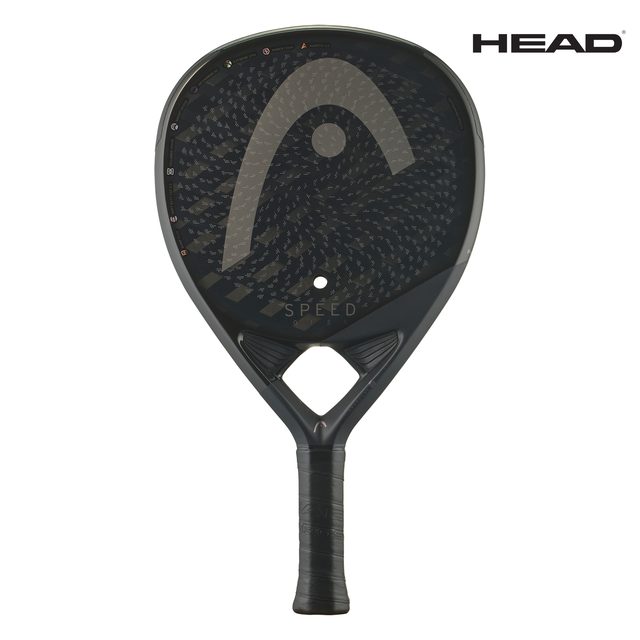
Some players need a racket that refuses to be pushed around. That's the Speed One X, Head's control teardrop built to stay planted when a rally turns frantic, for the intermediate whose racket head still twists under pressure. At around €180 it brings Head's comfort-and-control heritage at its steadiest.
At its heart is Power FOAM, Head's medium core, kind to the elbow and steady rather than explosive under the ball. A fuller 365g load anchors the head, so a hard incoming ball meets something planted instead of knocking you back. The 2D Carbon face turns that stability into a punched volley that stays on your side of the net. The carbon-fiber frame holds the whole shape rigid, which is what stops the twist mid-exchange.
The steadiness shows up the moment the pace climbs. Blocks and lobs hold their line under pressure at the baseline, coming back deep instead of ballooning short, and the head stays put through a fast net exchange, turning scrambled reactions into controlled punches and letting you hit the víbora on your terms. Against the lightest frames here you give up a shade of quickness, and the steadiness you get back more than covers it.
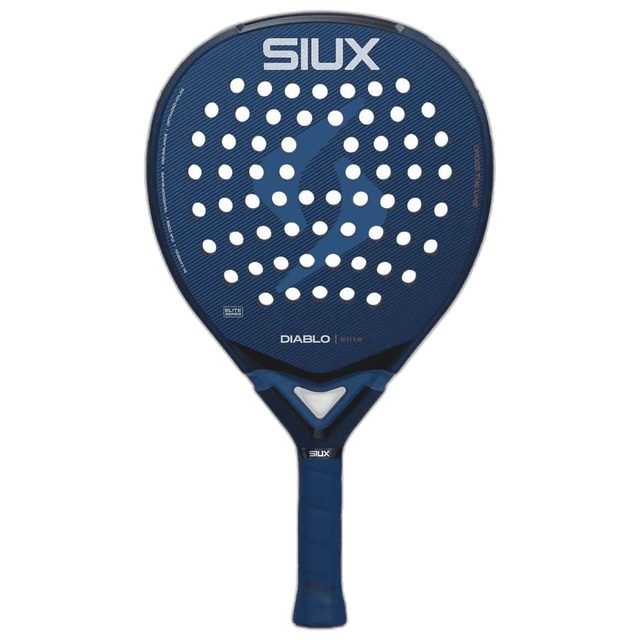
Every club has one Diablo, and there's a reason. Ours is the Elite 6: a sand-faced attacker for the intermediate whose finishing shots are arriving. Siux aims it a rung above the rest of this list, so treat it as the deliberate step up: you buy the game you're building, at around €170.
The spin lives in the surface. Siux gives the 3K carbon face a sandy 3D finish, and that grit bites the ball through contact, so your víbora dips harder and your bandeja lands shorter off the glass. Behind it sits an EVA core on the firm side of medium: quick to recover, honest about the pace you gave it, with enough hold to keep resets safe. The carbon frame keeps the teardrop stiff through a full swing, and the strike lands comfortable, the ball leaving soft and controlled.
It attacks with manners. The smash is where the ambition shows: time one cleanly and the ball stays down, and the frame asks for that same timing in return. At the net the head comes through quickly and put-aways leave with a clean, repeatable release you can trust under pressure, no wild snap to it. The signature move is that sand-driven bite, which is why the bandeja and víbora are the shots you'll notice first. Drop deep and it holds its end, blocks obedient and lobs carrying to the glass, though it expects you to move your feet.
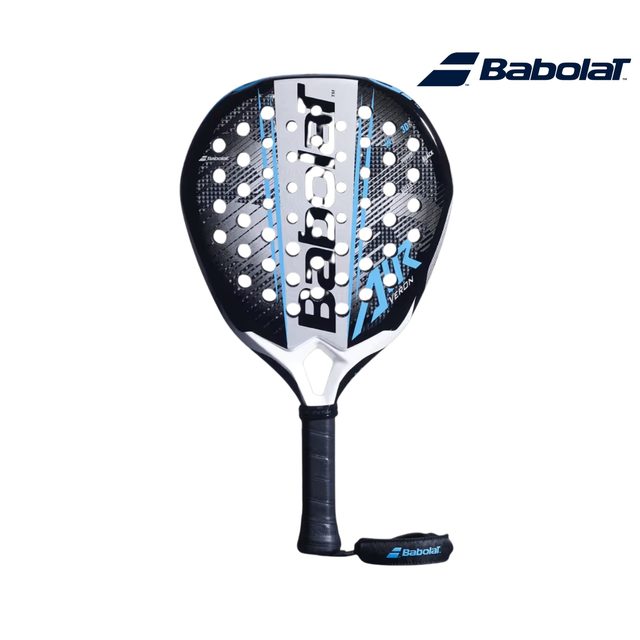
Fast hands win the net, and this racket frees them. The Babolat Air Veron 2.6 is a light, even-balanced teardrop built for quick changes of direction, so you can chain shots and hold the front of the court. At around €170 it sits in the middle of the field.
Carbon Flex is the trick. Babolat blends carbon with fiberglass in a single face: the carbon sends a pressed volley away briskly, and the glass adds elasticity, so a strike a touch off center still lands in. Behind it sits a Black EVA core. Babolat doesn't publish its density, so we won't guess at it. A carbon frame holds the teardrop shape, and at 355g, give or take 10g, the whole racket stays easy to move.
The head arrives early, and everything follows from that: at the net you take the ball in front of you, stack volleys on top of each other, and still have time to pick the gap for the put-away. Defending, the same agility turns cramped positions into clean resets, and the lob comes off with an easy, unhurried flick you can send from an awkward stance. Heavier frames here settle a hard drive down better, but few get you to the ball earlier.

Buy this one for the player you're about to become. The Volt 900 V4 is our pick for headroom you grow into over a season, not out of by spring. Volt built its name on touch, and this is that reputation with more held in reserve: it never plays like too much racket too soon. At around €240 it's an investment that keeps paying out.
Under the hood sits Volt's Fast Recovery Black EVA core, tuned to release its ceiling gradually: easy to time from day one, so early on you lean on the control and connected feel for safe defense. The 3K Carbon face is where the reserve lives, rewarding firmer volleys as your hands quicken and finding extra bite in the smash you couldn't reach at first. The 3K frame carries that response without ever feeling stiff or demanding.
Touch does the talking: a reset you can weigh, a volley you can place soft or firm and know which you chose. Early on that read keeps you steady, blocks and lobs dependable from the back while you find your range. Then the net game starts to climb: the víbora carries real snap, put-aways land with conviction, and the frame keeps handing you more, which is why it sits above the value picks.
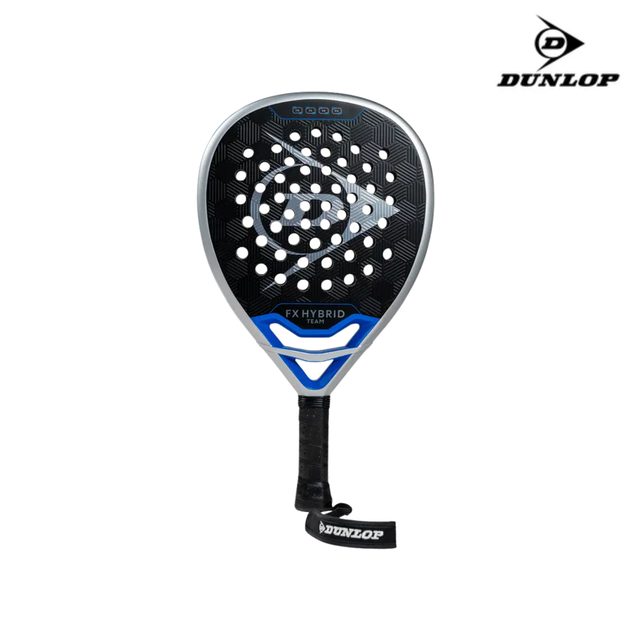
If the shot you're adding this season is the slice, this frame is built around it. The FX Hybrid Team is a forgiving hybrid head over a medium core, rated by Dunlop for intermediate players.
Under Dunlop's SpinBoost texture is a graphite face, backed by a medium-density Pro EVA core and a frame of graphite and glass fiber. Brush across the ball and the texture holds it a fraction longer, which is where the spin comes from. The medium core returns more of the swing than the soft starters, so a lob reaches the back corner without a big backswing.
Slice and topspin come easily, which is the shot most intermediates are trying to add. Volleys at the net are steady to cushion or redirect, and the hybrid head forgives one caught off-center. It isn't a finisher's frame; flat smashes need you to supply the pace.

A newer badge with a grown-up spec sheet. The Stealth Avenger matches the recipe the established houses put in their flagships, the full attacking build without the famous name. At around €249 you're paying flagship money too; what you're buying is the spec, and performance that plays above the badge's age. That's the trade.
The build is where the money went. An EVA CTRL+ core keeps a medium, stable base under everything, so defense stays solid and resets land safely. The lift comes from a 6K Carbon Twill T700 face, a stiffer weave that gets eager on the smash and lets you finish a sitter with real conviction. A Carbon T700 frame ties it together with point-ending rigidity.
Attack is where it earns its keep, near the net especially. Volleys sit firm, put-aways carry real punch off the face, and the smash closes with authority once you've worked forward. Back at the baseline the stable head keeps blocks and lobs on rails while you build the point, so you're never scrambling to reach the front. The frame outperforms the name on the throat, and that gap is the reason to buy it.
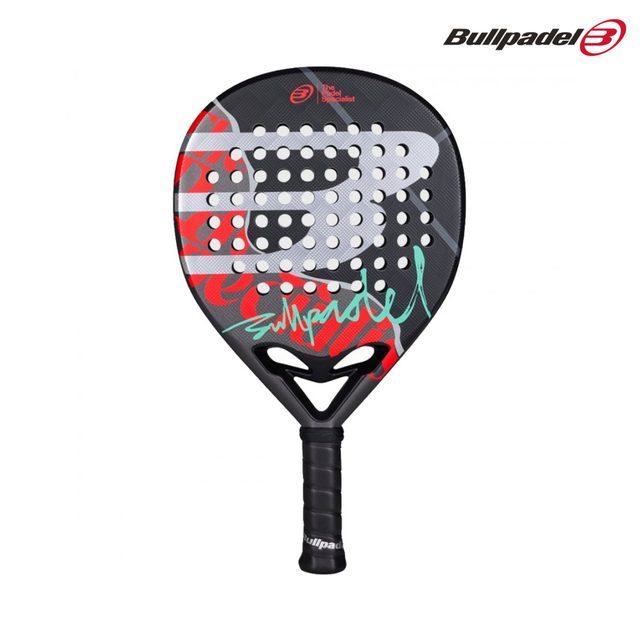
The safe, respected choice from padel's most recognizable name. Bullpadel built the Ionic Control control-first, around a round head that centers the sweet spot for maximum forgiveness, and the brand is on tour and in every club you'll walk into. At around €98 the trusted badge comes at value-pick money.
The forgiveness runs deeper than the shape. A MultiEVA core blends foam densities so the middle of the face stays soft and arm-kind while the outer edge firms up for stability, giving you comfort and a planted platform at once. The Glaphite face, a graphite-glass weave, keeps the response friendly and elastic, so mishits still go roughly where you aimed. Its 370g load carries the round head through the ball, adding punch when you press one away while keeping the elbow comfortable over a long match.
Defense is home here: blocks sit low, lobs go deep, and you rarely get rushed into an error, so you stay in points a lighter attacking frame would lose. Move up and the control character lets you place volleys with precision, the head's momentum finishing the put-away for you. You won't find diamond-style raw power here, and that's by design: what you get is a frame that keeps you in every rally.

A racket that puts the ball where you point it. The Stiga Axe is our precision pick, a control frame from a specialist that makes every shot feel deliberate. It's a round head priced keenly for this kind of accuracy at around €150, and it's for the intermediate who out-places opponents instead of out-hitting them.
Precision starts with a Hypersoft EVA core, a foam that cradles the ball a beat longer so you can steer it to a spot instead of just blocking it back. The face is a Carbon Duplex 3K and fiberglass layup: the carbon gives a clean, aimed strike its bite while the fiberglass softens the edges, so a placed shot pays off more than a swung-hard one. Under that, a Carbon and Kevlar Flexi Frame keeps contact composed at 365g, so your target doesn't wander when the pace picks up.
It settles you, and defense is where the round head leads. Digging out of trouble, resets stay low and lobs land with an accuracy you can trust, so a hard ball gets answered instead of flinched at. As the point develops, that stillness lets you thread a volley or a drop into the gap you spotted, and there's enough pop to punish a sitter. The soul of the frame is placement, rewarding the player thinking one shot ahead.
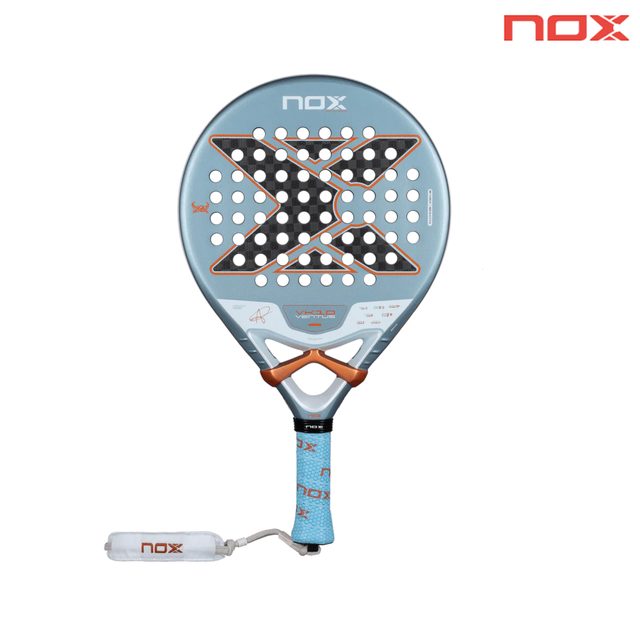
This is the round head you graduate to, not away from. Nox's VK10 Ventus Control is the signature frame of pro Aranzazu Osoro, for the intermediate who has decided placement is their game and wants serious tools for it. From around €175, it's the most committed control racket here.
Nox builds the control on firm foundations. A 12K carbon face with a rough finish gives the ball a definite, repeatable response, and the texture lets you cut and brush without changing your swing. Inside sits Nox's MLD Black EVA core, tuned toward feel: contact registers clearly through your hand, so you always know how much racket you gave the ball. The carbon frame and the wide sweet spot of the round mold keep an off-center hit on target and stop the head wobbling off line.
The guesswork goes early. From the back of the court you drop lobs onto a coin and skid resets low, and because nothing at contact surprises you, you stop steering the ball and start sending it. At the net the round head punches volleys flat and obedient into the corners, and when a sitter arrives there's enough behind it to finish by placing the ball, not swinging out of your shoes.
So, to route you: our Top Pick, the Starvie Drax +, is also one of the cheaper frames here at around €135, which settles it for most improving intermediates. Want your attack to arrive sooner? The Diablo Elite 6 is the step up. If placement is your whole identity, the Stiga Axe holds the value end and the VK10 Ventus Control is the serious version. Buying for the next two seasons? The Volt 900 V4 grows with you. Or let the quiz do it: two minutes in the free app reads your game, your budget, and your style, and hands you the one that fits.
The best intermediate padel rackets in 2026 are teardrop, round or hybrid frames with a medium core, mostly 355 to 370g, pairing control with usable power as your technique sharpens. Standouts: the Starvie Drax + (teardrop, all-round, one of the cheaper picks), the Head Speed One X (teardrop, stability), and the Bullpadel Ionic Control (round, big-brand control), all roughly €100 to €250.
A teardrop racket carries its balance through the middle for a blend of control and power, while a round racket sits the weight low and central for the most control and the largest sweet spot. Intermediates usually start with teardrop, like the Starvie Drax +, for versatility, and reach for round, like the Stiga Axe, when precision matters more than punch.
You're intermediate when you find the sweet spot more often than not, hold consistent rallies, land serves where you aim, and start thinking about placement and finishing at the net rather than just returning the ball. If you're still building consistency, a forgiving round beginner frame will suit you better for now. Our free app quiz reads your answers, confirms your level, and recommends a matching racket.
Yes. A teardrop intermediate frame drives the ball harder than a round beginner racket without shedding much control, because the mid-set balance and medium core add pace while keeping the face forgiving. You get extra bite on serves and smashes and keep the accuracy you've built. Frames around 365g, like the Head Speed One X, add stability so the extra power lands in the court where you aimed it.
Budget roughly €100 to €250 for an intermediate padel racket, the band where you get quality carbon frames, medium cores, and refined shapes that reward improving technique. You don't need a €300-plus pro model to play well at this stage, and value picks like the Stiga Axe near €150 hold their own against pricier names. Fit decides more matches than price does.
Move to a diamond racket only once you've maxed out a teardrop frame and your contact is clean and centered every time. Diamonds park the weight in the tip for explosive power but shrink the sweet spot, so a rushed jump costs you control and loads your elbow. If you're not certain you're ready, stay on teardrop a while longer and let the technique catch up first.
The list is built from our catalog of 800+ rackets. From it we select frames that add control and drive as your game sharpens, verify every price and stock status live at our approved shops before publishing, and re-check them on every update. Nobody pays for placement, and there are no invented test scores: specs come from the catalog and retailer listings, and the free two-minute quiz matches the same data to your game.
The app · free quiz
Take the free quiz in the app. We'll match a racket to your game, not the other way around.
Find my racketFree quiz. Sign in with email or Google to get your four picks.