Babolat Air Veron 2.6 2026 Review
By Andres Jovem · Updated October 19, 2026
An even-balanced teardrop for the intermediate who wants the shape's reach without a head that drags, and will give up the last yard of smash speed for it.
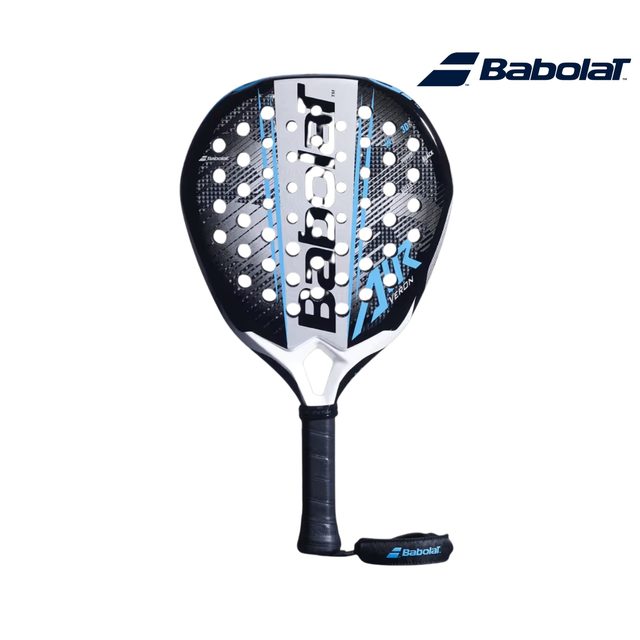
The verdict
The Babolat Air Veron 2.6 is a teardrop that handles like something tamer, and the shape stops reading as a threat the moment you rally with it. At 355g with the balance sitting even, the head never runs away from your hand and the frame turns over without a fight. This is the intermediate frame for the player who wants a settled ball and quick hands more than a heavier top-end punch.
The honest catch is the finish. The balance that keeps the head easy to move also takes the edge off a full-blooded overhead, so a buyer who picks up the teardrop expecting a point-ending weapon will feel let down. This racket rallies and resets. It does not put people through the back glass. If that is the shot you buy a padel racket for, this is not your frame, and the next section says why in full.
The build
A Black EVA core, firmness unstated
Babolat fills the Air Veron 2.6 with a Black EVA core and publishes no figure for how soft or firm that foam is. That gap matters, because core firmness shapes how a hit feels and how much shock reaches your arm. If cushioning is the reason you are shopping, try one before you buy, and let the rest of the build make its case on handling.
A Carbon Flex face on a carbon frame
The hitting layer is what Babolat calls Carbon Flex, set in a carbon frame. A carbon face stays rigid under the ball, so your swing decides where the shot goes and a hurried hit does not get bent off line. What the carbon hoop adds is a frame that stays steady in your hand when you catch one off the middle.
A teardrop that swings like something rounder
The mold is a teardrop, but the balance sits even, with the mass toward the middle of the frame rather than stacked up in the head. The result swings closer to a round racket than the shape lets on, so the head is not something you have to haul around and it comes through quickly when a ball rushes you. The teardrop still lifts the sweet spot a touch toward the tip and hands you a little extra reach on the overhead, and at 355g it does that without the top-heavy load that tires a shoulder or leaves your hands late at the net.
How it plays
Reactions at the net stay yours to make
A ball fired at your hip is still a ball you can deal with here, because the head is quick and the frame never lags behind your hands. Volleys go where you aim them, because the racket is already in position when the ball arrives instead of catching up to it. You are not going to flatten anyone from up here. What you get is the point kept alive and the ball parked in the gap, which for most intermediates banks more games than raw speed ever does.
Defense that digs you out of lost rallies
Under pressure at the back of the court this frame is a friend. Because the head gets to a heavy ball in time, a block or a reset becomes a shot you control instead of a frantic swipe, and you can float an attack back deep rather than flinging it into the net. Strikes caught a little off the middle still travel roughly where you meant, with the frame holding steady in your hand. Lobs come out steady and repeatable, the same length ball after ball once you trust it. It keeps you alive in exchanges you had no right to still be in.
On the attack, it wants you to set the point up
Wind up for an overhead and the ceiling shows itself. The ball leaves on a rounder, more controlled arc than a head-heavy finisher would send, a placed heavy ball rather than a flat guillotine drop. The bandeja and the víbora are the shots this racket asks for, where you shape the flight with your swing and bury it deep instead of gunning for a clean winner. Treat it as a builder and it pays you back. Swing for a por-tres knockout on every ball and you will hand the other pair shots they can read and send straight back.
Comfort and the arm
Handling is what this build delivers. An even balance at this weight puts less load on the shoulder than a top-heavy frame, so you are not fighting the head all afternoon, and a tired shoulder notices the difference by the third set. The elbow is another matter, and the FAQ below explains why, so if tennis elbow is steering your search, read that answer first.
Who it's for (and who should skip it)
Buy it if
- Your shoulder tires behind head-heavy frames and you want a teardrop that swings light.
- You are an intermediate who wins on placement, resets, and hanging in rallies rather than on raw pace.
- You have come across from tennis and want a padel racket that feels forgiving and familiar in the hand.
Look elsewhere if
- You are an aggressive finisher buying a teardrop to end points off the smash. The even balance leaves less weight behind exactly that shot, so keep shopping.
- You want maximum ball speed and a head-loaded frame that adds pace on its own.
- You are a complete beginner, where a lighter, fully round frame teaches you more before you step up to this one.
Not sure it's your match? The free 2-minute quiz reads your level, style, and budget and tells you which racket is.
The bottom line
There is no best racket, only the best racket for you, and the Air Veron 2.6 is the one for the player who resets, rallies, and builds the point rather than swinging to end it, especially anyone crossing over from tennis who wants a racket that handles easily. If that sounds like you but you are still weighing it against a head-heavier frame, the free 2-minute quiz reads your level, style, and budget and tells you where you land.
Frequently asked
No. The Air Veron 2.6 is an intermediate frame, and although its even balance makes it one of the easier teardrops to swing, a true beginner learns faster on a lighter, fully round frame that swings easily and is kinder on off-center hits. Grow into this one once your swing is grooved and you know what you want from a racket.
It sits on the control side. The even balance keeps the head quick and the ball placeable instead of loading the tip for a flat rocket, so you shape and place shots more than you swing for winners. There is enough pace on tap for an intermediate game, but scoring here comes from putting the ball where the other pair is not.
Babolat lists a Black EVA core behind a Carbon Flex face, on a carbon frame. The carbon face and frame keep the hitting area steady and the ball going where you aim it.
Kind to the shoulder, thanks to the even balance, but we can't vouch for the elbow. At 355g the head never loads up behind every swing, which is what spares the shoulder. Core firmness is the spec that decides how much shock reaches the elbow, and Babolat does not state it, so an arm-sensitive player should try it first or choose a frame with a published soft core.
The teardrop nudges the sweet spot toward the tip and lends a little reach on the overhead, but the balance sits even instead of loading the head. That makes it swing closer to a round frame than the outline implies, giving you the shape's reach without the top-heavy load that tires a shoulder. It is a handling racket wearing an attacking silhouette.
Live pricing sits in the where-to-buy block below, pulled from our retailers and localized to your currency so you see the current lowest in-stock figure rather than a stale one. Stock and prices move week to week, so we let the live comparison carry the number instead of printing one here that could be wrong by the time you read it.
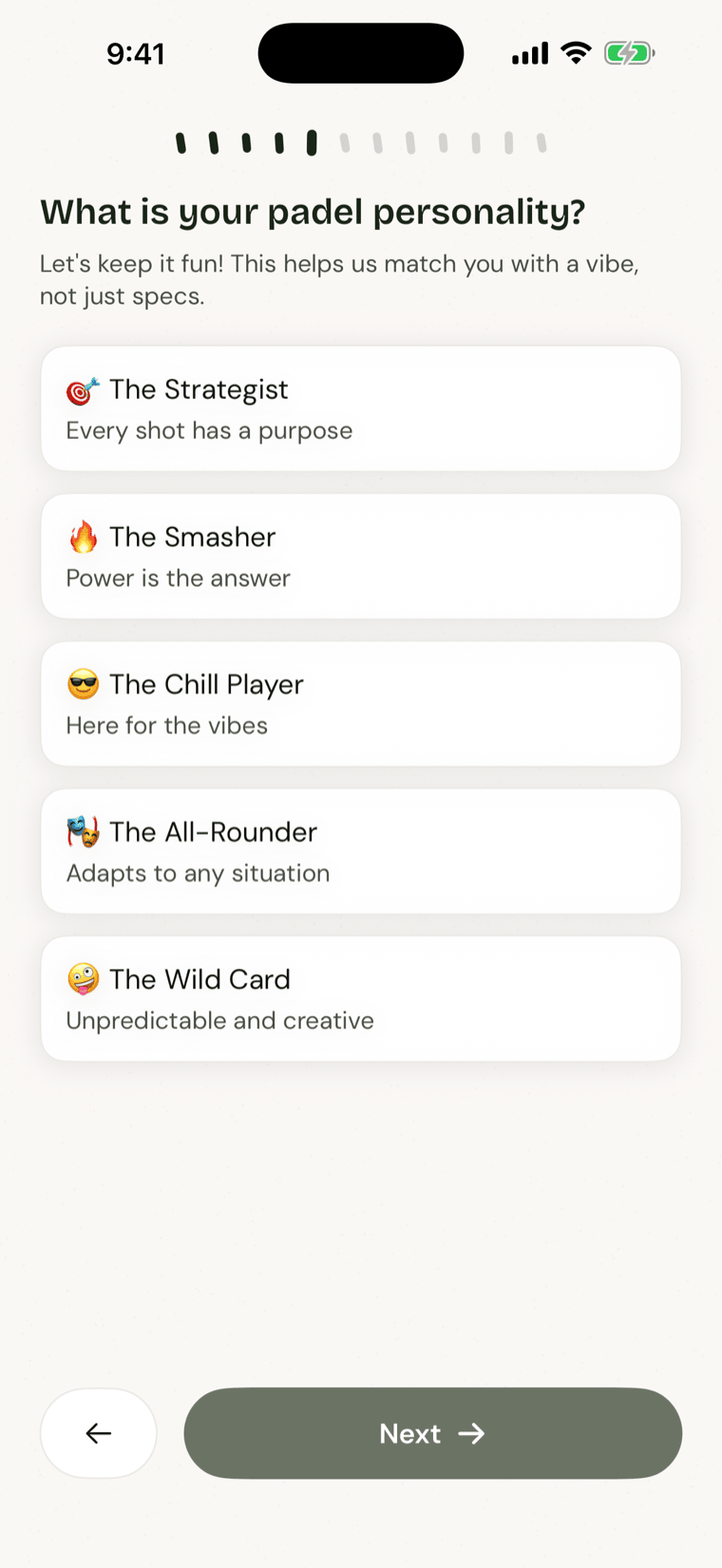
The app · free quiz
Not sure which one's you?
Take the free quiz in the app. We'll match a racket to your game, not the other way around.
Find my racketFree quiz. Sign in with email or Google to get your four picks.

Babolat Air Veron 2.6 2026 Review
By Andres Jovem · Updated October 19, 2026
An even-balanced teardrop for the intermediate who wants the shape's reach without a head that drags, and will give up the last yard of smash speed for it.
The verdict
The Babolat Air Veron 2.6 is a teardrop that handles like something tamer, and the shape stops reading as a threat the moment you rally with it. At 355g with the balance sitting even, the head never runs away from your hand and the frame turns over without a fight. This is the intermediate frame for the player who wants a settled ball and quick hands more than a heavier top-end punch.
The honest catch is the finish. The balance that keeps the head easy to move also takes the edge off a full-blooded overhead, so a buyer who picks up the teardrop expecting a point-ending weapon will feel let down. This racket rallies and resets. It does not put people through the back glass. If that is the shot you buy a padel racket for, this is not your frame, and the next section says why in full.
The build
A Black EVA core, firmness unstated
Babolat fills the Air Veron 2.6 with a Black EVA core and publishes no figure for how soft or firm that foam is. That gap matters, because core firmness shapes how a hit feels and how much shock reaches your arm. If cushioning is the reason you are shopping, try one before you buy, and let the rest of the build make its case on handling.
A Carbon Flex face on a carbon frame
The hitting layer is what Babolat calls Carbon Flex, set in a carbon frame. A carbon face stays rigid under the ball, so your swing decides where the shot goes and a hurried hit does not get bent off line. What the carbon hoop adds is a frame that stays steady in your hand when you catch one off the middle.
A teardrop that swings like something rounder
The mold is a teardrop, but the balance sits even, with the mass toward the middle of the frame rather than stacked up in the head. The result swings closer to a round racket than the shape lets on, so the head is not something you have to haul around and it comes through quickly when a ball rushes you. The teardrop still lifts the sweet spot a touch toward the tip and hands you a little extra reach on the overhead, and at 355g it does that without the top-heavy load that tires a shoulder or leaves your hands late at the net.
How it plays
Reactions at the net stay yours to make
A ball fired at your hip is still a ball you can deal with here, because the head is quick and the frame never lags behind your hands. Volleys go where you aim them, because the racket is already in position when the ball arrives instead of catching up to it. You are not going to flatten anyone from up here. What you get is the point kept alive and the ball parked in the gap, which for most intermediates banks more games than raw speed ever does.
Defense that digs you out of lost rallies
Under pressure at the back of the court this frame is a friend. Because the head gets to a heavy ball in time, a block or a reset becomes a shot you control instead of a frantic swipe, and you can float an attack back deep rather than flinging it into the net. Strikes caught a little off the middle still travel roughly where you meant, with the frame holding steady in your hand. Lobs come out steady and repeatable, the same length ball after ball once you trust it. It keeps you alive in exchanges you had no right to still be in.
On the attack, it wants you to set the point up
Wind up for an overhead and the ceiling shows itself. The ball leaves on a rounder, more controlled arc than a head-heavy finisher would send, a placed heavy ball rather than a flat guillotine drop. The bandeja and the víbora are the shots this racket asks for, where you shape the flight with your swing and bury it deep instead of gunning for a clean winner. Treat it as a builder and it pays you back. Swing for a por-tres knockout on every ball and you will hand the other pair shots they can read and send straight back.
Comfort and the arm
Handling is what this build delivers. An even balance at this weight puts less load on the shoulder than a top-heavy frame, so you are not fighting the head all afternoon, and a tired shoulder notices the difference by the third set. The elbow is another matter, and the FAQ below explains why, so if tennis elbow is steering your search, read that answer first.
Who it's for (and who should skip it)
Buy it if
- Your shoulder tires behind head-heavy frames and you want a teardrop that swings light.
- You are an intermediate who wins on placement, resets, and hanging in rallies rather than on raw pace.
- You have come across from tennis and want a padel racket that feels forgiving and familiar in the hand.
Look elsewhere if
- You are an aggressive finisher buying a teardrop to end points off the smash. The even balance leaves less weight behind exactly that shot, so keep shopping.
- You want maximum ball speed and a head-loaded frame that adds pace on its own.
- You are a complete beginner, where a lighter, fully round frame teaches you more before you step up to this one.
Not sure it's your match? The free 2-minute quiz reads your level, style, and budget and tells you which racket is.
The bottom line
There is no best racket, only the best racket for you, and the Air Veron 2.6 is the one for the player who resets, rallies, and builds the point rather than swinging to end it, especially anyone crossing over from tennis who wants a racket that handles easily. If that sounds like you but you are still weighing it against a head-heavier frame, the free 2-minute quiz reads your level, style, and budget and tells you where you land.
Frequently asked
No. The Air Veron 2.6 is an intermediate frame, and although its even balance makes it one of the easier teardrops to swing, a true beginner learns faster on a lighter, fully round frame that swings easily and is kinder on off-center hits. Grow into this one once your swing is grooved and you know what you want from a racket.
It sits on the control side. The even balance keeps the head quick and the ball placeable instead of loading the tip for a flat rocket, so you shape and place shots more than you swing for winners. There is enough pace on tap for an intermediate game, but scoring here comes from putting the ball where the other pair is not.
Babolat lists a Black EVA core behind a Carbon Flex face, on a carbon frame. The carbon face and frame keep the hitting area steady and the ball going where you aim it.
Kind to the shoulder, thanks to the even balance, but we can't vouch for the elbow. At 355g the head never loads up behind every swing, which is what spares the shoulder. Core firmness is the spec that decides how much shock reaches the elbow, and Babolat does not state it, so an arm-sensitive player should try it first or choose a frame with a published soft core.
The teardrop nudges the sweet spot toward the tip and lends a little reach on the overhead, but the balance sits even instead of loading the head. That makes it swing closer to a round frame than the outline implies, giving you the shape's reach without the top-heavy load that tires a shoulder. It is a handling racket wearing an attacking silhouette.
Live pricing sits in the where-to-buy block below, pulled from our retailers and localized to your currency so you see the current lowest in-stock figure rather than a stale one. Stock and prices move week to week, so we let the live comparison carry the number instead of printing one here that could be wrong by the time you read it.
The app · free quiz
Not sure which one's you?
Take the free quiz in the app. We'll match a racket to your game, not the other way around.
Find my racketFree quiz. Sign in with email or Google to get your four picks.