Adidas
Best overall value
Control
Power
Even balance
from€95.90
In stockBuying guide · Tennis Players
By Andres Jovem · Updated October 16, 2026
You already know how to hit a ball. That is the good news and the trap. Coming from tennis, you bring a grooved swing, real hand speed, and topspin most padel players spend years chasing. Then the wall sends your first lob back over your head, your big backswing arrives late at the net, and after two sessions your elbow is louder than it has been in years. Padel is a shorter, sharper game played in a box, and the racket that suits your tennis instincts is not the one a pure beginner needs.
The right frame for a convert keeps what tennis gave you, a face that bites for spin and enough mass to reward a full swing, while forgiving what padel is still teaching you: the compact stroke, the volley off the glass, the reset under pressure. And it protects the arm, because your old swing plus a stiff frame is how a padel elbow starts. Get that balance right and your tennis game transfers in weeks, not seasons.
Below, the ten split by where you are. The five intermediate picks lead with comfort and control, the frames that let a tennis swing land without punishing it. The five advanced picks add power and spin for a grooved game that is ready to attack. All ten are in stock with live prices right now. Ranked within each tier by how cleanly they carry a tennis game across, with value and in-stock shops breaking ties.
These are the best padel rackets for tennis converts in general. Your level, your swing weight, your budget, and whether your arm has a history all move the answer, and twelve questions gets the one that is actually yours. Take the free quiz before you scroll, or read on for the shortlist.
The top 10 at a glance. Swipe through, or read the full breakdown below ↓
Tennis Players
Your topspin is an edge, and a rough carbon face turns it into a weapon on the víbora and the lob. What does not carry over is swing length. Padel rewards a compact stroke, and a full tennis backswing arrives late off the back glass. Buy the spin-friendly face, then trust your hands to shorten the motion.
Tennis elbow follows you onto the padel court, and the new load, more volleys, more sudden blocks, finds it fast. A soft or medium core flexes on contact and soaks up the shock a stiff frame fires into your elbow and shoulder. If your arm already has history, treat comfort as the first spec, not the last.
A teardrop shape sits between control and power with a sweet spot you can actually find, which is what you want while your padel timing settles. A round head is the safest, most forgiving option if comfort leads. Save the diamond, with its tip-heavy power and small sweet spot, for when your padel technique is grooved, not your tennis one.
The common convert mistake is buying the most aggressive frame in the shop, then spraying it into the fence. You supply the pace already. A control or all-round frame reins the swing in and keeps your winners in the court. Once your padel attack is built, the advanced picks below let you add the power back on your terms.
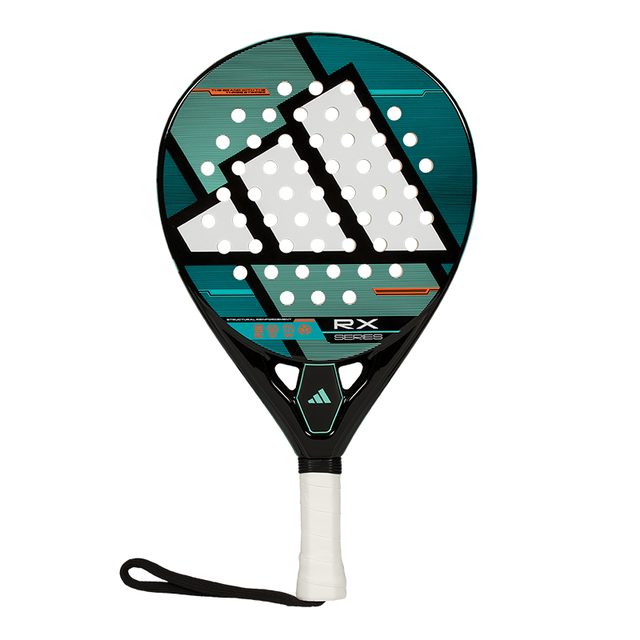
The RX Series is the easiest place to land a tennis game, and the most forgiving all-rounder on this list for the money. It is built for the convert who wants one versatile frame to relearn the game on without overspending, and it flatters the mistakes a new padel stroke makes while your timing catches up.
The build keeps everything gentle. An EVA Soft Performance core sinks under the ball and hands it back without a jolt, so the shock a stiff frame drives into your elbow never arrives. Over it sits a fiberglass face, which flexes on contact rather than punishing it, the softer, more controlled surface of the two common face materials. A carbon frame underneath keeps the teardrop head from twisting when you catch one off the sweet spot.
The first thing a tennis arm notices is the jolt that never comes. Contact is soft and absorbed, so an hour of relearning leaves the elbow quiet, and at the back of the court a lob floats deep off almost no swing. Step to the net and the head is quick enough to react to a body shot without turning in your hand. Power stays gentle by design, which suits you: you already own the pace, so let the frame keep your placement honest.

If your tennis game runs on topspin and fast hands, the Ionic Light is the frame that lets both travel across. It is the lightest, most agile pick here, built for the convert who wants to brush the ball and react at the net without dragging a heavy head around the box.
Bullpadel builds it on a soft MultiEVA core, a comfort-first foam that cushions contact and keeps the arm quiet, behind a Glaphite face, the brand's graphite-and-glass weave that flexes yet carries a rough finish that grabs the ball for spin. Its Vibradrive damping insert pulls the sting out of a hard strike, so a long session does not report straight to your wrist.
At the net the light head snaps to a reflex volley the way a tennis racket answers a quick hand, and defending deep you can carve topspin into a lob the way you would a passing shot. The rough face skids a víbora low and bites enough for a brushed finish, so the shot you already own becomes a weapon here. You bring the swing speed. The racket turns it into placement and bite.
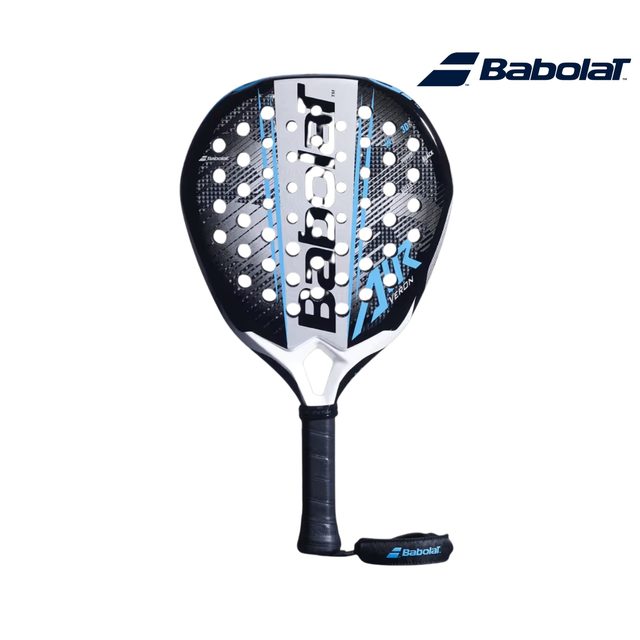
If your elbow remembers every tennis season, start your padel search here. The Babolat Air Veron 2.6 is a light, even-balanced teardrop from a brand already in your tennis bag, and its comfort comes from a face built to give, not from any promise about the foam inside.
The face is Carbon Flex, carbon blended with fiberglass: you keep the brisk exit a tennis player expects from carbon, and the glass adds the elasticity that softens the jolt a stiff carbon face sends up the arm. Behind it is a Black EVA core, and Babolat lists the material but not its density. A carbon frame holds the teardrop steady when contact drifts off center, and 355g keeps it easy to move through a long session.
You notice it late in a session, when your forearm has done less fighting than usual. Quick changes of direction come easily: a reaction volley at the net is there without a big backswing, and a block off the back glass comes away without a jolt. It rewards the compact stroke your tennis volley already taught you, while the big topspin swing from the baseline needs reining in.

Here is a familiar face wearing different clothes. The Wilson Blade LS V4 carries the most recognizable name in your old sport, and the punchline is that it plays nothing like your old Blade: soft, low-balanced, and built to talk you out of the tennis swing you arrived with.
Everything in the build argues for restraint. The Soft ECO foam core takes pace OFF the ball, which is what a convert needs most while learning that padel points are built rather than blasted, and the fiberglass face flexes wide so a mishit during the adjustment months still lands in play. Wilson's C2 Tubular construction holds the response uniform wherever you strike, and at 355g with the balance pulled low, the head answers to your wrist instead of your shoulder.
It coaches by feel. Swing big, tennis-style, and the soft bed gives you nothing extra, so the incentive to shorten up arrives within a session; block and place instead, and the ball lands where you pointed it. Walls stop being emergencies because the low balance keeps the racket ready late, and volleys reward the crisp technique you already own. When the put-away pace starts feeling capped, that is the racket telling you the transition is finished.

If you would rather keep your first padel outlay small while you find out how much you love the game, the Valkiria Flex is the least you can spend here and still get a real frame. Joma is a Spanish sports brand that knows racket sports, and this is a proper starter, not a toy for the price.
The construction stays honest and comfortable. A Flexo Black EVA core is a soft foam that forgives a mishit and cushions the arm, a fiberglass face flexes on contact instead of jarring it, and a carbon frame holds the round head steady when your contact drifts off center. Nothing exotic, everything that matters for a learner.
It asks nothing of you at the back of the court, where a block floats deep on its own and the round head keeps early mishits in play. At the net it wants you planted before you fire, then rewards a clean strike with a solid, placed volley. Power stays modest, which for a convert with tennis pace in reserve is no loss at all.
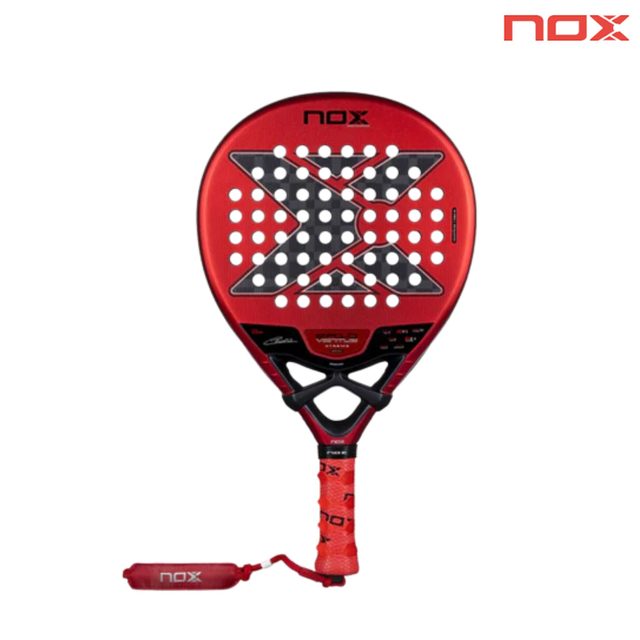
Tennis players rarely want to choose between defending and attacking, and the Ventus Hybrid doesn't make you. It's a medium-balanced teardrop that shifts from defense to finish inside one point, for the convert who attacks but still wants a safety net.
Nox builds it with a 12K Xtrem Carbon face, finished rough, over an MLD Black EVA core laid up in more than one density. The rough carbon grips the ball for the spin you already use off the ground, and the layered core stays softer where most contact lands, so an off-center ball still clears the net.
Pinned at the back, you can reset with a deep lob or a soft block and wait for the ball to attack. At the net the medium balance keeps volleys quick, and overhead a topspin smash kicks off the glass if you brush up through it. Flat smashes get less help than from the diamonds on this list.
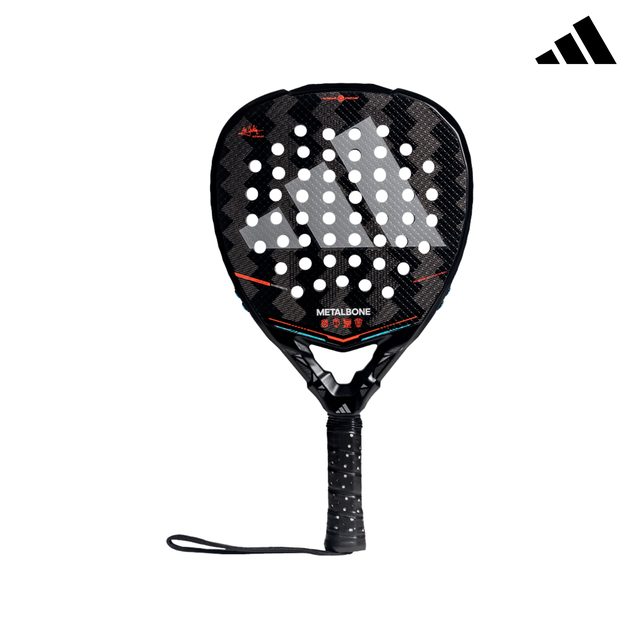
When you want to end the point overhead the way you used to end it with a serve, the Metalbone hits the hardest of anything here. It is Ale Galán's diamond, an unapologetically offensive frame for the convert who has the technique to swing it and the intent to dominate the net.
Power is engineered in. A diamond head with a high balance stacks the mass up at the crown, so the frame loads on the backswing and drives that weight through the smash. Adidas pairs it with an EVA Soft Performance core, a shade softer than most diamonds run, which keeps a brutal shape from becoming punishing, behind a stiff 16K aluminized carbon face for a fast, direct exit. Its Exoskeleton frame keeps the head from twisting through a hard swing.
At full stretch it is a weapon. A smash comes off flat and heavy, the kind that kicks off the glass and out of reach, and the rough face turns a víbora into a skidding, low missile. At the net it punches through the ball, and the only place it asks questions is deep in defense, where the crown-loaded mass wants an early, strong preparation. That head weight works the shoulder over a long match, so bring the arm to match the ambition.
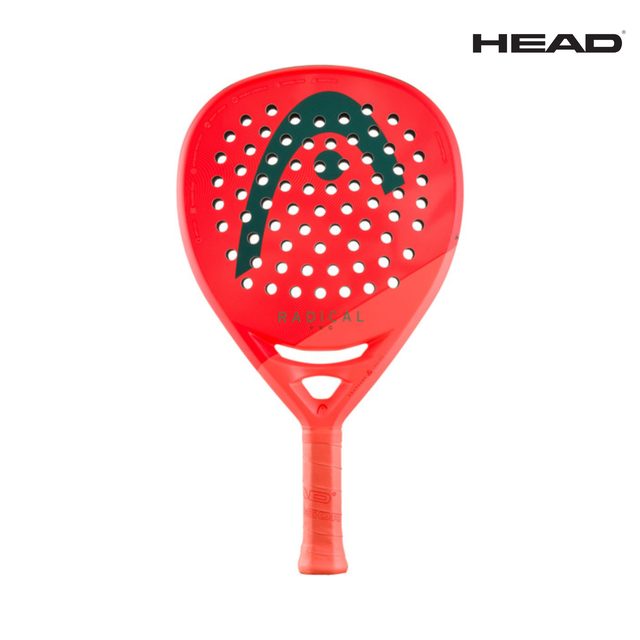
You know the Radical name from tennis, and Head carried its control-first character straight onto the padel court. The Radical Pro is the sharpest control-at-pace frame here, for the convert who wants precision without going soft, and the familiar badge is a bonus, not the reason.
The build is engineered for a measured ball. Head uses a Control Foam core that meters the exit rather than launching it, behind a Double Carbon face, two carbon layers that keep the hit stiff and precise. Running through it is Auxetic 2.0, Head's construction that cleans up the feel on contact and takes an edge off the shock a firm frame returns. The teardrop shape with a low balance keeps it fast in the hand and quick to reset.
Precision is what you buy, and the hands feel it. Volleys are where the low balance shines, snapping the head onto a reflex block, while deep defense turns from a scramble into a controlled redirect. On the attack it trades a little raw weight for placement you can trust, and the rough face still carves spin into a víbora or a lob. For a convert who leans on touch over brute force, it turns a tennis feel into padel accuracy.
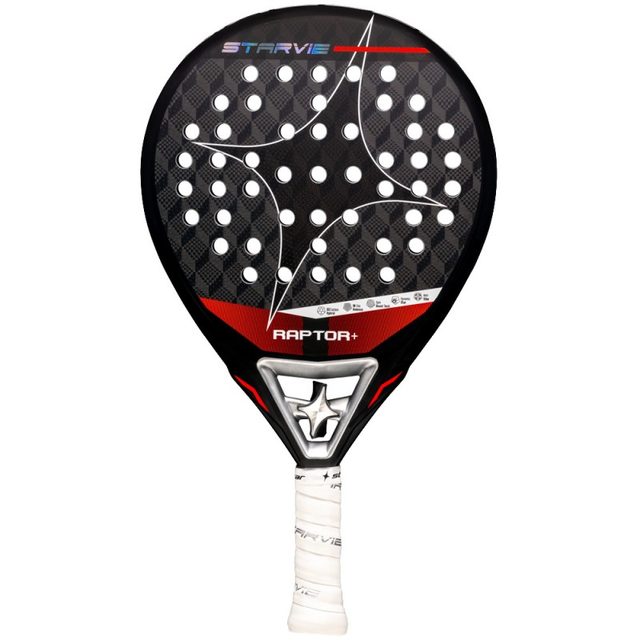
Want tour-style attack without the tour-style price? The Raptor+ gets closest on this list. It is the most racket for the money at this level, an attacking teardrop for the convert who has made the net their territory and wants power, sharp volleys, and spin in one frame.
Starvie centers it on an M-EVA Balance core, a medium foam that splits the difference between power and control, behind an 18K carbon face for a firm, fast strike that the rough finish turns into spin. A 3D Carbon Fabric layup adds stability so the head holds its line on an off-center hit, and Anti-Vibe technology keeps a hard contact from rattling the arm.
This one wants you on the front foot. It fires volleys away with weight behind them, and deep in defense it still counters off a hard ball instead of just surviving it. The smash and víbora leave with the bite a spin player wants, the rough face grabbing the ball through contact. Best of all it rewards a full, committed swing, the swing a tennis convert already owns, for well under the price of the marquee frames.
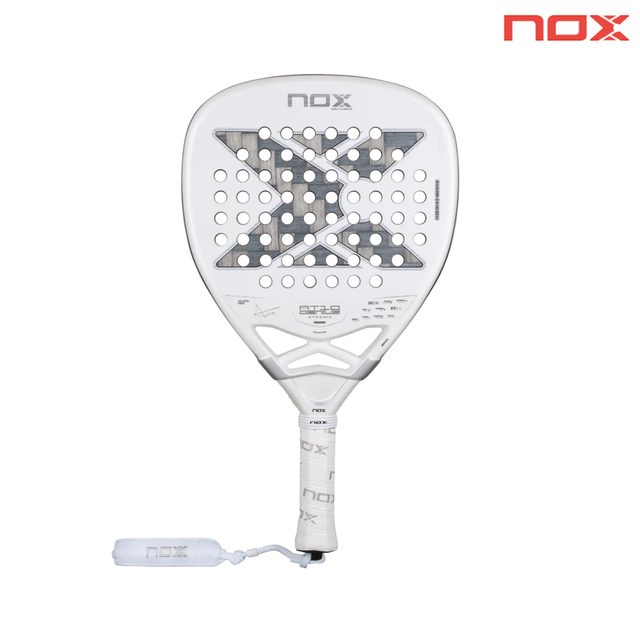
Heavy topspin is the AT10 Genius Attack's native language, and it bites harder than anything here. It comes from Nox's AT10 family, Agustín Tapia's line, and this is its most aggressive, spin-focused expression.
The build is all bite and drive. A hard HR3 Black EVA core barely compresses, so the ball leaves fast and flat with no lag, while the 12K Alum Xtrem carbon face with Nox's Dual Spin texture is a coarse, aggressive surface that grabs the ball and rips rotation onto it. The diamond head with a high balance stacks the mass up top for maximum smash weight. Nothing about it is softened for comfort.
At the top of the swing it is lethal. A smash lands heavy and steep, and the textured face turns a víbora into a low, skidding shot that spits off the glass, the closest thing in padel to a heavy topspin approach. It offers nothing in defense, where the firm core and crown-loaded mass punish anything but early, committed preparation, and even up close it wants you driving flat and heavy through contact, not guiding the ball. This is a specialist for a grooved, spin-first attacker, and it works the elbow and shoulder like one.
So: the best value here is the Adidas RX Series, and the smallest first outlay is the Joma Valkiria Flex. Still swinging like it's deuce on the baseline, the Wilson Blade LS V4 will retrain you kindly. Kindest to a tennis-worn arm, go with the flexible-faced Babolat Air Veron 2.6 or the light, spinny Bullpadel Ionic Light. Ready to attack, the Nox EA10 Ventus Hybrid does everything, the Adidas Metalbone hits the hardest, and the Nox AT10 Genius Attack bites the most spin. Not sure which tier is yours yet? Skip the scroll: the free two-minute quiz reads your level, your swing, and your budget, and matches the one racket that fits the game you are bringing over.
Tennis players moving to padel do best on a teardrop or round frame with a soft-to-medium core and a rough carbon face, in the €75 to €248 range on this list. That combination keeps your spin and rewards a full swing while forgiving the shorter padel stroke and protecting the arm. Skip the power diamonds until your padel technique is grooved.
No. A padel racket has no strings, a solid or foam core with a perforated hitting face, and a short handle you grip with one hand. It is much shorter than a tennis racket and swung with a compact motion, because points are played fast and off the glass walls. Your timing and spin carry over; your swing length does not.
Padel can aggravate tennis elbow if you pair a big swing with a stiff, head-heavy frame, but the right racket does the opposite. A soft or medium core flexes on contact and absorbs the shock that inflames the elbow and shoulder, as in the damped Bullpadel Ionic Light here. The Babolat Air Veron 2.6 finds its comfort elsewhere, in a Carbon Flex face that blends in fiberglass for give. Name the arm history when you choose, and lead with comfort.
Start round or teardrop, not diamond. A round head gives the biggest, most central sweet spot and the most forgiveness, and a teardrop adds pop without shrinking that sweet spot much. A diamond concentrates power at the tip with a small sweet spot that punishes anything less than a grooved padel swing, so it belongs in the advanced tier above once your technique is set.
Spend roughly €75 to €140 on your first padel racket as a convert. Quality intermediate frames sit well under €150 and suit a developing padel game far better than a €250 pro stick, which is stiffer and harder to control. Put what you save toward court time, which turns your tennis instincts into padel wins faster than any upgrade.
Yes, and four are on this list. Head brought its Radical line straight across, Adidas builds the Metalbone, Babolat's Air Veron 2.6 is one of our comfort picks, and Wilson's Blade LS V4 carries the most familiar name of all. The badge is a nice bit of familiarity, but choose on the build, shape, core, face, and how it fits your game, not the name over the door.
Our catalog of 800+ rackets is the starting pool. From it we select frames that ease the switch from tennis, verify every price and stock status live at our approved shops before publishing, and re-check them on every update. Nobody pays for placement, and there are no invented test scores: specs come from the catalog and retailer listings, and the free two-minute quiz matches the same data to your game.
The app · free quiz
Take the free quiz in the app. We'll match a racket to your game, not the other way around.
Find my racketFree quiz. Sign in with email or Google to get your four picks.