Joma Valkiria Flex 2026 Review
By Andres Jovem · Updated October 3, 2026
A soft, head-light round built to spare your arm and reward placement, not power.

The verdict
The Joma Valkiria Flex 2026 is built for one job above all others: getting you through a long match without your arm paying the bill. It is a round, soft, head-light frame at 350 to 360g, and every choice in the build points at comfort and control rather than raw power. If your elbow or shoulder has started to complain, or you just want a forgiving racket that lets you place the ball instead of muscling it, this is a frame worth your attention. If you play to finish points with weight and pace, read the next section and then keep looking.
Joma pitches this one at players who are starting out in the sport. It comes from a brand better known for football boots than padel frames, and it puts its money into the build instead of a marketing budget, which is why it lands around ninety euros. That price and its arm-friendly construction are the whole pitch. It will not out-hit a stiff diamond, and it does not pretend to, so the player chasing a heavy smash is better served elsewhere and the one nursing a sore elbow has come to the right place.
What you are buying is forgiveness, in two senses. The round head and flexing face forgive the mishits of a game still under construction, and the soft core forgives the arm that has been overworked. Neither of those is glamorous, and neither shows up in a highlight reel, but both are what keep a newer player on court week after week.
The build
A deep-flexing soft core
Joma builds the Valkiria Flex on a Flexo Black EVA foam, a soft core that compresses further under the ball than a firmer one would. That extra give matters most at the moment of contact, where the foam soaks up the shock before it can travel up the shaft into your elbow and shoulder. The trade is honest and simple: a core this soft returns the ball muted rather than fast, so you win points with placement, not pace. It is the single decision that defines how this racket plays and who it is for.
A fiberglass face that flexes with it
The hitting surface is fiberglass, a softer skin than carbon, and it bends along with the foam instead of resisting it. A face that flexes on contact widens the margin on an off-center hit, so a strike that lands slightly off the middle still goes roughly where you pointed it. That forgiveness is the reason a round frame like this suits a player who has not grooved a perfect swing yet. Carbon would give you a crisper, faster response, but it would also hand back more of the shock this frame is designed to swallow.
A round head on a low balance
The mold is round, which puts the sweet spot low and central where most players actually make contact. The balance sits low, so the weight rides toward the handle and the head stays quick and easy to move through a fast exchange. Underneath the give, a carbon fiber frame supplies the backbone that keeps the round head from twisting when you catch one off-center. Together they make a racket that feels light in the hand and steady on contact, a combination that suits defending and reacting far more than loading up a big swing.
How it plays
From the baseline
Sit behind a lob and it floats back deep off a short, unhurried swing, so you can reset a rally you were losing and buy time to get back into position. Digging a low ball out of trouble, the soft core cushions the hit so the reply clears the net rather than dumping into it. This is the end of the court where the frame feels most at home, doing the steady work so you can play the long game and wait for the ball you can actually attack.
At the net
The low balance keeps the head light, so in a fast hands exchange you can meet the ball out in front and steer a volley into the open court instead of arriving late. It rewards placement over punch: you guide the ball into the gap rather than trying to blast it through the pair in front of you. A hard, flat put-away is not what this racket does, and pretending otherwise would oversell it. What it gives you at the net is time and control, which for a newer player wins more points than power does.
On the attack
Line up a smash and the ball comes off controlled rather than heavy, so the overhead is a way to move opponents around more than a shot that ends the point outright. The soft face grips enough to shape a bandeja or a víbora when you brush across the ball, which keeps you in the rally and sets up the next shot rather than trying to win it in one swing. If your game is built on finishing from above, this frame will feel like it is holding you back, and it is honest enough that you should believe that before you buy.
Comfort and the arm
Two hours of blocks, lobs, and net scrambles leave your arm quiet, which is the entire reason this racket exists. The soft core and flexing face send far less shock back through the elbow and shoulder than a stiff carbon frame does, so a long session does not leave you aching the next morning or reaching for ice. The one thing to accept is feedback: strike the ball flush and the response comes back muffled rather than crisp, the tax a frame this cushioned charges for keeping your arm happy. For a player managing arm strain, that is a trade worth making every time.
Who it's for (and who should skip it)
Buy it if
- Your arm has started to complain after long matches and you want a frame that takes the sting out of contact.
- You are new to padel or early in it and want to win with placement and steady defense rather than power.
- You want a light, forgiving round that is easy on the wallet and easy on the elbow.
Look elsewhere if
- You finish points with weight and pace, because a soft, head-light frame gives the ball back muted and will feel like it is muting you too.
- You want sharp, crisp feedback on every strike, since this core trades that away for comfort.
- You are a strong, aggressive player chasing a flat, heavy smash, because a firmer diamond will serve that game far better.
Not sure it's your match? The free 2-minute quiz reads your level, style, and budget and tells you which racket is.
The bottom line
So the Valkiria Flex is the easy call for a comfort-first, control-minded player on a modest budget, and a poor one for anyone chasing power. If your arm needs a break more than your game needs pace, this frame is your match. If you want the smash to do the finishing, look at a firmer diamond instead. Not sure which side you fall on? The free 2-minute quiz reads your level, style, and budget and tells you the racket that fits.
Where to buy
Prices shown in Euro, converted and approximate. You check out in the store's own currency.
Frequently asked
Yes, and Joma says so itself: it pitches the Valkiria Flex at players who are starting out in the sport. It is a round, soft frame at 350 to 360g that forgives off-center hits and stays easy on the arm, so a newer player can learn the game without fighting the racket or feeling every mishit.
It is a control racket, plainly. The soft Flexo Black EVA core and fiberglass face return the ball muted rather than fast, so you win points by placing the ball into gaps instead of hitting through opponents. A player who wants a flat, heavy smash should look at a firmer diamond frame instead.
The Joma Valkiria Flex costs around €90.00, which is low for a frame with this much arm-friendly engineering. Joma keeps the price down by spending on the build rather than big-name marketing, so you get a comfort-focused round without the premium markup.
The Valkiria Flex pairs a soft Flexo Black EVA core with a fiberglass hitting surface, over a carbon fiber frame. The soft foam compresses deeply to absorb shock before it reaches your elbow, the fiberglass skin flexes with it for a wider margin on mishits, and the carbon frame keeps the round head from twisting.
A sore arm is exactly who this frame is for. Its soft core and flexing fiberglass face soak up the shock at contact, so far less vibration travels into the elbow and shoulder than a stiff carbon racket sends back. No racket cures an injury, but this is among the kindest frames we stock for a player managing arm strain.


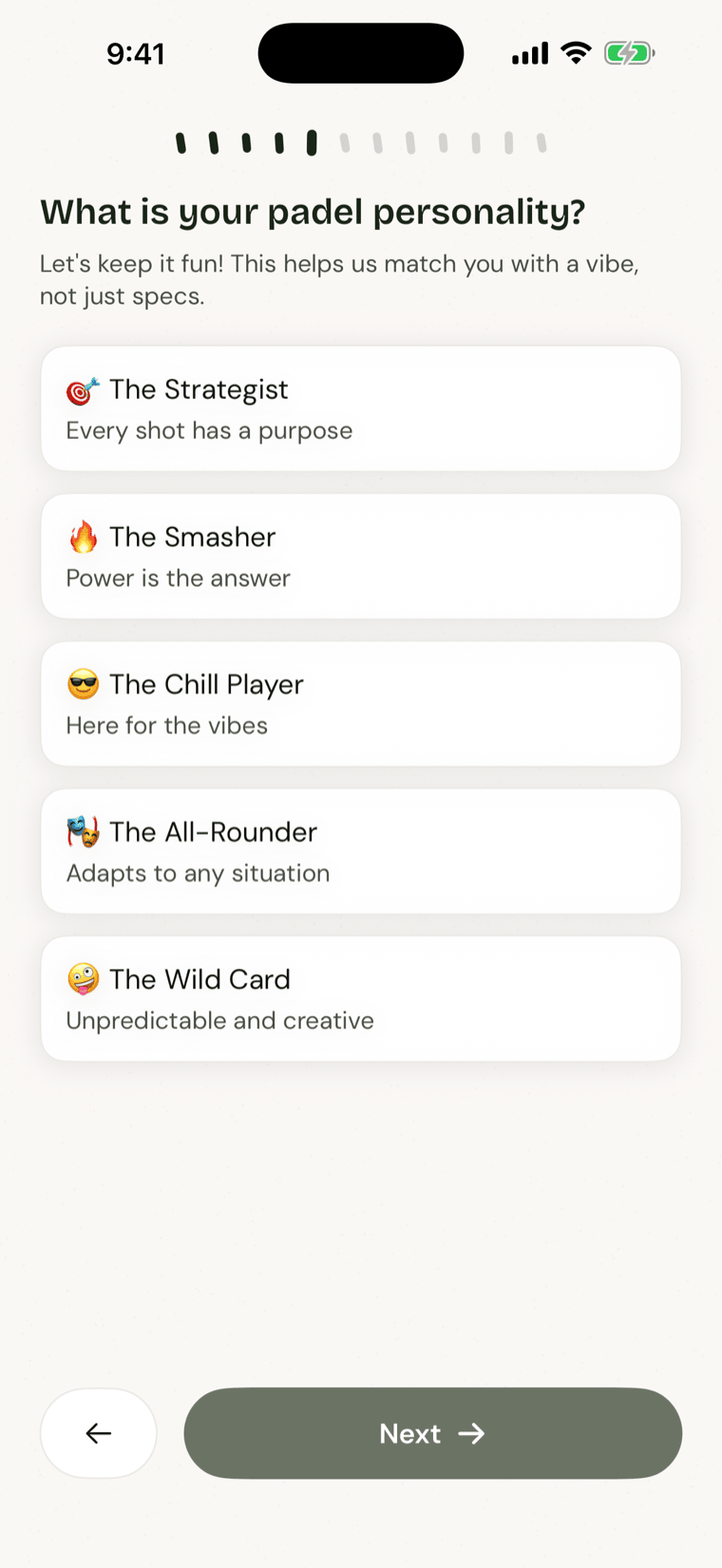
The app · free quiz
Not sure which one's you?
Take the free quiz in the app. We'll match a racket to your game, not the other way around.
Find my racketFree quiz. Sign in with email or Google to get your four picks.

Joma Valkiria Flex 2026 Review
By Andres Jovem · Updated October 3, 2026
A soft, head-light round built to spare your arm and reward placement, not power.
The verdict
The Joma Valkiria Flex 2026 is built for one job above all others: getting you through a long match without your arm paying the bill. It is a round, soft, head-light frame at 350 to 360g, and every choice in the build points at comfort and control rather than raw power. If your elbow or shoulder has started to complain, or you just want a forgiving racket that lets you place the ball instead of muscling it, this is a frame worth your attention. If you play to finish points with weight and pace, read the next section and then keep looking.
Joma pitches this one at players who are starting out in the sport. It comes from a brand better known for football boots than padel frames, and it puts its money into the build instead of a marketing budget, which is why it lands around ninety euros. That price and its arm-friendly construction are the whole pitch. It will not out-hit a stiff diamond, and it does not pretend to, so the player chasing a heavy smash is better served elsewhere and the one nursing a sore elbow has come to the right place.
What you are buying is forgiveness, in two senses. The round head and flexing face forgive the mishits of a game still under construction, and the soft core forgives the arm that has been overworked. Neither of those is glamorous, and neither shows up in a highlight reel, but both are what keep a newer player on court week after week.
The build
A deep-flexing soft core
Joma builds the Valkiria Flex on a Flexo Black EVA foam, a soft core that compresses further under the ball than a firmer one would. That extra give matters most at the moment of contact, where the foam soaks up the shock before it can travel up the shaft into your elbow and shoulder. The trade is honest and simple: a core this soft returns the ball muted rather than fast, so you win points with placement, not pace. It is the single decision that defines how this racket plays and who it is for.
A fiberglass face that flexes with it
The hitting surface is fiberglass, a softer skin than carbon, and it bends along with the foam instead of resisting it. A face that flexes on contact widens the margin on an off-center hit, so a strike that lands slightly off the middle still goes roughly where you pointed it. That forgiveness is the reason a round frame like this suits a player who has not grooved a perfect swing yet. Carbon would give you a crisper, faster response, but it would also hand back more of the shock this frame is designed to swallow.
A round head on a low balance
The mold is round, which puts the sweet spot low and central where most players actually make contact. The balance sits low, so the weight rides toward the handle and the head stays quick and easy to move through a fast exchange. Underneath the give, a carbon fiber frame supplies the backbone that keeps the round head from twisting when you catch one off-center. Together they make a racket that feels light in the hand and steady on contact, a combination that suits defending and reacting far more than loading up a big swing.
How it plays
From the baseline
Sit behind a lob and it floats back deep off a short, unhurried swing, so you can reset a rally you were losing and buy time to get back into position. Digging a low ball out of trouble, the soft core cushions the hit so the reply clears the net rather than dumping into it. This is the end of the court where the frame feels most at home, doing the steady work so you can play the long game and wait for the ball you can actually attack.
At the net
The low balance keeps the head light, so in a fast hands exchange you can meet the ball out in front and steer a volley into the open court instead of arriving late. It rewards placement over punch: you guide the ball into the gap rather than trying to blast it through the pair in front of you. A hard, flat put-away is not what this racket does, and pretending otherwise would oversell it. What it gives you at the net is time and control, which for a newer player wins more points than power does.
On the attack
Line up a smash and the ball comes off controlled rather than heavy, so the overhead is a way to move opponents around more than a shot that ends the point outright. The soft face grips enough to shape a bandeja or a víbora when you brush across the ball, which keeps you in the rally and sets up the next shot rather than trying to win it in one swing. If your game is built on finishing from above, this frame will feel like it is holding you back, and it is honest enough that you should believe that before you buy.
Comfort and the arm
Two hours of blocks, lobs, and net scrambles leave your arm quiet, which is the entire reason this racket exists. The soft core and flexing face send far less shock back through the elbow and shoulder than a stiff carbon frame does, so a long session does not leave you aching the next morning or reaching for ice. The one thing to accept is feedback: strike the ball flush and the response comes back muffled rather than crisp, the tax a frame this cushioned charges for keeping your arm happy. For a player managing arm strain, that is a trade worth making every time.
Who it's for (and who should skip it)
Buy it if
- Your arm has started to complain after long matches and you want a frame that takes the sting out of contact.
- You are new to padel or early in it and want to win with placement and steady defense rather than power.
- You want a light, forgiving round that is easy on the wallet and easy on the elbow.
Look elsewhere if
- You finish points with weight and pace, because a soft, head-light frame gives the ball back muted and will feel like it is muting you too.
- You want sharp, crisp feedback on every strike, since this core trades that away for comfort.
- You are a strong, aggressive player chasing a flat, heavy smash, because a firmer diamond will serve that game far better.
Not sure it's your match? The free 2-minute quiz reads your level, style, and budget and tells you which racket is.
The bottom line
So the Valkiria Flex is the easy call for a comfort-first, control-minded player on a modest budget, and a poor one for anyone chasing power. If your arm needs a break more than your game needs pace, this frame is your match. If you want the smash to do the finishing, look at a firmer diamond instead. Not sure which side you fall on? The free 2-minute quiz reads your level, style, and budget and tells you the racket that fits.
Where to buy
Prices shown in Euro, converted and approximate. You check out in the store's own currency.
Frequently asked
Yes, and Joma says so itself: it pitches the Valkiria Flex at players who are starting out in the sport. It is a round, soft frame at 350 to 360g that forgives off-center hits and stays easy on the arm, so a newer player can learn the game without fighting the racket or feeling every mishit.
It is a control racket, plainly. The soft Flexo Black EVA core and fiberglass face return the ball muted rather than fast, so you win points by placing the ball into gaps instead of hitting through opponents. A player who wants a flat, heavy smash should look at a firmer diamond frame instead.
The Joma Valkiria Flex costs around €90.00, which is low for a frame with this much arm-friendly engineering. Joma keeps the price down by spending on the build rather than big-name marketing, so you get a comfort-focused round without the premium markup.
The Valkiria Flex pairs a soft Flexo Black EVA core with a fiberglass hitting surface, over a carbon fiber frame. The soft foam compresses deeply to absorb shock before it reaches your elbow, the fiberglass skin flexes with it for a wider margin on mishits, and the carbon frame keeps the round head from twisting.
A sore arm is exactly who this frame is for. Its soft core and flexing fiberglass face soak up the shock at contact, so far less vibration travels into the elbow and shoulder than a stiff carbon racket sends back. No racket cures an injury, but this is among the kindest frames we stock for a player managing arm strain.
The app · free quiz
Not sure which one's you?
Take the free quiz in the app. We'll match a racket to your game, not the other way around.
Find my racketFree quiz. Sign in with email or Google to get your four picks.