Starvie
Best overall value
Control
Power
Low balance
from€75
In stockBuying guide · Budget
By Andres Jovem · Updated October 12, 2026
Ask any padel group chat how much to spend on a racket and you'll start a small war. Here is the calm answer: from €58 to €110, every racket on this page is a real one, from a real brand, in stock at shops we checked as we wrote. The budget bracket is not where padel hides its junk. It's where most players' padel starts.
What a sensible price buys is a fiberglass face over a soft EVA core, and that combination is an advantage rather than a compromise: flexible faces and soft foams forgive off-center hits and go easy on elbows, which is what most people reading this need most. What separates the ten picks is everything else. Six rounds, three teardrops, and one diamond. Weights from 340g to 367g. Badges from Spanish specialist factories to the biggest names in racket sports, and several carbon frames hiding at prices where carbon has no business being.
These picks suit budget-minded buyers of any level in general; your weight, your style, and how often you play move the answer, and the free quiz's 12 questions find the specific one that's yours. What follows is ranked by value: what each racket gives back for what it asks, prices checked live as we published.
The top 10 at a glance. Swipe through, or read the full breakdown below ↓
Budget
That range covers everything on this list and everything a developing game can use. Above it you start paying for carbon faces and stiffness tuned to fast, grooved swings, and the returns thin out quickly for anyone still building technique. Put the surplus into court time, which improves you faster than any face material.
At this price the face is fiberglass, and take it gladly. Fiberglass flexes on contact, so an off-center hit still crosses the net and the shock never travels up your arm. A carbon face costs more, replies faster, and demands a swing that can handle the reply. Most players at this level get more from the forgiving face than the fast one.
Six of these ten are round on purpose: the shape parks the sweet spot in the middle of the face, right where developing contact lands. Pick a teardrop if you want a little more push at the net, and a diamond only if you already know you're an attacker. The shape should follow your game, not your ambitions for it.
The honest difference between the cheapest and dearest picks here is mostly the skeleton. A carbon frame holds the head steady when contact wanders or pace rises; a fiberglass frame flexes and costs less. If you plan to improve on this racket rather than replace it, the carbon frame is the upgrade that shows up first.
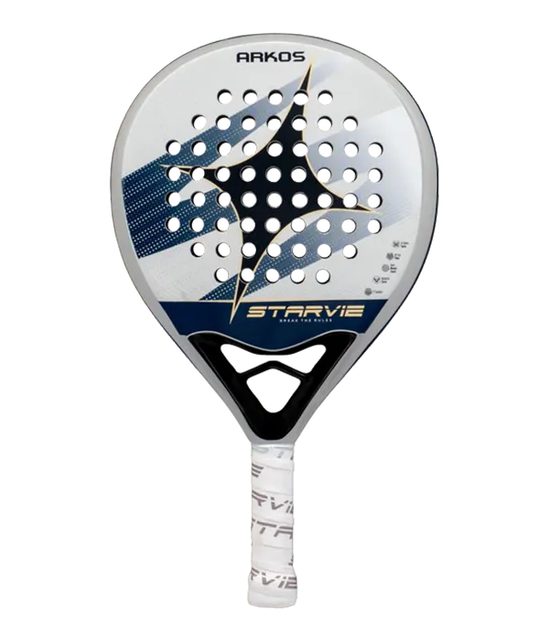
The most-asked question in padel has a short answer, and it costs €75. The Starvie Arkos is our Top Pick because it bundles the features budget rackets usually drop first: a carbon frame, a spin-ready rough face, and Starvie's own Spanish factory behind it, at a price where most brands ship plain fiberglass boxes.
The recipe starts with Starvie's S-EVA Flex core, a soft foam that gives under the ball, so mishits stay in play and your arm stays comfortable deep into a session. Over it sits an X Glass Tech face with a rough finish, and the texture earns its place: brushed shots grip the ball for spin that most starter frames can't produce. A carbon fiber frame holds the round head firm on off-center contact, the component cheaper rivals cut first.
In the hand it feels quicker than its size suggests, because the mass sits low, near your palm. Volleys come around on time at the net and land central, and a body shot doesn't turn the frame in your grip. Defending, blocks and lobs travel deep off an easy swing, and a brushed overhead holds its bite instead of sitting up. You supply the finishing pace and the racket supplies the margin, which is the right division of labor at this stage.

The smallest outlay on this list is €59, and the X Zero Red spends every cent of it well. Nox built its reputation on affordable frames that behave like proper ones, and this is that reputation at its entry price, a round, soft starter with no gimmicks attached and none needed.
Inside is Nox's HR3 White EVA core, a medium-soft foam that cushions each strike, so an off-center hit still clears the net and your elbow stays out of the conversation. The 3K fiberglass face bends with the ball for a gentle, predictable reply, and a carbon fiber frame keeps the round head from twisting when contact wanders, a structural nicety at this money.
Quick exchanges are where it overdelivers. The head sits light in your hand, so reaction volleys arrive on schedule and put-aways run on angles rather than force. From the baseline, lobs and blocks carry with margin, the kind of dependable depth that keeps a rally alive while your technique catches up. Pace tops out early, and that is the honest deal: this money buys consistency, and here it buys plenty.
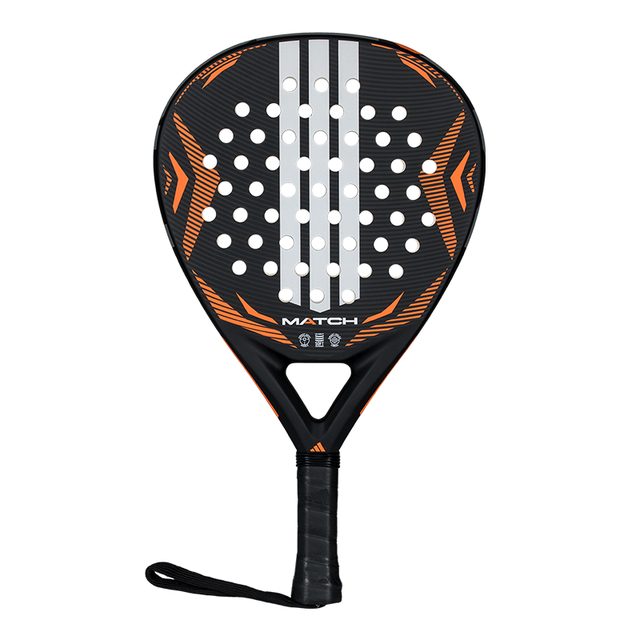
Not everyone is building toward league nights, and this racket knows it. The Adidas Match Black/Orange is the relaxed all-rounder of the list, a teardrop for the player whose padel is Saturday doubles and a laugh afterwards, priced at €58 so the hobby stays comfortably a hobby.
Adidas fits its EVA Soft Performance core, the same cushioning foam it uses well up its range, so contact stays gentle across a long social session. The fiberglass face flexes with the ball for an easy, readable response, and here the frame is fiberglass too: a cost decision that keeps the price down and happens to keep the whole racket forgiving.
It plays friendly at both ends of the court. The teardrop gives a volley a little extra push, so put-aways ask less of your shoulder, while blocks from the back come off soft and land safe. Overheads clear the glass rather than threaten anyone, which is all its crowd asks of it. Feed it serious pace and the all-soft build starts to blur, the fair limit of a frame this agreeable.
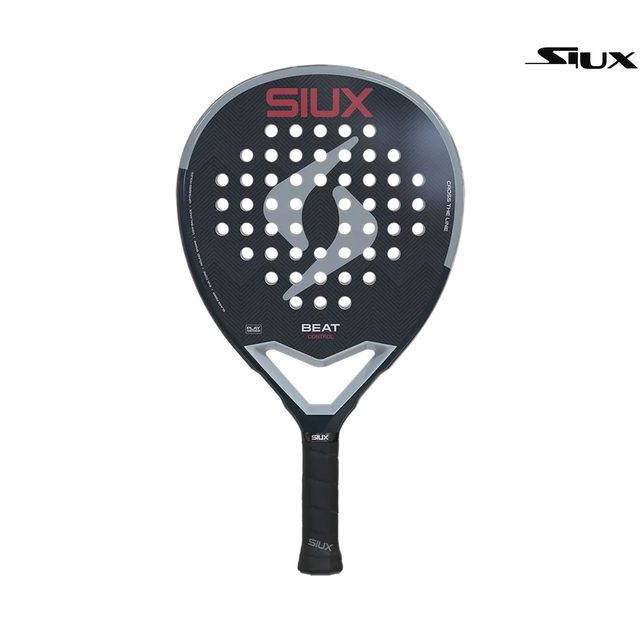
Your first racket is wearing out, but your game still needs the margin it gave you. The Beat Control 3 keeps that margin: a soft, low-balanced round that Siux rates for beginners, the forgiving end of a range that runs up to its pro frames.
Inside is a soft EVA core behind 3K fiberglass faces. That pairing slows the ball down on contact, so a mistimed swing sends it back over the net instead of into the glass, and very little of the hit reaches your arm.
With the weight kept near the grip, the head is quick when a ball comes at your body at the net. From the back, a short swing lifts a lob deep, which is most of what an early rally asks of you. It will not hit hard for you; it keeps you in the point while your technique catches up.

Budget shopping and a grumpy arm usually pull in opposite directions, and this is the frame that resolves them. The Joma Valkiria Flex is the comfort specialist of the list at €75, a beginner-friendly round from a brand that spends its money on the build instead of the billboard.
Flex is in the name because it's in the core. Joma's Flexo Black EVA compresses further than a standard soft foam, absorbing the hit at the face so little of it ever reaches your elbow or shoulder. A fiberglass skin bends along with it, and the carbon fiber frame underneath supplies the backbone, so all that give still sends the ball where you aimed it.
Sessions end differently with this racket. Two hours of blocks, lobs, and net scrambles leave your arm unremarkable, which is the whole review in one sentence. In play it favors the patient: resets drop deep from the baseline, volleys steer into gaps rather than through opponents, and your hands stay on schedule in fast exchanges. Strike one flush and the reply comes back muted, the one trade this much cushioning asks.
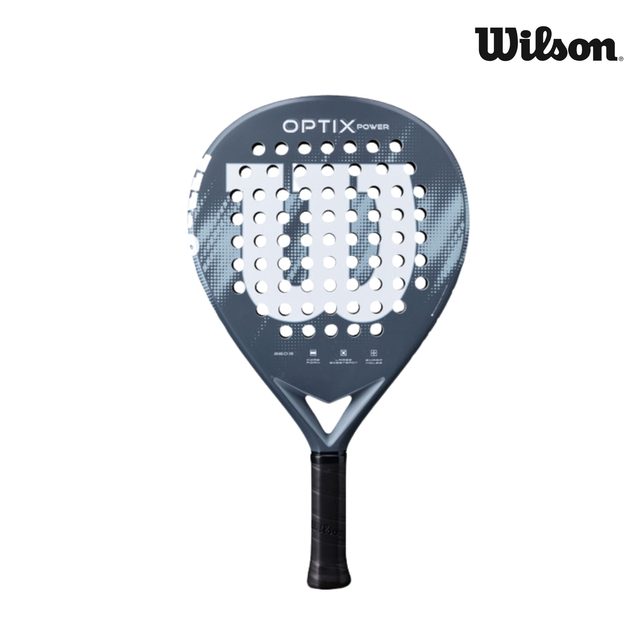
Every other racket here promises forgiveness first; this one leans toward the smash. The Wilson Optix V2 Power Blue is the attacking teardrop on the list, the pick for the player who already knows they like to finish points, at €110.
Wilson builds it with a fiberglass weave face over its Core Foam, in a carbon-reinforced frame, and rates it for intermediate players. A teardrop sits between a round's forgiveness and a diamond's power, so the overhead gets more help than the rounds here give it while the head stays manageable on defense.
Overheads are where it pays you back: a bandeja or a flat smash leaves with more push than the soft rounds can give. The fiberglass face keeps contact forgiving, so a mistimed volley still goes over. Defending from the back asks a little more care than a round does, and the extra pace is real but not dramatic; it's a first step toward attacking frames, not a diamond.
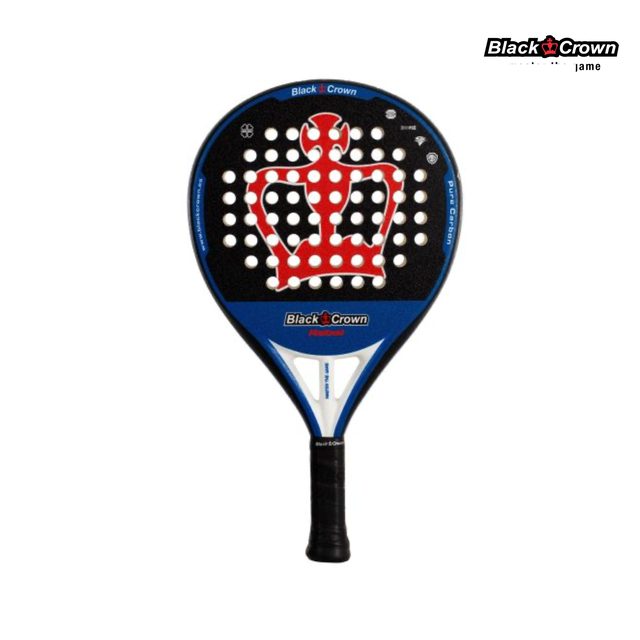
Most budget rackets are built to be outgrown. The Rebel is built to be kept for a second season: a round head and a soft core you can learn on, with a build that keeps rewarding you as your swing gets longer. Black Crown sells it for beginners and intermediates, and for once that is not a hedge.
The core is SSM White EVA, the soft compound Black Crown uses across its comfort line, wrapped in Fiberflex fiberglass planes and a tubular frame for durability. The face carries a Sandspin finish, a fine grit that grips the ball for slice and lift without a rough carbon bite.
Up at the net the Rebel is calm and easy to place; the soft core takes the sting out of fast volleys and the round head keeps the sweet spot wide. From the baseline, blocks come off soft and deep, and the grit helps a slice lob stay low. Push it hard and you will find the ceiling, but that ceiling is a season away.
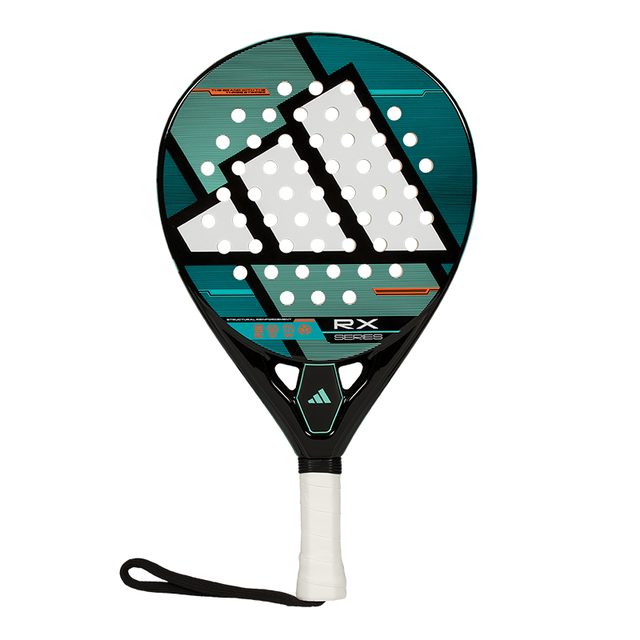
Spend near the top of this bracket and this is what it buys. The Adidas RX Series is a legitimate second racket rather than a first, the pick at €96 for the intermediate whose starter round has begun to feel small, bringing teardrop reach with a carbon spine to a list of mostly softer machinery.
Adidas keeps the EVA Soft Performance core from its comfort lines, so the step up in shape never arrives as a step up in harshness, and skins it in fiberglass for a flexible, readable strike. The difference maker is the carbon fiber frame: it holds the teardrop stable through a committed swing, which is where all-fiberglass builds at this money start to fold.
You feel the shape in the mid-court. Volleys carry more purpose than a round's, the bandeja travels with weight behind it, and an attacking second ball starts to threaten. Defense keeps its manners, the soft core putting margin under blocks and lobs when you're stretched, though the forward-of-center balance asks quicker preparation than the rounds elsewhere on this list. For a developing all-court game with a firm ceiling on spending, this is where the money lands best.

Light rackets are usually where budget lists compromise, because shaving grams costs manufacturers money. The Radical Team Light is the exception you're paying for: a 340g frame from a major racket brand at €100, and the easiest swing on this page by a clear margin. Smaller players, teenagers, and anyone whose forearm fades in a third set, start here.
Head fills it with a Control FOAM core rather than EVA, a foam filling that gives the frame a cushioned middle no matter how little it weighs, and faces it in fiberglass that flexes on contact and keeps the sweet spot wide and central.
Everything about it happens early. You meet the ball out in front at the net because the head gets there while heavier frames are still turning, and a late lob you'd concede with anything fuller stays reachable. From the back, resets cost so little effort that long defensive games stop being tiring. What the low mass can't do is muscle: a heavy incoming ball pushes it around, and finishing pace is yours to provide. For the player it fits, no racket here is easier to love.
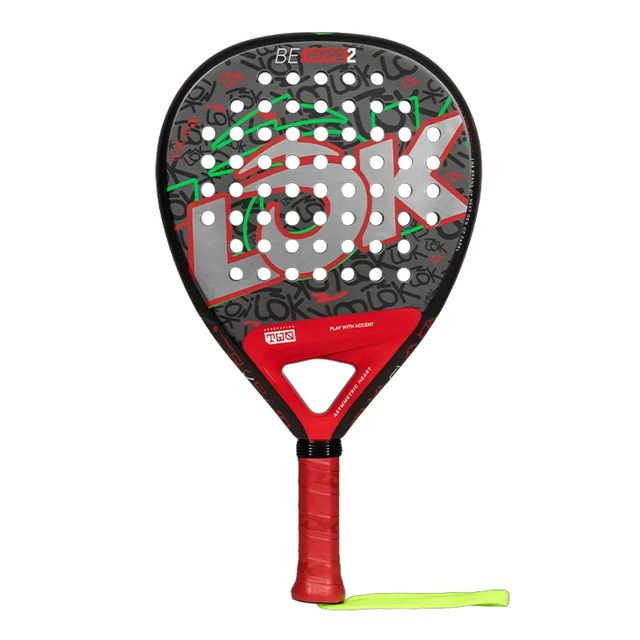
Most budget lists keep beginners away from diamonds; this pick is the exception that makes sense. Lok, a young direct-to-player brand, builds the Be Hype Gen 2 as a diamond with the danger taken out: attacking shape, soft response, starter price.
The build explains the price and the manners at once. A soft EVA rubber core absorbs the strike instead of firing it back, so mishits, which is most attacking shots at this level, stay in play, and the fiberglass face and frame flex with the ball rather than punishing it. There is no dense carbon here, which is why it costs €66, and why your arm will forgive a season of learning overheads on it.
It teaches the finishing game gently. The head-forward shape puts real weight behind a smash without demanding a perfect strike, lobs and blocks stay soft and manageable from the back, and dragged wide you can still push a recovery ball with the flexible bed. The honest limits: a firm-cored diamond will out-hit it once your overhead matures, and fiberglass wears sooner than carbon. As the first racket you attack with, rather than the last, it is a smart spend.
Here's the short version. Least to spend: the Adidas Match Black/Orange or the Nox X Zero Red, both around €59. Forgiveness for a second season: the Siux Beat Control 3. A power game to feed: the Wilson Optix V2 Power. Already intermediate: the Adidas RX Series. Everyone else starts with the Starvie Arkos, our Top Pick, and keeps the change. And if ten options are still nine too many, the free quiz asks 12 questions and hands you the one that's yours.
Between €58 and €110 buys every racket on this list, and for most club players that range is enough. Beginners land well between €58 and €75 with frames like the Adidas Match, Nox X Zero Red, or Starvie Arkos; improving players top out near €96 with the Adidas RX Series. Past that ceiling you're paying for advanced-swing tech, not better padel.
Good budget rackets are real rackets: fiberglass faces, soft EVA cores, and in several cases carbon frames, often from the same factories that build the premium lines. What you give up is top-end stiffness and spin tech tuned for advanced swings, which most developing players don't miss. Every pick here was in stock when we published.
Materials, mostly. Premium rackets buy carbon faces, firmer cores, and rough spin surfaces that reward a fast, grooved swing; budget rackets use fiberglass and soft EVA, which flex more and forgive more. For a developing player the budget build is often the better tool, not the lesser one. The gap matters at advanced level, and barely before.
For a beginner, the Starvie Arkos is the strongest budget buy: a soft, forgiving round with a carbon frame and a spin-friendly rough face for €75. The Nox X Zero Red does the same forgiving job for €59 with fewer refinements, and the Siux Beat Control 3 at €90 is the forgiving round to move up to when your first racket wears out.
Comfortably. The Adidas RX Series at €96 is built for improving players, and the Joma Valkiria Flex at €75 gives a beginner a carbon frame and a soft core, both at under half of what the premium tier asks. A budget frame limits an advanced attacker long before it limits anyone else.
Neither wins by default: match the weight to your build. Smaller or lighter players and anyone with a tired arm should look near 340-350g, like the Head Radical Team Light; stronger players get useful stability from 360-367g frames like the Starvie Arkos. If you're unsure, the free app quiz matches weight, shape, and budget to your game in two minutes.
Our catalog of 800+ rackets is the starting pool. From it we select the frames that outperform their price, verify every price and stock status live at our approved shops before publishing, and re-check them on every update. Nobody pays for placement, and there are no invented test scores: specs come from the catalog and retailer listings, and the free two-minute quiz matches the same data to your game.
The app · free quiz
Take the free quiz in the app. We'll match a racket to your game, not the other way around.
Find my racketFree quiz. Sign in with email or Google to get your four picks.