Adidas Match Black/Orange 2026 Review
By Andres Jovem · Updated October 5, 2026
A soft, forgiving teardrop for the weekend beginner who wants an easy racket to learn on, not a weapon to grow into.
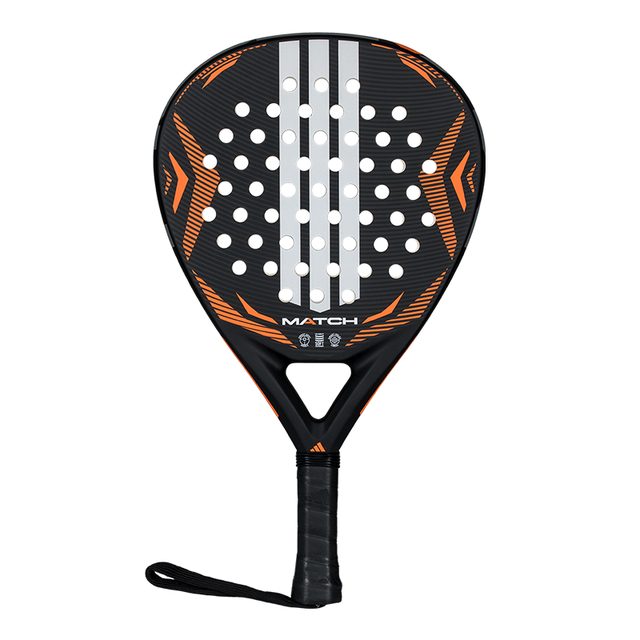
The verdict
The Adidas Match Black/Orange is a first-season racket built to keep a new player comfortable, not to add power. The soft EVA Soft Performance core and fiberglass build point it at one job: your first months on court, learning to rally without your arm complaining. At 367g it plants itself steadily, and the give in the core means a mishit still travels somewhere useful. This is a racket for the player who plays twice a week for fun and wants the game to feel welcoming from the first swing.
It is not a racket to grow old with. There is a ceiling here, and a stronger hitter will find it fast, because the soft face hands you comfort in place of pop. Buy it to enjoy the learning curve, not to win the club ladder. If you already swing hard and want the ball to jump off the strings, this soft frame will feel like a brake.
The build
A soft core that cushions the hit
The Match is engineered to take the shock out of a beginner's contact, and the EVA Soft Performance core is where that starts. The foam sinks under the ball and hands it back gently, so the jolt a stiff frame fires up your forearm never really arrives. That cushion is the whole point of a starter frame: it lets you find the ball with a relaxed swing and keeps a long Sunday session from leaving your arm tender. The cost is push. A soft core stores less of your swing speed and returns it slower, so the ball leaves under control rather than in a hurry, and you supply the pace with timing you are still building.
A smooth fiberglass face, comfort over bite
The hitting layer is fiberglass, and it flexes where a carbon face would stay rigid. That flex widens the margin on an off-center strike and softens contact further, which is why fiberglass is the standard beginner surface and carbon is not. The finish is smooth rather than gritty, so the face passes under the ball instead of grabbing it. Do not expect the surface to carry heavy spin for you; a brushed shot leaves with light rotation at best. What you get back is a forgiving hitting zone, and at this stage that is worth more than rip.
A fiberglass frame in a teardrop mold
The frame is fiberglass too, and paired with the medium balance it keeps the head from feeling top-heavy in your hand. The teardrop mold puts the sweet spot a touch higher than a round frame would, so there is a hint of reach toward the tip for an overhead. The outline usually signals attack, but do not read it as a promise of power here. With soft foam and a flexing face behind it, this mold plays like a comfortable all-rounder rather than the diamond-leaning finisher the shape hints at. The 367g mass sits evenly and steadies the frame when you catch one late.
How it plays
From the baseline, it keeps you in the rally
The back of the court is where this racket makes sense: it floats a lob back deep off a short swing while you learn where the ball lands. Sit behind that lob and it lifts long and easy off an unhurried motion, doing the work your technique cannot yet. Reset a hard drive and the pace melts away, so the block drops in front of you instead of sailing long. You are not going to blow anyone off the court from here. You are going to stay in points, and for a beginner that is the skill that matters first.
At the net, quick enough to react
The even balance keeps the head light in the hand, so when a ball jumps at your hip you can get the face to it in time. Punch a volley and it goes where you point it, though it lands as a considered placement, not a point-ender, so your opponent gets another ball to deal with. The forgiveness carries here: catch the volley slightly off the middle and it still clears the net and lands in, where a stiffer frame would spit it wide. What the net will not give you is a put-away that ends the rally outright. You place the volley and play the next one.
On the smash, expect placement not a bomb
Line up an overhead and the ball leaves clean but polite. Contact feels muffled and soft in the hand, easy on your shoulder and quiet even when you catch it off-center, and the ball floats down at a manageable speed rather than crashing. This is a smash you aim into a gap, not one you drive through the court. There is no grip on the ball for a kicking, dipping overhead either, so the shot stays flat and readable. Treat the smash as a placement shot and the racket rewards you; try to crush it and you will feel the ceiling.
Comfort and the arm
This is the friendliest note in the review. Contact lands muted and cushioned, so a new player can hit for an hour without the ache that a stiff carbon frame breeds in the wrist and elbow. If your arm is the reason you are shopping, this build is on your side. The honest flip is that the same softness is what you will outgrow: once your swing sharpens, the comfort that protected you starts to read as a lack of response, and you will want a frame that answers back.
Who it's for (and who should skip it)
Buy it if
- You are new to padel and want a comfortable, forgiving racket to learn the game on.
- You play casually, a couple of times a week for fun, and value your arm feeling fresh afterward.
- Your budget is modest and you would rather keep your first outlay small while you find out how much you love the sport.
Look elsewhere if
- You already generate your own pace and want a frame that hits through the court, since the soft core will feel like it holds you back.
- You want spin off the face, since the smooth fiberglass surface passes under the ball rather than gripping it.
- You are an improving player looking for a racket to grow into for years, not one you will outpace in a season.
Not sure it's your match? The free 2-minute quiz reads your level, style, and budget and tells you which racket is.
The bottom line
The Adidas Match Black/Orange is the racket you buy to fall in love with padel, not to win it. It forgives your mishits, spares your arm, and keeps you in the rally while your swing catches up, then hands the game over once you have outgrown it. If that is the season you are in, it is an honest, easy first frame. If you are past it and hunting for pace or spin, take the free quiz and let it point you at the racket that fits the game you have now.
Where to buy
Prices shown in Euro, converted and approximate. You check out in the store's own currency.
Frequently asked
Yes, this is squarely a beginner racket. The Match pairs a soft EVA Soft Performance core with a flexing fiberglass face, so it forgives off-center hits and stays kind to your arm while you learn. At a steady 367g it plants itself rather than twisting on a mishit. It is one of the easiest frames to start on, as long as you accept you may outgrow it in a season or two.
The Match sits firmly on the control and comfort side. Its soft core and fiberglass face return the ball gently, so you win points by placing it rather than blasting it. Raw pace is not what this frame is built to deliver, and a stronger hitter will run into that ceiling quickly. If power off the strings is your priority, look elsewhere.
Among the current rackets we track, the Adidas Match is one of the more affordable, which suits its job as an easygoing starter frame. Prices move with stock and the shop, so check the live comparison below for the lowest in-stock price today. It is priced like the hobby racket it is, not a tour stick.
The Match is built on an EVA Soft Performance core with a smooth fiberglass hitting face and a fiberglass frame. That soft foam cushions contact to protect your arm, while the flexing fiberglass widens the forgiving zone on a mishit. The smooth surface trades spin grip for comfort, so it holds light rotation rather than heavy, and control comes ahead of power.
Go with the fiberglass Match if comfort and forgiveness are your priority, and a carbon frame if you want more response and a longer runway to grow into. Fiberglass flexes and cushions, which is easier on a new arm; carbon plays stiffer and firmer, rewarding a swing you have not built yet. For a true first racket, the softer fiberglass route usually wins. Not sure it is your match? The free 2-minute quiz reads your level, style, and budget and tells you.
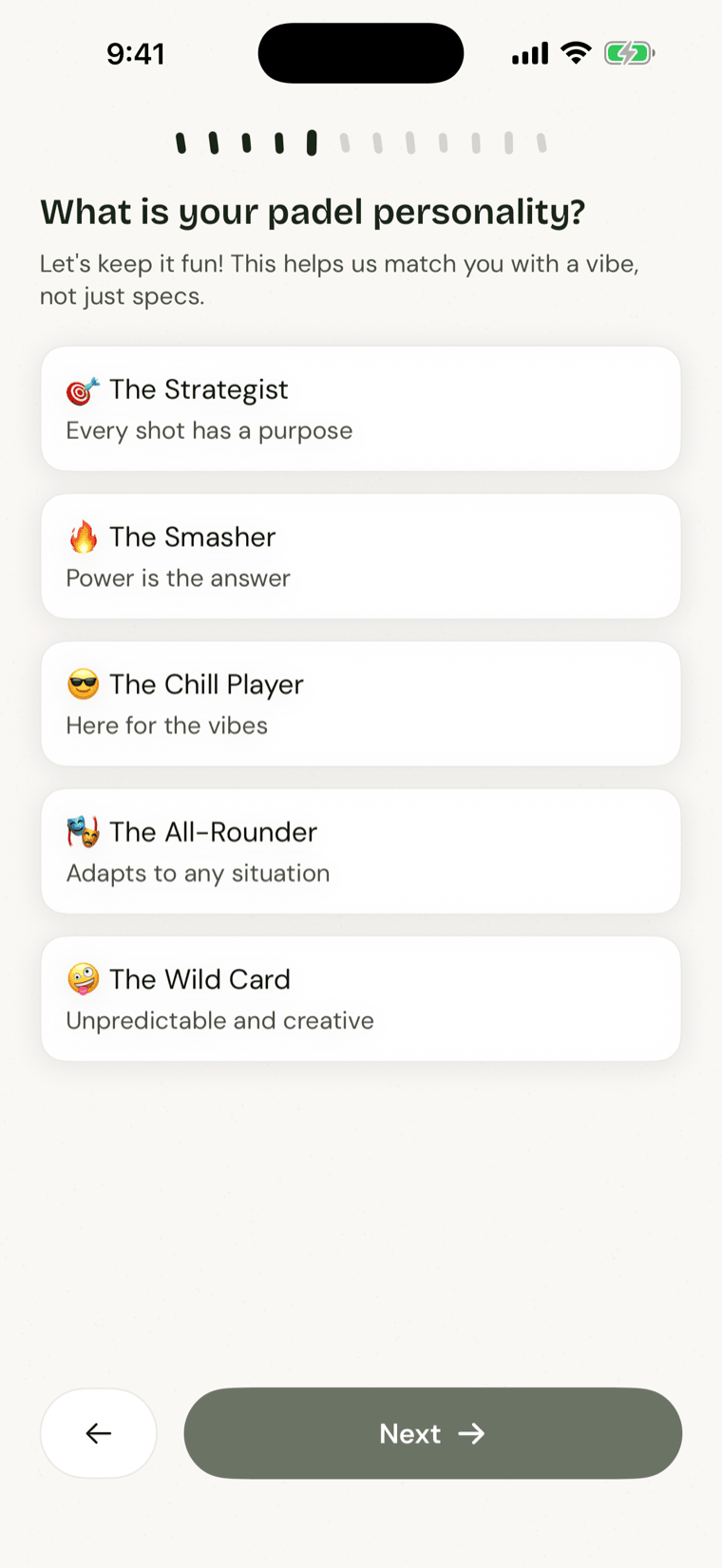
The app · free quiz
Not sure which one's you?
Take the free quiz in the app. We'll match a racket to your game, not the other way around.
Find my racketFree quiz. Sign in with email or Google to get your four picks.

Adidas Match Black/Orange 2026 Review
By Andres Jovem · Updated October 5, 2026
A soft, forgiving teardrop for the weekend beginner who wants an easy racket to learn on, not a weapon to grow into.
The verdict
The Adidas Match Black/Orange is a first-season racket built to keep a new player comfortable, not to add power. The soft EVA Soft Performance core and fiberglass build point it at one job: your first months on court, learning to rally without your arm complaining. At 367g it plants itself steadily, and the give in the core means a mishit still travels somewhere useful. This is a racket for the player who plays twice a week for fun and wants the game to feel welcoming from the first swing.
It is not a racket to grow old with. There is a ceiling here, and a stronger hitter will find it fast, because the soft face hands you comfort in place of pop. Buy it to enjoy the learning curve, not to win the club ladder. If you already swing hard and want the ball to jump off the strings, this soft frame will feel like a brake.
The build
A soft core that cushions the hit
The Match is engineered to take the shock out of a beginner's contact, and the EVA Soft Performance core is where that starts. The foam sinks under the ball and hands it back gently, so the jolt a stiff frame fires up your forearm never really arrives. That cushion is the whole point of a starter frame: it lets you find the ball with a relaxed swing and keeps a long Sunday session from leaving your arm tender. The cost is push. A soft core stores less of your swing speed and returns it slower, so the ball leaves under control rather than in a hurry, and you supply the pace with timing you are still building.
A smooth fiberglass face, comfort over bite
The hitting layer is fiberglass, and it flexes where a carbon face would stay rigid. That flex widens the margin on an off-center strike and softens contact further, which is why fiberglass is the standard beginner surface and carbon is not. The finish is smooth rather than gritty, so the face passes under the ball instead of grabbing it. Do not expect the surface to carry heavy spin for you; a brushed shot leaves with light rotation at best. What you get back is a forgiving hitting zone, and at this stage that is worth more than rip.
A fiberglass frame in a teardrop mold
The frame is fiberglass too, and paired with the medium balance it keeps the head from feeling top-heavy in your hand. The teardrop mold puts the sweet spot a touch higher than a round frame would, so there is a hint of reach toward the tip for an overhead. The outline usually signals attack, but do not read it as a promise of power here. With soft foam and a flexing face behind it, this mold plays like a comfortable all-rounder rather than the diamond-leaning finisher the shape hints at. The 367g mass sits evenly and steadies the frame when you catch one late.
How it plays
From the baseline, it keeps you in the rally
The back of the court is where this racket makes sense: it floats a lob back deep off a short swing while you learn where the ball lands. Sit behind that lob and it lifts long and easy off an unhurried motion, doing the work your technique cannot yet. Reset a hard drive and the pace melts away, so the block drops in front of you instead of sailing long. You are not going to blow anyone off the court from here. You are going to stay in points, and for a beginner that is the skill that matters first.
At the net, quick enough to react
The even balance keeps the head light in the hand, so when a ball jumps at your hip you can get the face to it in time. Punch a volley and it goes where you point it, though it lands as a considered placement, not a point-ender, so your opponent gets another ball to deal with. The forgiveness carries here: catch the volley slightly off the middle and it still clears the net and lands in, where a stiffer frame would spit it wide. What the net will not give you is a put-away that ends the rally outright. You place the volley and play the next one.
On the smash, expect placement not a bomb
Line up an overhead and the ball leaves clean but polite. Contact feels muffled and soft in the hand, easy on your shoulder and quiet even when you catch it off-center, and the ball floats down at a manageable speed rather than crashing. This is a smash you aim into a gap, not one you drive through the court. There is no grip on the ball for a kicking, dipping overhead either, so the shot stays flat and readable. Treat the smash as a placement shot and the racket rewards you; try to crush it and you will feel the ceiling.
Comfort and the arm
This is the friendliest note in the review. Contact lands muted and cushioned, so a new player can hit for an hour without the ache that a stiff carbon frame breeds in the wrist and elbow. If your arm is the reason you are shopping, this build is on your side. The honest flip is that the same softness is what you will outgrow: once your swing sharpens, the comfort that protected you starts to read as a lack of response, and you will want a frame that answers back.
Who it's for (and who should skip it)
Buy it if
- You are new to padel and want a comfortable, forgiving racket to learn the game on.
- You play casually, a couple of times a week for fun, and value your arm feeling fresh afterward.
- Your budget is modest and you would rather keep your first outlay small while you find out how much you love the sport.
Look elsewhere if
- You already generate your own pace and want a frame that hits through the court, since the soft core will feel like it holds you back.
- You want spin off the face, since the smooth fiberglass surface passes under the ball rather than gripping it.
- You are an improving player looking for a racket to grow into for years, not one you will outpace in a season.
Not sure it's your match? The free 2-minute quiz reads your level, style, and budget and tells you which racket is.
The bottom line
The Adidas Match Black/Orange is the racket you buy to fall in love with padel, not to win it. It forgives your mishits, spares your arm, and keeps you in the rally while your swing catches up, then hands the game over once you have outgrown it. If that is the season you are in, it is an honest, easy first frame. If you are past it and hunting for pace or spin, take the free quiz and let it point you at the racket that fits the game you have now.
Where to buy
Prices shown in Euro, converted and approximate. You check out in the store's own currency.
Frequently asked
Yes, this is squarely a beginner racket. The Match pairs a soft EVA Soft Performance core with a flexing fiberglass face, so it forgives off-center hits and stays kind to your arm while you learn. At a steady 367g it plants itself rather than twisting on a mishit. It is one of the easiest frames to start on, as long as you accept you may outgrow it in a season or two.
The Match sits firmly on the control and comfort side. Its soft core and fiberglass face return the ball gently, so you win points by placing it rather than blasting it. Raw pace is not what this frame is built to deliver, and a stronger hitter will run into that ceiling quickly. If power off the strings is your priority, look elsewhere.
Among the current rackets we track, the Adidas Match is one of the more affordable, which suits its job as an easygoing starter frame. Prices move with stock and the shop, so check the live comparison below for the lowest in-stock price today. It is priced like the hobby racket it is, not a tour stick.
The Match is built on an EVA Soft Performance core with a smooth fiberglass hitting face and a fiberglass frame. That soft foam cushions contact to protect your arm, while the flexing fiberglass widens the forgiving zone on a mishit. The smooth surface trades spin grip for comfort, so it holds light rotation rather than heavy, and control comes ahead of power.
Go with the fiberglass Match if comfort and forgiveness are your priority, and a carbon frame if you want more response and a longer runway to grow into. Fiberglass flexes and cushions, which is easier on a new arm; carbon plays stiffer and firmer, rewarding a swing you have not built yet. For a true first racket, the softer fiberglass route usually wins. Not sure it is your match? The free 2-minute quiz reads your level, style, and budget and tells you.
The app · free quiz
Not sure which one's you?
Take the free quiz in the app. We'll match a racket to your game, not the other way around.
Find my racketFree quiz. Sign in with email or Google to get your four picks.