Adidas Drive Black 2026 Review
By Andres Jovem · Updated October 19, 2026
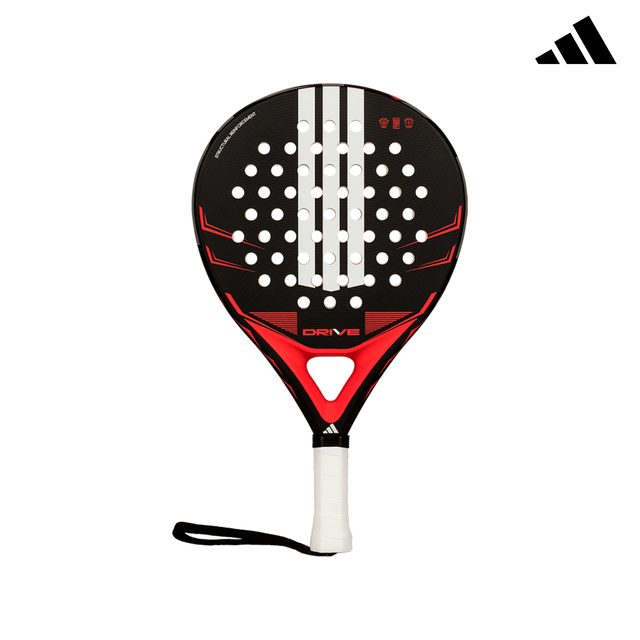
A round, soft, fiberglass first racket with a little more mass than its Drive Light twin, for the beginner who wants the head to sit still on contact instead of flicking.
The verdict
Two first rackets share a name in the adidas Drive line, and the Drive Black 2026 is the one that stays put. Same round head, same soft core, same fiberglass face as the Drive Light, with a few more grams in the frame. Those grams are the whole story: a hard ball meets weight instead of shoving the head off line, so your block comes back where you aimed it and not where the ball decided.
It is a control racket for beginners, and the label holds. Nothing here is built to end a point. It is built to keep you in one while your timing catches up, and to do that without your elbow filing a complaint the next day.
The trade is speed. A fuller frame takes longer to get round at the net, and a beginner with quick hands and a light swing may prefer the Drive Light. If you would sooner feel solid than quick, read on. If quick is the point, the Light is a few lines down in our beginners guide.
The build
A soft core that absorbs the hit
Inside is EVA Soft Performance, the soft foam adidas uses for comfort. Soft foam squashes under the ball and recovers slowly. That does two things for a newcomer. Contact lasts a touch longer, so a rushed swing still gets some lift. And most of the shock from a mishit is soaked up in the foam before it reaches your wrist. Comfort and good ball exit are the two things adidas promises from it, and for a soft core those are the right two.
A fiberglass face that bends before it bites
The hitting layer is fiberglass, smooth, with no grit. Fiberglass has more give than carbon, so a strike that lands a thumb's width off the middle gets rounded off instead of punished, and the ball leaves with less sting in your hand. The cost is spin. A smooth glass face does not grip a brushed ball the way a rough carbon skin does, so your bandeja will go where you swing it and not much further. adidas drills the face with its Smart Holes Lineal pattern, equidistant holes in groups of three, which it says reinforces the hitting surface.
A round head, even balance, and a frame built to stay stiff
The round mold centers the sweet spot on a 519 cm² face, right where a beginner's eye lands. adidas lists the balance as even and the weight at 360 to 375g. Slightly above the 355g we had it down as. You feel the difference as a head that does not get knocked off line. Around the rim runs Structural Reinforcement, a perimeter layup adidas says resists the torsion of an off-center hit, so the frame twists less in your hand. The frame is fiberglass by every account except adidas's own, which leaves the field blank.
How it plays
Blocking at the net, the head stays where you put it
This is the shot the extra mass was bought for. A fast volley into your body arrives and the frame does not flinch: the ball comes off square, lands short, and you are still standing in position. Lighter beginner frames get pushed back by the same ball, and the block floats up for the opponent to finish. The Drive Black turns that flinch into a reset. Try it on the first fast volley of a session: the ball dies short on your side of the net and the point is still yours to play.
The price of that steadiness is a slower first step
Reaction volleys take a touch longer to set up than with the Drive Light, because you are moving more racket. For most beginners that is invisible. For the quick-handed player who already reads the ball early and wants to punch, it will feel like the racket is a step behind your hands. Know which player you are before you choose between the two Drives.
From the back, the lob and the block take care of themselves
Defending deep, the soft core takes the pace off an opponent's drive, so a block comes back absorbed and lands inside the court instead of sailing long. Stretched wide, the central sweet spot and the foam's slow spring give a lob enough lift even when your feet are late. You will not hit anyone off the court from here, and you are not supposed to.
Attacking, you bring the power
Overhead, the Drive Black hands back what you put in. A smooth glass face and soft foam do not add pace or spin, so a bandeja is a placement shot and a smash is a firm push to the fence rather than a kill. That is correct for the first year. A beginner who smashes hard with a stiff racket learns to miss hard; this one teaches you to smash into the court first and add speed later.
Kind to the elbow, candid about the shoulder
A soft core under a face with some give means the jolt of a mishit mostly dies in the racket before it reaches the elbow. That is why this frame appears in our beginners list and not our power one. The one body part to watch is the shoulder: a 360 to 375g frame swung for two hours by someone new to the sport is a workout. If your shoulder tires before your legs do, the Drive Light is the same racket with less to carry.
Who it's for (and who should skip it)
Buy it if
- You are starting out and want a round, soft racket that stays still when a fast ball hits it
- You block and lob more than you attack, and you want a mishit to stay in the point
- You tried a very light frame and felt the head get shoved around at the net
Look elsewhere if
- Your hands are quick and you want the racket to keep up: the Drive Light is the same recipe with a faster swing
- Your swing already supplies the pace and you want spin or finishing power from the racket
- Your shoulder tires early in a session: pick the lighter twin and let the frame do less of the work
Not sure it's your match? The free 2-minute quiz reads your level, style, and budget and tells you which racket is.
The bottom line
If your shoulder has never swung a racket for two hours, buy the Light. If it has, the Black is the one that will not get pushed around.
Where to buy
Prices shown in Euro, converted and approximate. You check out in the store's own currency.
Frequently asked
Yes. The adidas Drive Black 2026 is a round, soft-cored, fiberglass-faced control racket built for beginners. An off-center hit stays in the point. The frame absorbs most of the shock. Its one beginner caveat is weight: adidas declares 360 to 375g, so it suits a newcomer who wants a steady head more than a quick one.
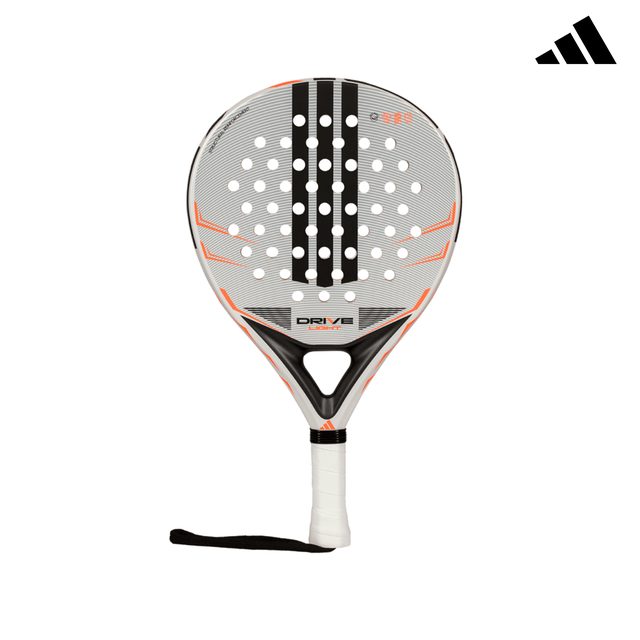
Weight and balance. Both put adidas's EVA Soft Performance core under a fiberglass face on a round head. The Drive Light is lighter, at 352g with a low balance in our review of it. The Drive Black is declared at 360 to 375g with an even balance. The Black holds its line better on a fast block, the Light moves faster at the net and is easier on a tired shoulder. Same racket, two temperaments.
From €63.95 at PadelPROShop for the adidas Drive Black 2026, with PadelMarket stocking it for more. That puts it among the lower-priced first rackets from a major brand.
The adidas Drive Black runs an EVA Soft Performance core, adidas's comfort foam, under a smooth fiberglass face. The face carries adidas's Smart Holes Lineal pattern, holes drilled in groups of three to reinforce the hitting surface, and the rim has a Structural Reinforcement layup to limit twisting on off-center hits.
Eventually, and that is fine: the Drive Black is a first-year racket. Once your swing supplies its own pace and you start wanting spin from the face, a smooth fiberglass racket has nothing left to give you, and a rough-faced teardrop is the next step. Until then it will keep teaching you to block, lob, and place the ball without hurting your arm.
Yes, on the elbow. The adidas Drive Black pairs its EVA Soft Performance core, a soft comfort foam, with a fiberglass face that flexes on contact. Most of a mishit's shock dies in the racket before it reaches the joint. The part of the arm to watch is the shoulder. At a declared 360 to 375g it is the heavier of the two Drives. A newcomer swinging it for two hours will feel the weight before the elbow feels anything.
The app · free quiz
Not sure which one's you?
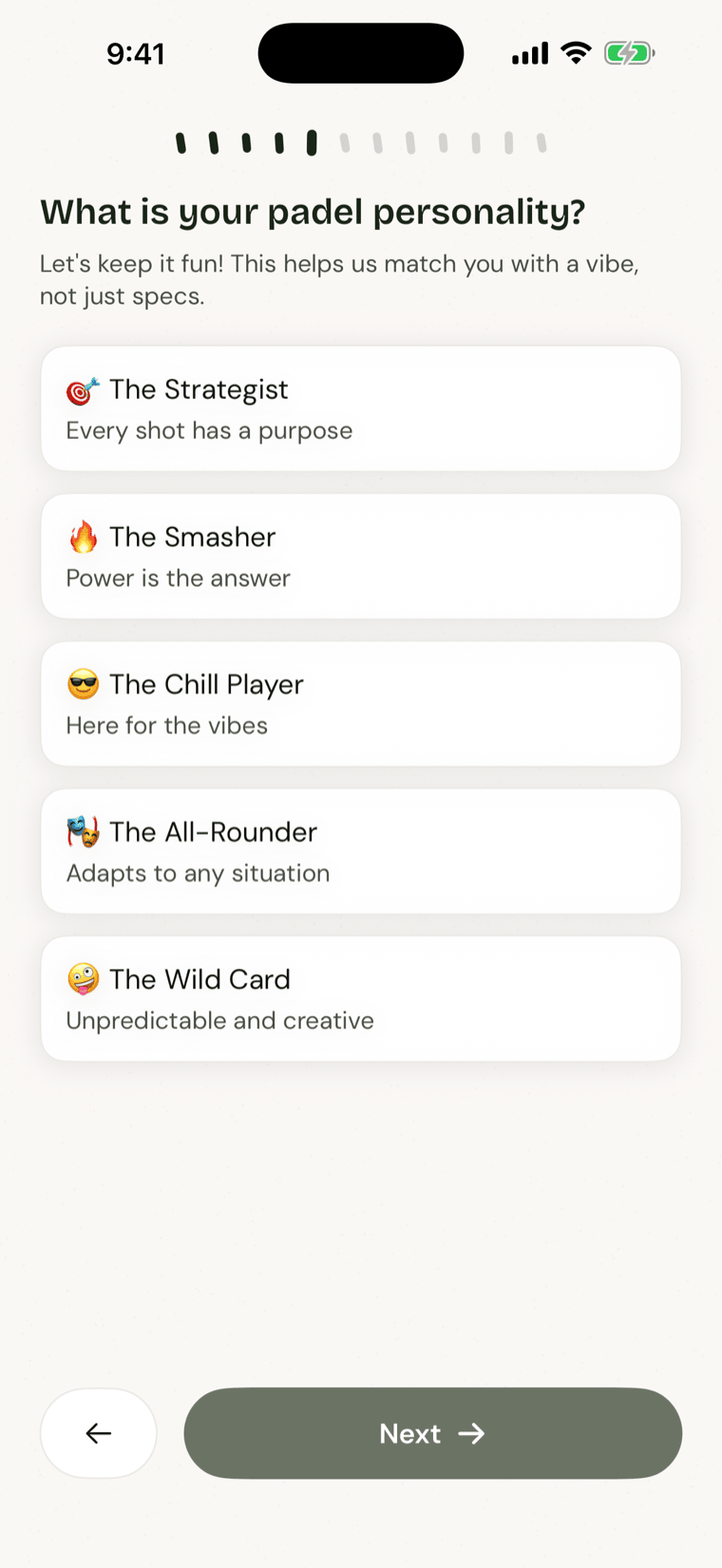
Take the free quiz in the app. We'll match a racket to your game, not the other way around.
Find my racketFree quiz. Sign in with email or Google to get your four picks.

Adidas Drive Black 2026 Review
By Andres Jovem · Updated October 19, 2026
A round, soft, fiberglass first racket with a little more mass than its Drive Light twin, for the beginner who wants the head to sit still on contact instead of flicking.
The verdict
Two first rackets share a name in the adidas Drive line, and the Drive Black 2026 is the one that stays put. Same round head, same soft core, same fiberglass face as the Drive Light, with a few more grams in the frame. Those grams are the whole story: a hard ball meets weight instead of shoving the head off line, so your block comes back where you aimed it and not where the ball decided.
It is a control racket for beginners, and the label holds. Nothing here is built to end a point. It is built to keep you in one while your timing catches up, and to do that without your elbow filing a complaint the next day.
The trade is speed. A fuller frame takes longer to get round at the net, and a beginner with quick hands and a light swing may prefer the Drive Light. If you would sooner feel solid than quick, read on. If quick is the point, the Light is a few lines down in our beginners guide.
The build
A soft core that absorbs the hit
Inside is EVA Soft Performance, the soft foam adidas uses for comfort. Soft foam squashes under the ball and recovers slowly. That does two things for a newcomer. Contact lasts a touch longer, so a rushed swing still gets some lift. And most of the shock from a mishit is soaked up in the foam before it reaches your wrist. Comfort and good ball exit are the two things adidas promises from it, and for a soft core those are the right two.
A fiberglass face that bends before it bites
The hitting layer is fiberglass, smooth, with no grit. Fiberglass has more give than carbon, so a strike that lands a thumb's width off the middle gets rounded off instead of punished, and the ball leaves with less sting in your hand. The cost is spin. A smooth glass face does not grip a brushed ball the way a rough carbon skin does, so your bandeja will go where you swing it and not much further. adidas drills the face with its Smart Holes Lineal pattern, equidistant holes in groups of three, which it says reinforces the hitting surface.
A round head, even balance, and a frame built to stay stiff
The round mold centers the sweet spot on a 519 cm² face, right where a beginner's eye lands. adidas lists the balance as even and the weight at 360 to 375g. Slightly above the 355g we had it down as. You feel the difference as a head that does not get knocked off line. Around the rim runs Structural Reinforcement, a perimeter layup adidas says resists the torsion of an off-center hit, so the frame twists less in your hand. The frame is fiberglass by every account except adidas's own, which leaves the field blank.
How it plays
Blocking at the net, the head stays where you put it
This is the shot the extra mass was bought for. A fast volley into your body arrives and the frame does not flinch: the ball comes off square, lands short, and you are still standing in position. Lighter beginner frames get pushed back by the same ball, and the block floats up for the opponent to finish. The Drive Black turns that flinch into a reset. Try it on the first fast volley of a session: the ball dies short on your side of the net and the point is still yours to play.
The price of that steadiness is a slower first step
Reaction volleys take a touch longer to set up than with the Drive Light, because you are moving more racket. For most beginners that is invisible. For the quick-handed player who already reads the ball early and wants to punch, it will feel like the racket is a step behind your hands. Know which player you are before you choose between the two Drives.
From the back, the lob and the block take care of themselves
Defending deep, the soft core takes the pace off an opponent's drive, so a block comes back absorbed and lands inside the court instead of sailing long. Stretched wide, the central sweet spot and the foam's slow spring give a lob enough lift even when your feet are late. You will not hit anyone off the court from here, and you are not supposed to.
Attacking, you bring the power
Overhead, the Drive Black hands back what you put in. A smooth glass face and soft foam do not add pace or spin, so a bandeja is a placement shot and a smash is a firm push to the fence rather than a kill. That is correct for the first year. A beginner who smashes hard with a stiff racket learns to miss hard; this one teaches you to smash into the court first and add speed later.
Kind to the elbow, candid about the shoulder
A soft core under a face with some give means the jolt of a mishit mostly dies in the racket before it reaches the elbow. That is why this frame appears in our beginners list and not our power one. The one body part to watch is the shoulder: a 360 to 375g frame swung for two hours by someone new to the sport is a workout. If your shoulder tires before your legs do, the Drive Light is the same racket with less to carry.
Who it's for (and who should skip it)
Buy it if
- You are starting out and want a round, soft racket that stays still when a fast ball hits it
- You block and lob more than you attack, and you want a mishit to stay in the point
- You tried a very light frame and felt the head get shoved around at the net
Look elsewhere if
- Your hands are quick and you want the racket to keep up: the Drive Light is the same recipe with a faster swing
- Your swing already supplies the pace and you want spin or finishing power from the racket
- Your shoulder tires early in a session: pick the lighter twin and let the frame do less of the work
Not sure it's your match? The free 2-minute quiz reads your level, style, and budget and tells you which racket is.
The bottom line
If your shoulder has never swung a racket for two hours, buy the Light. If it has, the Black is the one that will not get pushed around.
Where to buy
Prices shown in Euro, converted and approximate. You check out in the store's own currency.
Frequently asked
Yes. The adidas Drive Black 2026 is a round, soft-cored, fiberglass-faced control racket built for beginners. An off-center hit stays in the point. The frame absorbs most of the shock. Its one beginner caveat is weight: adidas declares 360 to 375g, so it suits a newcomer who wants a steady head more than a quick one.
Weight and balance. Both put adidas's EVA Soft Performance core under a fiberglass face on a round head. The Drive Light is lighter, at 352g with a low balance in our review of it. The Drive Black is declared at 360 to 375g with an even balance. The Black holds its line better on a fast block, the Light moves faster at the net and is easier on a tired shoulder. Same racket, two temperaments.
From €63.95 at PadelPROShop for the adidas Drive Black 2026, with PadelMarket stocking it for more. That puts it among the lower-priced first rackets from a major brand.
The adidas Drive Black runs an EVA Soft Performance core, adidas's comfort foam, under a smooth fiberglass face. The face carries adidas's Smart Holes Lineal pattern, holes drilled in groups of three to reinforce the hitting surface, and the rim has a Structural Reinforcement layup to limit twisting on off-center hits.
Eventually, and that is fine: the Drive Black is a first-year racket. Once your swing supplies its own pace and you start wanting spin from the face, a smooth fiberglass racket has nothing left to give you, and a rough-faced teardrop is the next step. Until then it will keep teaching you to block, lob, and place the ball without hurting your arm.
Yes, on the elbow. The adidas Drive Black pairs its EVA Soft Performance core, a soft comfort foam, with a fiberglass face that flexes on contact. Most of a mishit's shock dies in the racket before it reaches the joint. The part of the arm to watch is the shoulder. At a declared 360 to 375g it is the heavier of the two Drives. A newcomer swinging it for two hours will feel the weight before the elbow feels anything.
The app · free quiz
Not sure which one's you?
Take the free quiz in the app. We'll match a racket to your game, not the other way around.
Find my racketFree quiz. Sign in with email or Google to get your four picks.