Adidas Cross It Team Light 2026 Review
By Andres Jovem · Updated October 19, 2026
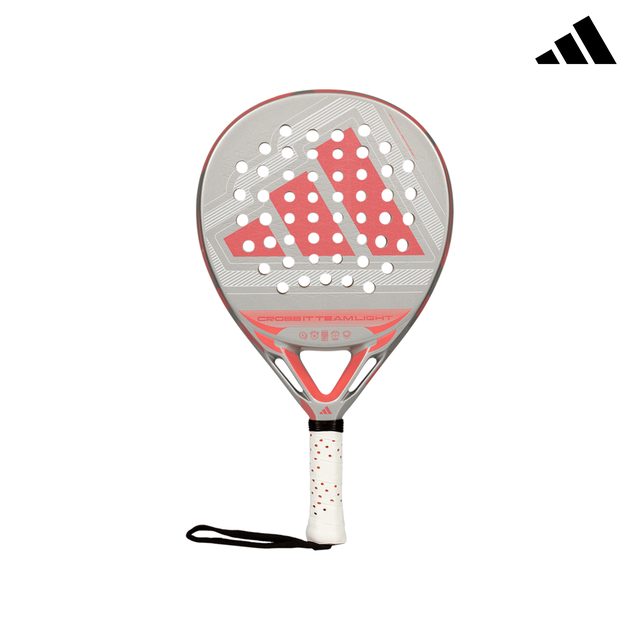
The fiberglass-faced sibling of the Cross It Light: the same 352g round head and soft core, a gentler and cheaper face, for the right-side defender who would rather keep every mishit in play than hit the lines.
The verdict
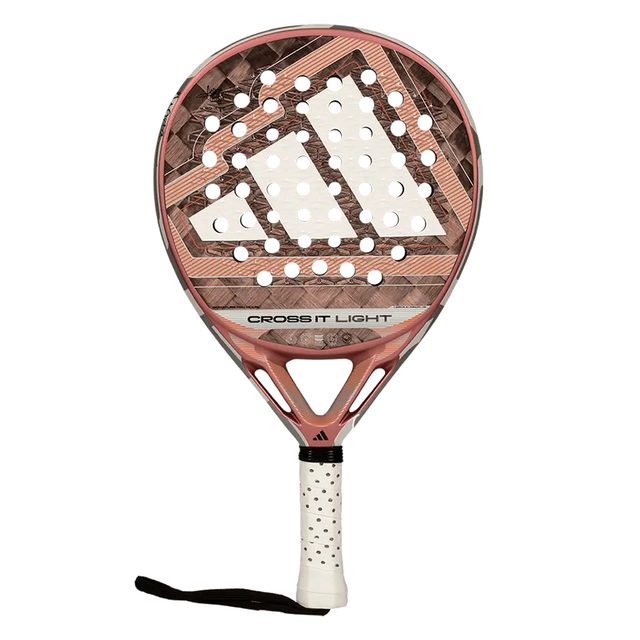
The Cross It Team Light costs less and hits softer than the Cross It Light it is twinned with, and one part explains both. Where the Cross It Light wears a stiff 24K aluminized carbon face, the Team Light runs fiberglass over a soft EVA core, and that one swap changes who the racket is for. Carbon rewards the player who can find the middle of the face and wants an exact ball off a drive, one that goes where the face pointed. Fiberglass bends more on contact, so a ball struck off-center keeps its depth and a blocked smash reaches your hand with less sting. You give up some precision on the drive down the wall. You get a frame that forgives the stretched block and keeps your arm quiet.
That makes the Team Light a defender's racket in the plainest sense. Round, balanced even, light enough that the head never drags in a fast exchange, it gets reaction volleys and blocks out on time and lifts the lob off the glass without a full swing. Attack is where it runs out. There is little help on the overhead, and the soft face turns a smash into a reset. The right-sider whose job is to keep the ball in and hand the point to a partner will be well served. The player who wants to finish should look at a teardrop.
The shops disagree on level. We have it down as advanced, one shop calls it advanced to semi-pro, another says beginner to intermediate. The specs settle it. A soft, round, even-balanced frame this light is playable from the first session. An improving intermediate will not be out of their depth, and an advanced defender who values a quiet arm over a sharp ball will not outgrow it quickly.
The build
A low-density EVA core Adidas calls Soft Performance
Inside is EVA Soft Performance, a low-density EVA rubber marked with a black cap on the frame. Low density means the foam gives more on contact, so the ball stays in touch with the face longer and leaves with lift you did not have to add. On a block from deep that is the difference between a ball that dies at the net and one that reaches the glass. On a flat drive it is the opposite: the core absorbs some of the pace you put in, and the ball lands softer than a firm frame would send it.
A fiberglass face where the Cross It Light wears carbon
The face is fiberglass under Adidas's Spin Blade Decal, a raised relief the brand says adds control and spin. Fiberglass is the reason this frame exists. It flexes more than the 24K carbon on the Cross It Light. A strike toward the rim loses less depth, and the contact sends less shock back through the wrist. The relief gives a brushed bandeja something to grip, though a raised relief is not a sanded carbon finish, so the spin is modest next to what a rough carbon face produces.
A round head, balanced even, with Adidas's hole pattern
The mold is round and the balance even, so the hitting zone is central and the mass stays in your hand rather than at the tip. That is why the frame turns over quickly on a reaction block and why a mishit toward the edge still goes in. Adidas's 11 Thirteen pattern drills eleven smaller holes at the center of the face. The brand says that adds rigidity and durability. Its Dynamic Air Flow holes through the core are meant to cut air resistance on the swing. Adidas lengthens the handle under the name Extra Power Grip and says the extra length adds inertia to the swing. We cannot measure any of the three.
How it plays
On defense, the frame does the lifting
Stretched wide for a ball you reached late, the Team Light gives you a lob that still lands deep, because the give in the frame lifts the ball for you. A block taken off the back glass climbs high and safe rather than short and flat. That is what a right-side defender needs when the opponents own the net and the point has to be reset. Defense is the job this racket was given, and a long rally spent doing it costs you little effort and little arm.
At the net, fast hands and a soft touch
With the weight in your hand, the head is where you want it before the ball arrives, so the reaction volley at your hip goes back over the net instead of into it. Touch volleys and drop shots are easy, because the soft contact lets you take pace off the ball without the racket adding any. The punch volley is where you notice the limit. With no tip weight and a soft face, a volley meant to end the point lands deep but not fast. A well-placed opponent gets it back.
Overhead, a bandeja to reset and not much more
The bandeja is the gentle one. The relief on the face gives the ball enough slice to keep it low after the bounce, and the round head means a slightly mistimed overhead still clears the net. A smash is another story. The soft core takes the sting out of your swing in both directions, so a flat overhead leaves slower than you expect and the ball you aimed at the back wall tends to come back. Use the overhead to hold the net and the racket makes sense.
The arm bill
Soft core, flexing face, low weight. This is one of the kinder rackets on the wrist and elbow you can buy at this price. A player moving from a stiff carbon face will notice the sting leave on the first block. There is so little to swing that two hours of overheads leave the shoulder alone too. The one way to get hurt with it is to over-swing chasing the pace the frame absorbs, which hands the forearm the strain the soft core had removed.
Who it's for (and who should skip it)
Buy it if
- Your right-side game is keeping the ball in play, deep and safe, until a partner finishes
- The Cross It Light's carbon face feels harsh or too exact for your hands, and you want the same round shape with more give
- A comfortable round frame at a lower price appeals, and you will trade some precision on the drive for it
Look elsewhere if
- Accuracy matters more to you than comfort: the carbon Cross It Light rewards a clean strike with a sharper, more exact ball
- You want to attack from the right side: there is little help on the overhead and no bite in the face
- Your drive already has pace and you want a firm frame that returns it: a soft core gives some of it away
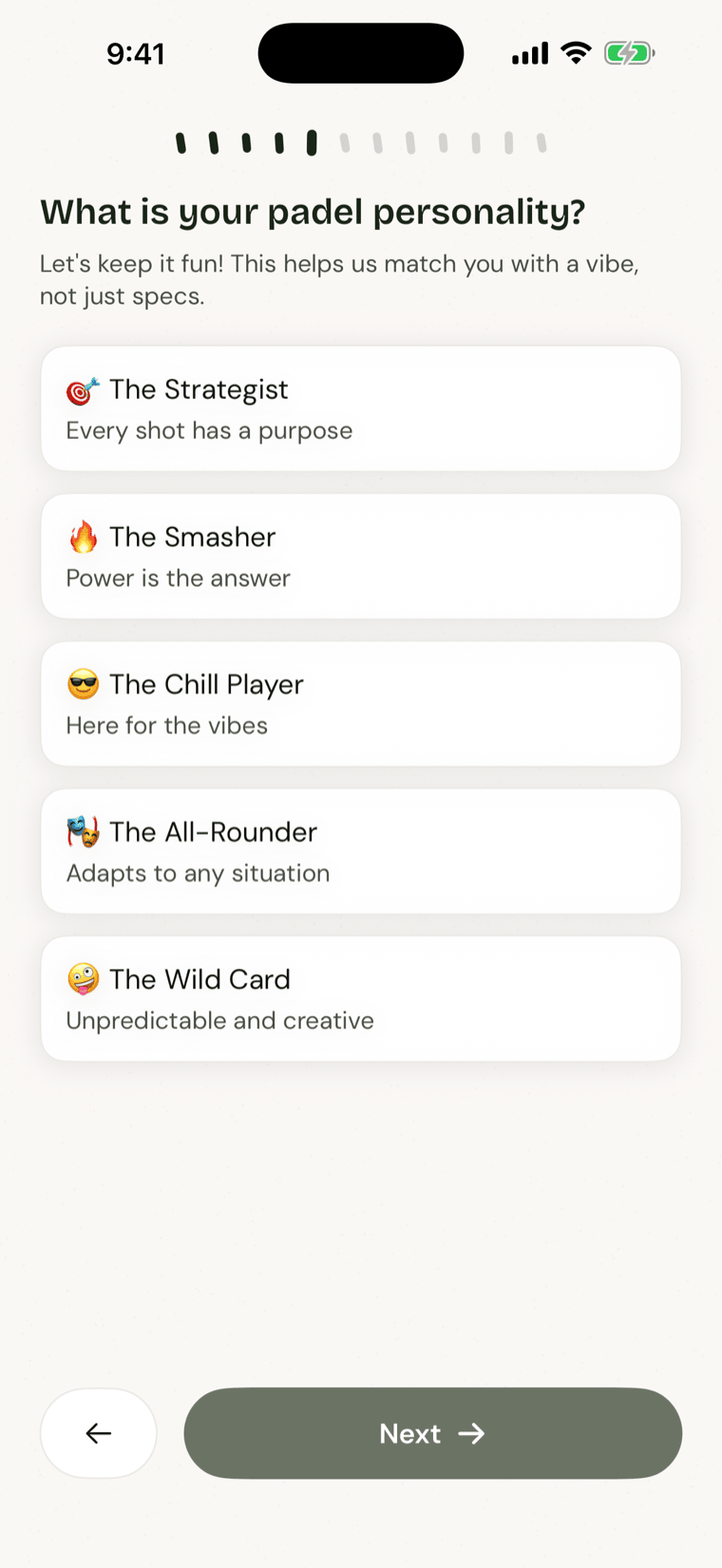
Not sure it's your match? The free 2-minute quiz reads your level, style, and budget and tells you which racket is.
The bottom line
Buy it for the defense it makes easy and the arm it spares, and buy the carbon Cross It Light instead if your hands are good enough to want the exact ball back.
Where to buy
Prices shown in Euro, converted and approximate. You check out in the store's own currency.
Frequently asked
One part changes between them: the face. The Cross It Light runs a stiff 24K aluminized carbon surface with a rough finish over an EVA Soft Energy core, on a 352g round frame balanced even. It is the racket Marta Ortega plays. The Team Light keeps the round shape, the weight and a soft EVA core, but moves to fiberglass with a Spin Blade Decal. Carbon gives a cleaner, more exact ball on a well-struck drive. Fiberglass is kinder to an off-center hit and to the arm. The Team Light also costs around 65 euros less at our approved shops.
Yes, with one caveat, a beginner can start on the Cross It Team Light. Round, soft-cored and even-balanced at 352g, it forgives a mishit and keeps the strike gentle. The caveat is price. A beginner can get the same shape and softness for less. This frame makes more sense for an improving player who wants a round racket they will not outgrow in a season.
Control is the Cross It Team Light's whole game. Round head, even balance and a soft core each push the same way: the ball lands where you pointed it and the frame adds lift rather than pace. Without mass at the tip to drive a smash, a player after power is better served by a teardrop or a diamond.
From €124.49 at Tradeinn for the Cross It Team Light, and PadelRacket.ph stocks it in the Philippines.
A low-density EVA Soft Performance core sits under the Cross It Team Light's fiberglass face, which carries Adidas's Spin Blade Decal relief. The core gives the ball lift on a block, the fiberglass softens an off-center strike, and the relief adds modest grip for slice on the bandeja.
The Cross It Team Light is sold as unisex, and nothing about a 352g round frame with a soft core needs a label. We put it in the guide for advanced right-side women because that game is what the specs serve.
The app · free quiz
Not sure which one's you?
Take the free quiz in the app. We'll match a racket to your game, not the other way around.
Find my racketFree quiz. Sign in with email or Google to get your four picks.

Adidas Cross It Team Light 2026 Review
By Andres Jovem · Updated October 19, 2026
The fiberglass-faced sibling of the Cross It Light: the same 352g round head and soft core, a gentler and cheaper face, for the right-side defender who would rather keep every mishit in play than hit the lines.
The verdict
The Cross It Team Light costs less and hits softer than the Cross It Light it is twinned with, and one part explains both. Where the Cross It Light wears a stiff 24K aluminized carbon face, the Team Light runs fiberglass over a soft EVA core, and that one swap changes who the racket is for. Carbon rewards the player who can find the middle of the face and wants an exact ball off a drive, one that goes where the face pointed. Fiberglass bends more on contact, so a ball struck off-center keeps its depth and a blocked smash reaches your hand with less sting. You give up some precision on the drive down the wall. You get a frame that forgives the stretched block and keeps your arm quiet.
That makes the Team Light a defender's racket in the plainest sense. Round, balanced even, light enough that the head never drags in a fast exchange, it gets reaction volleys and blocks out on time and lifts the lob off the glass without a full swing. Attack is where it runs out. There is little help on the overhead, and the soft face turns a smash into a reset. The right-sider whose job is to keep the ball in and hand the point to a partner will be well served. The player who wants to finish should look at a teardrop.
The shops disagree on level. We have it down as advanced, one shop calls it advanced to semi-pro, another says beginner to intermediate. The specs settle it. A soft, round, even-balanced frame this light is playable from the first session. An improving intermediate will not be out of their depth, and an advanced defender who values a quiet arm over a sharp ball will not outgrow it quickly.
The build
A low-density EVA core Adidas calls Soft Performance
Inside is EVA Soft Performance, a low-density EVA rubber marked with a black cap on the frame. Low density means the foam gives more on contact, so the ball stays in touch with the face longer and leaves with lift you did not have to add. On a block from deep that is the difference between a ball that dies at the net and one that reaches the glass. On a flat drive it is the opposite: the core absorbs some of the pace you put in, and the ball lands softer than a firm frame would send it.
A fiberglass face where the Cross It Light wears carbon
The face is fiberglass under Adidas's Spin Blade Decal, a raised relief the brand says adds control and spin. Fiberglass is the reason this frame exists. It flexes more than the 24K carbon on the Cross It Light. A strike toward the rim loses less depth, and the contact sends less shock back through the wrist. The relief gives a brushed bandeja something to grip, though a raised relief is not a sanded carbon finish, so the spin is modest next to what a rough carbon face produces.
A round head, balanced even, with Adidas's hole pattern
The mold is round and the balance even, so the hitting zone is central and the mass stays in your hand rather than at the tip. That is why the frame turns over quickly on a reaction block and why a mishit toward the edge still goes in. Adidas's 11 Thirteen pattern drills eleven smaller holes at the center of the face. The brand says that adds rigidity and durability. Its Dynamic Air Flow holes through the core are meant to cut air resistance on the swing. Adidas lengthens the handle under the name Extra Power Grip and says the extra length adds inertia to the swing. We cannot measure any of the three.
How it plays
On defense, the frame does the lifting
Stretched wide for a ball you reached late, the Team Light gives you a lob that still lands deep, because the give in the frame lifts the ball for you. A block taken off the back glass climbs high and safe rather than short and flat. That is what a right-side defender needs when the opponents own the net and the point has to be reset. Defense is the job this racket was given, and a long rally spent doing it costs you little effort and little arm.
At the net, fast hands and a soft touch
With the weight in your hand, the head is where you want it before the ball arrives, so the reaction volley at your hip goes back over the net instead of into it. Touch volleys and drop shots are easy, because the soft contact lets you take pace off the ball without the racket adding any. The punch volley is where you notice the limit. With no tip weight and a soft face, a volley meant to end the point lands deep but not fast. A well-placed opponent gets it back.
Overhead, a bandeja to reset and not much more
The bandeja is the gentle one. The relief on the face gives the ball enough slice to keep it low after the bounce, and the round head means a slightly mistimed overhead still clears the net. A smash is another story. The soft core takes the sting out of your swing in both directions, so a flat overhead leaves slower than you expect and the ball you aimed at the back wall tends to come back. Use the overhead to hold the net and the racket makes sense.
The arm bill
Soft core, flexing face, low weight. This is one of the kinder rackets on the wrist and elbow you can buy at this price. A player moving from a stiff carbon face will notice the sting leave on the first block. There is so little to swing that two hours of overheads leave the shoulder alone too. The one way to get hurt with it is to over-swing chasing the pace the frame absorbs, which hands the forearm the strain the soft core had removed.
Who it's for (and who should skip it)
Buy it if
- Your right-side game is keeping the ball in play, deep and safe, until a partner finishes
- The Cross It Light's carbon face feels harsh or too exact for your hands, and you want the same round shape with more give
- A comfortable round frame at a lower price appeals, and you will trade some precision on the drive for it
Look elsewhere if
- Accuracy matters more to you than comfort: the carbon Cross It Light rewards a clean strike with a sharper, more exact ball
- You want to attack from the right side: there is little help on the overhead and no bite in the face
- Your drive already has pace and you want a firm frame that returns it: a soft core gives some of it away
Not sure it's your match? The free 2-minute quiz reads your level, style, and budget and tells you which racket is.
The bottom line
Buy it for the defense it makes easy and the arm it spares, and buy the carbon Cross It Light instead if your hands are good enough to want the exact ball back.
Where to buy
Prices shown in Euro, converted and approximate. You check out in the store's own currency.
Frequently asked
One part changes between them: the face. The Cross It Light runs a stiff 24K aluminized carbon surface with a rough finish over an EVA Soft Energy core, on a 352g round frame balanced even. It is the racket Marta Ortega plays. The Team Light keeps the round shape, the weight and a soft EVA core, but moves to fiberglass with a Spin Blade Decal. Carbon gives a cleaner, more exact ball on a well-struck drive. Fiberglass is kinder to an off-center hit and to the arm. The Team Light also costs around 65 euros less at our approved shops.
Yes, with one caveat, a beginner can start on the Cross It Team Light. Round, soft-cored and even-balanced at 352g, it forgives a mishit and keeps the strike gentle. The caveat is price. A beginner can get the same shape and softness for less. This frame makes more sense for an improving player who wants a round racket they will not outgrow in a season.
Control is the Cross It Team Light's whole game. Round head, even balance and a soft core each push the same way: the ball lands where you pointed it and the frame adds lift rather than pace. Without mass at the tip to drive a smash, a player after power is better served by a teardrop or a diamond.
From €124.49 at Tradeinn for the Cross It Team Light, and PadelRacket.ph stocks it in the Philippines.
A low-density EVA Soft Performance core sits under the Cross It Team Light's fiberglass face, which carries Adidas's Spin Blade Decal relief. The core gives the ball lift on a block, the fiberglass softens an off-center strike, and the relief adds modest grip for slice on the bandeja.
The Cross It Team Light is sold as unisex, and nothing about a 352g round frame with a soft core needs a label. We put it in the guide for advanced right-side women because that game is what the specs serve.
The app · free quiz
Not sure which one's you?
Take the free quiz in the app. We'll match a racket to your game, not the other way around.
Find my racketFree quiz. Sign in with email or Google to get your four picks.