Adidas Drive Light 2026 Review
By Andres Jovem · Updated October 19, 2026
A light, round, soft-cored first racket that keeps your off-center hits in the point and stays gentle on the arm, for a newcomer learning the game from scratch.
The verdict
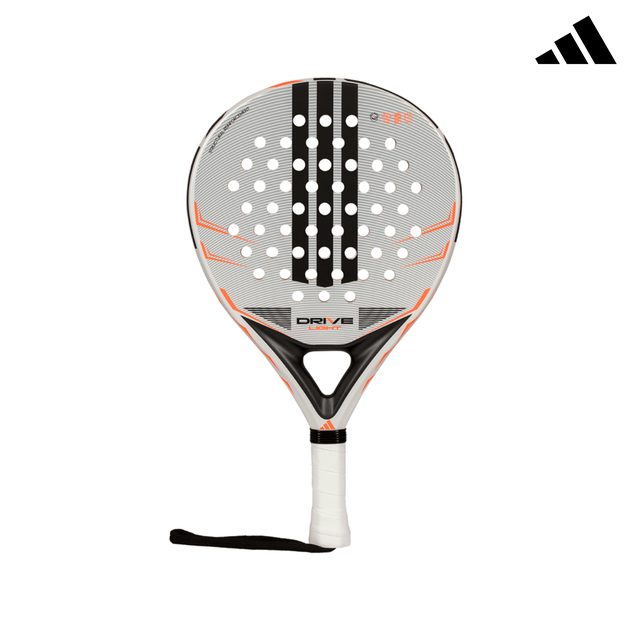
Start with what a first racket is supposed to do, and the Adidas Drive Light 2026 does it. A newcomer needs contact that feels forgiving, a head that stays easy to move when the forearm tires, and off-center hits that stay in the point long enough to build a rally. This round, light, soft-cored frame is aimed at all three. It is a tool for the learning months, not a weapon for the club ladder.
Where it holds back is power. The soft middle and flexible face are tuned to keep the ball in play, not to send it flat and fast, so the pace on every shot has to come from your own swing. For a player whose first job is rallying rather than finishing, that is the correct arrangement. A hard-hitting player who wants the frame to do the work will feel boxed in, and the list below spells out who that is.
The build
A core tuned to take the sting out
The middle of this racket is an EVA Soft Performance foam, and its whole job is to give a beginner a gentle contact. A low-density foam like this compresses deep when the ball lands, so much of the jolt that a firmer frame would push up the handle is swallowed at the face instead. For a new player that reads as a strike with a cushioned, pressed feel rather than a sharp knock, and an arm that is still fresh late in a session. The catch is pace: a foam this yielding returns the ball slowly, so the speed on your shots comes from how you swing, not from anything stored in the core.
A hitting layer that bends before it bites
The face is a fiberglass panel with a smooth finish, and fiberglass is the more flexible of the common hitting materials. It bows a little more than a carbon skin when the ball arrives, and that give is a big reason the racket keeps a scuffed strike alive: the surface folds around the ball and steers it back onto the court rather than flinging it off at an angle. The smooth finish is the honest trade. There is no grit for the ball to catch on, so a brushed shot leaves with less rotation than a textured face would put on it, which matters little to a player still working on clean contact.
Round head, even weight, light in the hand
The mold is round, which puts the largest, most central sweet spot right where a beginner tends to make contact. Catch the ball off-center and enough of that round face stays behind it to send the shot back over. Weight sits even and low in the hand rather than out toward the tip, and at 352g the frame is a touch under the usual starter, so it stays quick to swing through a long match. None of that mass is parked up top to load a smash. It is placed to keep the racket nimble, easy to steer, and settled on a volley, which is what a learner uses most.
How it plays
Quick hands at the net
The light frame and low weight make this racket fast to lift in front of you, so when a ball is driven at your hip you can get the face onto it in time. You will not blast many put-aways from up here; the payoff is different. A rushed reflex still finds the strings and steers the ball back deep instead of spraying it wide, which is what keeps a beginner in the exchange when the pace picks up at the net.
Staying in the rally from the back
This is where the soft build does its clearest work. Get under a lob and the flex in the face lifts the ball back to length off a short, unhurried swing, so you can reset the point without swinging hard for it. Scrape a low ball off the deck and the cushioned contact keeps it from sailing long, so a defensive dig stays on the court. Meet one very late and the racket will not manufacture free depth to rescue you, but on the ordinary defending ball it carries most of the load while your footwork catches up.
Bringing your own pace on the attack
Set up over an overhead and the shot leaves at the speed of your own swing, because there is no tip weight or stiff panel piling pace on behind it. Point a smash where you like and it goes there, but it goes committed or not at all; a lazy swing produces a lazy ball. The bandeja suits this frame better as an attacking shot. The soft face lets you slide under the ball and float it back into the corner with control, which beats hunting a winner the racket was never built to hit.
Kind to a sore arm
This is one of the easier rackets on the elbow on our lists. A middled ball arrives as a soft press, and even a mishit near the frame comes back muted rather than with the jolt a stiff carbon stick would fire into the joint, so your arm is still working freely in the second hour. The light frame helps too, since your forearm is not dragging extra weight through every swing. If you are coming to padel with a cranky elbow, or you want your first months on court to stay pain-free, this is a frame that guards the arm where a heavier, harder one would leave it aching.
Who it's for (and who should skip it)
Buy it if
- You are new to padel and want a frame that keeps your off-center hits in the point while your swing settles.
- Your arm is sensitive, or you just want to stay comfortable through long sessions, and a soft, low-shock racket is worth more to you than raw pace.
- You are a smaller or faster player who wants a light, easy-swinging head you can still move quickly late in a match.
Look elsewhere if
- You already make your own pace and want a racket that hits heavy. This soft frame stores no power and returns the ball gently, so a strong hitter will feel it capping them.
- You lean on spin and want a textured face to grab the ball. The smooth fiberglass surface will not carve the rotation a rough carbon panel does.
- You are past the beginner stage and want tip weight behind your smash. There is no mass up top to finish points, and you will move on from it inside a season.
Not sure it's your match? The free 2-minute quiz reads your level, style, and budget and tells you which racket is.
The bottom line
If your first job on court is rallying, staying comfortable, and keeping the ball alive, the Adidas Drive Light 2026 is a sound place to begin. If you already swing hard and want a racket that hits back, reach for a firmer, head-heavier frame instead, and let the free quiz match one to your game in two minutes.
Where to buy
Prices shown in Euro, converted and approximate. You check out in the store's own currency.
Frequently asked
Yes, the Drive Light 2026 is one of the friendlier frames we stock for a first racket. Its round head puts a big central sweet spot where a new player makes contact, the soft core keeps mishits in play, and at 352g the head stays easy to swing all match. It is built to help you learn the game, not to fight you through it.
Control is the whole design here, and power is what you supply. The soft foam and flexible face cushion the ball and hand it back gently rather than firing it out fast, and the even, low balance parks no weight in the head for a smash. Aim it and it goes where you point; the speed comes from your swing.
An EVA Soft Performance core sits behind a smooth fiberglass face, on a fiberglass frame. The soft foam absorbs shock for a gentle, forgiving contact, while the fiberglass face bends on impact to widen the room for error on off-center hits. The smooth finish is the trade, giving up spin bite in exchange for that forgiveness.
A sore-armed player is well served here. The soft core and flexible fiberglass panel mute the vibration a stiff frame drives into the elbow and shoulder, and the 352g weight keeps the forearm from hauling extra mass through every swing. It is a sound pick if you want your first months of padel to stay pain-free.
Most players move on from the Drive Light 2026 once their swing settles and they start wanting a heavier, faster ball. It is made to forgive and control rather than attack, so anyone generating real pace will meet its ceiling within a season. That is deliberate for a first racket, and it does the learning job well in the meantime. If you are not sure it suits your game today, the free 2-minute quiz reads your level, style, and budget and points you to the right one.
The app · free quiz
Not sure which one's you?
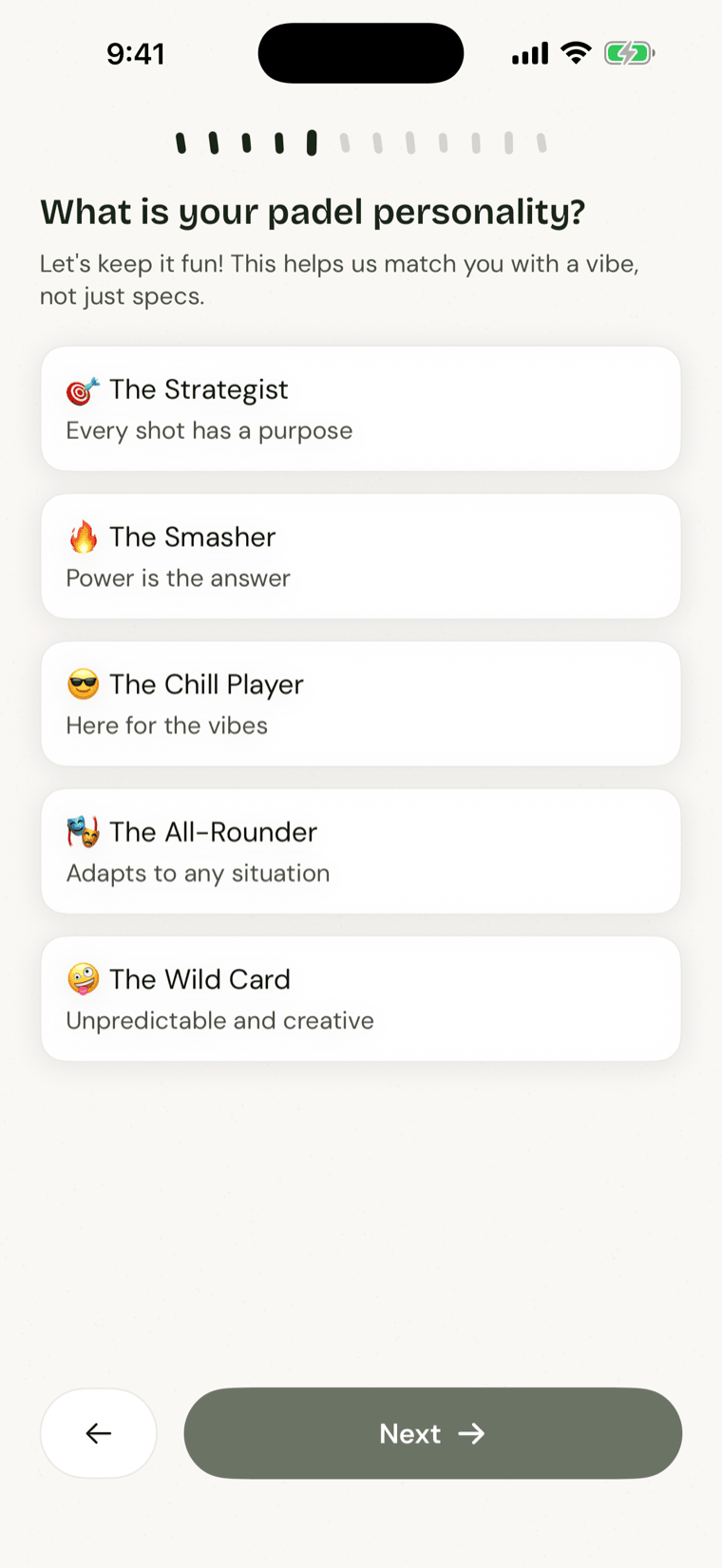
Take the free quiz in the app. We'll match a racket to your game, not the other way around.
Find my racketFree quiz. Sign in with email or Google to get your four picks.

Adidas Drive Light 2026 Review
By Andres Jovem · Updated October 19, 2026
A light, round, soft-cored first racket that keeps your off-center hits in the point and stays gentle on the arm, for a newcomer learning the game from scratch.
The verdict
Start with what a first racket is supposed to do, and the Adidas Drive Light 2026 does it. A newcomer needs contact that feels forgiving, a head that stays easy to move when the forearm tires, and off-center hits that stay in the point long enough to build a rally. This round, light, soft-cored frame is aimed at all three. It is a tool for the learning months, not a weapon for the club ladder.
Where it holds back is power. The soft middle and flexible face are tuned to keep the ball in play, not to send it flat and fast, so the pace on every shot has to come from your own swing. For a player whose first job is rallying rather than finishing, that is the correct arrangement. A hard-hitting player who wants the frame to do the work will feel boxed in, and the list below spells out who that is.
The build
A core tuned to take the sting out
The middle of this racket is an EVA Soft Performance foam, and its whole job is to give a beginner a gentle contact. A low-density foam like this compresses deep when the ball lands, so much of the jolt that a firmer frame would push up the handle is swallowed at the face instead. For a new player that reads as a strike with a cushioned, pressed feel rather than a sharp knock, and an arm that is still fresh late in a session. The catch is pace: a foam this yielding returns the ball slowly, so the speed on your shots comes from how you swing, not from anything stored in the core.
A hitting layer that bends before it bites
The face is a fiberglass panel with a smooth finish, and fiberglass is the more flexible of the common hitting materials. It bows a little more than a carbon skin when the ball arrives, and that give is a big reason the racket keeps a scuffed strike alive: the surface folds around the ball and steers it back onto the court rather than flinging it off at an angle. The smooth finish is the honest trade. There is no grit for the ball to catch on, so a brushed shot leaves with less rotation than a textured face would put on it, which matters little to a player still working on clean contact.
Round head, even weight, light in the hand
The mold is round, which puts the largest, most central sweet spot right where a beginner tends to make contact. Catch the ball off-center and enough of that round face stays behind it to send the shot back over. Weight sits even and low in the hand rather than out toward the tip, and at 352g the frame is a touch under the usual starter, so it stays quick to swing through a long match. None of that mass is parked up top to load a smash. It is placed to keep the racket nimble, easy to steer, and settled on a volley, which is what a learner uses most.
How it plays
Quick hands at the net
The light frame and low weight make this racket fast to lift in front of you, so when a ball is driven at your hip you can get the face onto it in time. You will not blast many put-aways from up here; the payoff is different. A rushed reflex still finds the strings and steers the ball back deep instead of spraying it wide, which is what keeps a beginner in the exchange when the pace picks up at the net.
Staying in the rally from the back
This is where the soft build does its clearest work. Get under a lob and the flex in the face lifts the ball back to length off a short, unhurried swing, so you can reset the point without swinging hard for it. Scrape a low ball off the deck and the cushioned contact keeps it from sailing long, so a defensive dig stays on the court. Meet one very late and the racket will not manufacture free depth to rescue you, but on the ordinary defending ball it carries most of the load while your footwork catches up.
Bringing your own pace on the attack
Set up over an overhead and the shot leaves at the speed of your own swing, because there is no tip weight or stiff panel piling pace on behind it. Point a smash where you like and it goes there, but it goes committed or not at all; a lazy swing produces a lazy ball. The bandeja suits this frame better as an attacking shot. The soft face lets you slide under the ball and float it back into the corner with control, which beats hunting a winner the racket was never built to hit.
Kind to a sore arm
This is one of the easier rackets on the elbow on our lists. A middled ball arrives as a soft press, and even a mishit near the frame comes back muted rather than with the jolt a stiff carbon stick would fire into the joint, so your arm is still working freely in the second hour. The light frame helps too, since your forearm is not dragging extra weight through every swing. If you are coming to padel with a cranky elbow, or you want your first months on court to stay pain-free, this is a frame that guards the arm where a heavier, harder one would leave it aching.
Who it's for (and who should skip it)
Buy it if
- You are new to padel and want a frame that keeps your off-center hits in the point while your swing settles.
- Your arm is sensitive, or you just want to stay comfortable through long sessions, and a soft, low-shock racket is worth more to you than raw pace.
- You are a smaller or faster player who wants a light, easy-swinging head you can still move quickly late in a match.
Look elsewhere if
- You already make your own pace and want a racket that hits heavy. This soft frame stores no power and returns the ball gently, so a strong hitter will feel it capping them.
- You lean on spin and want a textured face to grab the ball. The smooth fiberglass surface will not carve the rotation a rough carbon panel does.
- You are past the beginner stage and want tip weight behind your smash. There is no mass up top to finish points, and you will move on from it inside a season.
Not sure it's your match? The free 2-minute quiz reads your level, style, and budget and tells you which racket is.
The bottom line
If your first job on court is rallying, staying comfortable, and keeping the ball alive, the Adidas Drive Light 2026 is a sound place to begin. If you already swing hard and want a racket that hits back, reach for a firmer, head-heavier frame instead, and let the free quiz match one to your game in two minutes.
Where to buy
Prices shown in Euro, converted and approximate. You check out in the store's own currency.
Frequently asked
Yes, the Drive Light 2026 is one of the friendlier frames we stock for a first racket. Its round head puts a big central sweet spot where a new player makes contact, the soft core keeps mishits in play, and at 352g the head stays easy to swing all match. It is built to help you learn the game, not to fight you through it.
Control is the whole design here, and power is what you supply. The soft foam and flexible face cushion the ball and hand it back gently rather than firing it out fast, and the even, low balance parks no weight in the head for a smash. Aim it and it goes where you point; the speed comes from your swing.
An EVA Soft Performance core sits behind a smooth fiberglass face, on a fiberglass frame. The soft foam absorbs shock for a gentle, forgiving contact, while the fiberglass face bends on impact to widen the room for error on off-center hits. The smooth finish is the trade, giving up spin bite in exchange for that forgiveness.
A sore-armed player is well served here. The soft core and flexible fiberglass panel mute the vibration a stiff frame drives into the elbow and shoulder, and the 352g weight keeps the forearm from hauling extra mass through every swing. It is a sound pick if you want your first months of padel to stay pain-free.
Most players move on from the Drive Light 2026 once their swing settles and they start wanting a heavier, faster ball. It is made to forgive and control rather than attack, so anyone generating real pace will meet its ceiling within a season. That is deliberate for a first racket, and it does the learning job well in the meantime. If you are not sure it suits your game today, the free 2-minute quiz reads your level, style, and budget and points you to the right one.
The app · free quiz
Not sure which one's you?
Take the free quiz in the app. We'll match a racket to your game, not the other way around.
Find my racketFree quiz. Sign in with email or Google to get your four picks.