Wilson Optix V2 Lite 2026 Review
By Andres Jovem · Updated October 19, 2026
A soft, round, low-balanced starter from Wilson that keeps a late hit in the court and the arm quiet, for the first-season player who would rather learn placement than chase pace.
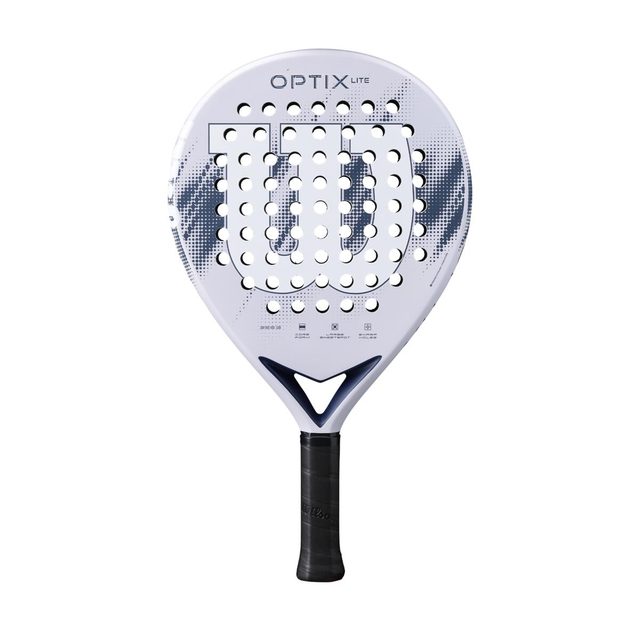
The verdict
The Optix V2 Lite is for the player whose problem is still the middle of the racket, and it solves that problem well. A round head, a low balance, a low-density foam core, and a fiberglass face. Together they make a frame that keeps a late, off-center hit in the court. Very little of the sting travels back up your arm. It is a beginner's racket, and we'd put it the same way: this is a first racket, or the racket you keep in the bag when the first one wears out.
What it won't do is hit for you. Overheads leave with the pace you gave them, the smooth face adds little spin, and a keen improver will feel the ceiling inside a season or two. None of that is a flaw at this price. It is the trade a beginner should want: margin now, a step up later, and around €80 spent on learning instead of on power you can't aim yet.
The build
A low-density foam that gives before your arm does
The core is Core Foam, a low-density foam. Low density means the foam compresses under the ball, so contact arrives in your hand as a push rather than a jolt. That is what makes a block off the back glass feel easy on the elbow, and it is also why the ball comes off slower than it would from a dense EVA core. You get comfort and margin; you give up free speed.
A fiberglass weave that widens the margin
The hitting face is a fiberglass weave, not carbon. Fiberglass flexes more than carbon on contact, so a ball struck a few centimeters from the center still gets enough of the face to go where you aimed. The surface is smooth, which tells you where spin will come from: your swing, because there is no grit on the face to hold the ball. Sharp Hole Technology, a drilling pattern meant to add bite on every stroke, is the one concession to the brushed shot, so a sliced ball gets some grip from the holes.
A round head, carried low
The head is round and the balance sits low, with the mass close to your hand. Wilson calls the frame a fiberglass weave; the shops call it carbon-reinforced, which is the usual way a fiberglass frame is stiffened against twisting. Either way, when a hard ball catches the edge the head holds its line instead of turning in your grip. Wilson says 355g and the shops say 360g give or take ten, so expect a light racket that is quick to move whichever figure your unit lands on.
How it plays
From the back, the lob is the whole game
Most of a beginner's points are won by getting one more ball back, and this is the shot it was built for. A short, relaxed swing lifts a lob deep enough to push the other pair off the net, and a ball you meet late still clears the tape because the face carries some of the work. Blocks off the glass come back soft and unhurried, so there is time to recover your position before the next one. You will not surprise anyone with pace from back here. You will stay in the point, which at this stage is the better outcome. The one back-court shot to practice on it is the chiquita. That is the soft, low ball played to the feet of the pair at the net. The slow face makes it easy to take pace off, and a round head that keeps a late hit on line is the right frame to learn it with.
At the net, aim survives a timing error
Volleys are the shot that shows what a round, low-balanced frame is for. The head is already where your hand is, so a reaction block comes off the face on line even when your feet are not set. A volley aimed low across the net lands where you looked more often than a beginner's usually do. The racket will not punch a volley through a gap for you. Place it instead, and wait for the error at the other end.
Overhead, you supply everything
A bandeja comes off controlled and lands safe, which is the right overhead to learn first. A smash leaves with the speed of your swing and not a gram more. A brushed víbora gets very little bite from the smooth face, so the ball tends to sit up rather than skid away. If finishing points is already your game, this frame will frustrate you inside a month. If finishing points is something you plan to learn later, it will not get in the way.
Your arm, at the end of the night
Very little happens to it, and that is the point. A mishit arrives in the hand as a dull push, so nothing climbs to the elbow, and the shoulder is never hauling a heavy tip through the swing. Sessions end with your arm tired from padel, not from the racket. A player coming back from elbow or shoulder trouble, or a tennis player whose arm already has mileage, will notice the difference on the first evening.
Who it's for (and who should skip it)
Buy it if
- You are in your first season and your mishits still outnumber your clean hits
- You want a known brand on a soft, round starter without paying for a technology you cannot use yet
- Your arm has a history and you need every contact to stay gentle
Look elsewhere if
- You already finish points overhead: the pace has to come from you here, and a firmer teardrop will pay your swing back better
- Spin matters to you already: the smooth fiberglass face gives a brushed shot little to hold onto
- You are improving fast: by next season you will want a firmer core, so consider skipping a step
Not sure it's your match? The free 2-minute quiz reads your level, style, and budget and tells you which racket is.
The bottom line
Buy it as the racket you will not mind outgrowing. The one after it is where you spend real money.
Where to buy
Prices shown in Euro, converted and approximate. You check out in the store's own currency.
Frequently asked
Yes. The Optix V2 Lite is built to keep a late hit in the court. Its round head keeps the sweet spot in the middle, which is where a new player meets the ball. The soft contact spares the arm while your timing is still rough. The low balance makes it quick to move at the net. Few first rackets are easier to live with.
Control, in the way a beginner's racket should be: the Optix V2 Lite wins points by keeping a mistimed ball on line, not by adding speed to it. The low-density core slows the ball down rather than firing it. Power is yours to add with a bigger swing. The racket adds none of its own.
From around €80 for the Optix V2 Lite, with a second shop at €90, which puts it in the lower half of the big-brand beginner rackets. Prices on starter frames drift with stock more than on flagships, so the comparison above is worth a look before you click through.
Shape and intent. The Optix V2 Power is the attacking sibling of the Optix V2 Lite: a 360g teardrop aimed at improving players, with a foam core of unstated density and a carbon-reinforced frame. An overhead gets more reach. The swing has to be more committed. The Lite is the 355g round with a low balance, built for the first season. Both wear a fiberglass weave face, so the forgiveness on a drifting strike is shared. New to the sport, take the Lite. A season in and starting to attack, read our Optix V2 Power review.
Core Foam and fiberglass: the Optix V2 Lite runs Wilson's low-density foam under a smooth fiberglass weave face. The soft foam cushions the hit and widens the usable area of the face; the smooth fiberglass flexes on contact but has no texture to grip the ball, so spin stays modest. Sharp Hole Technology is its answer on bite for a brushed ball.
Not a women's racket, a first-season racket: the Optix V2 Lite is 355g, low balance, soft core. That is why it sits in our women's beginners guide, and why it works for anyone in year one. The lilac finish is the version our shops stock; nothing about it is built for one group of players.
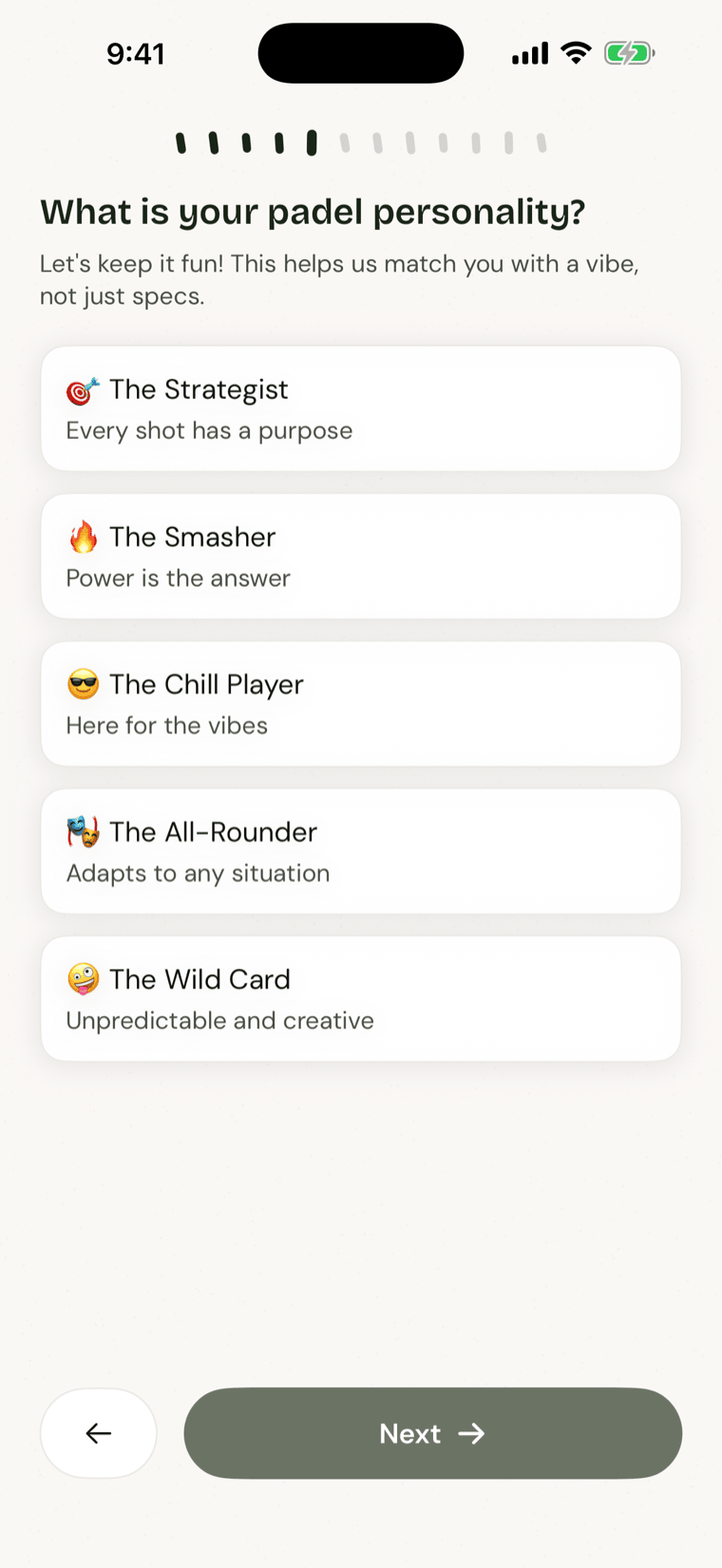
The app · free quiz
Not sure which one's you?
Take the free quiz in the app. We'll match a racket to your game, not the other way around.
Find my racketFree quiz. Sign in with email or Google to get your four picks.

Wilson Optix V2 Lite 2026 Review
By Andres Jovem · Updated October 19, 2026
A soft, round, low-balanced starter from Wilson that keeps a late hit in the court and the arm quiet, for the first-season player who would rather learn placement than chase pace.
The verdict
The Optix V2 Lite is for the player whose problem is still the middle of the racket, and it solves that problem well. A round head, a low balance, a low-density foam core, and a fiberglass face. Together they make a frame that keeps a late, off-center hit in the court. Very little of the sting travels back up your arm. It is a beginner's racket, and we'd put it the same way: this is a first racket, or the racket you keep in the bag when the first one wears out.
What it won't do is hit for you. Overheads leave with the pace you gave them, the smooth face adds little spin, and a keen improver will feel the ceiling inside a season or two. None of that is a flaw at this price. It is the trade a beginner should want: margin now, a step up later, and around €80 spent on learning instead of on power you can't aim yet.
The build
A low-density foam that gives before your arm does
The core is Core Foam, a low-density foam. Low density means the foam compresses under the ball, so contact arrives in your hand as a push rather than a jolt. That is what makes a block off the back glass feel easy on the elbow, and it is also why the ball comes off slower than it would from a dense EVA core. You get comfort and margin; you give up free speed.
A fiberglass weave that widens the margin
The hitting face is a fiberglass weave, not carbon. Fiberglass flexes more than carbon on contact, so a ball struck a few centimeters from the center still gets enough of the face to go where you aimed. The surface is smooth, which tells you where spin will come from: your swing, because there is no grit on the face to hold the ball. Sharp Hole Technology, a drilling pattern meant to add bite on every stroke, is the one concession to the brushed shot, so a sliced ball gets some grip from the holes.
A round head, carried low
The head is round and the balance sits low, with the mass close to your hand. Wilson calls the frame a fiberglass weave; the shops call it carbon-reinforced, which is the usual way a fiberglass frame is stiffened against twisting. Either way, when a hard ball catches the edge the head holds its line instead of turning in your grip. Wilson says 355g and the shops say 360g give or take ten, so expect a light racket that is quick to move whichever figure your unit lands on.
How it plays
From the back, the lob is the whole game
Most of a beginner's points are won by getting one more ball back, and this is the shot it was built for. A short, relaxed swing lifts a lob deep enough to push the other pair off the net, and a ball you meet late still clears the tape because the face carries some of the work. Blocks off the glass come back soft and unhurried, so there is time to recover your position before the next one. You will not surprise anyone with pace from back here. You will stay in the point, which at this stage is the better outcome. The one back-court shot to practice on it is the chiquita. That is the soft, low ball played to the feet of the pair at the net. The slow face makes it easy to take pace off, and a round head that keeps a late hit on line is the right frame to learn it with.
At the net, aim survives a timing error
Volleys are the shot that shows what a round, low-balanced frame is for. The head is already where your hand is, so a reaction block comes off the face on line even when your feet are not set. A volley aimed low across the net lands where you looked more often than a beginner's usually do. The racket will not punch a volley through a gap for you. Place it instead, and wait for the error at the other end.
Overhead, you supply everything
A bandeja comes off controlled and lands safe, which is the right overhead to learn first. A smash leaves with the speed of your swing and not a gram more. A brushed víbora gets very little bite from the smooth face, so the ball tends to sit up rather than skid away. If finishing points is already your game, this frame will frustrate you inside a month. If finishing points is something you plan to learn later, it will not get in the way.
Your arm, at the end of the night
Very little happens to it, and that is the point. A mishit arrives in the hand as a dull push, so nothing climbs to the elbow, and the shoulder is never hauling a heavy tip through the swing. Sessions end with your arm tired from padel, not from the racket. A player coming back from elbow or shoulder trouble, or a tennis player whose arm already has mileage, will notice the difference on the first evening.
Who it's for (and who should skip it)
Buy it if
- You are in your first season and your mishits still outnumber your clean hits
- You want a known brand on a soft, round starter without paying for a technology you cannot use yet
- Your arm has a history and you need every contact to stay gentle
Look elsewhere if
- You already finish points overhead: the pace has to come from you here, and a firmer teardrop will pay your swing back better
- Spin matters to you already: the smooth fiberglass face gives a brushed shot little to hold onto
- You are improving fast: by next season you will want a firmer core, so consider skipping a step
Not sure it's your match? The free 2-minute quiz reads your level, style, and budget and tells you which racket is.
The bottom line
Buy it as the racket you will not mind outgrowing. The one after it is where you spend real money.
Where to buy
Prices shown in Euro, converted and approximate. You check out in the store's own currency.
Frequently asked
Yes. The Optix V2 Lite is built to keep a late hit in the court. Its round head keeps the sweet spot in the middle, which is where a new player meets the ball. The soft contact spares the arm while your timing is still rough. The low balance makes it quick to move at the net. Few first rackets are easier to live with.
Control, in the way a beginner's racket should be: the Optix V2 Lite wins points by keeping a mistimed ball on line, not by adding speed to it. The low-density core slows the ball down rather than firing it. Power is yours to add with a bigger swing. The racket adds none of its own.
From around €80 for the Optix V2 Lite, with a second shop at €90, which puts it in the lower half of the big-brand beginner rackets. Prices on starter frames drift with stock more than on flagships, so the comparison above is worth a look before you click through.
Shape and intent. The Optix V2 Power is the attacking sibling of the Optix V2 Lite: a 360g teardrop aimed at improving players, with a foam core of unstated density and a carbon-reinforced frame. An overhead gets more reach. The swing has to be more committed. The Lite is the 355g round with a low balance, built for the first season. Both wear a fiberglass weave face, so the forgiveness on a drifting strike is shared. New to the sport, take the Lite. A season in and starting to attack, read our Optix V2 Power review.
Core Foam and fiberglass: the Optix V2 Lite runs Wilson's low-density foam under a smooth fiberglass weave face. The soft foam cushions the hit and widens the usable area of the face; the smooth fiberglass flexes on contact but has no texture to grip the ball, so spin stays modest. Sharp Hole Technology is its answer on bite for a brushed ball.
Not a women's racket, a first-season racket: the Optix V2 Lite is 355g, low balance, soft core. That is why it sits in our women's beginners guide, and why it works for anyone in year one. The lilac finish is the version our shops stock; nothing about it is built for one group of players.
The app · free quiz
Not sure which one's you?
Take the free quiz in the app. We'll match a racket to your game, not the other way around.
Find my racketFree quiz. Sign in with email or Google to get your four picks.