Bullpadel Indiga W 2026 Review
By Andres Jovem · Updated October 19, 2026
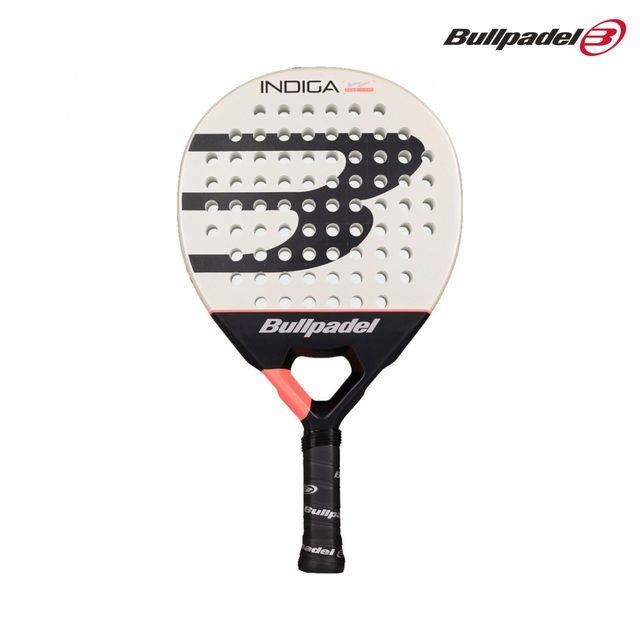
Bullpadel's women's-line starter: a round, low-balance frame with a SoftEVA core and a Polyglass face, gentle on the forearm and easy to steer, with nothing in it for the smash.
The verdict
The Indiga W is a beginner's racket in the plainest sense, and nothing about it is dressed up as more. Everything in the frame points at a player in their first season. A round head parks the sweet spot where a new player tends to make contact. A SoftEVA core keeps the strike gentle, and a Polyglass fiberglass face bends on an off-center hit. The balance is low, which keeps the weight near your hand so the head goes where you point it. A ball you catch near the rim still clears the net. A ball you block late still gets deep. That is the job of a first racket, and the Indiga W does it for €79.95.
What it will not do is grow with an attacking game. There is no weight behind the overhead and no stiffness in the face, so a smash keeps the point going rather than ending it. A player who starts finding the glass with their bandeja by the end of year one will want a frame with more in the tip. Beginner to intermediate is the fair range: most players will move on after a season or two, and that is a feature of a starter, not a flaw.
The W stands for the women's line, and it is a line, not a spec. A light round frame with a soft core suits any new player who wants a gentle racket, and nothing in the construction changes because of the letter on the frame.
The build
A SoftEVA core, soft to the touch
Bullpadel fills the Indiga W with its SoftEVA rubber, and soft is the word for it. The first block should show you what that means. The foam yields to the ball and returns it with lift, so a defensive shot from deep lands long without a hard swing. The same yield is what keeps a long session from leaving your forearm sore, because less of the contact climbs the handle. The trade is speed. A soft core keeps part of what you put into a flat drive, so the ball crosses the net with less on it than a firmer frame would send. A player who already hits hard will read that as the racket holding them back.
A Polyglass face, smooth
Bullpadel covers the core with Polyglass, its fiberglass face, in a smooth finish. Fiberglass bends more than carbon, so a ball struck toward the rim is cheaper than it would be on a stiff face, and the contact stays quiet on the wrist. The smooth surface is the detail to read twice. There is no rough texture here to grip the ball. A bandeja leaves with less slice than a textured face would give it, and the víbora is not this racket's shot. For a beginner that costs little, because spin is a skill you build after the basics, not before.
A CarbonTube frame around a round head, balanced low
Around it runs Bullpadel's CarbonTube carbon frame, the part that stops a soft, fiberglass-faced racket from twisting when you reach wide; the head holds square and the shot lands where you meant it. The head is round, putting the sweet spot in the middle of the face, and the balance is low, keeping the mass near your hand. That pairing is why the racket is ready a beat earlier on a volley at your body and why a long rally leaves your shoulder alone. It is also why the overhead has no punch: nothing sits at the tip to drive the ball down.
How it plays
At the net, ready a beat early
What a new player notices first is that the racket is already in place when the ball arrives. With the weight near your hand, a volley struck at your chest goes back over the net rather than past you. A reaction block off a hard drive is on time more often than not. The volley itself is a placement shot: it lands deep and safe, not fast, and a player who wants to punch a volley through a gap will find nothing extra in the frame. In a first season that is the trade to make, because the point you keep alive matters more than the one you nearly finished.
From the back, blocks get deep without effort
Defense is where the soft core pays off most. A blocked smash lifts off the face and travels to the back glass on its own, so a rally the opponents should have won keeps going. The lob is easy to get up, because the frame does the lifting, and a mishit toward the rim still lands in. What you lose is pace on the counter: a hard drive from deep carries less than you intended, and the better your opponents, the more they will step in on it.
Overhead, a reset and not a weapon
The bandeja is comfortable. The round head forgives a late contact, but the face gives it little slice and the low balance little depth, so it keeps the net rather than pinning anyone back. The smash is the frame's weakest shot. With no tip weight and soft foam under the face, a flat overhead leaves slowly and a ball you meant to put away comes back. Play the volley instead, and in your first season that is good advice.
What the forearm hears
Soft core, bending fiberglass face, low balance, light frame: the Indiga W is about as gentle on the arm as a racket gets. Forearm and elbow stay quiet through a long session because little of the contact comes back up the handle, and the shoulder has almost nothing to swing at the tip. You will tire with it only if you chase the pace the frame keeps by swinging ever harder.
Who it's for (and who should skip it)
Buy it if
- Your first season is under way and you want a racket that forgives the rim of the face and keeps your forearm quiet
- The lightest possible feel in the hand matters to you, so volleys and blocks come out on time while your footwork catches up
- You want a small first outlay and plan to move to a stiffer frame once your game has a shape
Look elsewhere if
- Hitting hard is already your game: a soft core keeps some of that pace for itself
- You are starting to finish points overhead: there is no head weight here, and a smash keeps the rally going rather than ending it
- You want spin on the bandeja: the face is smooth, and a textured surface will grip the ball in a way this one cannot
Not sure it's your match? The free 2-minute quiz reads your level, style, and budget and tells you which racket is.
The bottom line
Start on it, learn the volley with it, and when your overhead starts finding the glass, pass it to the next beginner and move up.
Where to buy
Prices shown in Euro, converted and approximate. You check out in the store's own currency.
Frequently asked
No. The Indiga W is a round 352g frame with a SoftEVA core, a Polyglass fiberglass face and a low balance, and that is a first racket for any beginner who wants something light and gentle. Bullpadel sells it under its women's line. The racket does not know that.
Yes. The Indiga W is built for a first season from the ground up: round head, soft core, fiberglass face, low balance. A mishit stays in and the strike stays gentle on the arm.
Control, as far as a beginner's frame goes, is what the Indiga W offers. Round shape, soft core and low balance between them send the ball where you point it with lift rather than speed. There is nothing in the frame for power: no head weight for the smash and no stiff face to fire a drive, so a player looking to attack should look at a teardrop.
From €79.95 at PadelMarket, which is where the Indiga W is in stock at the moment. That puts it among the cheaper rackets in our women's beginner guide.
SoftEVA inside, smooth Polyglass fiberglass outside, CarbonTube carbon around the edge: that is the Indiga W. The core softens the block, the fiberglass face forgives an off-center strike, and the carbon frame stops the head twisting when you reach wide.
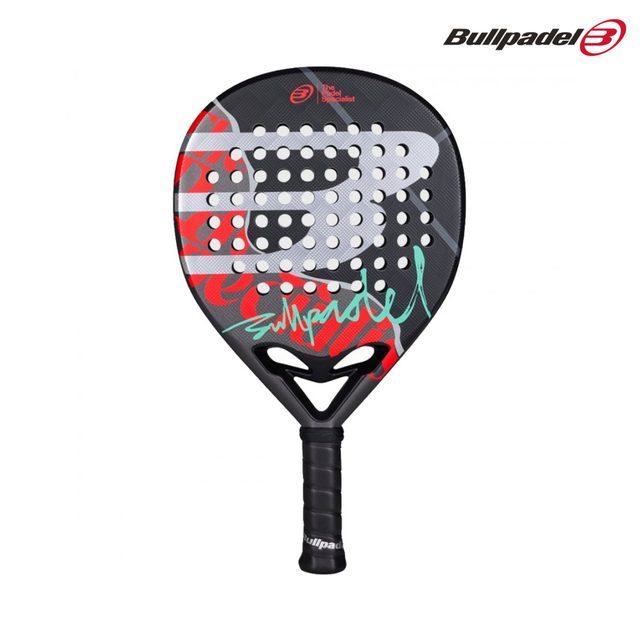
The Indiga W and the X Hero Red are both round, soft starters, so the choice is weight and price. The Nox X Hero Red is a 355g round frame, 3K fiberglass over an HR3 White EVA core. It is a few grams heavier than the Indiga W, and it was a few euros cheaper at PadelMarket when we compared the two. The Indiga W sits lower in balance, so it feels lighter in the hand than the numbers suggest and is the easier of the two to steer at the net. The lightest feel points to the Indiga W; a touch more mass behind a block points to the X Hero Red.


The app · free quiz
Not sure which one's you?
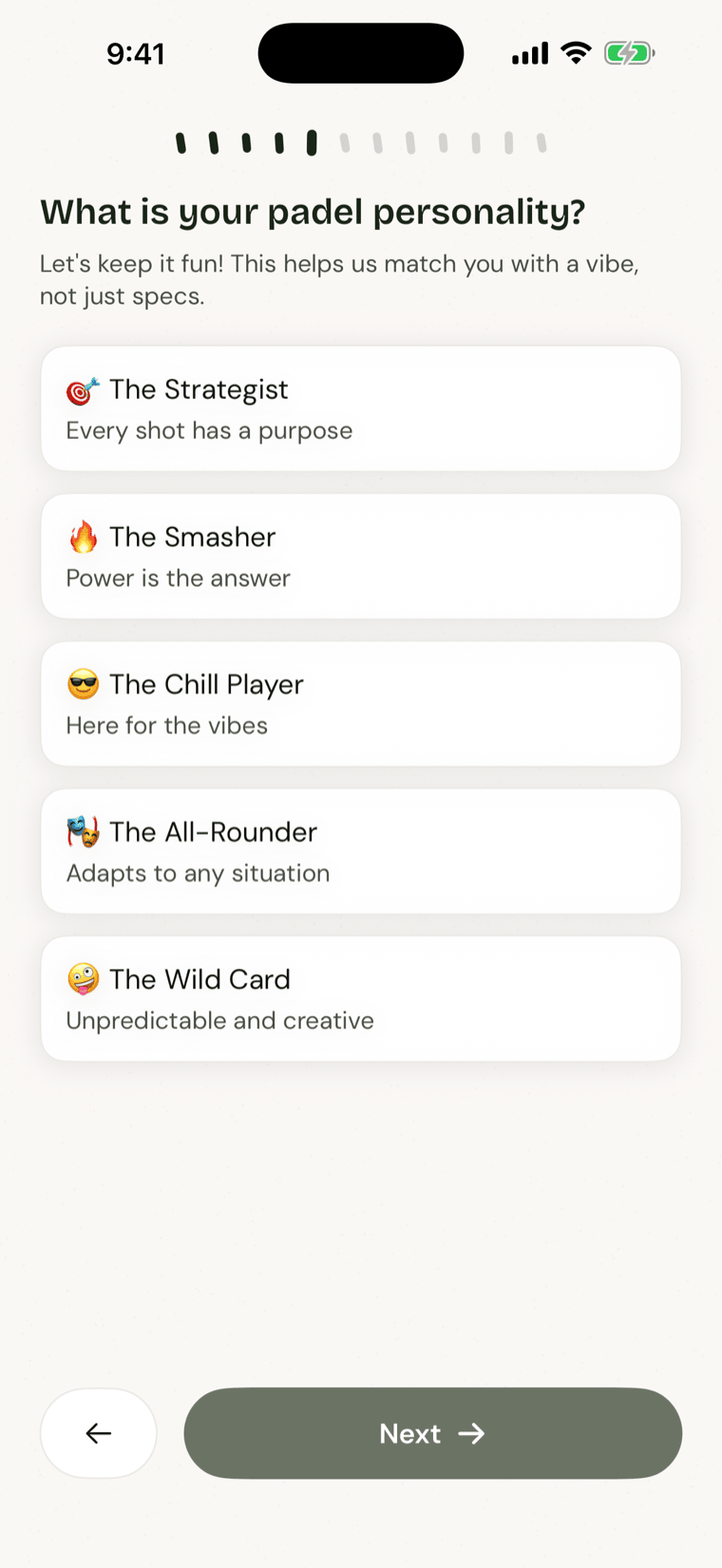
Take the free quiz in the app. We'll match a racket to your game, not the other way around.
Find my racketFree quiz. Sign in with email or Google to get your four picks.

Bullpadel Indiga W 2026 Review
By Andres Jovem · Updated October 19, 2026
Bullpadel's women's-line starter: a round, low-balance frame with a SoftEVA core and a Polyglass face, gentle on the forearm and easy to steer, with nothing in it for the smash.
The verdict
The Indiga W is a beginner's racket in the plainest sense, and nothing about it is dressed up as more. Everything in the frame points at a player in their first season. A round head parks the sweet spot where a new player tends to make contact. A SoftEVA core keeps the strike gentle, and a Polyglass fiberglass face bends on an off-center hit. The balance is low, which keeps the weight near your hand so the head goes where you point it. A ball you catch near the rim still clears the net. A ball you block late still gets deep. That is the job of a first racket, and the Indiga W does it for €79.95.
What it will not do is grow with an attacking game. There is no weight behind the overhead and no stiffness in the face, so a smash keeps the point going rather than ending it. A player who starts finding the glass with their bandeja by the end of year one will want a frame with more in the tip. Beginner to intermediate is the fair range: most players will move on after a season or two, and that is a feature of a starter, not a flaw.
The W stands for the women's line, and it is a line, not a spec. A light round frame with a soft core suits any new player who wants a gentle racket, and nothing in the construction changes because of the letter on the frame.
The build
A SoftEVA core, soft to the touch
Bullpadel fills the Indiga W with its SoftEVA rubber, and soft is the word for it. The first block should show you what that means. The foam yields to the ball and returns it with lift, so a defensive shot from deep lands long without a hard swing. The same yield is what keeps a long session from leaving your forearm sore, because less of the contact climbs the handle. The trade is speed. A soft core keeps part of what you put into a flat drive, so the ball crosses the net with less on it than a firmer frame would send. A player who already hits hard will read that as the racket holding them back.
A Polyglass face, smooth
Bullpadel covers the core with Polyglass, its fiberglass face, in a smooth finish. Fiberglass bends more than carbon, so a ball struck toward the rim is cheaper than it would be on a stiff face, and the contact stays quiet on the wrist. The smooth surface is the detail to read twice. There is no rough texture here to grip the ball. A bandeja leaves with less slice than a textured face would give it, and the víbora is not this racket's shot. For a beginner that costs little, because spin is a skill you build after the basics, not before.
A CarbonTube frame around a round head, balanced low
Around it runs Bullpadel's CarbonTube carbon frame, the part that stops a soft, fiberglass-faced racket from twisting when you reach wide; the head holds square and the shot lands where you meant it. The head is round, putting the sweet spot in the middle of the face, and the balance is low, keeping the mass near your hand. That pairing is why the racket is ready a beat earlier on a volley at your body and why a long rally leaves your shoulder alone. It is also why the overhead has no punch: nothing sits at the tip to drive the ball down.
How it plays
At the net, ready a beat early
What a new player notices first is that the racket is already in place when the ball arrives. With the weight near your hand, a volley struck at your chest goes back over the net rather than past you. A reaction block off a hard drive is on time more often than not. The volley itself is a placement shot: it lands deep and safe, not fast, and a player who wants to punch a volley through a gap will find nothing extra in the frame. In a first season that is the trade to make, because the point you keep alive matters more than the one you nearly finished.
From the back, blocks get deep without effort
Defense is where the soft core pays off most. A blocked smash lifts off the face and travels to the back glass on its own, so a rally the opponents should have won keeps going. The lob is easy to get up, because the frame does the lifting, and a mishit toward the rim still lands in. What you lose is pace on the counter: a hard drive from deep carries less than you intended, and the better your opponents, the more they will step in on it.
Overhead, a reset and not a weapon
The bandeja is comfortable. The round head forgives a late contact, but the face gives it little slice and the low balance little depth, so it keeps the net rather than pinning anyone back. The smash is the frame's weakest shot. With no tip weight and soft foam under the face, a flat overhead leaves slowly and a ball you meant to put away comes back. Play the volley instead, and in your first season that is good advice.
What the forearm hears
Soft core, bending fiberglass face, low balance, light frame: the Indiga W is about as gentle on the arm as a racket gets. Forearm and elbow stay quiet through a long session because little of the contact comes back up the handle, and the shoulder has almost nothing to swing at the tip. You will tire with it only if you chase the pace the frame keeps by swinging ever harder.
Who it's for (and who should skip it)
Buy it if
- Your first season is under way and you want a racket that forgives the rim of the face and keeps your forearm quiet
- The lightest possible feel in the hand matters to you, so volleys and blocks come out on time while your footwork catches up
- You want a small first outlay and plan to move to a stiffer frame once your game has a shape
Look elsewhere if
- Hitting hard is already your game: a soft core keeps some of that pace for itself
- You are starting to finish points overhead: there is no head weight here, and a smash keeps the rally going rather than ending it
- You want spin on the bandeja: the face is smooth, and a textured surface will grip the ball in a way this one cannot
Not sure it's your match? The free 2-minute quiz reads your level, style, and budget and tells you which racket is.
The bottom line
Start on it, learn the volley with it, and when your overhead starts finding the glass, pass it to the next beginner and move up.
Where to buy
Prices shown in Euro, converted and approximate. You check out in the store's own currency.
Frequently asked
No. The Indiga W is a round 352g frame with a SoftEVA core, a Polyglass fiberglass face and a low balance, and that is a first racket for any beginner who wants something light and gentle. Bullpadel sells it under its women's line. The racket does not know that.
Yes. The Indiga W is built for a first season from the ground up: round head, soft core, fiberglass face, low balance. A mishit stays in and the strike stays gentle on the arm.
Control, as far as a beginner's frame goes, is what the Indiga W offers. Round shape, soft core and low balance between them send the ball where you point it with lift rather than speed. There is nothing in the frame for power: no head weight for the smash and no stiff face to fire a drive, so a player looking to attack should look at a teardrop.
From €79.95 at PadelMarket, which is where the Indiga W is in stock at the moment. That puts it among the cheaper rackets in our women's beginner guide.
SoftEVA inside, smooth Polyglass fiberglass outside, CarbonTube carbon around the edge: that is the Indiga W. The core softens the block, the fiberglass face forgives an off-center strike, and the carbon frame stops the head twisting when you reach wide.
The Indiga W and the X Hero Red are both round, soft starters, so the choice is weight and price. The Nox X Hero Red is a 355g round frame, 3K fiberglass over an HR3 White EVA core. It is a few grams heavier than the Indiga W, and it was a few euros cheaper at PadelMarket when we compared the two. The Indiga W sits lower in balance, so it feels lighter in the hand than the numbers suggest and is the easier of the two to steer at the net. The lightest feel points to the Indiga W; a touch more mass behind a block points to the X Hero Red.
The app · free quiz
Not sure which one's you?
Take the free quiz in the app. We'll match a racket to your game, not the other way around.
Find my racketFree quiz. Sign in with email or Google to get your four picks.