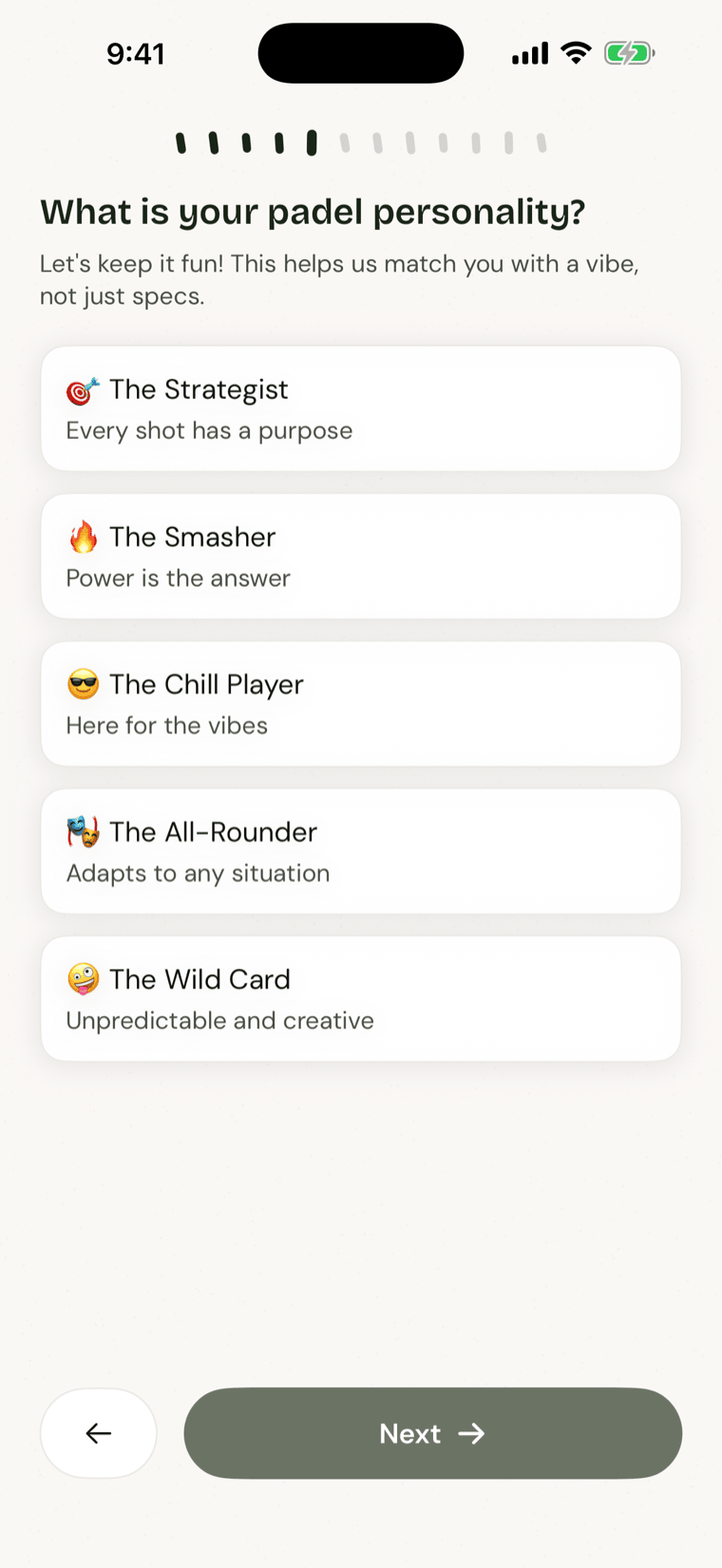
Head
Best overall for control
Control
Power
Low balance
from€127.95
In stockBuying guide · Control
By Andres Jovem · Updated October 16, 2026
You already know your kind of point. It's long, it has three lobs in it, a couple of blocks the other pair swore were winners, and it ends with the ball rolling into a gap you created two shots ago. That's the placement-first game, and it deserves gear chosen for it, because most rackets are sold on power a control player never uses and pays for anyway, in a twitchy response and a sweet spot that forgives nothing.
What makes a racket a control racket is dull on paper and decisive on court: a round or teardrop head that keeps the sweet spot central, balance held near the hand so the head obeys, and a core that returns the ball at a speed you chose. Every frame here clears that bar. What separates the ten is who each is for: they run from a first racket at €59 to the teardrop Bullpadel builds for Fede Chingotto, ranked by how much control your money buys at each stage of the game.
One honest note before the list: these picks suit control players in general. Your build, your budget, and how the rest of your game works move the answer, and the free app quiz's 12 questions land on the one that's yours in about two minutes. Every racket below is verified in stock at approved shops, prices checked live as we write.
The top 10 at a glance. Swipe through, or read the full breakdown below ↓
Control
A round head keeps the sweet spot low and central, which keeps a mishit on target, and that reliability is the raw material of a placement game. A teardrop shifts a little mass toward the head for a livelier overhead; take it when your bandeja is a shot, not a hope. The diamond is the one shape a control player can skip without a second thought.
Soft cores hold the ball longer and forgive more, the right trade while your contact still wanders. Medium cores give back clearer feedback, so a consistent swing can feel the difference between strikes and adjust. Rubber cores, like the Neuron 02's polyethylene, deaden incoming pace so hard hitters can't use their speed against you.
Control frames run fuller than you might expect, 355-370g across this list, because mass is stability: it plants your blocks and stops fast hands punching the racket aside. The condition is balance. Kept near the hand, that mass costs little to swing; stacked toward the tip it turns into lag your wrist pays for.
From fiberglass to carbon is the upgrade you can feel: a carbon face returns the same response shot after shot, and repeatability is what you're buying. This list runs from €59 to €208, and the climb buys face material, feedback, and refinement. Spend where your game is, not where the ceiling is.
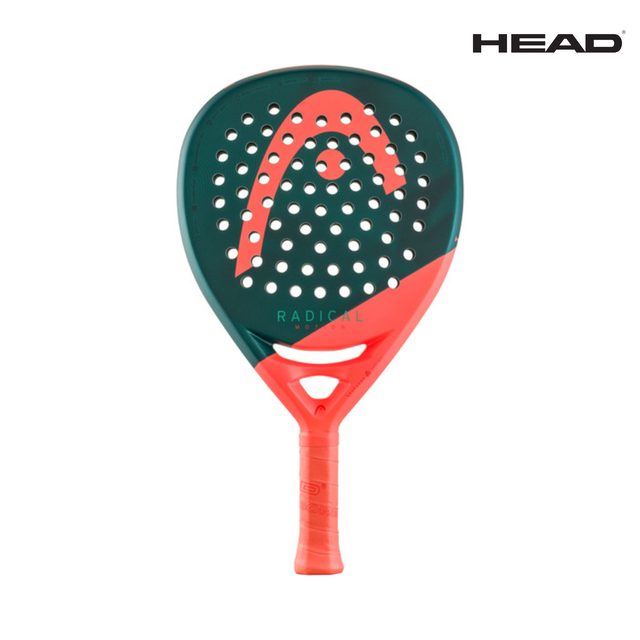
The oldest complaint about control rackets is that the precision stops at shoulder height. Our Top Pick answers it: the Head Radical Motion is a control teardrop with a real overhead in it, built for the advanced player who wants placement everywhere on the court, including above it. At €128, it also costs less than most of the advanced field below it.
Head builds the trust in layers. A Control Foam core takes pace off the incoming ball and hands it back at a speed you chose, and the 3K carbon face over it returns the same response strike after strike, so the shot you grooved in practice is the shot that shows up in the third set. The rough finish grips a brushed slice without a bigger swing, and the 38mm frame keeps the head from twisting when you take the ball late.
You feel the trust before you can name it. Blocks off the back glass sit down where you sent them, the chiquita crosses low and dies, and the low balance keeps the head early to every net exchange, so volleys go to the open corner instead of floating back to the middle. Overhead is where the teardrop earns its slot: the bandeja carries with shape, the smash stays placed rather than wild, and nothing about the motion drags. At 355g it's among the easier advanced frames here to swing deep into a long match.

Placement is a habit, and habits are cheapest to build early. The Nox X Zero Red is the least expensive way onto this list at €59, a round, soft starter with no power to lean on, and that absence is the feature: from your first session, the only way to win a point with it is to put the ball somewhere smart.
Nox keeps the build honest. The HR3 White EVA core is a medium-soft foam that cushions contact and keeps a mishit playable, and the 3K fiberglass face flexes with the ball, so an off-center strike costs you accuracy rather than the point. Underneath, a carbon frame stops the round head twisting on a stretched reach, more structure than most starter rackets bother with.
Calm is the operating mode. Lobs are easy to measure from the back, blocks come off soft enough to stay low, and at the net the light-in-hand head lets you punch a volley without steering it. Winners arrive by geometry, not violence, because the soft build tops out early on pace. That ceiling is the deal, and for a beginner deciding what kind of padel player to become, this racket votes for the placement game.
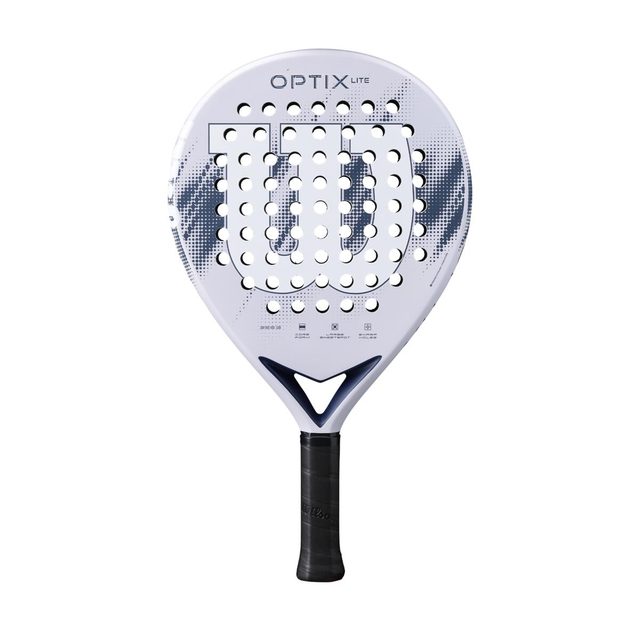
Control starts with a frame that does what you meant. The Optix V2 Lite is Wilson's beginner round, a forgiving racket that makes placement your first habit rather than your later correction.
Wilson's Core Foam sits behind a fiberglass weave face, and a carbon-reinforced frame wraps the pair. Fiberglass gives a little on contact, which widens the area that still sends the ball on line, while the carbon around the edge stops the head from twisting on a firm block. Aim survives a timing error.
Defending from the back, a short swing places a lob deep into the corners. At the net, volleys aimed at the other pair's feet come back where you sent them more often than a beginner's usually do. It rewards aim over effort, which is the right lesson early.
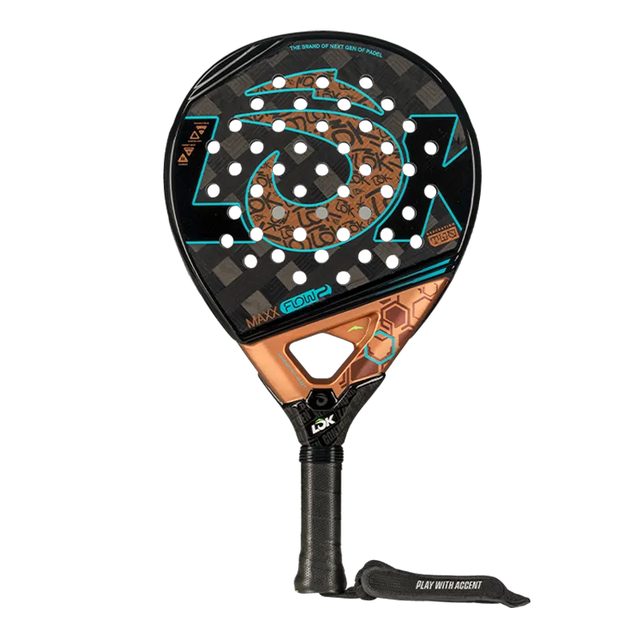
Every list needs the pick the big brands would rather you skipped. Lok is a young direct-to-player label, and the Maxx Flow Gen 2 is its control round argument: serious materials, grown-up weight, and a price the established names reserve for their second tier.
The sheet reads above its receipt. A C18 carbon face carries a weave you normally meet two shelves up the price list, over a medium EVA core that returns the ball evenly instead of springing it, and the rough finish grips for the sliced, placed game a round head rewards. At 367g with a medium balance it sits planted through contact, so a firm block stays a firm block.
Repeatability is the pitch. The strike feels the same on the fiftieth ball as the first: volleys repeat themselves, lobs land at the depth you picked, and a hard incoming drive meets enough mass that you steer it rather than survive it. What you give up is pedigree and shelf presence, plus a little hand speed to the heft. What you keep, at €169, is money a badge would have cost you, in a frame your game will not outgrow next season.
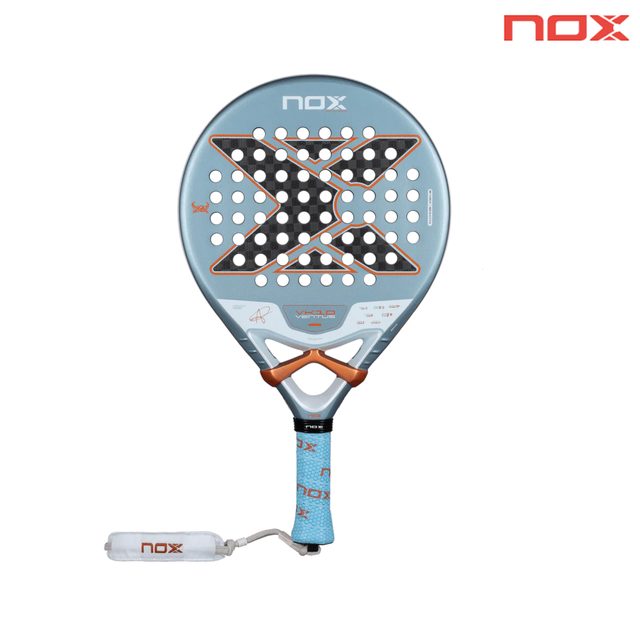
Spin is the control player's scoring shot, and no pick here produces it more easily. The Nox VK10 Ventus Control 12K, the signature frame of pro Aranzazu Osoro, pairs a round control mold with a rough 12K carbon face that turns a brushing swing into heavy rotation, giving your placement game a cutting edge.
The core carries the feel. Nox's MLD Black EVA layers foam densities so the middle of the hit stays cushioned while contact reaches your hand with enough detail to judge how much racket you gave the ball. Outside, the 12K carbon weave is stiff enough to repeat, and its rough finish grips the felt for slice, kick lobs, and dipping chiquitas without asking for a bigger swing.
Point construction turns quietly vicious. A backhand slice off the glass skids instead of sitting up, volleys carry underspin that makes the counter awkward, and the bandeja drops shorter and meaner out of the same motion you already own. Defense stays composed, the round head forgiving a stretched reach, though the medium balance asks slightly quicker hands than the low-balanced rounds around it. At €175 it's a spend, and it's the one spend on this list that buys a new weapon rather than a refinement.
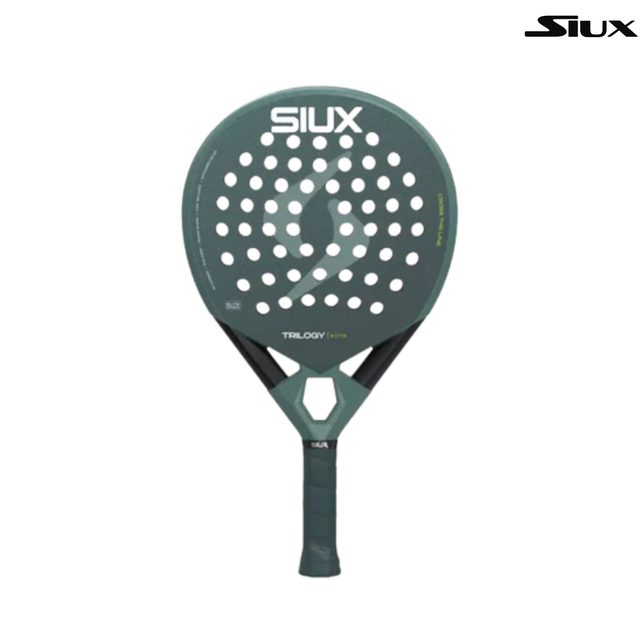
The advanced field gets expensive fast. The Siux Trilogy Elite 6 is where it stays sensible: a full advanced control build without the flagship markup, €140 at the cheaper of two shops, for the improver who wants serious equipment and a defensible receipt.
Siux specs it honest rather than exotic. A medium-density Black EVA core gives the ball a firm, consistent platform, so the length you find in the warmup is the length you keep in the third set, and the 3K carbon face returns the same answer from the center or a thumb's width off it. Carbon frame, low balance, round head: the stability holds through contact, which is where mid-priced rackets usually cheat and this one doesn't.
Evenness is the experience. Blocks travel deep off a predictable middle, so you give away very few cheap points from the back, and at the net it punches clean and straight, happier finding a corner than cutting an angle. Overheads stay conservative by design. There's no party trick, and that's the pitch: everything works, nothing surprises, and 367g of substance means faster opponents can't hurry you off your own game.
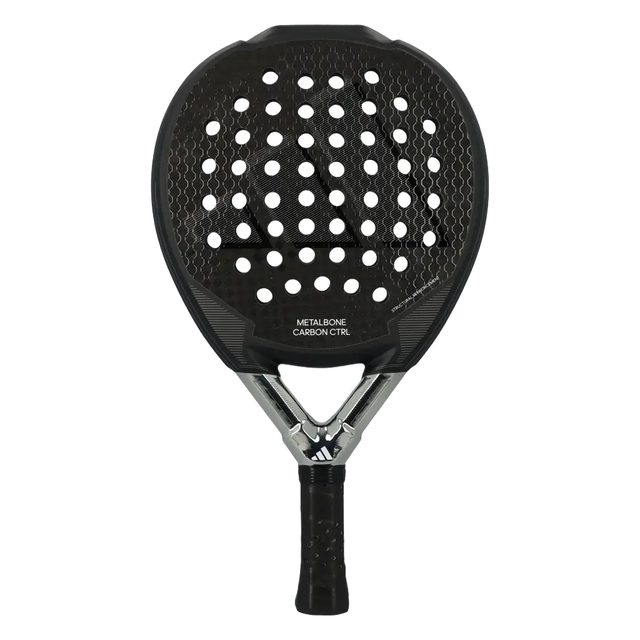
Take the engineering of padel's most famous attack franchise and point it the other way. The Adidas Metalbone Carbon Ctrl borrows the Metalbone name for a round, soft, control-first frame at €208, priced with the advanced field rather than above it.
Adidas softens the recipe at both layers. The EVA Soft core compresses deep at contact and releases slow, so touch shots come off with margin and a long rally stays comfortable, while the carbon face supplies what the soft middle can't: a stiff outer skin that keeps your aim honest while the center cushions the hit.
It rewards the player who wins slow. Drops and resets die close to the net because the deep-compressing middle strips the incoming pace, defensive lobs place easily at a length, and volleys steer accurately without much native pop, so put-aways come from the court you opened rather than the racket. Two approved shops carry it as we write, so if it fits your game there is no rush to decide.

Advanced control players separate in the short game. The Siux Gea 2 is built for it: the touch specialist of this list, a soft-cored, low-balanced round for the player whose best shots are the drop, the reset, and the chiquita that lands on a shoelace.
Softness with structure is the trick. The HR3 EVA core is a forgiving foam that holds the ball a fraction longer at contact, and that extra beat of dwell is what lets a practiced hand add or subtract pace at will, while the 3K carbon face keeps the geometry strict so the softness never blurs your aim. A carbon frame closes a premium build, priced like one at €180.
Feel is the currency. Resets land short and dead off a middle that soaks up whatever pace the ball brought with it, net exchanges reward the quickest brain rather than the biggest swing, and the low balance keeps the head obedient on reaction volleys. Baseline defense is patient and precise, though finishing takes planning: the soft core returns little free power, so the kill arrives by opening the court twice. Hands still building their touch will find it expensive tuition. Hands that are ready will find their racket.
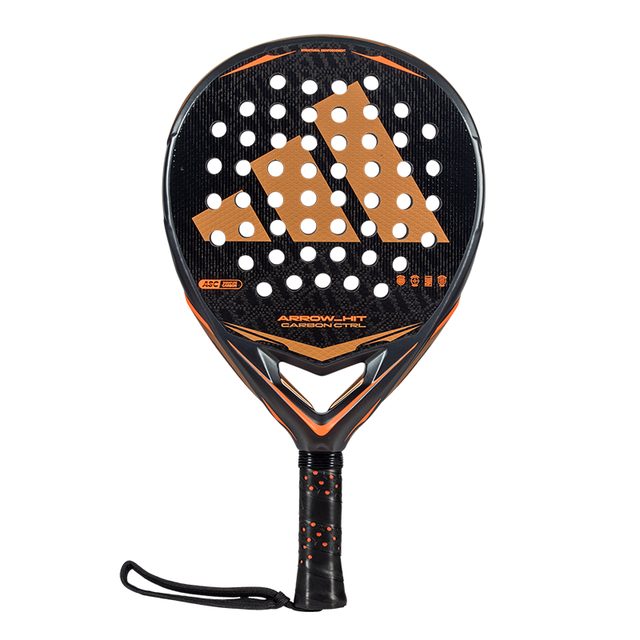
Some pairs attack their way to wins; others make winning feel impossible for the opposition. The Adidas Arrow Hit Carbon Ctrl is for the second kind: the fullest soft round on this list at 367g, a wall of a racket for the advanced player who treats defense as an offensive plan.
The construction pairs mass with mercy. An EVA Soft core swallows whatever the other pair throws at it, so the return leaves at your speed rather than theirs, and the carbon face and frame give all that softness a rigid skeleton, keeping the round head level when a smash lands out near the edge. A medium balance keeps the substance centered rather than head-high.
Playing against it is the best description of it. Smashes come back. Lobs land deep enough to reset the point on demand, blocks arrive low, heavy, and short of anything to attack, and at the net the sheer stability turns a body-shot exchange into your point. The bill is physical: the mass that makes it immovable also makes it deliberate. Give it to a defender in good shape and it may be the most frustrating pick here to face.
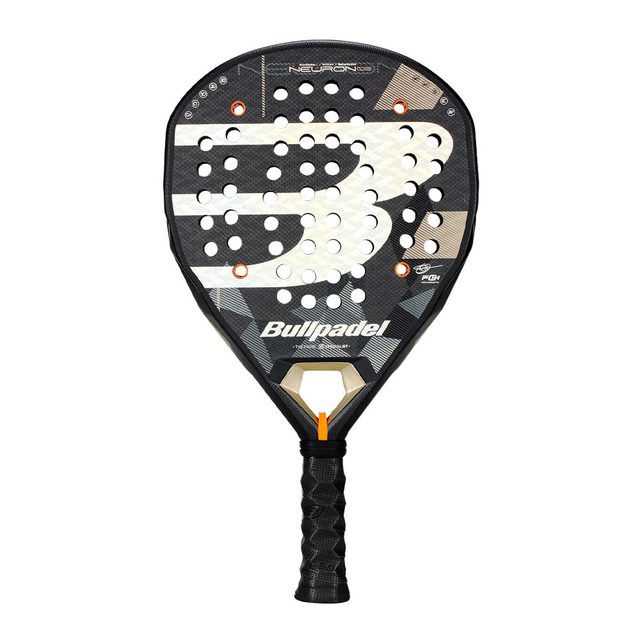
This is what control means at the top of the game. The Bullpadel Neuron 02 is the frame built for Fede Chingotto, one of the best defensive players alive, and it brings pro-level control engineering to the one slot on this list that reaches it. At €179 from the right shop, it even undercuts two of the advanced picks above.
The core is the exotic part. Bullpadel fills it with microperforated polyethylene, its dense control rubber in a perforated, tuned construction. Around it, a 3K carbon face and carbon frame supply tour-grade stiffness, and the teardrop mold with a low balance puts working mass into the overhead while the head stays quick in hand at 370g.
Played well, it makes order out of chaos. The hardest incoming ball leaves the face quiet and placed, defensive lobs buy time on demand, and the teardrop gives the bandeja and víbora enough behind them to hold the net once you've earned it. Nothing here helps an unfinished swing: the medium core reports a mishit as it happened and the frame assumes you can defend your half of the court alone. That's the deal at this level, and for the placement-first player who has outgrown every step below, this is the ceiling, in stock.
The routing is short. Keeping your first outlay small, the Nox X Zero Red teaches the placement game for €59, and the Wilson Optix V2 Lite teaches it on a steadier, carbon-reinforced frame if you're staying. Stepping up, it's the VK10 for spin, or the Lok Maxx Flow if you'd rather pay for carbon than for a badge. At the advanced level, our Top Pick Radical Motion covers the most court for the money, the Trilogy Elite 6 and Metalbone Carbon Ctrl keep the receipt sensible, the Gea 2 owns the short game, and the Arrow Hit turns defense into a weapon. Ready for the ceiling, it's the Neuron 02. Or skip the deliberation: the free app quiz takes your game, your budget, and two minutes, and hands back the racket that's yours.
A control padel racket is a round or teardrop frame with a centered sweet spot, a low or even balance, and a core that returns the ball at a manageable pace, built to reward placement over power. The design keeps mishits on target and your aim repeatable. Every pick on this list fits that description, from starter frames to Fede Chingotto's tour teardrop.
No. Beginners benefit most from the forgiveness, but control is a playing style, not a skill level: this list runs from a €59 starter to a pro signature frame, and defensive specialists at the top of the game build entire careers on round and teardrop control molds.
Round is the default: it centers the sweet spot and keeps the head obedient, which suits the block, lob, and reset game. Choose a teardrop once your bandeja is a reliable weapon, because it moves a little mass up for overhead work. Two of the ten here are teardrops for that reason, the Radical Motion and the Neuron 02.
Between about €59 and €208, which covers this entire list. A capable starter costs €59 to €80, the mid-tier step-ups sit near €169 and €175, and the advanced frames run from €138 to €208. Past our Top Pick's €138, extra money buys refinement and pedigree rather than more control.
Yes, by design: the head-high mass and stiffness that fire a ball out of a diamond frame are traded for a centered sweet spot and a calmer response, so you supply the pace and the racket supplies the accuracy. The trade costs less than it sounds, since most amateur points end on errors, not winners.
Roughly 355-370g, which is where all ten of these sit. The lighter frames in that band favor quick hands at the net; the fuller ones plant blocks and resist hard hitters. Balance matters as much as the number, and if you're unsure where you land, the free app quiz weighs your build and game in two minutes.
Every pick starts in our catalog of 800+ rackets. From it we select placement-first frames across every level, verify every price and stock status live at our approved shops before publishing, and re-check them on every update. Nobody pays for placement, and there are no invented test scores: specs come from the catalog and retailer listings, and the free two-minute quiz matches the same data to your game.
The app · free quiz
Take the free quiz in the app. We'll match a racket to your game, not the other way around.
Find my racketFree quiz. Sign in with email or Google to get your four picks.