Nox VK10 Ventus Control 12K 2026 Review
By Andres Jovem · Updated October 19, 2026
A composed, medium-core round that trades free power for a level of placement control most intermediate players are ready to graduate into.
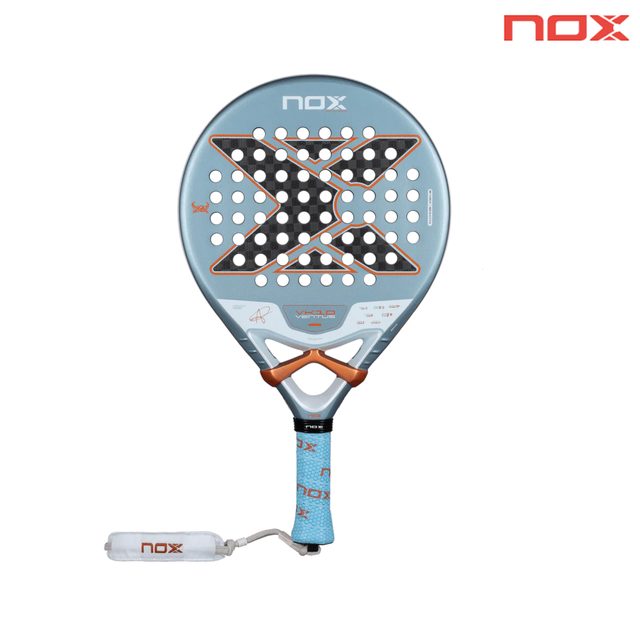
The verdict
The Nox VK10 Ventus Control 12K is a control racket that means it, and it does not apologize for what that costs you. This is a round, medium-balanced 362g frame built for the intermediate who has already decided that winning points is about where the ball goes, not how hard it leaves. You point, it obeys. What you will not find here is a frame that hits for you, so if you are still hunting free power off the smash, the honest answer is that this is not your racket yet.
Where it earns its keep is the middle third of the court and the net. The medium core and the round mold give you a response you can trust shot after shot, which is the whole appeal: you stop steering the ball and start aiming it. It rewards the player whose game is patience, angles, and pressure at the net, and it quietly punishes anyone expecting the head to do the finishing. Read the skip list below before you buy, because this is a frame that fits a specific game and frustrates the rest.
The build
A 12K carbon face that reports back
The hitting layer is a 12K carbon weave with a rough finish, and the texture is the point. A coarser surface grabs the ball for the fraction of a second it sits on the face, so a brushed slice or a cut reset leaves with the rotation you asked for instead of skidding off flat. Carbon plays firm and consistent, which is what a control player wants: the same ball back every time, not a face that flexes and hands you a different result on the next swing. Spin and repeatability are what this surface is built to give, and it gives them plainly.
An MLD Black EVA core tuned for feel
Under the face sits Nox's MLD Black EVA core, a medium-density foam that leans toward feedback rather than pop. A medium core compresses just enough at contact to tell your hand how much racket you put on the ball, so the information comes back clean and you can adjust the next shot before you have even reset your feet. That clarity is the trade for cushion: this is not a plush, shock-eating foam, so a mishit still gets through to your arm. You buy this core for touch, not for comfort.
A round head on a carbon frame, balanced even
The mass sits in the middle at a medium balance, and the frame is full carbon around a round mold, which is the most forgiving shape in padel. The sweet spot sits low and central, right where an intermediate makes contact, so a strike caught slightly off center still holds its line instead of twisting the head off target. At 362g the frame is substantial without being a plank, so it plants behind a volley yet still comes around in time for a quick exchange. Nothing about the layout chases power; every choice here protects your accuracy.
How it plays
From the baseline, the guesswork leaves
Sit behind a lob and this frame lets you drop it onto a small target, because the response never surprises you. Resets skid low off the face when you slice them, and the rough carbon holds enough of the ball to keep a defensive block from ballooning. You are not fighting the racket to place a ball deep. The pace you get is the pace you supply, so on defense you trade in patience and angles, and the frame keeps the exchange alive until the point turns your way.
At the net, it puts the ball where you look
This is the zone the VK10 was built for. The round head punches volleys flat and obedient into the corners, and quick hands are rewarded because the medium balance lets the frame change direction without dragging. A reflex block off a hard drive comes back controlled rather than sprayed, since the face does not add pace you did not ask for. When a sitter floats up, you finish it by placing it into open court, not by swinging out of your shoes and hoping.
On the attack, you place the smash rather than blast it
Set your feet under an overhead and the ball comes off heavy enough to hurt when you aim it into a corner or angle it off the side glass, but the frame will not manufacture a por tres out of thin air. The medium core and even balance mean the power is honest, in proportion to your technique, so the finish rewards a well-placed smash over a raw one. The bandeja and vibora are where it shines on offense: the textured face bites for spin and holds the ball on line, so you can carve the point open instead of ending it in one blow.
Comfort and the arm, said plainly
A medium core is friendlier than a hard one, but do not read this as an arm-saver. There is no soft, shock-absorbing foam here to eat a mishit, so a ball caught off the sweet spot still sends feedback up into the wrist and elbow. A grooved swing will feel this frame as clean information all match. A rough or still-developing swing will feel it as sting by the third set, and no grip swap softens that. If your elbow already complains after a long match, weigh that honestly before you commit.
Who it's for (and who should skip it)
Buy it if
- You are an intermediate who has decided placement, angles, and net pressure are how you win, and you want a frame that answers to that game.
- You generate your own pace and want a repeatable, controllable response over free power off the face.
- You lean on spin, the bandeja, and the vibora, and want a rough carbon surface that bites for rotation.
Look elsewhere if
- You are a beginner or still building your swing. This frame gives back nothing you do not put in, and its medium core will not forgive off-center hits for you.
- You want a racket that supplies power, especially off the smash. This one asks you to place the ball, not to blast it.
- Your arm already grumbles after a long match. A medium core is not a soft one, and a mishit still reaches the elbow.
Not sure it's your match? The free 2-minute quiz reads your level, style, and budget and tells you which racket is.
The bottom line
If your game has grown into placement and you want a round frame that answers to precision rather than doing the hitting for you, the VK10 Ventus Control 12K is a committed, honest pick. Beginners and power hunters should look elsewhere. Not sure it is your match? The free 2-minute quiz reads your level, style, and budget and tells you the racket that is actually yours.
Where to buy
Prices shown in Euro, converted and approximate. You check out in the store's own currency.
Frequently asked
No. The VK10 Ventus Control 12K is an intermediate control racket, and its medium core and demanding face give a beginner almost nothing back on a mishit, so a new player will fight it. A softer, round beginner frame around 355 to 365g will forgive more and teach you faster. Come back to this one once your swing is grooved and placement is your game.
It is firmly a control racket. Between the round head, the medium MLD Black EVA core, and the even balance, the whole design protects accuracy over pace, so power arrives only in proportion to the technique you bring. You point it and it obeys; it will not hit through the ball for you.
It sits in the mid-range for a 12K control frame. Availability and price move week to week across shops and currencies, so check the live where-to-buy block above for the current lowest in-stock option in your currency as you read this.
It pairs a medium-density MLD Black EVA core with a 12K carbon face in a rough finish. The medium core is tuned for feel, sending clear feedback to your hand at contact, while the coarse carbon surface grips the ball for spin and gives a firm, repeatable response on every strike.
A power frame usually leans on a firmer core, a head-heavy balance, or a teardrop or diamond shape to load pace behind the ball, and it asks a clean, confident strike in return. The VK10 Ventus Control goes the other way with a round head and an even balance, trading that free pace for placement and a forgiving sweet spot. Choose this one if you would rather aim the ball than blast it.


The app · free quiz
Not sure which one's you?
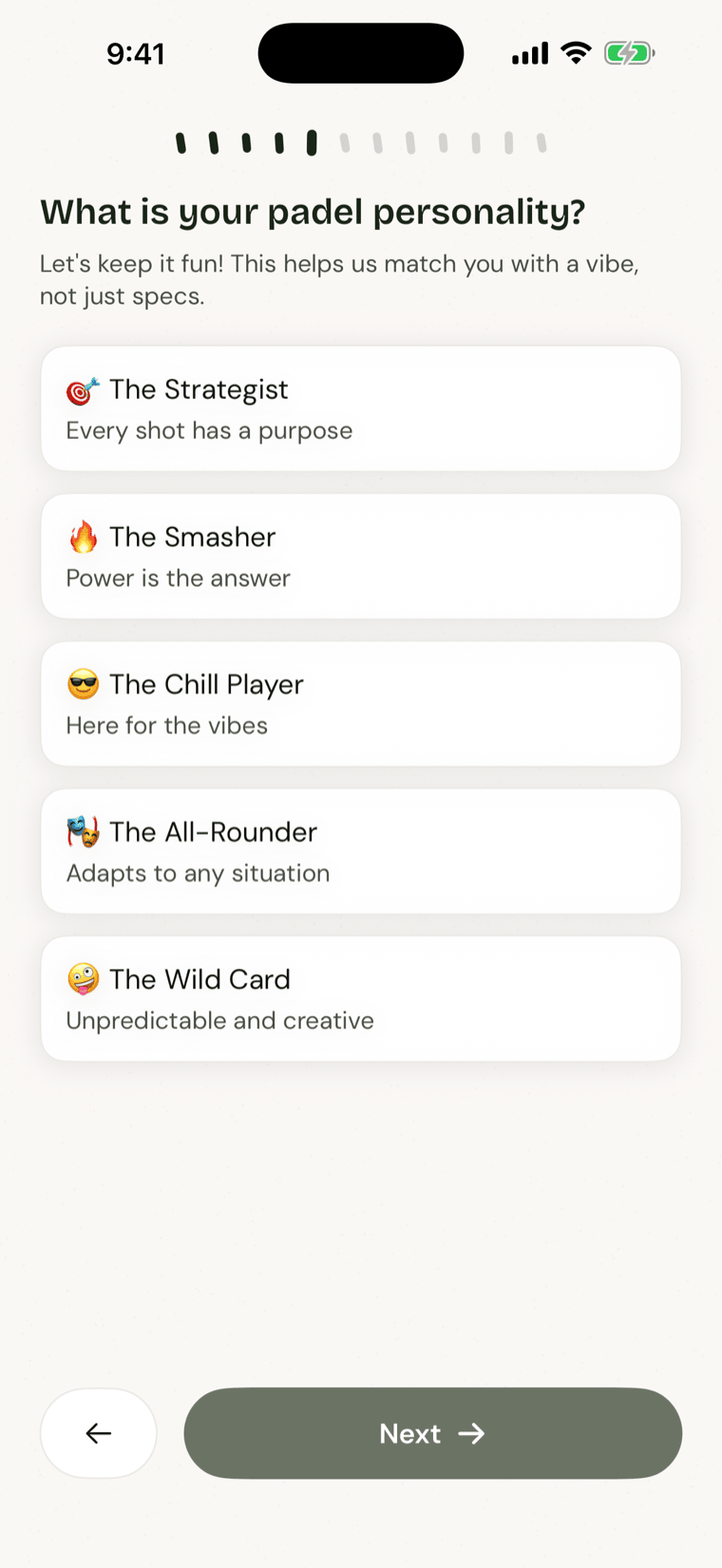
Take the free quiz in the app. We'll match a racket to your game, not the other way around.
Find my racketFree quiz. Sign in with email or Google to get your four picks.

Nox VK10 Ventus Control 12K 2026 Review
By Andres Jovem · Updated October 19, 2026
A composed, medium-core round that trades free power for a level of placement control most intermediate players are ready to graduate into.
The verdict
The Nox VK10 Ventus Control 12K is a control racket that means it, and it does not apologize for what that costs you. This is a round, medium-balanced 362g frame built for the intermediate who has already decided that winning points is about where the ball goes, not how hard it leaves. You point, it obeys. What you will not find here is a frame that hits for you, so if you are still hunting free power off the smash, the honest answer is that this is not your racket yet.
Where it earns its keep is the middle third of the court and the net. The medium core and the round mold give you a response you can trust shot after shot, which is the whole appeal: you stop steering the ball and start aiming it. It rewards the player whose game is patience, angles, and pressure at the net, and it quietly punishes anyone expecting the head to do the finishing. Read the skip list below before you buy, because this is a frame that fits a specific game and frustrates the rest.
The build
A 12K carbon face that reports back
The hitting layer is a 12K carbon weave with a rough finish, and the texture is the point. A coarser surface grabs the ball for the fraction of a second it sits on the face, so a brushed slice or a cut reset leaves with the rotation you asked for instead of skidding off flat. Carbon plays firm and consistent, which is what a control player wants: the same ball back every time, not a face that flexes and hands you a different result on the next swing. Spin and repeatability are what this surface is built to give, and it gives them plainly.
An MLD Black EVA core tuned for feel
Under the face sits Nox's MLD Black EVA core, a medium-density foam that leans toward feedback rather than pop. A medium core compresses just enough at contact to tell your hand how much racket you put on the ball, so the information comes back clean and you can adjust the next shot before you have even reset your feet. That clarity is the trade for cushion: this is not a plush, shock-eating foam, so a mishit still gets through to your arm. You buy this core for touch, not for comfort.
A round head on a carbon frame, balanced even
The mass sits in the middle at a medium balance, and the frame is full carbon around a round mold, which is the most forgiving shape in padel. The sweet spot sits low and central, right where an intermediate makes contact, so a strike caught slightly off center still holds its line instead of twisting the head off target. At 362g the frame is substantial without being a plank, so it plants behind a volley yet still comes around in time for a quick exchange. Nothing about the layout chases power; every choice here protects your accuracy.
How it plays
From the baseline, the guesswork leaves
Sit behind a lob and this frame lets you drop it onto a small target, because the response never surprises you. Resets skid low off the face when you slice them, and the rough carbon holds enough of the ball to keep a defensive block from ballooning. You are not fighting the racket to place a ball deep. The pace you get is the pace you supply, so on defense you trade in patience and angles, and the frame keeps the exchange alive until the point turns your way.
At the net, it puts the ball where you look
This is the zone the VK10 was built for. The round head punches volleys flat and obedient into the corners, and quick hands are rewarded because the medium balance lets the frame change direction without dragging. A reflex block off a hard drive comes back controlled rather than sprayed, since the face does not add pace you did not ask for. When a sitter floats up, you finish it by placing it into open court, not by swinging out of your shoes and hoping.
On the attack, you place the smash rather than blast it
Set your feet under an overhead and the ball comes off heavy enough to hurt when you aim it into a corner or angle it off the side glass, but the frame will not manufacture a por tres out of thin air. The medium core and even balance mean the power is honest, in proportion to your technique, so the finish rewards a well-placed smash over a raw one. The bandeja and vibora are where it shines on offense: the textured face bites for spin and holds the ball on line, so you can carve the point open instead of ending it in one blow.
Comfort and the arm, said plainly
A medium core is friendlier than a hard one, but do not read this as an arm-saver. There is no soft, shock-absorbing foam here to eat a mishit, so a ball caught off the sweet spot still sends feedback up into the wrist and elbow. A grooved swing will feel this frame as clean information all match. A rough or still-developing swing will feel it as sting by the third set, and no grip swap softens that. If your elbow already complains after a long match, weigh that honestly before you commit.
Who it's for (and who should skip it)
Buy it if
- You are an intermediate who has decided placement, angles, and net pressure are how you win, and you want a frame that answers to that game.
- You generate your own pace and want a repeatable, controllable response over free power off the face.
- You lean on spin, the bandeja, and the vibora, and want a rough carbon surface that bites for rotation.
Look elsewhere if
- You are a beginner or still building your swing. This frame gives back nothing you do not put in, and its medium core will not forgive off-center hits for you.
- You want a racket that supplies power, especially off the smash. This one asks you to place the ball, not to blast it.
- Your arm already grumbles after a long match. A medium core is not a soft one, and a mishit still reaches the elbow.
Not sure it's your match? The free 2-minute quiz reads your level, style, and budget and tells you which racket is.
The bottom line
If your game has grown into placement and you want a round frame that answers to precision rather than doing the hitting for you, the VK10 Ventus Control 12K is a committed, honest pick. Beginners and power hunters should look elsewhere. Not sure it is your match? The free 2-minute quiz reads your level, style, and budget and tells you the racket that is actually yours.
Where to buy
Prices shown in Euro, converted and approximate. You check out in the store's own currency.
Frequently asked
No. The VK10 Ventus Control 12K is an intermediate control racket, and its medium core and demanding face give a beginner almost nothing back on a mishit, so a new player will fight it. A softer, round beginner frame around 355 to 365g will forgive more and teach you faster. Come back to this one once your swing is grooved and placement is your game.
It is firmly a control racket. Between the round head, the medium MLD Black EVA core, and the even balance, the whole design protects accuracy over pace, so power arrives only in proportion to the technique you bring. You point it and it obeys; it will not hit through the ball for you.
It sits in the mid-range for a 12K control frame. Availability and price move week to week across shops and currencies, so check the live where-to-buy block above for the current lowest in-stock option in your currency as you read this.
It pairs a medium-density MLD Black EVA core with a 12K carbon face in a rough finish. The medium core is tuned for feel, sending clear feedback to your hand at contact, while the coarse carbon surface grips the ball for spin and gives a firm, repeatable response on every strike.
A power frame usually leans on a firmer core, a head-heavy balance, or a teardrop or diamond shape to load pace behind the ball, and it asks a clean, confident strike in return. The VK10 Ventus Control goes the other way with a round head and an even balance, trading that free pace for placement and a forgiving sweet spot. Choose this one if you would rather aim the ball than blast it.
The app · free quiz
Not sure which one's you?
Take the free quiz in the app. We'll match a racket to your game, not the other way around.
Find my racketFree quiz. Sign in with email or Google to get your four picks.