Stiga Axe 2025 Review
By Andres Jovem · Updated October 3, 2026
A round, low-balanced control frame for the improving player who wins on placement and wants a quiet arm, not a head-heavy finisher.

The verdict
The Stiga Axe 2025 is a placement racket, and it plays like one from the first ball. It is a round head with the weight sitting down in the handle, wrapped around a medium foam that flexes under contact, so the ball comes off soft and controllable, and the sweet spot sits where an improving player actually meets it. You steer points here. You do not blast them.
This is the frame for the intermediate who has worked out that the player who hits softer and deeper usually takes the rally. It covers for a swing that arrives a fraction late and keeps your elbow out of the conversation across three sets. If you want a racket that stores mass behind an overhead and drops the ball out of reach, this is the wrong page, and the who-should-skip-it list below says so in plain words.
The build
A round head that keeps the target wide
Start with the shape, because it sets the whole character. The Round head puts the sweet spot broad and central, right in the middle of the face where a developing player tends to catch the ball. Miss the exact center and the return still comes off true instead of dying or flying, which is the forgiveness an intermediate leans on most. This is a head built to keep your shots honest, not to reward one perfect contact point in a hundred.
Balance parked down in the handle
At 365g the Axe is a full-weight racket, but Stiga sets the balance Low, so the bulk of that mass rests near your grip rather than out at the tip. You feel it the moment you swing: the head comes around fast and points where you aim with almost no lag. That same low pivot is the reason the Axe will never carry momentum into a smash. The weight you could unload on an overhead simply is not sitting up in the head to unload.
A medium foam and a gritty carbon-glass face
The core is Hypersoft EVA, which Stiga rates as medium, and it gives a little when the ball presses in, handing the shot back at a slower, more governable pace and taking the edge off the shock a rigid frame would fire into your forearm. The hitting layer pairs Carbon Duplex 3K with fiberglass under a rough finish. The carbon keeps contact firm enough that the face is not mushy, the fiberglass widens the margin on a strike that drifts off-center, and the coarse grain catches the ball long enough to put a working bite of spin on a brushed shot. Round the frame off with carbon and a strand of Kevlar woven through the hoop, there to soak up buzz and hold a shade of give rather than lock the frame board-stiff.
How it plays
At the net, the head arrives on time
This is where the low balance repays you. The head is quick to bring around, so a hard drive aimed at your body gets met and blocked before it can beat your hands. Volleys come off deep and settled rather than fizzing loose, and you can thread a soft one into open court with room to spare. Reset a fast exchange and the racket holds steady in your grip, with no twist to wrestle back.
Deep in defense, it lifts you clear
Stretched under a lob or scrambling on a heavy ball to the corner, the face cushions the hit and floats the return deep off barely any swing. The Axe does the lifting in the exact moment you are out of shape and short on time, which is the shot an improving player coughs up most often. Placement is the whole game from back here. You aim for the space the other pair has left and the racket keeps handing you that shot, point after point.
On the attack, it trades the finish for the trust
The bandeja is the shot this frame lives for, taken out in front and steered deep with slice, and it drops in with a heavy, working bite that keeps the other pair pinned back. Ask it for a flat overhead winner and you meet the ceiling: the smash lands deep and controlled instead of putting the point away, so you are building the next ball rather than ending this one. Out-and-out finishers will want more weight in the head. Everyone else gets a víbora and a bandeja they can count on.
The arm stays out of it
Here is the payoff you feel most: rally after rally, the Axe passes so little sting back through the handle that your elbow and shoulder barely register the work, and the joint that usually starts complaining midway through a long session stays quiet to the final game. If your arm tends to ache the morning after, this frame is on its side. The catch is that the same calm contact is why the ball never leaves with much venom.
Who it's for (and who should skip it)
Buy it if
- You are an improving player who wins on placement and depth, not on hitting through people.
- Your arm flares up after a long match and you want a frame that keeps the elbow and shoulder quiet.
- You spend more time at the net and defending than hunting the smash, and you want a head that turns up fast.
Look elsewhere if
- You are a finisher who wants a head-heavy frame to load up behind an overhead. The mass sits in the handle here, so the put-away power is not on offer.
- You already generate your own pace and want a crisp, firm core that fires the ball back hard. This one cushions instead.
- You are a complete beginner still grooving a swing and want the very lightest, most bulletproof starter frame. An intermediate control racket is a step past that.
Not sure it's your match? The free 2-minute quiz reads your level, style, and budget and tells you which racket is.
The bottom line
If your game runs on depth, angles, and a rally you win by outlasting the other pair, the Stiga Axe 2025 gives you all three and asks nothing of your elbow in return. Not sure it is your match? The free 2-minute quiz reads your level, style, and budget and names the racket that fits.
Where to buy
Prices shown in Euro, converted and approximate. You check out in the store's own currency.
Frequently asked
Not quite. The Axe 2025 is pitched at intermediates: a round, control-first frame at 365g that rewards a player who already has a swing to steer with. A true beginner will manage it, but a lighter, softer starter racket will teach faster and feel easier in the hand. Come to the Axe once you are hitting with intent and want more precision.
The Stiga Axe is firmly a control racket. Its round head, its low balance that keeps the weight in your hand, and its medium, flexing core all point at placement and comfort over raw power. You build pace through timing and depth here, and you win points by putting the ball where the other pair cannot reach it, not by hitting through them.
The opposite is the pitch. A medium core that gives on contact plus Kevlar woven into the frame to damp vibration means the Axe sends very little shock up the forearm. It is one of the kinder frames for a player whose elbow or shoulder tends to ache after a long session. No racket is a cure, but this one works with a sensitive arm rather than against it.
The core is a medium-rated Hypersoft EVA foam, so the response is cushioned and gives on contact. The face is Carbon Duplex 3K with fiberglass, textured rough for grip on a brushed ball. The frame itself runs carbon reinforced with Kevlar for a touch of flex.
Skip it if you are an attacker chasing head-heavy power for the smash. Because the Axe carries its weight low in the handle, it stays quick and comfortable but never loads up behind an overhead the way a diamond or high-balance frame does. Players who live for the put-away will feel that ceiling and are better served by a head-heavy racket.


The app · free quiz
Not sure which one's you?
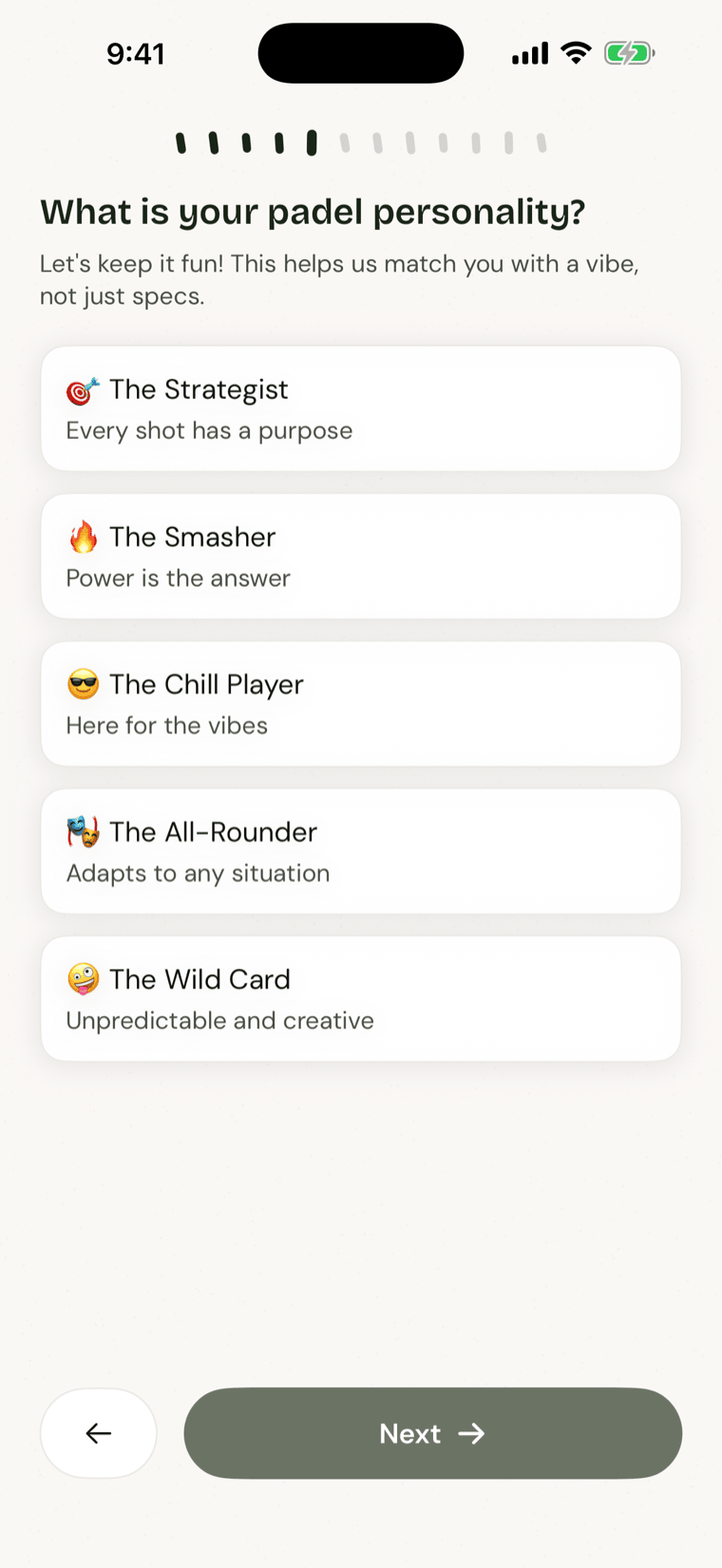
Take the free quiz in the app. We'll match a racket to your game, not the other way around.
Find my racketFree quiz. Sign in with email or Google to get your four picks.

Stiga Axe 2025 Review
By Andres Jovem · Updated October 3, 2026
A round, low-balanced control frame for the improving player who wins on placement and wants a quiet arm, not a head-heavy finisher.
The verdict
The Stiga Axe 2025 is a placement racket, and it plays like one from the first ball. It is a round head with the weight sitting down in the handle, wrapped around a medium foam that flexes under contact, so the ball comes off soft and controllable, and the sweet spot sits where an improving player actually meets it. You steer points here. You do not blast them.
This is the frame for the intermediate who has worked out that the player who hits softer and deeper usually takes the rally. It covers for a swing that arrives a fraction late and keeps your elbow out of the conversation across three sets. If you want a racket that stores mass behind an overhead and drops the ball out of reach, this is the wrong page, and the who-should-skip-it list below says so in plain words.
The build
A round head that keeps the target wide
Start with the shape, because it sets the whole character. The Round head puts the sweet spot broad and central, right in the middle of the face where a developing player tends to catch the ball. Miss the exact center and the return still comes off true instead of dying or flying, which is the forgiveness an intermediate leans on most. This is a head built to keep your shots honest, not to reward one perfect contact point in a hundred.
Balance parked down in the handle
At 365g the Axe is a full-weight racket, but Stiga sets the balance Low, so the bulk of that mass rests near your grip rather than out at the tip. You feel it the moment you swing: the head comes around fast and points where you aim with almost no lag. That same low pivot is the reason the Axe will never carry momentum into a smash. The weight you could unload on an overhead simply is not sitting up in the head to unload.
A medium foam and a gritty carbon-glass face
The core is Hypersoft EVA, which Stiga rates as medium, and it gives a little when the ball presses in, handing the shot back at a slower, more governable pace and taking the edge off the shock a rigid frame would fire into your forearm. The hitting layer pairs Carbon Duplex 3K with fiberglass under a rough finish. The carbon keeps contact firm enough that the face is not mushy, the fiberglass widens the margin on a strike that drifts off-center, and the coarse grain catches the ball long enough to put a working bite of spin on a brushed shot. Round the frame off with carbon and a strand of Kevlar woven through the hoop, there to soak up buzz and hold a shade of give rather than lock the frame board-stiff.
How it plays
At the net, the head arrives on time
This is where the low balance repays you. The head is quick to bring around, so a hard drive aimed at your body gets met and blocked before it can beat your hands. Volleys come off deep and settled rather than fizzing loose, and you can thread a soft one into open court with room to spare. Reset a fast exchange and the racket holds steady in your grip, with no twist to wrestle back.
Deep in defense, it lifts you clear
Stretched under a lob or scrambling on a heavy ball to the corner, the face cushions the hit and floats the return deep off barely any swing. The Axe does the lifting in the exact moment you are out of shape and short on time, which is the shot an improving player coughs up most often. Placement is the whole game from back here. You aim for the space the other pair has left and the racket keeps handing you that shot, point after point.
On the attack, it trades the finish for the trust
The bandeja is the shot this frame lives for, taken out in front and steered deep with slice, and it drops in with a heavy, working bite that keeps the other pair pinned back. Ask it for a flat overhead winner and you meet the ceiling: the smash lands deep and controlled instead of putting the point away, so you are building the next ball rather than ending this one. Out-and-out finishers will want more weight in the head. Everyone else gets a víbora and a bandeja they can count on.
The arm stays out of it
Here is the payoff you feel most: rally after rally, the Axe passes so little sting back through the handle that your elbow and shoulder barely register the work, and the joint that usually starts complaining midway through a long session stays quiet to the final game. If your arm tends to ache the morning after, this frame is on its side. The catch is that the same calm contact is why the ball never leaves with much venom.
Who it's for (and who should skip it)
Buy it if
- You are an improving player who wins on placement and depth, not on hitting through people.
- Your arm flares up after a long match and you want a frame that keeps the elbow and shoulder quiet.
- You spend more time at the net and defending than hunting the smash, and you want a head that turns up fast.
Look elsewhere if
- You are a finisher who wants a head-heavy frame to load up behind an overhead. The mass sits in the handle here, so the put-away power is not on offer.
- You already generate your own pace and want a crisp, firm core that fires the ball back hard. This one cushions instead.
- You are a complete beginner still grooving a swing and want the very lightest, most bulletproof starter frame. An intermediate control racket is a step past that.
Not sure it's your match? The free 2-minute quiz reads your level, style, and budget and tells you which racket is.
The bottom line
If your game runs on depth, angles, and a rally you win by outlasting the other pair, the Stiga Axe 2025 gives you all three and asks nothing of your elbow in return. Not sure it is your match? The free 2-minute quiz reads your level, style, and budget and names the racket that fits.
Where to buy
Prices shown in Euro, converted and approximate. You check out in the store's own currency.
Frequently asked
Not quite. The Axe 2025 is pitched at intermediates: a round, control-first frame at 365g that rewards a player who already has a swing to steer with. A true beginner will manage it, but a lighter, softer starter racket will teach faster and feel easier in the hand. Come to the Axe once you are hitting with intent and want more precision.
The Stiga Axe is firmly a control racket. Its round head, its low balance that keeps the weight in your hand, and its medium, flexing core all point at placement and comfort over raw power. You build pace through timing and depth here, and you win points by putting the ball where the other pair cannot reach it, not by hitting through them.
The opposite is the pitch. A medium core that gives on contact plus Kevlar woven into the frame to damp vibration means the Axe sends very little shock up the forearm. It is one of the kinder frames for a player whose elbow or shoulder tends to ache after a long session. No racket is a cure, but this one works with a sensitive arm rather than against it.
The core is a medium-rated Hypersoft EVA foam, so the response is cushioned and gives on contact. The face is Carbon Duplex 3K with fiberglass, textured rough for grip on a brushed ball. The frame itself runs carbon reinforced with Kevlar for a touch of flex.
Skip it if you are an attacker chasing head-heavy power for the smash. Because the Axe carries its weight low in the handle, it stays quick and comfortable but never loads up behind an overhead the way a diamond or high-balance frame does. Players who live for the put-away will feel that ceiling and are better served by a head-heavy racket.
The app · free quiz
Not sure which one's you?
Take the free quiz in the app. We'll match a racket to your game, not the other way around.
Find my racketFree quiz. Sign in with email or Google to get your four picks.