Siux Gea 2 2026 Review
By Andres Jovem · Updated October 3, 2026
A soft, low-balanced control frame built to protect a sensitive arm, for the technical player who wins on placement, not power.
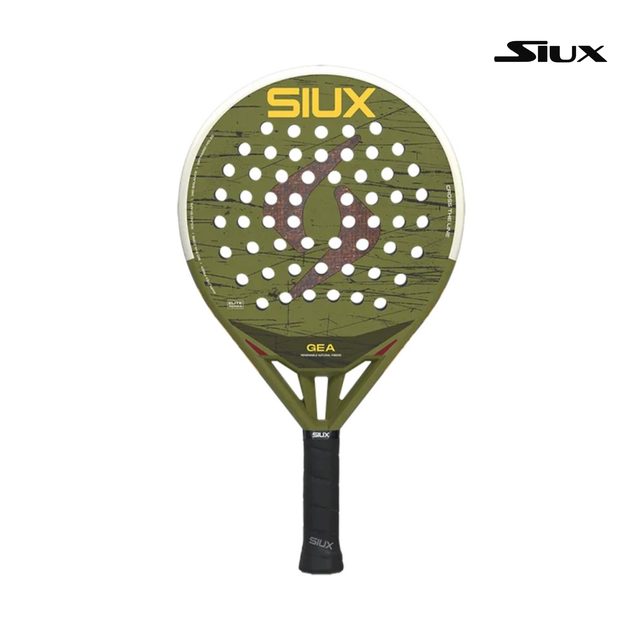
The verdict
The Siux Gea 2 is a comfort-first control racket, and it never pretends to be anything louder. A soft Bio EVA core sits under a smooth-mannered carbon face, the balance is pulled back toward the handle, and the whole frame is tuned to reach your hand quiet. This is the racket for a technical right-side or all-court player whose elbow or shoulder has started to complain, and who would rather place a ball perfectly than crush it. It sits at the premium end of the shelf, and what the premium buys is comfort, not pace.
If you want a frame that ends points on its own, this is not it, and the who-should-skip-it list below says so plainly. The Gea 2 gives you a low-vibration platform to build points from, precise and calm, and asks you to supply the finishing pace yourself. That is a fair trade only for a specific player: one whose game already runs on placement and patience, and whose arm has told them, in a sore elbow or a stiff shoulder, that a firmer frame is no longer worth it. For that player the Gea 2 is a genuine keep-playing racket. For a finisher hunting free power it will feel tame, and honesty means saying so up front.
The build
A soft Bio EVA core that cushions the strike
Siux builds the Gea 2 on a Bio EVA core, a soft, forgiving foam that flexes under the ball at contact. That flex is the comfort story: the core compresses when the ball lands and lets the hit settle rather than snapping it straight back, so far less of the shock that aggravates a tendon travels up into your wrist and elbow. It is the softest, most damped frame we stock for arm-sensitive players, and the core is why.
An Amplitex 3K face tuned for a quiet hit
Over the core sits an Amplitex 3K carbon face with a rough finish. The weave is chosen for how the shot arrives at your hand already stripped of its buzz, so contact reads as a soft, clean thud rather than a sting, and the roughened surface still grips a brushed ball for a shaped bandeja or vibora. This is low-vibration engineering wearing a premium badge, not a stiff carbon skin bolted on for pop.
A low-balanced round head that answers to your hand
The mold is a round head on a carbon frame, and Siux pulls the balance low, close to even. A round face keeps the sweet spot central where a controlled swing makes contact, so mishits stay in play instead of jarring off the tip, and the low balance keeps the head light and late so the racket sits where your wrist points it rather than lagging a beat behind. Siux quotes a 355 to 375 gram range, so weigh the one you get if your shoulder is the reason you are buying; toward the lighter end it carries through a full match without loading the joint. The carbon frame holds that round head composed through a long, fast exchange without twisting in your grip.
How it plays
From the baseline, you build the point
The Gea 2 plays like a control instrument, and defense is where it feels most at home. Sit behind a lob and it threads to length right where you aim, blocks come back deep and settled, and a low ball digs out clean because the soft bed takes the pace off before it fights you. Under pressure that softness reads as time: a fast drive sinks into the face for a fraction longer, which is enough to steer a reset back rather than fend it away. You win these rallies by placing the ball into space, patiently, rather than by hitting through anyone.
At the net, the hands stay quick
Because the head is light and late, your hands stay fast for the reset and the controlled volley, and a ball that jumps at your hip is reachable instead of a scramble. Volleys steer where you point them and land with usable weight rather than a punch. This is a placement game at the net, not a put-away cannon, and it rewards the player who already knows where the open court is.
On the attack, it places more than it punishes
The overhead is the honest part. The Gea 2 will hit a measured smash and a heavy bandeja, and the rough face lets you brush spin onto both, but the finish comes with control rather than fury. A flat bomber will find the ceiling on raw pace quickly. Treat the smash as a way to move your opponents and open the court, and the racket obliges; ask it to end points by force and it will feel capped.
Comfort is the whole pitch, and it holds
This is the reason to buy the Gea 2. The soft core and damped face keep the strike gentle on the elbow and shoulder shot after shot, and the planted, quiet feel is what carries a sensitive arm through a long, competitive match without the ache that a stiff frame leaves behind. Where a firm carbon frame reports every off-center hit straight into the joint, the Gea 2 swallows it, so a rough patch of contact costs you a point rather than a flare-up. Name your weak joint honestly: if it is your elbow or your shoulder, this frame was built for it, and that protection is the performance you are paying for.
Who it's for (and who should skip it)
Buy it if
- Your elbow or shoulder has started grumbling and you need the most damped frame on the shelf to keep playing.
- You are a technical right-side or all-court player who wins on placement, resets, and patience rather than raw power.
- You want a light, low-balanced head that stays quick at the net and threads lobs to length from the back.
Look elsewhere if
- You are a finisher who wants the racket to supply the smash, because the soft core and low balance cap your top-end pace by design.
- You play a flat, power-first game and lean on free rebound off the back glass, which this control frame does not hand you.
- You are a raw beginner still grooving a swing, since a control frame at this price pays off only once you have technique to put to work.
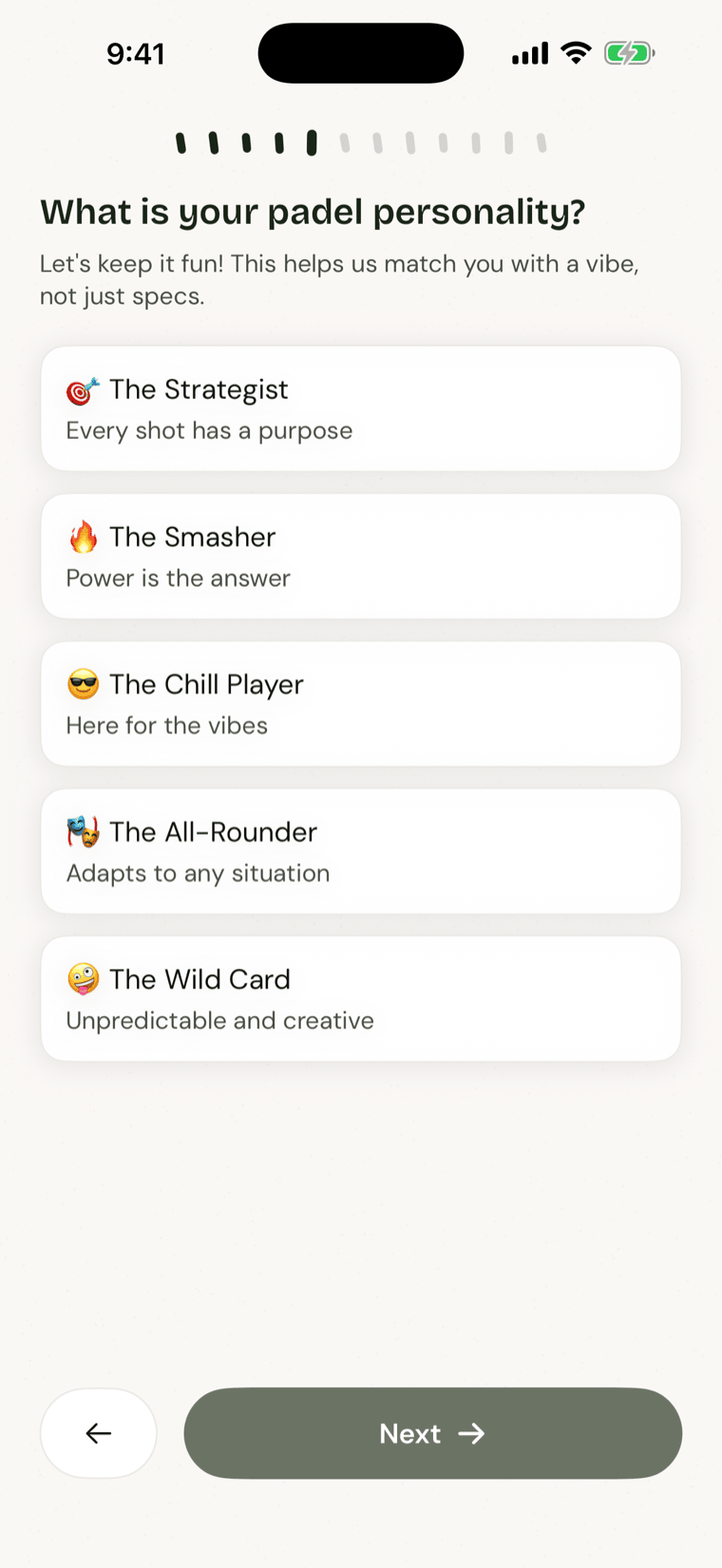
Not sure it's your match? The free 2-minute quiz reads your level, style, and budget and tells you which racket is.
The bottom line
If a sore elbow or shoulder is steering your search, the Siux Gea 2 is the frame here built squarely for you, and it rewards a placement game over a power one. Chasing free finishing pace instead? Look at a diamond and skip this one. Not sure it is your match? The free 2-minute quiz reads your level, style, and budget and tells you which racket is yours.
Where to buy
Prices shown in Euro, converted and approximate. You check out in the store's own currency.
Frequently asked
Not really. Siux rates the Gea 2 for intermediate players: kind on the arm, but built for someone who already places the ball on purpose, so a raw beginner is paying for precision they cannot yet use. A round, soft-cored frame around 350 to 360 grams from a beginner line will teach you more for less. Come back to the Gea 2 once your technique is grooved.
The Gea 2 is a control racket, first and last. Its soft Bio EVA core, round head, and low, near-even balance are all tuned for placement, quick hands, and comfort rather than raw finishing power. You can hit a measured smash with it, but the pace on the attack is capped by design, so treat it as a frame for building points, not blasting through them.
Yes, arm comfort is the point of this racket. Siux pairs a soft Bio EVA core with an Amplitex 3K face specifically to flex at contact and strip the vibration that aggravates a tendon before it reaches your wrist, elbow, and shoulder. It is the most damped, arm-friendly frame we stock, which is why it anchors our control and tennis-elbow picks.
The Gea 2 runs a soft Bio EVA core under an Amplitex 3K carbon face with a rough finish, all on a carbon frame. The soft foam cushions the strike for comfort, the carbon face keeps the round head composed and grips a brushed ball for spin, and the rough surface earns bite on the bandeja and vibora without adding sting.
Pricing sits at the premium end for a control frame, and you are paying for the low-vibration build rather than for power. Check the live comparison above for the current lowest in-stock price across our retailers, localized to your currency, since availability and the exact figure move week to week. It is a top-end arm-comfort pick, not a budget one.
The app · free quiz
Not sure which one's you?
Take the free quiz in the app. We'll match a racket to your game, not the other way around.
Find my racketFree quiz. Sign in with email or Google to get your four picks.

Siux Gea 2 2026 Review
By Andres Jovem · Updated October 3, 2026
A soft, low-balanced control frame built to protect a sensitive arm, for the technical player who wins on placement, not power.
The verdict
The Siux Gea 2 is a comfort-first control racket, and it never pretends to be anything louder. A soft Bio EVA core sits under a smooth-mannered carbon face, the balance is pulled back toward the handle, and the whole frame is tuned to reach your hand quiet. This is the racket for a technical right-side or all-court player whose elbow or shoulder has started to complain, and who would rather place a ball perfectly than crush it. It sits at the premium end of the shelf, and what the premium buys is comfort, not pace.
If you want a frame that ends points on its own, this is not it, and the who-should-skip-it list below says so plainly. The Gea 2 gives you a low-vibration platform to build points from, precise and calm, and asks you to supply the finishing pace yourself. That is a fair trade only for a specific player: one whose game already runs on placement and patience, and whose arm has told them, in a sore elbow or a stiff shoulder, that a firmer frame is no longer worth it. For that player the Gea 2 is a genuine keep-playing racket. For a finisher hunting free power it will feel tame, and honesty means saying so up front.
The build
A soft Bio EVA core that cushions the strike
Siux builds the Gea 2 on a Bio EVA core, a soft, forgiving foam that flexes under the ball at contact. That flex is the comfort story: the core compresses when the ball lands and lets the hit settle rather than snapping it straight back, so far less of the shock that aggravates a tendon travels up into your wrist and elbow. It is the softest, most damped frame we stock for arm-sensitive players, and the core is why.
An Amplitex 3K face tuned for a quiet hit
Over the core sits an Amplitex 3K carbon face with a rough finish. The weave is chosen for how the shot arrives at your hand already stripped of its buzz, so contact reads as a soft, clean thud rather than a sting, and the roughened surface still grips a brushed ball for a shaped bandeja or vibora. This is low-vibration engineering wearing a premium badge, not a stiff carbon skin bolted on for pop.
A low-balanced round head that answers to your hand
The mold is a round head on a carbon frame, and Siux pulls the balance low, close to even. A round face keeps the sweet spot central where a controlled swing makes contact, so mishits stay in play instead of jarring off the tip, and the low balance keeps the head light and late so the racket sits where your wrist points it rather than lagging a beat behind. Siux quotes a 355 to 375 gram range, so weigh the one you get if your shoulder is the reason you are buying; toward the lighter end it carries through a full match without loading the joint. The carbon frame holds that round head composed through a long, fast exchange without twisting in your grip.
How it plays
From the baseline, you build the point
The Gea 2 plays like a control instrument, and defense is where it feels most at home. Sit behind a lob and it threads to length right where you aim, blocks come back deep and settled, and a low ball digs out clean because the soft bed takes the pace off before it fights you. Under pressure that softness reads as time: a fast drive sinks into the face for a fraction longer, which is enough to steer a reset back rather than fend it away. You win these rallies by placing the ball into space, patiently, rather than by hitting through anyone.
At the net, the hands stay quick
Because the head is light and late, your hands stay fast for the reset and the controlled volley, and a ball that jumps at your hip is reachable instead of a scramble. Volleys steer where you point them and land with usable weight rather than a punch. This is a placement game at the net, not a put-away cannon, and it rewards the player who already knows where the open court is.
On the attack, it places more than it punishes
The overhead is the honest part. The Gea 2 will hit a measured smash and a heavy bandeja, and the rough face lets you brush spin onto both, but the finish comes with control rather than fury. A flat bomber will find the ceiling on raw pace quickly. Treat the smash as a way to move your opponents and open the court, and the racket obliges; ask it to end points by force and it will feel capped.
Comfort is the whole pitch, and it holds
This is the reason to buy the Gea 2. The soft core and damped face keep the strike gentle on the elbow and shoulder shot after shot, and the planted, quiet feel is what carries a sensitive arm through a long, competitive match without the ache that a stiff frame leaves behind. Where a firm carbon frame reports every off-center hit straight into the joint, the Gea 2 swallows it, so a rough patch of contact costs you a point rather than a flare-up. Name your weak joint honestly: if it is your elbow or your shoulder, this frame was built for it, and that protection is the performance you are paying for.
Who it's for (and who should skip it)
Buy it if
- Your elbow or shoulder has started grumbling and you need the most damped frame on the shelf to keep playing.
- You are a technical right-side or all-court player who wins on placement, resets, and patience rather than raw power.
- You want a light, low-balanced head that stays quick at the net and threads lobs to length from the back.
Look elsewhere if
- You are a finisher who wants the racket to supply the smash, because the soft core and low balance cap your top-end pace by design.
- You play a flat, power-first game and lean on free rebound off the back glass, which this control frame does not hand you.
- You are a raw beginner still grooving a swing, since a control frame at this price pays off only once you have technique to put to work.
Not sure it's your match? The free 2-minute quiz reads your level, style, and budget and tells you which racket is.
The bottom line
If a sore elbow or shoulder is steering your search, the Siux Gea 2 is the frame here built squarely for you, and it rewards a placement game over a power one. Chasing free finishing pace instead? Look at a diamond and skip this one. Not sure it is your match? The free 2-minute quiz reads your level, style, and budget and tells you which racket is yours.
Where to buy
Prices shown in Euro, converted and approximate. You check out in the store's own currency.
Frequently asked
Not really. Siux rates the Gea 2 for intermediate players: kind on the arm, but built for someone who already places the ball on purpose, so a raw beginner is paying for precision they cannot yet use. A round, soft-cored frame around 350 to 360 grams from a beginner line will teach you more for less. Come back to the Gea 2 once your technique is grooved.
The Gea 2 is a control racket, first and last. Its soft Bio EVA core, round head, and low, near-even balance are all tuned for placement, quick hands, and comfort rather than raw finishing power. You can hit a measured smash with it, but the pace on the attack is capped by design, so treat it as a frame for building points, not blasting through them.
Yes, arm comfort is the point of this racket. Siux pairs a soft Bio EVA core with an Amplitex 3K face specifically to flex at contact and strip the vibration that aggravates a tendon before it reaches your wrist, elbow, and shoulder. It is the most damped, arm-friendly frame we stock, which is why it anchors our control and tennis-elbow picks.
The Gea 2 runs a soft Bio EVA core under an Amplitex 3K carbon face with a rough finish, all on a carbon frame. The soft foam cushions the strike for comfort, the carbon face keeps the round head composed and grips a brushed ball for spin, and the rough surface earns bite on the bandeja and vibora without adding sting.
Pricing sits at the premium end for a control frame, and you are paying for the low-vibration build rather than for power. Check the live comparison above for the current lowest in-stock price across our retailers, localized to your currency, since availability and the exact figure move week to week. It is a top-end arm-comfort pick, not a budget one.
The app · free quiz
Not sure which one's you?
Take the free quiz in the app. We'll match a racket to your game, not the other way around.
Find my racketFree quiz. Sign in with email or Google to get your four picks.