Royal Padel Whip Light 2026 Review
By Andres Jovem · Updated October 19, 2026
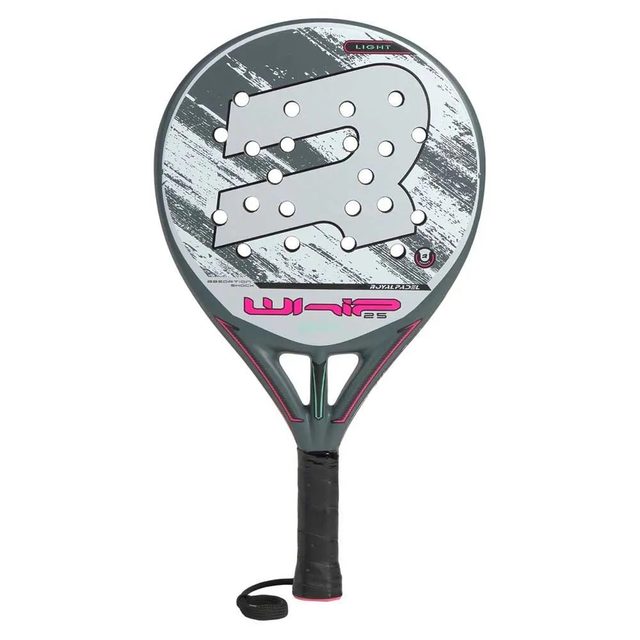
A light, round, soft-cored frame that puts arm comfort ahead of raw punch, for the intermediate whose shoulder or elbow decides how long she plays.

The verdict
The Royal Padel Whip Light 2026 sets out to be comfortable before it is anything else, and it is upfront about that order. A soft core and a round head cushion each strike and keep the sweet spot where an intermediate tends to meet the ball, so you can play a long afternoon without your arm complaining by the last set. At 355g it is light enough to swing cleanly all match. This is the frame for the player who books court time already knowing her shoulder or elbow will tap out before her legs do.
It is not a power stick, and pretending otherwise would waste your money. There is no stiff, head-loaded snap on tap, so if you hunt flat put-aways off every ball you will bump into its ceiling early. Aim it at placement, resets, and steady defense and it pays you back. Ask it for brute pace and it will point you elsewhere.
The build
A soft core built to swallow the hit
Royal Padel has leaned on one idea for decades, and it lives at this racket's center. The core is a soft one, and it gives way under the ball at contact so that very little of the jolt travels up the shaft to your hand. Where a firm foam kicks the ball back hard and passes the shock along with it, this softer filling compresses and slows the hit, trading a slice of raw rebound for a strike that lands muted and cushioned. That is the whole reason an arm-conscious player can string sets together without stiffening up later, and it is the trait Royal Padel has built its name on.
A smooth face over the round head
Over that yielding core sits a smooth hitting face. Its job here is composure, not aggression: it keeps the round head holding its form through a full season of play, so contact stays predictable while the soft core does the cushioning underneath. Because the surface is smooth rather than textured, the ball comes off clean and repeatable on volleys and blocks, and a shot lands where you point it. What it will not do is grab the ball for extra spin, so a player who lives off a heavily brushed, rolling ball should know that going in and read the overhead section before buying.
A round head at a light weight
The mold is a classic round shape with the mass spread evenly rather than stacked toward the tip, and the whole frame weighs 355g. That is a middleweight number, and it swings lighter than it reads because none of the mass hangs out at the head. The round face puts the sweet spot low and central where an intermediate's contact tends to land, keeps an off-center strike from turning in the hand, and stays easy to bring around when a ball rushes you. The even balance is what makes it approachable: no heavy tip to time, no stiff frame to muscle.
How it plays
Deep in defense, the easiest job on court
Pinned at the back wall under a heavy lob, you get to do less than almost any racket asks of you. A tired, half-length swing still sends a block floating deep, and a reset drops over the net without you forcing the shot. The ball settles into the face for a beat before it goes, which buys you time on a fast one that would rush a stiffer frame. Catch one out near the frame edge and the head stays put in your grip rather than wrenching sideways, so a scrambled dig still clears. A counterpuncher who reads the point and waits out the rally feels right at home here.
At the net, soft-spoken and precise
Up close the racket keeps its voice down. Volleys land soft and short-angled, so you can drop one at a player's feet or into an open pocket instead of trying to end the point with pace you will not get from this frame. When a ball jumps at you fast, the racket comes around in time to meet it, which rewards the player who wins the net with angles and touch over the one swinging for a clean kill.
Overhead, you earn the finish
Line up a smash and the ball leaves controlled and lands where you aim, but it will not blast through a defender who is set and ready. The Whip Light asks you to build the finish out of placement and timing rather than borrowed frame power. A bandeja sits deep and holds your court position, and a víbora bites less than it would off a textured face, so you angle it into the side glass rather than trusting it to spin away on its own. A smash into open space closes points when you pick the gap. Go for an outright winner off every single lob and you will feel the pop run dry by the third set.
Comfort and the arm
This is the reason the racket exists, and it holds up. Contact stays padded set after set, and the elbow and shoulder that tend to flare late in a long match hold off longer here. If a tender joint is the thing that cuts your padel short, this frame buys you more court time before the ache shows up. Comfort is the performance it sells, and it delivers it.
Who it's for (and who should skip it)
Buy it if
- Your shoulder or elbow is the first thing to give out in a long match, and comfort is the spec you shop for first.
- You are an intermediate who scores on placement and patient defense rather than raw power.
- You want a light, round, forgiving frame that keeps a mishit alive while your game keeps sharpening.
Look elsewhere if
- You are an attacker who lives for the flat, heavy smash and wants the frame to supply the pace. This one leaves the finishing to you.
- You are after a stiff, head-heavy power frame. The soft core and even balance pull in the other direction.
- You want a rough, textured face for maximum spin bite. The smooth surface gives clean, predictable contact, not heavy rotation.
Not sure it's your match? The free 2-minute quiz reads your level, style, and budget and tells you which racket is.
The bottom line
There is no single best racket, only the one that fits how you play, and the Whip Light fits the player whose arm sets the clock on a match. Buy it for the comfort, play it for placement, and let the quiz confirm the fit if you are still weighing an easy arm against a bigger hit.
Where to buy
Prices shown in Euro, converted and approximate. You check out in the store's own currency.
Frequently asked
It can work for a careful beginner, but it is really built for the comfort-first intermediate. Round, soft, and light at 355g, the Whip Light forgives mishits and stays kind to the arm, which suits a newer player fine. Its real edge, deep shock absorption for a tender shoulder or elbow, matters most to someone who has already met padel arm.
Control and comfort, not power. Its soft core, round head, and even balance are tuned to place the ball and cushion contact rather than fire it flat and fast. You supply the pace through timing, and the frame rewards accuracy and steady defense over a crushing finish.
A soft core sits under a smooth hitting face. The soft core is the comfort engine, giving way at contact so less shock reaches your arm, while the smooth face keeps the round head predictable and sends volleys and blocks off clean rather than gripping the ball for spin.
Because easing the load on the joint is the racket's whole design brief. The soft core compresses under the ball and slows each hit, so far less of the strike reaches your elbow and shoulder than a stiff, firm-cored frame passes on. At a light 355g it also stays easy to swing deep into a match, before fatigue turns into ache.
Comfort and control, at the cost of a finishing smash, is the trade against a stiff head-heavy frame. A power racket loads the tip and fires the ball back hard and flat, sending more shock through the arm along the way. The Whip Light spreads its weight evenly, softens the hit, and asks you to earn pace through placement. Not sure which side you fall on? The free 2-minute quiz reads your level, style, and budget and tells you.


The app · free quiz
Not sure which one's you?
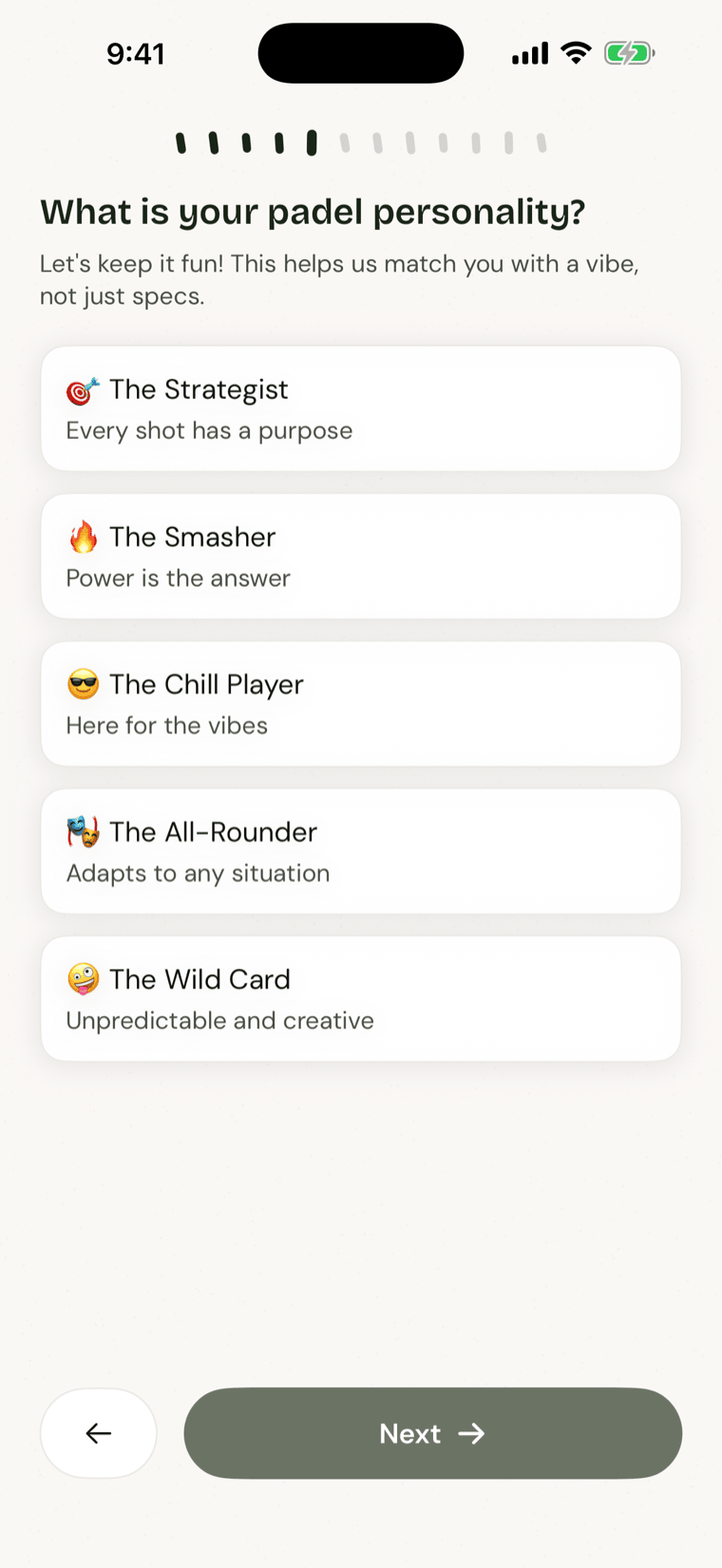
Take the free quiz in the app. We'll match a racket to your game, not the other way around.
Find my racketFree quiz. Sign in with email or Google to get your four picks.

Royal Padel Whip Light 2026 Review
By Andres Jovem · Updated October 19, 2026
A light, round, soft-cored frame that puts arm comfort ahead of raw punch, for the intermediate whose shoulder or elbow decides how long she plays.
The verdict
The Royal Padel Whip Light 2026 sets out to be comfortable before it is anything else, and it is upfront about that order. A soft core and a round head cushion each strike and keep the sweet spot where an intermediate tends to meet the ball, so you can play a long afternoon without your arm complaining by the last set. At 355g it is light enough to swing cleanly all match. This is the frame for the player who books court time already knowing her shoulder or elbow will tap out before her legs do.
It is not a power stick, and pretending otherwise would waste your money. There is no stiff, head-loaded snap on tap, so if you hunt flat put-aways off every ball you will bump into its ceiling early. Aim it at placement, resets, and steady defense and it pays you back. Ask it for brute pace and it will point you elsewhere.
The build
A soft core built to swallow the hit
Royal Padel has leaned on one idea for decades, and it lives at this racket's center. The core is a soft one, and it gives way under the ball at contact so that very little of the jolt travels up the shaft to your hand. Where a firm foam kicks the ball back hard and passes the shock along with it, this softer filling compresses and slows the hit, trading a slice of raw rebound for a strike that lands muted and cushioned. That is the whole reason an arm-conscious player can string sets together without stiffening up later, and it is the trait Royal Padel has built its name on.
A smooth face over the round head
Over that yielding core sits a smooth hitting face. Its job here is composure, not aggression: it keeps the round head holding its form through a full season of play, so contact stays predictable while the soft core does the cushioning underneath. Because the surface is smooth rather than textured, the ball comes off clean and repeatable on volleys and blocks, and a shot lands where you point it. What it will not do is grab the ball for extra spin, so a player who lives off a heavily brushed, rolling ball should know that going in and read the overhead section before buying.
A round head at a light weight
The mold is a classic round shape with the mass spread evenly rather than stacked toward the tip, and the whole frame weighs 355g. That is a middleweight number, and it swings lighter than it reads because none of the mass hangs out at the head. The round face puts the sweet spot low and central where an intermediate's contact tends to land, keeps an off-center strike from turning in the hand, and stays easy to bring around when a ball rushes you. The even balance is what makes it approachable: no heavy tip to time, no stiff frame to muscle.
How it plays
Deep in defense, the easiest job on court
Pinned at the back wall under a heavy lob, you get to do less than almost any racket asks of you. A tired, half-length swing still sends a block floating deep, and a reset drops over the net without you forcing the shot. The ball settles into the face for a beat before it goes, which buys you time on a fast one that would rush a stiffer frame. Catch one out near the frame edge and the head stays put in your grip rather than wrenching sideways, so a scrambled dig still clears. A counterpuncher who reads the point and waits out the rally feels right at home here.
At the net, soft-spoken and precise
Up close the racket keeps its voice down. Volleys land soft and short-angled, so you can drop one at a player's feet or into an open pocket instead of trying to end the point with pace you will not get from this frame. When a ball jumps at you fast, the racket comes around in time to meet it, which rewards the player who wins the net with angles and touch over the one swinging for a clean kill.
Overhead, you earn the finish
Line up a smash and the ball leaves controlled and lands where you aim, but it will not blast through a defender who is set and ready. The Whip Light asks you to build the finish out of placement and timing rather than borrowed frame power. A bandeja sits deep and holds your court position, and a víbora bites less than it would off a textured face, so you angle it into the side glass rather than trusting it to spin away on its own. A smash into open space closes points when you pick the gap. Go for an outright winner off every single lob and you will feel the pop run dry by the third set.
Comfort and the arm
This is the reason the racket exists, and it holds up. Contact stays padded set after set, and the elbow and shoulder that tend to flare late in a long match hold off longer here. If a tender joint is the thing that cuts your padel short, this frame buys you more court time before the ache shows up. Comfort is the performance it sells, and it delivers it.
Who it's for (and who should skip it)
Buy it if
- Your shoulder or elbow is the first thing to give out in a long match, and comfort is the spec you shop for first.
- You are an intermediate who scores on placement and patient defense rather than raw power.
- You want a light, round, forgiving frame that keeps a mishit alive while your game keeps sharpening.
Look elsewhere if
- You are an attacker who lives for the flat, heavy smash and wants the frame to supply the pace. This one leaves the finishing to you.
- You are after a stiff, head-heavy power frame. The soft core and even balance pull in the other direction.
- You want a rough, textured face for maximum spin bite. The smooth surface gives clean, predictable contact, not heavy rotation.
Not sure it's your match? The free 2-minute quiz reads your level, style, and budget and tells you which racket is.
The bottom line
There is no single best racket, only the one that fits how you play, and the Whip Light fits the player whose arm sets the clock on a match. Buy it for the comfort, play it for placement, and let the quiz confirm the fit if you are still weighing an easy arm against a bigger hit.
Where to buy
Prices shown in Euro, converted and approximate. You check out in the store's own currency.
Frequently asked
It can work for a careful beginner, but it is really built for the comfort-first intermediate. Round, soft, and light at 355g, the Whip Light forgives mishits and stays kind to the arm, which suits a newer player fine. Its real edge, deep shock absorption for a tender shoulder or elbow, matters most to someone who has already met padel arm.
Control and comfort, not power. Its soft core, round head, and even balance are tuned to place the ball and cushion contact rather than fire it flat and fast. You supply the pace through timing, and the frame rewards accuracy and steady defense over a crushing finish.
A soft core sits under a smooth hitting face. The soft core is the comfort engine, giving way at contact so less shock reaches your arm, while the smooth face keeps the round head predictable and sends volleys and blocks off clean rather than gripping the ball for spin.
Because easing the load on the joint is the racket's whole design brief. The soft core compresses under the ball and slows each hit, so far less of the strike reaches your elbow and shoulder than a stiff, firm-cored frame passes on. At a light 355g it also stays easy to swing deep into a match, before fatigue turns into ache.
Comfort and control, at the cost of a finishing smash, is the trade against a stiff head-heavy frame. A power racket loads the tip and fires the ball back hard and flat, sending more shock through the arm along the way. The Whip Light spreads its weight evenly, softens the hit, and asks you to earn pace through placement. Not sure which side you fall on? The free 2-minute quiz reads your level, style, and budget and tells you.
The app · free quiz
Not sure which one's you?
Take the free quiz in the app. We'll match a racket to your game, not the other way around.
Find my racketFree quiz. Sign in with email or Google to get your four picks.