Royal Padel 779 Whip Light 2025 Review
By Andres Jovem · Updated October 20, 2026
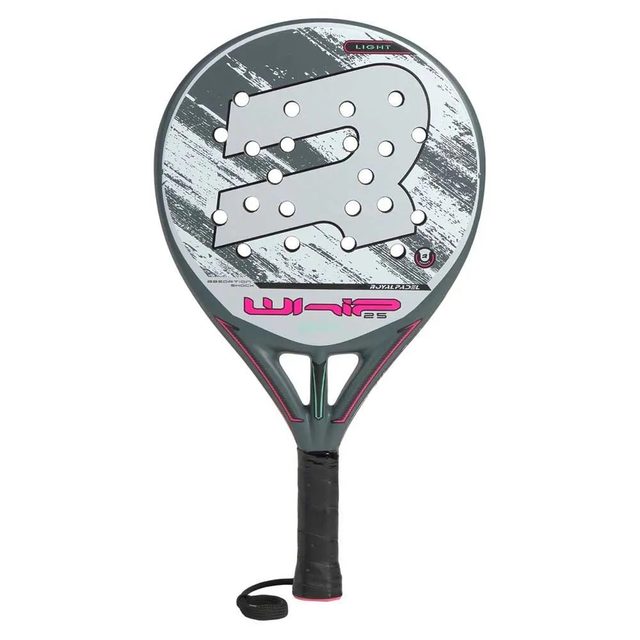
A 355g round frame with an ultra-soft polyethylene core and the weight down by your hand, for the woman whose second racket has to be kind to her elbow before it does anything else.
The verdict
The Royal Padel 779 Whip Light 2025 is a round head at 355g, balanced low, over a polyethylene core that Royal Padel rates ultra-soft. It keeps the two things most second rackets make you choose between. It still forgives the mishits of your first season, and it takes the sting out of the clean hits too. A crisper strike is what it will not add.
Royal Padel sells a unisex Whip Light and this 779 version, the women's-line build of the same idea. The construction matches the 2026 unisex frame: two layers of aluminized fiberglass over a polyethylene core. What differs is where the mass sits. Our Whip Light 2026 review found a medium balance; the 779 keeps the mass down by the handle, so the head feels lighter in your hand than 355g suggests.
It is a 2025 model, stocked by one of our shops, at a price above most beginner frames. Buy it for the arm, for the quiet contact, and for a sweet spot that stays wide when your timing runs late. Skip it if you already win points with the smash. This core will not give that back.
The build
A polyethylene core, and softer than the usual EVA
The 779 Whip Light sits on ultra-soft polyethylene foam where most rackets use EVA, and ultra-soft is the word Royal Padel chooses for it. On court the softness shows up as a ball that leaves with less of your swing turned into shock. The result you can check: a block taken late, out near the frame, still floats back over the net instead of dying at your shoelaces. Play it against a pair who smash hard and you will notice the second thing, which is that their pace never quite reaches your wrist. The cost is pace. Your arm supplies it, because the foam will not.
Two layers of aluminized fiberglass on the face
The hitting surface is Fiber Tech, Royal Padel's aluminized fiberglass, laid up in two layers. Glass flexes more than carbon at contact, which widens how much of the face still returns the ball on target. A flat hit leaves the face clean and quiet, and the glass gives enough on a late strike that the ball still clears the net.
A round head at 355g, balanced by the hand
The head is round, and its hitting zone sits mid-face, right where a developing player's contact lands most weeks. Royal Padel declares 345 to 365g for the 779; the figure we carry is 355g, mid-range, and your unit will land somewhere in that spread. The balance is low. The handle carries the mass, so the head comes round quickly on a reaction volley and the frame never drags on your shoulder in the third set.
How it plays
Defense first, and it keeps you in the point
Deep in your own court this racket does its best work. A ball coming off the back glass meets a core that absorbs the pace, so a short push sends a lob to the back of the opposing court without a full swing. Blocks on a hard smash come back slower than they arrived, which buys you the step back to the net. A ball taken at knee height on the backhand side, the one that usually dies, still lifts over the net because the foam does the lifting. From there the point resets on your terms, with your partner already back at the net. The low lob to the back fence, played from behind the service line with your weight going backward, is the shot that shows what the soft core is for. The round head means a strike low on the face, the kind you make when stretched, still travels deep.
At the net, quick hands and quiet volleys
The low balance brings the head round early, so a volley off a fast drive can be taken late and still land in front of your opponents. The drop volley sits down nicely because the soft core takes the speed off the ball. Hit it from a ball below net height and it still clears, because the foam lifts the ball for you. Do not expect a punch volley with sting. Against a pair who sit deep and absorb, you win net points by placing the ball wide, not by hitting through them. The angle volley to the side glass, hit softly, is the finish this frame has. Play it from the middle of the court, where the round head's wide zone covers a volley taken a touch late, and the ball dies in the corner before the returner gets there.
Overheads are placement, not finishing
The bandeja to the far corner, cut with a short swing, is this frame's overhead. Take it a little in front of you rather than overhead, and the low balance lets you recover to the net before the ball comes back. The round head and the soft foam keep it controlled and the ball dips into the glass low enough to force a weak reply. The smash is a different story. A flat overhead leaves slowly enough for a good defender to send it back. Hit the víbora for depth rather than kick; the soft core gives it less snap than a firm frame would.
What your elbow notices
A polyethylene core under a fiberglass face sends less of each strike up your arm than a carbon face over EVA. A clean hit lands in the hand as a soft knock, a mishit as a dull one, and neither leaves the elbow buzzing an hour after the match. The price of that quiet is a frame that feels muted when you want to attack. Play it for a season and the muting is what you will miss least and the comfort what you will miss most.
Who it's for (and who should skip it)
Buy it if
- Your first racket was a soft round frame and you want the same forgiveness with better feel at the net
- Your elbow or shoulder decides how often you play, and a quiet strike matters more than pace
- You defend, lob and place for a living, and your partner finishes
Look elsewhere if
- You end points with the smash or want a víbora that kicks: a firmer core and a rough face serve that game, and the left-side women's guide has them
- You want a frame at a first-racket price: the unisex Whip Light 2026 is the same construction with a medium balance, and our review has it at €208
- Your game is flat and hard from the baseline and you need pace off the face
Not sure it's your match? The free 2-minute quiz reads your level, style, and budget and tells you which racket is.
The bottom line
Buy this Whip Light for your elbow; for anything else, the 2026 unisex version does the same job for less money.
Where to buy
Prices shown in Euro, converted and approximate. You check out in the store's own currency.
Frequently asked
Yes, though it fits a second racket more than a first. The 779 Whip Light is a round, soft-cored 355g frame with the weight by your hand, which is the beginner recipe, but at €249.99 it costs more than most starter frames. A player a season in gets the most from it: the forgiveness is still there and the quicker head shows up at the net.
Control. On the 779 Whip Light the round head, the low balance and the ultra-soft polyethylene core all point the same way: placement, depth and a quiet arm. Power comes from your swing, and a flat smash leaves the face at a modest pace. A frame that finishes for you is a different Whip.
The 779 Whip Light 2025 is €249.99 at Tradeinn, the last of our shops to stock the 2025. That is a lot for a round comfort frame; the unisex Whip Light 2026 does the same job for €208.
The construction is the same: two layers of aluminized fiberglass over a polyethylene core, at 355g, with a round head. The 779 is the women's-line version and carries its weight lower, by the handle, where our Whip Light 2026 review found a medium balance. The 2026 unisex frame is also cheaper.
An ultra-soft polyethylene foam core under two layers of Fiber Tech aluminized fiberglass; Royal Padel does not publish the frame material. Tradeinn's page has it as a pro-level frame, which overstates it: the soft core and smooth face make it an intermediate player's control racket, not a tour frame.
This Whip Light is built for a sore arm: a polyethylene core that takes more of the impact than EVA does, under a glass face that bends instead of ringing. At 355g balanced low there is little mass out at the tip to load the elbow on a late swing. The tennis elbow guide covers the full set of arm-friendly frames.



The app · free quiz
Not sure which one's you?
Take the free quiz in the app. We'll match a racket to your game, not the other way around.
Find my racketFree quiz. Sign in with email or Google to get your four picks.

Royal Padel 779 Whip Light 2025 Review
By Andres Jovem · Updated October 20, 2026
A 355g round frame with an ultra-soft polyethylene core and the weight down by your hand, for the woman whose second racket has to be kind to her elbow before it does anything else.
The verdict
The Royal Padel 779 Whip Light 2025 is a round head at 355g, balanced low, over a polyethylene core that Royal Padel rates ultra-soft. It keeps the two things most second rackets make you choose between. It still forgives the mishits of your first season, and it takes the sting out of the clean hits too. A crisper strike is what it will not add.
Royal Padel sells a unisex Whip Light and this 779 version, the women's-line build of the same idea. The construction matches the 2026 unisex frame: two layers of aluminized fiberglass over a polyethylene core. What differs is where the mass sits. Our Whip Light 2026 review found a medium balance; the 779 keeps the mass down by the handle, so the head feels lighter in your hand than 355g suggests.
It is a 2025 model, stocked by one of our shops, at a price above most beginner frames. Buy it for the arm, for the quiet contact, and for a sweet spot that stays wide when your timing runs late. Skip it if you already win points with the smash. This core will not give that back.
The build
A polyethylene core, and softer than the usual EVA
The 779 Whip Light sits on ultra-soft polyethylene foam where most rackets use EVA, and ultra-soft is the word Royal Padel chooses for it. On court the softness shows up as a ball that leaves with less of your swing turned into shock. The result you can check: a block taken late, out near the frame, still floats back over the net instead of dying at your shoelaces. Play it against a pair who smash hard and you will notice the second thing, which is that their pace never quite reaches your wrist. The cost is pace. Your arm supplies it, because the foam will not.
Two layers of aluminized fiberglass on the face
The hitting surface is Fiber Tech, Royal Padel's aluminized fiberglass, laid up in two layers. Glass flexes more than carbon at contact, which widens how much of the face still returns the ball on target. A flat hit leaves the face clean and quiet, and the glass gives enough on a late strike that the ball still clears the net.
A round head at 355g, balanced by the hand
The head is round, and its hitting zone sits mid-face, right where a developing player's contact lands most weeks. Royal Padel declares 345 to 365g for the 779; the figure we carry is 355g, mid-range, and your unit will land somewhere in that spread. The balance is low. The handle carries the mass, so the head comes round quickly on a reaction volley and the frame never drags on your shoulder in the third set.
How it plays
Defense first, and it keeps you in the point
Deep in your own court this racket does its best work. A ball coming off the back glass meets a core that absorbs the pace, so a short push sends a lob to the back of the opposing court without a full swing. Blocks on a hard smash come back slower than they arrived, which buys you the step back to the net. A ball taken at knee height on the backhand side, the one that usually dies, still lifts over the net because the foam does the lifting. From there the point resets on your terms, with your partner already back at the net. The low lob to the back fence, played from behind the service line with your weight going backward, is the shot that shows what the soft core is for. The round head means a strike low on the face, the kind you make when stretched, still travels deep.
At the net, quick hands and quiet volleys
The low balance brings the head round early, so a volley off a fast drive can be taken late and still land in front of your opponents. The drop volley sits down nicely because the soft core takes the speed off the ball. Hit it from a ball below net height and it still clears, because the foam lifts the ball for you. Do not expect a punch volley with sting. Against a pair who sit deep and absorb, you win net points by placing the ball wide, not by hitting through them. The angle volley to the side glass, hit softly, is the finish this frame has. Play it from the middle of the court, where the round head's wide zone covers a volley taken a touch late, and the ball dies in the corner before the returner gets there.
Overheads are placement, not finishing
The bandeja to the far corner, cut with a short swing, is this frame's overhead. Take it a little in front of you rather than overhead, and the low balance lets you recover to the net before the ball comes back. The round head and the soft foam keep it controlled and the ball dips into the glass low enough to force a weak reply. The smash is a different story. A flat overhead leaves slowly enough for a good defender to send it back. Hit the víbora for depth rather than kick; the soft core gives it less snap than a firm frame would.
What your elbow notices
A polyethylene core under a fiberglass face sends less of each strike up your arm than a carbon face over EVA. A clean hit lands in the hand as a soft knock, a mishit as a dull one, and neither leaves the elbow buzzing an hour after the match. The price of that quiet is a frame that feels muted when you want to attack. Play it for a season and the muting is what you will miss least and the comfort what you will miss most.
Who it's for (and who should skip it)
Buy it if
- Your first racket was a soft round frame and you want the same forgiveness with better feel at the net
- Your elbow or shoulder decides how often you play, and a quiet strike matters more than pace
- You defend, lob and place for a living, and your partner finishes
Look elsewhere if
- You end points with the smash or want a víbora that kicks: a firmer core and a rough face serve that game, and the left-side women's guide has them
- You want a frame at a first-racket price: the unisex Whip Light 2026 is the same construction with a medium balance, and our review has it at €208
- Your game is flat and hard from the baseline and you need pace off the face
Not sure it's your match? The free 2-minute quiz reads your level, style, and budget and tells you which racket is.
The bottom line
Buy this Whip Light for your elbow; for anything else, the 2026 unisex version does the same job for less money.
Where to buy
Prices shown in Euro, converted and approximate. You check out in the store's own currency.
Frequently asked
Yes, though it fits a second racket more than a first. The 779 Whip Light is a round, soft-cored 355g frame with the weight by your hand, which is the beginner recipe, but at €249.99 it costs more than most starter frames. A player a season in gets the most from it: the forgiveness is still there and the quicker head shows up at the net.
Control. On the 779 Whip Light the round head, the low balance and the ultra-soft polyethylene core all point the same way: placement, depth and a quiet arm. Power comes from your swing, and a flat smash leaves the face at a modest pace. A frame that finishes for you is a different Whip.
The 779 Whip Light 2025 is €249.99 at Tradeinn, the last of our shops to stock the 2025. That is a lot for a round comfort frame; the unisex Whip Light 2026 does the same job for €208.
The construction is the same: two layers of aluminized fiberglass over a polyethylene core, at 355g, with a round head. The 779 is the women's-line version and carries its weight lower, by the handle, where our Whip Light 2026 review found a medium balance. The 2026 unisex frame is also cheaper.
An ultra-soft polyethylene foam core under two layers of Fiber Tech aluminized fiberglass; Royal Padel does not publish the frame material. Tradeinn's page has it as a pro-level frame, which overstates it: the soft core and smooth face make it an intermediate player's control racket, not a tour frame.
This Whip Light is built for a sore arm: a polyethylene core that takes more of the impact than EVA does, under a glass face that bends instead of ringing. At 355g balanced low there is little mass out at the tip to load the elbow on a late swing. The tennis elbow guide covers the full set of arm-friendly frames.
The app · free quiz
Not sure which one's you?
Take the free quiz in the app. We'll match a racket to your game, not the other way around.
Find my racketFree quiz. Sign in with email or Google to get your four picks.