Siux Trilogy Pro 5 2025 Review
By Andres Jovem · Updated October 20, 2026
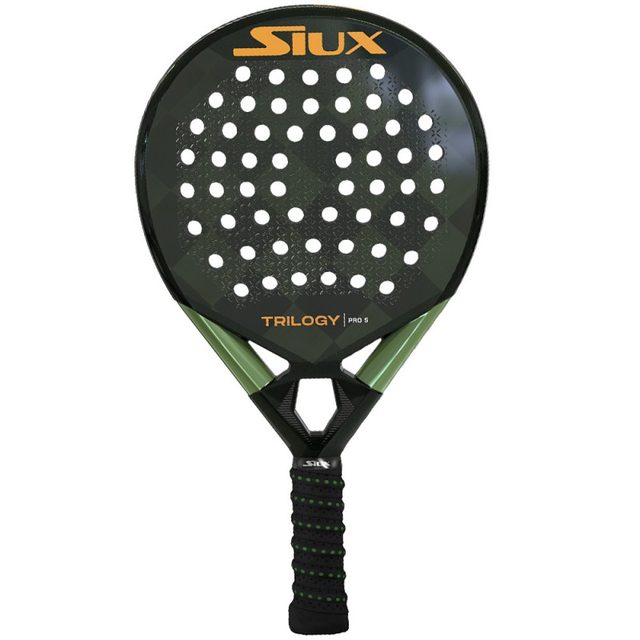
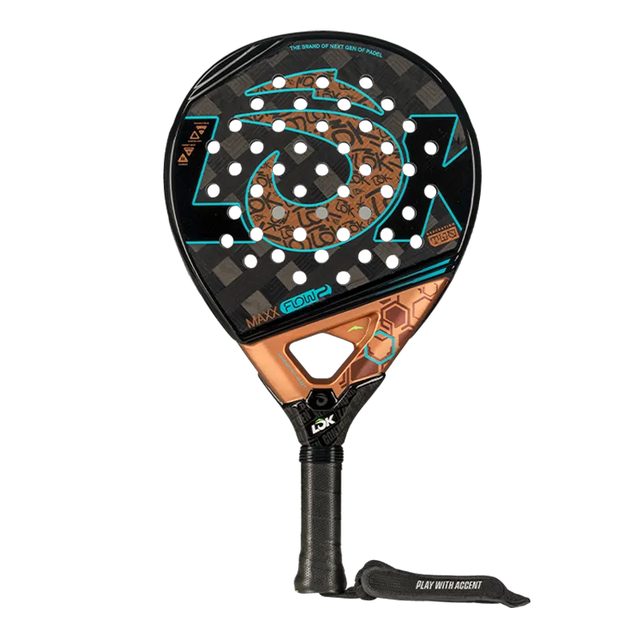
Patty Llaguno's Trilogy Pro 5 2025 is a round control frame, balanced low, with a 24K carbon face and a fast-recovering EVA core, and at €129 it is forty euros under the Noir Fog 2026 at its cheapest shop.
The verdict
The Trilogy Pro 5 2025 is a control racket marked down from a €325 compare-at price. A round head, the weight carried low, a 24K carbon face, and three shops selling it for far less than that. It is sold as Patty Llaguno's 2025 edition, and the frame is built for the right side. It puts the ball where you aimed it and leaves the pace to you.
That last clause is the warning. This is an advanced control frame, not a comfortable all-rounder. The face is stiff 24K carbon and the core is a medium, fast-recovering EVA, so a mishit gives you a report rather than a cushion, and there is no free power on the smash. If your points end with a ball dropped into the back corner, dead against the glass, this is your kind of racket. If you need the frame to add pace to a slow arm, look at the Elite W or the Wonder instead.
Being a 2025 model is why two of the three shops sell it for less than the 2026 Noir Fog. It is also a heavier frame than the women's-line rackets around it: 367g, with shop listings running from 355 up to 375g, which is more than the women's right-side guide usually allows.
The build
An EVA core that comes back fast
Siux fills the Trilogy Pro 5 with EVA Quick Recovery, a medium-density foam that returns to shape immediately after contact. A core that recovers fast gives you the same response on the tenth volley of a rally as on the first. The price of that consistency is a core that does not sink far under the ball. A strike off the middle of the face sends its feedback to the wrist rather than losing it in the foam.
A 24K carbon face with a 3D gloss texture
The hitting surface is 24K carbon, a dense 24K weave, finished in a glossy 3D texture rather than a sandy one. A stiff face flexes very little, so the ball holds the line you gave it, and the response feels direct in the hand. The textured gloss takes hold of a brushed ball, so a sliced lob or a bandeja picks up its spin off the surface, not from a bigger swing. On a round frame that spin is the difference between a lob that floats and one that dies in the corner.
A round head with the weight down low
The outline is round and the balance is low. A round outline keeps the sweet spot central, right where a block, a reset and a stretched volley land, so the forgiving zone covers the strikes a defender makes. With the balance low, the weight stays down by your grip, so the head turns quickly and the frame stays steady when the ball arrives faster than you expected. At 367g that stability is real; this racket does not twist in your hand on a hard block the way a 340g frame can.
Carbon frame, 2025 edition
The frame is carbon throughout, which keeps the round head rigid when a strike drifts out toward the rim. This is the 2025 edition of the Trilogy Pro line, and its successor, the Trilogy Pro Noir Fog 2026, keeps the same round outline, low balance and 24K carbon face. The 2026 moves to a rough 24K face over a medium EVA core; the 2025 keeps the gloss face and its fast-recovering foam, and costs less at two of the three shops while stock lasts.
How it plays
Placement from the right side
This racket is built for the player who wins by making the other pair hit one more ball. A low volley taken at the shoelaces goes back deep and flat because the weight near your hand lets you open the face late. A block off a hard smash lands in the corner you pointed at, because the stiff face does not add spin or direction you did not ask for. Where the Trilogy Pro 5 is at its best is the slow, deliberate point: three deep lobs, a drop volley, then the ball into the gap. The one shot to avoid is the drive hit flat from behind the service line; without pace of its own the ball arrives short and sits up for the volley. A slow ball off the back wall is the one this frame handles best: step in, take it early, and the stiff face sends it back deep without you adding a thing.
The lob and the chiquita
A medium core that recovers fast means the depth of your lob is yours to control and yours to get wrong. Hit it with set feet and a full follow-through and it clears the net player and drops a meter inside the back glass. Hit it late, on the run, and it comes off flat and short. The chiquita is where the textured face earns its place: a brushed ball dipping onto the net player's shoes is the shot this frame is built for. Against a pair who lob you all afternoon, that depth control is what keeps you at the net instead of chasing.
Overhead, you bring the pace
A round frame with a low balance has no interest in finishing points by force, and this one keeps to the type. The bandeja is its overhead: a controlled, sliced shot into the corner that resets the net rather than ending the rally. Aim it long and low to the corner and the stiff face keeps it there, which is all a right-sider needs from an overhead. You can hit a flat smash with a full swing, but the ball comes off with your pace and no more. If you play the right side with a partner who does the finishing, that is the correct division of labor.
Wrist and elbow, two different stories
The weight is kind to the shoulder: 367g sits near your hand, so the frame never drags on the overhead. The wrist is another matter. A stiff 24K face over a medium core passes a real share of each impact to your hand, and a mishit stings. Players with a grooved swing who find the middle of the face most of the time will barely notice. Players with a sensitive elbow should read the soft-cored alternatives first. A thicker overgrip does more for this frame than a different ball: it takes the edge off the stiff face on a long session.
Who it's for (and who should skip it)
Buy it if
- Your game lives on the right side, you play at an advanced level, and you win on placement, depth and patience
- You want a stiff, direct control frame and will bring your own pace
- A tour-grade frame without tour-grade money appeals to you, and a 2025 model does not bother you
Look elsewhere if
- You want the racket to add pace to your smash: a round, low-balanced frame will not
- You are still learning where the middle of the face is: a softer core forgives the misses this one reports
- Your elbow or wrist is already sore: the stiff face and medium core send more back than a soft frame does
Not sure it's your match? The free 2-minute quiz reads your level, style, and budget and tells you which racket is.
The bottom line
A round control frame at forty euros under its 2026 successor is the deal here, and the only question is whether your wrist wants a stiff one.
Where to buy
Prices shown in Euro, converted and approximate. You check out in the store's own currency.
Frequently asked
No. The Trilogy Pro 5 is an advanced control racket, stiff 24K carbon over a medium, fast-recovering EVA core, and at 367g it is heavier than a first racket should be. A beginner wants a softer core and a lighter frame. A softer round frame around 355g is the better first buy.
Control, without hedging. Round outline, low balance, stiff face: all three serve placement and consistency, and the racket adds no pace of its own. Spin comes from the textured gloss face; power comes from your swing. If you want pace from the frame itself, the Wonder in the same guide gives you some.
From €129 at PadelPROShop, with PadelShop and PadelMarket higher. All three carry it, and the 2025 model year is why PadelPROShop and PadelShop price it under the 2026 Noir Fog.
The face finish, the core and the price. Both are round, low-balanced 24K carbon frames at 367g. The Noir Fog 2026 runs a rough face over a medium EVA core; the Pro 5 2025 runs a glossy textured face over a medium EVA that Siux calls Quick Recovery. The 2025 is cheaper at PadelPROShop and PadelShop; PadelMarket sells it at the Noir Fog's price.
The 2025 edition carries her name. PadelPROShop sells it as the Patty Llaguno edition, and the frame fits a right-side control game: round, low-balanced and stiff.
An EVA Quick Recovery core, medium and fast to return to shape, under a 24K carbon face with a glossy 3D texture. The frame is carbon. Weight is 367g, with shop listings spanning 355 to 375g.
The app · free quiz
Not sure which one's you?
Take the free quiz in the app. We'll match a racket to your game, not the other way around.
Find my racketFree quiz. Sign in with email or Google to get your four picks.


Siux Trilogy Pro 5 2025 Review
By Andres Jovem · Updated October 20, 2026
Patty Llaguno's Trilogy Pro 5 2025 is a round control frame, balanced low, with a 24K carbon face and a fast-recovering EVA core, and at €129 it is forty euros under the Noir Fog 2026 at its cheapest shop.
The verdict
The Trilogy Pro 5 2025 is a control racket marked down from a €325 compare-at price. A round head, the weight carried low, a 24K carbon face, and three shops selling it for far less than that. It is sold as Patty Llaguno's 2025 edition, and the frame is built for the right side. It puts the ball where you aimed it and leaves the pace to you.
That last clause is the warning. This is an advanced control frame, not a comfortable all-rounder. The face is stiff 24K carbon and the core is a medium, fast-recovering EVA, so a mishit gives you a report rather than a cushion, and there is no free power on the smash. If your points end with a ball dropped into the back corner, dead against the glass, this is your kind of racket. If you need the frame to add pace to a slow arm, look at the Elite W or the Wonder instead.
Being a 2025 model is why two of the three shops sell it for less than the 2026 Noir Fog. It is also a heavier frame than the women's-line rackets around it: 367g, with shop listings running from 355 up to 375g, which is more than the women's right-side guide usually allows.
The build
An EVA core that comes back fast
Siux fills the Trilogy Pro 5 with EVA Quick Recovery, a medium-density foam that returns to shape immediately after contact. A core that recovers fast gives you the same response on the tenth volley of a rally as on the first. The price of that consistency is a core that does not sink far under the ball. A strike off the middle of the face sends its feedback to the wrist rather than losing it in the foam.
A 24K carbon face with a 3D gloss texture
The hitting surface is 24K carbon, a dense 24K weave, finished in a glossy 3D texture rather than a sandy one. A stiff face flexes very little, so the ball holds the line you gave it, and the response feels direct in the hand. The textured gloss takes hold of a brushed ball, so a sliced lob or a bandeja picks up its spin off the surface, not from a bigger swing. On a round frame that spin is the difference between a lob that floats and one that dies in the corner.
A round head with the weight down low
The outline is round and the balance is low. A round outline keeps the sweet spot central, right where a block, a reset and a stretched volley land, so the forgiving zone covers the strikes a defender makes. With the balance low, the weight stays down by your grip, so the head turns quickly and the frame stays steady when the ball arrives faster than you expected. At 367g that stability is real; this racket does not twist in your hand on a hard block the way a 340g frame can.
Carbon frame, 2025 edition
The frame is carbon throughout, which keeps the round head rigid when a strike drifts out toward the rim. This is the 2025 edition of the Trilogy Pro line, and its successor, the Trilogy Pro Noir Fog 2026, keeps the same round outline, low balance and 24K carbon face. The 2026 moves to a rough 24K face over a medium EVA core; the 2025 keeps the gloss face and its fast-recovering foam, and costs less at two of the three shops while stock lasts.
How it plays
Placement from the right side
This racket is built for the player who wins by making the other pair hit one more ball. A low volley taken at the shoelaces goes back deep and flat because the weight near your hand lets you open the face late. A block off a hard smash lands in the corner you pointed at, because the stiff face does not add spin or direction you did not ask for. Where the Trilogy Pro 5 is at its best is the slow, deliberate point: three deep lobs, a drop volley, then the ball into the gap. The one shot to avoid is the drive hit flat from behind the service line; without pace of its own the ball arrives short and sits up for the volley. A slow ball off the back wall is the one this frame handles best: step in, take it early, and the stiff face sends it back deep without you adding a thing.
The lob and the chiquita
A medium core that recovers fast means the depth of your lob is yours to control and yours to get wrong. Hit it with set feet and a full follow-through and it clears the net player and drops a meter inside the back glass. Hit it late, on the run, and it comes off flat and short. The chiquita is where the textured face earns its place: a brushed ball dipping onto the net player's shoes is the shot this frame is built for. Against a pair who lob you all afternoon, that depth control is what keeps you at the net instead of chasing.
Overhead, you bring the pace
A round frame with a low balance has no interest in finishing points by force, and this one keeps to the type. The bandeja is its overhead: a controlled, sliced shot into the corner that resets the net rather than ending the rally. Aim it long and low to the corner and the stiff face keeps it there, which is all a right-sider needs from an overhead. You can hit a flat smash with a full swing, but the ball comes off with your pace and no more. If you play the right side with a partner who does the finishing, that is the correct division of labor.
Wrist and elbow, two different stories
The weight is kind to the shoulder: 367g sits near your hand, so the frame never drags on the overhead. The wrist is another matter. A stiff 24K face over a medium core passes a real share of each impact to your hand, and a mishit stings. Players with a grooved swing who find the middle of the face most of the time will barely notice. Players with a sensitive elbow should read the soft-cored alternatives first. A thicker overgrip does more for this frame than a different ball: it takes the edge off the stiff face on a long session.
Who it's for (and who should skip it)
Buy it if
- Your game lives on the right side, you play at an advanced level, and you win on placement, depth and patience
- You want a stiff, direct control frame and will bring your own pace
- A tour-grade frame without tour-grade money appeals to you, and a 2025 model does not bother you
Look elsewhere if
- You want the racket to add pace to your smash: a round, low-balanced frame will not
- You are still learning where the middle of the face is: a softer core forgives the misses this one reports
- Your elbow or wrist is already sore: the stiff face and medium core send more back than a soft frame does
Not sure it's your match? The free 2-minute quiz reads your level, style, and budget and tells you which racket is.
The bottom line
A round control frame at forty euros under its 2026 successor is the deal here, and the only question is whether your wrist wants a stiff one.
Where to buy
Prices shown in Euro, converted and approximate. You check out in the store's own currency.
Frequently asked
No. The Trilogy Pro 5 is an advanced control racket, stiff 24K carbon over a medium, fast-recovering EVA core, and at 367g it is heavier than a first racket should be. A beginner wants a softer core and a lighter frame. A softer round frame around 355g is the better first buy.
Control, without hedging. Round outline, low balance, stiff face: all three serve placement and consistency, and the racket adds no pace of its own. Spin comes from the textured gloss face; power comes from your swing. If you want pace from the frame itself, the Wonder in the same guide gives you some.
From €129 at PadelPROShop, with PadelShop and PadelMarket higher. All three carry it, and the 2025 model year is why PadelPROShop and PadelShop price it under the 2026 Noir Fog.
The face finish, the core and the price. Both are round, low-balanced 24K carbon frames at 367g. The Noir Fog 2026 runs a rough face over a medium EVA core; the Pro 5 2025 runs a glossy textured face over a medium EVA that Siux calls Quick Recovery. The 2025 is cheaper at PadelPROShop and PadelShop; PadelMarket sells it at the Noir Fog's price.
The 2025 edition carries her name. PadelPROShop sells it as the Patty Llaguno edition, and the frame fits a right-side control game: round, low-balanced and stiff.
An EVA Quick Recovery core, medium and fast to return to shape, under a 24K carbon face with a glossy 3D texture. The frame is carbon. Weight is 367g, with shop listings spanning 355 to 375g.
The app · free quiz
Not sure which one's you?
Take the free quiz in the app. We'll match a racket to your game, not the other way around.
Find my racketFree quiz. Sign in with email or Google to get your four picks.