Siux Trilogy Elite 6 2026 Review
By Andres Jovem · Updated October 3, 2026
A steady, even-balanced advanced control round that does everything competently and nothing showy, for the improver who wants dependable equipment without the flagship markup.
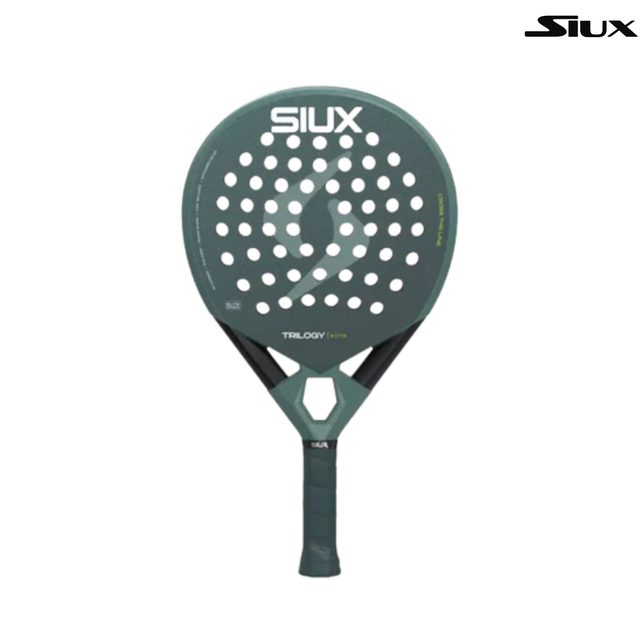
The verdict
The Siux Trilogy Elite 6 is a control player's tool, and it is honest about being an unremarkable one. Round head, even balance, a medium core that keeps the ball on a leash rather than firing it away, this is a frame built to repeat the same shot at the back of the court all afternoon. It has no signature weapon and makes no attempt to grow one. What it offers instead is consistency: the length you find in the warmup is the length you still have in the third set.
This is the racket for the intermediate stepping up to advanced kit who wants serious construction and a receipt they can defend. It sits in the sensible middle of a field that gets expensive fast, and it earns that spot by refusing to cut the corners cheaper rackets cut. If you want a frame that surprises you, or an opponent, this is not it. If you want one that never lets you down, read on.
The build
The core: a medium Black EVA that stays honest
Siux builds the Trilogy Elite 6 on a medium-density Black EVA core. A medium foam compresses a little at contact and then hands the ball back on a predictable line, so the ball leaves with a firm, even response rather than a soft catapult or a hard flat sting. The payoff is repeatability: because the core reacts the same way to every strike, the depth you dial in early holds shot after shot, which is exactly what a control player is buying. The honest trade sits here too. A medium core cushions less than the soft, spongy rounds a beginner leans on, so a mishit reports back through the hand instead of being quietly absorbed, and there is no free trampoline of power waiting when you want to end a rally.
The face: a 3K carbon weave that answers the same everywhere
The hitting layer is a 3K carbon face, a moderate-weave carbon that holds the surface firm without the harsh, board-like rigidity of the denser weaves on flagship attackers. Firm carbon keeps the contact point consistent across the face, so a ball struck a thumb's width off center comes back close to the same as one struck dead middle. That steadiness is the whole reason to reach for this frame: your placement does not swing wildly with your accuracy. The 3K weave carries a light natural grit for spin, enough to shape a ball, though this is not a face built to rip heavy rotation, and pretending otherwise would be the kind of oversell this racket does not deserve.
The frame and balance: a round head sat low and even
The mold is a round head on a carbon frame with a low, even balance point, and every part of that description pushes the same way, toward stability. A round shape puts the sweet spot low and central where a controlled swing actually makes contact, so the face stays composed and resists twisting when a strike wanders. The even balance keeps the mass close to your hand rather than loaded out in the head, which is what makes a 367g frame maneuverable instead of tiring. Nothing here is engineered to load the head for a bigger smash. The frame spends its whole design budget on holding steady through contact, and that is a deliberate choice, not a shortfall.
How it plays
From the baseline, it repeats itself
This is the zone the Trilogy Elite 6 was built for, and it is where you feel the point of the racket. Sit behind a rally and blocks travel deep off a middle you can trust, so you give away very few of the cheap short balls that hand an attacking pair the net. Resets under pressure land where you aim because the response never changes on you, and a lob floated off the back glass carries with margin instead of dumping into the net or sailing long. The reward is a plain one: you keep the ball in play and in awkward places, and you win the point when the other pair blinks first.
At the net, clean and straight
Up front the frame punches a volley clean and flat, happier driving a ball straight into a gap than carving a sharp angle off the frame. The even balance means the head is on time when a volley jumps at your hip, so you are not dragging a head-heavy racket into position while the ball is already past you. Quick hands stay quick. What you do not get is a put-away that ends the exchange by sheer violence, because the pace tops out where a control frame's pace tops out. You finish by placement and patience, not by overpowering the block.
On the attack, conservative by design
Line up an overhead and the ball comes off solid and controlled rather than steep and brutal. The smash is a placement shot here, not a hammer, and the frame concedes raw ceiling to the head-heavy diamonds it sits below in price and intent. A bandeja is where this suits you better than a smash, because the even, planted feel lets you slice a defensive overhead deep and keep the point on your terms. If your game plan is to bludgeon a pair off the court, this is not the tool, and it will not learn to be one as you improve.
Comfort and the arm: firm, not cruel
The medium core sits in a fair middle for the elbow and shoulder. It is not the plush, forgiving cushion of a soft beginner round, so an arm that already grumbles after a long match will feel more of each contact through the wrist and elbow than a softer frame would send back. It is also nowhere near the jarring shock of a hard, dense attacking core, so most improving players will play a full afternoon without their arm becoming the story. Name the honest limit plainly: if arm comfort is your first requirement, a soft-cored round will treat your elbow more kindly than the medium core here does.
Who it's for (and who should skip it)
Buy it if
- You are an improver moving up to advanced equipment and want a control frame that repeats the same shot all match without a flagship price.
- You play a patient baseline game built on depth, resets, and margin, and you win points by keeping the ball where the other pair does not want it.
- You value a frame that never lets you down over one that occasionally dazzles, and you want the same answer from the center of the face and just off it.
Look elsewhere if
- You want a standout weapon. This racket is deliberately steady, has no party trick, and stays conservative on the smash by design, so a finisher hunting overhead power should look at a head-heavy diamond instead.
- Your arm is easily aggravated. The medium core cushions less than a soft round, so an elbow or shoulder that flares up after long matches will be happier on a softer-cored frame.
- You are a true beginner. At 367g and with an advanced control build, this asks for a swing you are still grooving, and a lighter, softer round will teach you faster and forgive you more.
Not sure it's your match? The free 2-minute quiz reads your level, style, and budget and tells you which racket is.
The bottom line
So this is the steady middle of the advanced field: not the smash weapon, not the featherweight, but the frame that repeats itself when the match gets long and tight. If you defend, build points, and want dependable equipment without paying flagship money, the Trilogy Elite 6 is your match, and if you want a knockout overhead you already know to look elsewhere from the skip list above. Not sure it is your racket? The free 2-minute quiz reads your level, style, and budget and tells you the one that fits.
Where to buy
Prices shown in Euro, converted and approximate. You check out in the store's own currency.
Frequently asked
Not really. The Trilogy Elite 6 is an advanced control frame at 367g with a medium core, so a newcomer will find it heavier and less forgiving than a starter racket should be. A soft-cored round around 350g will cushion your mishits and build your swing faster. Come back to this one once your technique is grooved and you are ready to move up.
It is firmly a control racket. The round head, even low balance, and medium Black EVA core all steer the Trilogy Elite 6 toward placement, depth, and consistency rather than raw pace. You supply the power and the racket supplies the repeatability, which is the honest deal with a frame built for the patient baseline player.
The Trilogy Elite 6 pairs a medium-density Black EVA core with a 3K carbon face on a carbon frame. That medium foam gives a firm, consistent rebound instead of a soft catapult, while the 3K carbon keeps the response even across the face. The build is honest and controlled rather than exotic, which is the point of the racket.
The Trilogy Elite 6 trades the diamond's attacking ceiling for steadiness and forgiveness. A head-heavy diamond loads mass toward the tip for a bigger smash but punishes an off-center hit and tires the arm sooner. The even-balanced, round Trilogy Elite 6 gives up that top-end power for a maneuverable, consistent frame that rewards placement, so choose it if you defend and build points rather than end them with an overhead.
No, because the weight sits in the right place. The Trilogy Elite 6 carries its 367 grams on a low, even balance, so the mass stays close to your hand instead of loading the head. That keeps it quick enough for reaction volleys at the net while giving you the substance to hold your ground when a faster pair tries to rush you.
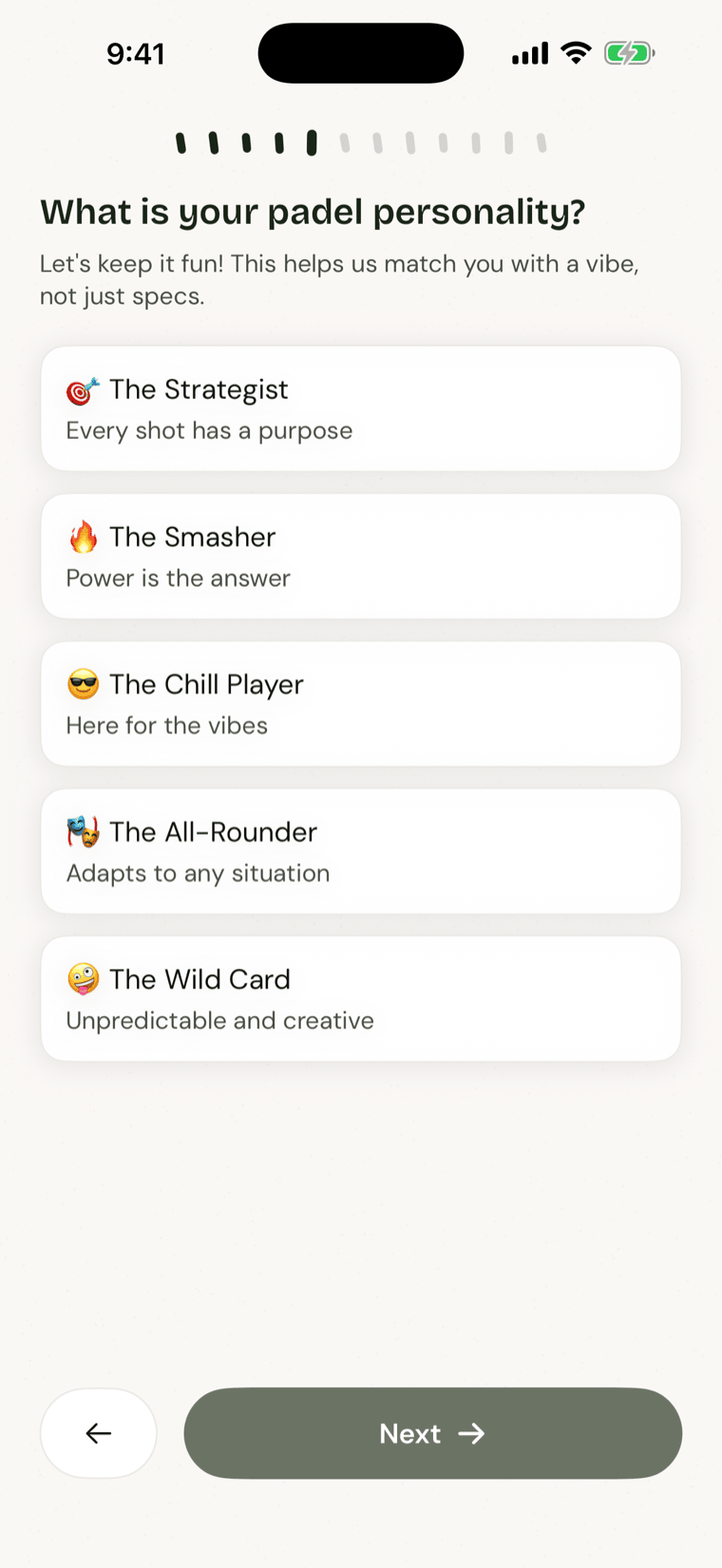
The app · free quiz
Not sure which one's you?
Take the free quiz in the app. We'll match a racket to your game, not the other way around.
Find my racketFree quiz. Sign in with email or Google to get your four picks.

Siux Trilogy Elite 6 2026 Review
By Andres Jovem · Updated October 3, 2026
A steady, even-balanced advanced control round that does everything competently and nothing showy, for the improver who wants dependable equipment without the flagship markup.
The verdict
The Siux Trilogy Elite 6 is a control player's tool, and it is honest about being an unremarkable one. Round head, even balance, a medium core that keeps the ball on a leash rather than firing it away, this is a frame built to repeat the same shot at the back of the court all afternoon. It has no signature weapon and makes no attempt to grow one. What it offers instead is consistency: the length you find in the warmup is the length you still have in the third set.
This is the racket for the intermediate stepping up to advanced kit who wants serious construction and a receipt they can defend. It sits in the sensible middle of a field that gets expensive fast, and it earns that spot by refusing to cut the corners cheaper rackets cut. If you want a frame that surprises you, or an opponent, this is not it. If you want one that never lets you down, read on.
The build
The core: a medium Black EVA that stays honest
Siux builds the Trilogy Elite 6 on a medium-density Black EVA core. A medium foam compresses a little at contact and then hands the ball back on a predictable line, so the ball leaves with a firm, even response rather than a soft catapult or a hard flat sting. The payoff is repeatability: because the core reacts the same way to every strike, the depth you dial in early holds shot after shot, which is exactly what a control player is buying. The honest trade sits here too. A medium core cushions less than the soft, spongy rounds a beginner leans on, so a mishit reports back through the hand instead of being quietly absorbed, and there is no free trampoline of power waiting when you want to end a rally.
The face: a 3K carbon weave that answers the same everywhere
The hitting layer is a 3K carbon face, a moderate-weave carbon that holds the surface firm without the harsh, board-like rigidity of the denser weaves on flagship attackers. Firm carbon keeps the contact point consistent across the face, so a ball struck a thumb's width off center comes back close to the same as one struck dead middle. That steadiness is the whole reason to reach for this frame: your placement does not swing wildly with your accuracy. The 3K weave carries a light natural grit for spin, enough to shape a ball, though this is not a face built to rip heavy rotation, and pretending otherwise would be the kind of oversell this racket does not deserve.
The frame and balance: a round head sat low and even
The mold is a round head on a carbon frame with a low, even balance point, and every part of that description pushes the same way, toward stability. A round shape puts the sweet spot low and central where a controlled swing actually makes contact, so the face stays composed and resists twisting when a strike wanders. The even balance keeps the mass close to your hand rather than loaded out in the head, which is what makes a 367g frame maneuverable instead of tiring. Nothing here is engineered to load the head for a bigger smash. The frame spends its whole design budget on holding steady through contact, and that is a deliberate choice, not a shortfall.
How it plays
From the baseline, it repeats itself
This is the zone the Trilogy Elite 6 was built for, and it is where you feel the point of the racket. Sit behind a rally and blocks travel deep off a middle you can trust, so you give away very few of the cheap short balls that hand an attacking pair the net. Resets under pressure land where you aim because the response never changes on you, and a lob floated off the back glass carries with margin instead of dumping into the net or sailing long. The reward is a plain one: you keep the ball in play and in awkward places, and you win the point when the other pair blinks first.
At the net, clean and straight
Up front the frame punches a volley clean and flat, happier driving a ball straight into a gap than carving a sharp angle off the frame. The even balance means the head is on time when a volley jumps at your hip, so you are not dragging a head-heavy racket into position while the ball is already past you. Quick hands stay quick. What you do not get is a put-away that ends the exchange by sheer violence, because the pace tops out where a control frame's pace tops out. You finish by placement and patience, not by overpowering the block.
On the attack, conservative by design
Line up an overhead and the ball comes off solid and controlled rather than steep and brutal. The smash is a placement shot here, not a hammer, and the frame concedes raw ceiling to the head-heavy diamonds it sits below in price and intent. A bandeja is where this suits you better than a smash, because the even, planted feel lets you slice a defensive overhead deep and keep the point on your terms. If your game plan is to bludgeon a pair off the court, this is not the tool, and it will not learn to be one as you improve.
Comfort and the arm: firm, not cruel
The medium core sits in a fair middle for the elbow and shoulder. It is not the plush, forgiving cushion of a soft beginner round, so an arm that already grumbles after a long match will feel more of each contact through the wrist and elbow than a softer frame would send back. It is also nowhere near the jarring shock of a hard, dense attacking core, so most improving players will play a full afternoon without their arm becoming the story. Name the honest limit plainly: if arm comfort is your first requirement, a soft-cored round will treat your elbow more kindly than the medium core here does.
Who it's for (and who should skip it)
Buy it if
- You are an improver moving up to advanced equipment and want a control frame that repeats the same shot all match without a flagship price.
- You play a patient baseline game built on depth, resets, and margin, and you win points by keeping the ball where the other pair does not want it.
- You value a frame that never lets you down over one that occasionally dazzles, and you want the same answer from the center of the face and just off it.
Look elsewhere if
- You want a standout weapon. This racket is deliberately steady, has no party trick, and stays conservative on the smash by design, so a finisher hunting overhead power should look at a head-heavy diamond instead.
- Your arm is easily aggravated. The medium core cushions less than a soft round, so an elbow or shoulder that flares up after long matches will be happier on a softer-cored frame.
- You are a true beginner. At 367g and with an advanced control build, this asks for a swing you are still grooving, and a lighter, softer round will teach you faster and forgive you more.
Not sure it's your match? The free 2-minute quiz reads your level, style, and budget and tells you which racket is.
The bottom line
So this is the steady middle of the advanced field: not the smash weapon, not the featherweight, but the frame that repeats itself when the match gets long and tight. If you defend, build points, and want dependable equipment without paying flagship money, the Trilogy Elite 6 is your match, and if you want a knockout overhead you already know to look elsewhere from the skip list above. Not sure it is your racket? The free 2-minute quiz reads your level, style, and budget and tells you the one that fits.
Where to buy
Prices shown in Euro, converted and approximate. You check out in the store's own currency.
Frequently asked
Not really. The Trilogy Elite 6 is an advanced control frame at 367g with a medium core, so a newcomer will find it heavier and less forgiving than a starter racket should be. A soft-cored round around 350g will cushion your mishits and build your swing faster. Come back to this one once your technique is grooved and you are ready to move up.
It is firmly a control racket. The round head, even low balance, and medium Black EVA core all steer the Trilogy Elite 6 toward placement, depth, and consistency rather than raw pace. You supply the power and the racket supplies the repeatability, which is the honest deal with a frame built for the patient baseline player.
The Trilogy Elite 6 pairs a medium-density Black EVA core with a 3K carbon face on a carbon frame. That medium foam gives a firm, consistent rebound instead of a soft catapult, while the 3K carbon keeps the response even across the face. The build is honest and controlled rather than exotic, which is the point of the racket.
The Trilogy Elite 6 trades the diamond's attacking ceiling for steadiness and forgiveness. A head-heavy diamond loads mass toward the tip for a bigger smash but punishes an off-center hit and tires the arm sooner. The even-balanced, round Trilogy Elite 6 gives up that top-end power for a maneuverable, consistent frame that rewards placement, so choose it if you defend and build points rather than end them with an overhead.
No, because the weight sits in the right place. The Trilogy Elite 6 carries its 367 grams on a low, even balance, so the mass stays close to your hand instead of loading the head. That keeps it quick enough for reaction volleys at the net while giving you the substance to hold your ground when a faster pair tries to rush you.
The app · free quiz
Not sure which one's you?
Take the free quiz in the app. We'll match a racket to your game, not the other way around.
Find my racketFree quiz. Sign in with email or Google to get your four picks.