Head Radical Motion 2026 Review
By Andres Jovem · Updated October 3, 2026
A light, handle-balanced control teardrop with a foam core softer than the usual EVA, discounted about 30 percent: the value route to advanced-level control for the player who wins with placement.
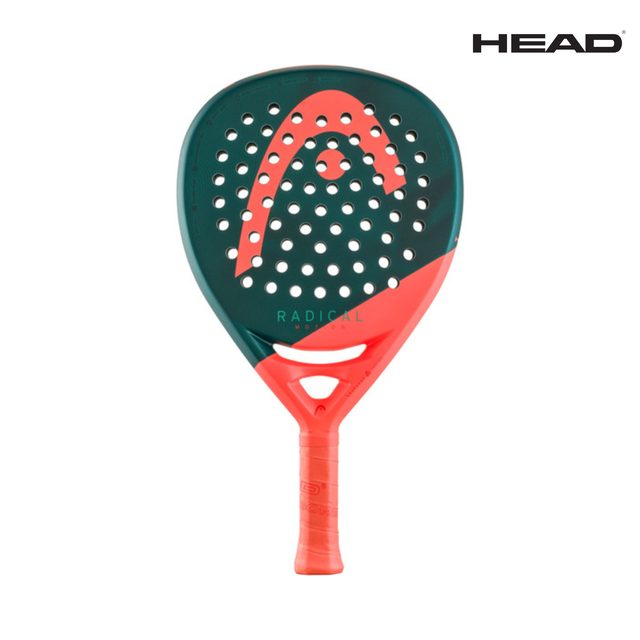
The verdict
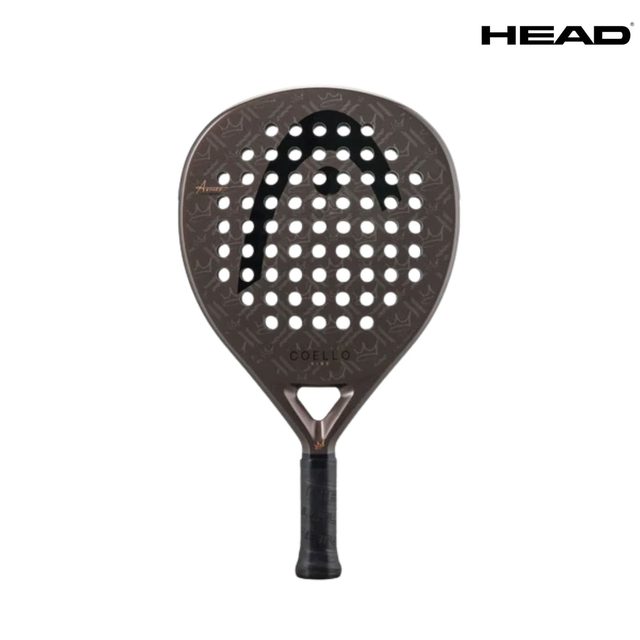
The Head Radical Motion 2026 is the value pick on the control shelf. Head lists it at €199.95; at our last price check it sold from €137.95, a cut of roughly 30 percent on a current-season racket, not an old model being cleared out. What that money buys is the lightest and most manageable frame in Head's 2026 Radical line: 355g nominal, a Control Foam core softer than the usual EVA, a 3K carbon face, and a balance point down at 26cm, near your hand.
The design signature is the pairing. The teardrop head puts the sweet spot mid-high, where your bandeja and smash make contact, while the 26cm balance keeps the mass by the handle, so the head comes around fast at the net and your shoulder does less work holding it up through a long match. That combination is the point of the Motion: overhead coverage without the swing weight.
The trade is written into the name of the core. Control Foam is softer than the EVA in most control rackets, and a softer core does not fire the ball back at pace; the speed of your shots is the speed of your swing. If you want a racket that adds thump to a flat smash, this is not it, and no discount changes that. It is a frame for the player who wins by putting the ball in the wrong place for the other team, over and over.
The build
A Control Foam core, and it means it
Head builds the Motion around Control Foam, a softer compound than the EVA rubber most control rackets use. Two things follow. The foam soaks up vibration at contact instead of sending it up your arm. And it holds the ball on the face a fraction longer, which is time you spend steering the shot. The exit is predictable rather than explosive: you give up pop and get certainty in return.
A 3K carbon face with a rough coat
The hitting surface is 3K Carbon, a weave of 3,000-filament bundles that lays down smoother than the chunkier 12K cloth on stiffer frames, and Head finishes it rough. The smooth weave keeps the bite consistent across the face, so the same swing produces the same ball. The rough texture adds friction, and friction is spin: a bandeja or víbora grips the ball and leaves with shape instead of sliding off flat.
A 38mm frame with the weight by your hand
The profile is 38mm, mid-range: thick enough to stay rigid when you drive the ball, thin enough to flex a little at contact. On the power-to-control spectrum it sits at the control end. Balance is the headline number, though. 26cm puts the mass toward the handle, which is why a 355-365g racket feels lighter than the scale says and why the head is easy to place in a fast exchange. Head's sheet also lists Auxetic 2.0, Graphene Inside, Smart Bridge, and a Soft ButtCap+. We name them because Head does; the parts you will feel are the foam, the face, and where the weight sits.
How it plays
Placement is the whole game plan
From the back of the court the Motion plays like a racket that expects patience. Resets and chiquitas come off slow and short, easy to keep out of the opponents' strike zone, and a block stays in front of you instead of floating long. The cost shows on the deep defensive lob: nothing in this frame adds distance, so depth comes from your push, and a tired arm will send it short. What the racket gives back late in a match is speed of hand; you are still swinging on time when heavier frames start arriving late.
At the net it does what quick hands want
This is where the low balance stops being a spec and becomes something you can feel. The head changes direction fast, so a hard body shot gets blocked instead of eaten, and a rapid volley exchange never runs away from you. Volleys land where you aimed them. What they do not do is finish points on their own: a put-away needs a firm punch from you, because the racket will not add the pace.
Overheads: reach yes, thunder no
The teardrop earns its keep above your shoulder. The sweet spot sits mid-high, right where a bandeja or víbora makes contact, so the working overheads come off clean, and the rough face lets you cut them with enough spin to keep the ball low and awkward after the bounce. The flat smash is honest labor. With the mass at your hand rather than in the head, ball speed is swing speed; hit it well and it goes, but nobody will ask what racket you used.
Your arm gets the good news
The comfort note is a good one, for once. Contact stays soft on the hands, and after three sets your shoulder has not been hauling head weight through every swing. If your arm or shoulder has a history, a softer foam core and a handle-side balance are the two specs you would shop for, and the Motion has both. Scope the forgiveness, though: it forgives your joints, not your aim. The sweet spot is medium sized, and a strike off the edge of the face loses more than it would on a bigger-faced, more forgiving frame.
Who it's for (and who should skip it)
Buy it if
- You win points with placement and patience, and you bring your own pace
- You want a control racket that stays quick in the hand and quiet on the arm and shoulder
- You want a current-season advanced frame for under €150.00
Look elsewhere if
- You want the racket to power your smash: the mass sits at the handle and the core is a softer foam, so the pace is all yours to supply
- You are a beginner: this is an advanced control frame with a medium sweet spot, and a round, bigger-faced racket will forgive more of your learning
- You like a firm, instant hit: this foam holds the ball longer and reads muted by comparison
Not sure it's your match? The free 2-minute quiz reads your level, style, and budget and tells you which racket is.
The bottom line
The case for the Radical Motion is simple to state: current-season control at a discount, in a frame that costs your body as little as your card. If placement is your game and your shoulder gets a vote, it belongs on your shortlist. If you want power delivered to you, it never will be, at any price. Not sure which player you are? The free two-minute quiz reads your level, style, and budget and tells you which racket is yours.
Where to buy
Prices shown in Euro, converted and approximate. You check out in the store's own currency.
Frequently asked
Not as a first racket. Head builds the Radical Motion for advanced players, and its medium sweet spot rewards a swing that finds the middle of the face. That said, it is gentler than most advanced frames: light, handle-balanced, and soft on contact, so an ambitious improver moving up from a round beginner racket could grow into it without punishing their arm. A true beginner should start rounder and bigger-faced.
Control, with no asterisk. The core is named Control Foam, the balance sits low at 26cm, and Head designs it for placement over pace. Any power it shows on court is power you swung with; the racket adds spin and precision, not speed.
Head's list price is €199.95, and at our last check it sold from about €137.95, roughly 30 percent off a current 2026 model. The live price block below shows the shops that carry it, converted to your currency. One note for readers in the Philippines: none of our local Philippine retailers stocks it at the moment, so the available shops are international ones.
A Control Foam core under a 3K Carbon face with a rough finish, in a carbon frame 38mm thick. The foam is softer than the EVA cores most control rackets use and absorbs more vibration; the smooth 3K weave keeps the response consistent, and the rough surface adds the friction that generates spin.
It is the lightest and most manageable model in the 2026 Radical range. That comes from the numbers: 355g nominal weight and a 26cm balance point, close to the hand, paired with the softer Control Foam core. In short, it is the Radical for the player who values hand speed and comfort over mass.
Yes, by the specs that matter. The Control Foam core absorbs vibration at contact, and the 26cm balance keeps head weight off your shoulder through long rallies, which is the pairing to look for if your arm or shoulder complains after matches.
It might be the best value on our control shelf: around €138.00 for a foam-cored teardrop that plays above its price. The catch is the pace ceiling that comes with control foam, so confirmed power hitters should read it as a second racket, not the answer.
For most players, the Radical Motion: it delivers the placement game at 355g and about two-thirds of the Neuron's price. The Neuron 02 justifies the step up only when your technique is already complete and you want tour weight behind every block and lob.
The app · free quiz
Not sure which one's you?
Take the free quiz in the app. We'll match a racket to your game, not the other way around.
Find my racketFree quiz. Sign in with email or Google to get your four picks.

Head Radical Motion 2026 Review
By Andres Jovem · Updated October 3, 2026
A light, handle-balanced control teardrop with a foam core softer than the usual EVA, discounted about 30 percent: the value route to advanced-level control for the player who wins with placement.
The verdict
The Head Radical Motion 2026 is the value pick on the control shelf. Head lists it at €199.95; at our last price check it sold from €137.95, a cut of roughly 30 percent on a current-season racket, not an old model being cleared out. What that money buys is the lightest and most manageable frame in Head's 2026 Radical line: 355g nominal, a Control Foam core softer than the usual EVA, a 3K carbon face, and a balance point down at 26cm, near your hand.
The design signature is the pairing. The teardrop head puts the sweet spot mid-high, where your bandeja and smash make contact, while the 26cm balance keeps the mass by the handle, so the head comes around fast at the net and your shoulder does less work holding it up through a long match. That combination is the point of the Motion: overhead coverage without the swing weight.
The trade is written into the name of the core. Control Foam is softer than the EVA in most control rackets, and a softer core does not fire the ball back at pace; the speed of your shots is the speed of your swing. If you want a racket that adds thump to a flat smash, this is not it, and no discount changes that. It is a frame for the player who wins by putting the ball in the wrong place for the other team, over and over.
The build
A Control Foam core, and it means it
Head builds the Motion around Control Foam, a softer compound than the EVA rubber most control rackets use. Two things follow. The foam soaks up vibration at contact instead of sending it up your arm. And it holds the ball on the face a fraction longer, which is time you spend steering the shot. The exit is predictable rather than explosive: you give up pop and get certainty in return.
A 3K carbon face with a rough coat
The hitting surface is 3K Carbon, a weave of 3,000-filament bundles that lays down smoother than the chunkier 12K cloth on stiffer frames, and Head finishes it rough. The smooth weave keeps the bite consistent across the face, so the same swing produces the same ball. The rough texture adds friction, and friction is spin: a bandeja or víbora grips the ball and leaves with shape instead of sliding off flat.
A 38mm frame with the weight by your hand
The profile is 38mm, mid-range: thick enough to stay rigid when you drive the ball, thin enough to flex a little at contact. On the power-to-control spectrum it sits at the control end. Balance is the headline number, though. 26cm puts the mass toward the handle, which is why a 355-365g racket feels lighter than the scale says and why the head is easy to place in a fast exchange. Head's sheet also lists Auxetic 2.0, Graphene Inside, Smart Bridge, and a Soft ButtCap+. We name them because Head does; the parts you will feel are the foam, the face, and where the weight sits.
How it plays
Placement is the whole game plan
From the back of the court the Motion plays like a racket that expects patience. Resets and chiquitas come off slow and short, easy to keep out of the opponents' strike zone, and a block stays in front of you instead of floating long. The cost shows on the deep defensive lob: nothing in this frame adds distance, so depth comes from your push, and a tired arm will send it short. What the racket gives back late in a match is speed of hand; you are still swinging on time when heavier frames start arriving late.
At the net it does what quick hands want
This is where the low balance stops being a spec and becomes something you can feel. The head changes direction fast, so a hard body shot gets blocked instead of eaten, and a rapid volley exchange never runs away from you. Volleys land where you aimed them. What they do not do is finish points on their own: a put-away needs a firm punch from you, because the racket will not add the pace.
Overheads: reach yes, thunder no
The teardrop earns its keep above your shoulder. The sweet spot sits mid-high, right where a bandeja or víbora makes contact, so the working overheads come off clean, and the rough face lets you cut them with enough spin to keep the ball low and awkward after the bounce. The flat smash is honest labor. With the mass at your hand rather than in the head, ball speed is swing speed; hit it well and it goes, but nobody will ask what racket you used.
Your arm gets the good news
The comfort note is a good one, for once. Contact stays soft on the hands, and after three sets your shoulder has not been hauling head weight through every swing. If your arm or shoulder has a history, a softer foam core and a handle-side balance are the two specs you would shop for, and the Motion has both. Scope the forgiveness, though: it forgives your joints, not your aim. The sweet spot is medium sized, and a strike off the edge of the face loses more than it would on a bigger-faced, more forgiving frame.
Who it's for (and who should skip it)
Buy it if
- You win points with placement and patience, and you bring your own pace
- You want a control racket that stays quick in the hand and quiet on the arm and shoulder
- You want a current-season advanced frame for under €150.00
Look elsewhere if
- You want the racket to power your smash: the mass sits at the handle and the core is a softer foam, so the pace is all yours to supply
- You are a beginner: this is an advanced control frame with a medium sweet spot, and a round, bigger-faced racket will forgive more of your learning
- You like a firm, instant hit: this foam holds the ball longer and reads muted by comparison
Not sure it's your match? The free 2-minute quiz reads your level, style, and budget and tells you which racket is.
The bottom line
The case for the Radical Motion is simple to state: current-season control at a discount, in a frame that costs your body as little as your card. If placement is your game and your shoulder gets a vote, it belongs on your shortlist. If you want power delivered to you, it never will be, at any price. Not sure which player you are? The free two-minute quiz reads your level, style, and budget and tells you which racket is yours.
Where to buy
Prices shown in Euro, converted and approximate. You check out in the store's own currency.
Frequently asked
Not as a first racket. Head builds the Radical Motion for advanced players, and its medium sweet spot rewards a swing that finds the middle of the face. That said, it is gentler than most advanced frames: light, handle-balanced, and soft on contact, so an ambitious improver moving up from a round beginner racket could grow into it without punishing their arm. A true beginner should start rounder and bigger-faced.
Control, with no asterisk. The core is named Control Foam, the balance sits low at 26cm, and Head designs it for placement over pace. Any power it shows on court is power you swung with; the racket adds spin and precision, not speed.
Head's list price is €199.95, and at our last check it sold from about €137.95, roughly 30 percent off a current 2026 model. The live price block below shows the shops that carry it, converted to your currency. One note for readers in the Philippines: none of our local Philippine retailers stocks it at the moment, so the available shops are international ones.
A Control Foam core under a 3K Carbon face with a rough finish, in a carbon frame 38mm thick. The foam is softer than the EVA cores most control rackets use and absorbs more vibration; the smooth 3K weave keeps the response consistent, and the rough surface adds the friction that generates spin.
It is the lightest and most manageable model in the 2026 Radical range. That comes from the numbers: 355g nominal weight and a 26cm balance point, close to the hand, paired with the softer Control Foam core. In short, it is the Radical for the player who values hand speed and comfort over mass.
Yes, by the specs that matter. The Control Foam core absorbs vibration at contact, and the 26cm balance keeps head weight off your shoulder through long rallies, which is the pairing to look for if your arm or shoulder complains after matches.
It might be the best value on our control shelf: around €138.00 for a foam-cored teardrop that plays above its price. The catch is the pace ceiling that comes with control foam, so confirmed power hitters should read it as a second racket, not the answer.
For most players, the Radical Motion: it delivers the placement game at 355g and about two-thirds of the Neuron's price. The Neuron 02 justifies the step up only when your technique is already complete and you want tour weight behind every block and lob.
The app · free quiz
Not sure which one's you?
Take the free quiz in the app. We'll match a racket to your game, not the other way around.
Find my racketFree quiz. Sign in with email or Google to get your four picks.