Siux
Best of 2026 overall
Control
Power
Even balance
from€179.99
In stockBuying guide · Best of 2026
By Andres Jovem · Updated October 19, 2026
A best-of list that suits only one kind of player is a review of that player, not of the year. So this one runs the whole court: the hardest hitters in the 2026 catalog, the sharpest control builds, the all-courters that refuse to specialize, and the value frames that embarrass their price tags. Every pick is a 2026 release, in stock at an approved shop, its price checked as we write.
There is no single best padel racket, and anyone selling you one is selling. What exists is the best execution of each job: the diamond that ends points, the round frame that never gives one away, the teardrop that does most of both. These ten are the strongest executions we can verify this year, ranked by conviction, meaning how sure we are that the right player, handed that frame, keeps it. The spread runs from €130 to €248 on purpose: the best racket at each price is a more useful truth than one flagship at the top.
One caveat before the countdown: these are the best frames of 2026 in general. Your level, your side of the court, your budget, and what your arm can carry all move the answer, and the free quiz's 12 questions land on the one that's yours in about two minutes. Now, the field.
The top 10 at a glance. Swipe through, or read the full breakdown below ↓
Best of 2026
A racket's shape is the one spec that never lies. Diamond heads carry their mass high, which feeds the smash and taxes everything else. Round heads park the sweet spot at dead center and make placement repeatable. Teardrops split the difference, which is why the all-courters on this list wear one. Decide which player you are before you decide which racket.
Not your best one. A hard core like the Metalbone's returns your swing as flat pace and reports every mishit straight up your arm. Medium foams, which dominate this list, give a little at contact, so an off-center strike stays playable and the shock never piles up in your arm and shoulder over a long match.
Where the mass sits matters as much as what it weighs. Everything here lives between 355 and 370g, but a high balance puts that mass over your head: extra smash weight, slower hands, more work for your shoulder on every swing. Low and medium balances keep the racket obedient. Attackers accept the tax; everyone else shouldn't.
Between €130 and €248, extra money buys denser carbon weaves and layered cores, real things you can feel, but it never buys fit. The wrong flagship loses to the right mid-priced frame every day of the week. Settle your lane and level first, then spend as far up that lane as your budget goes happily.
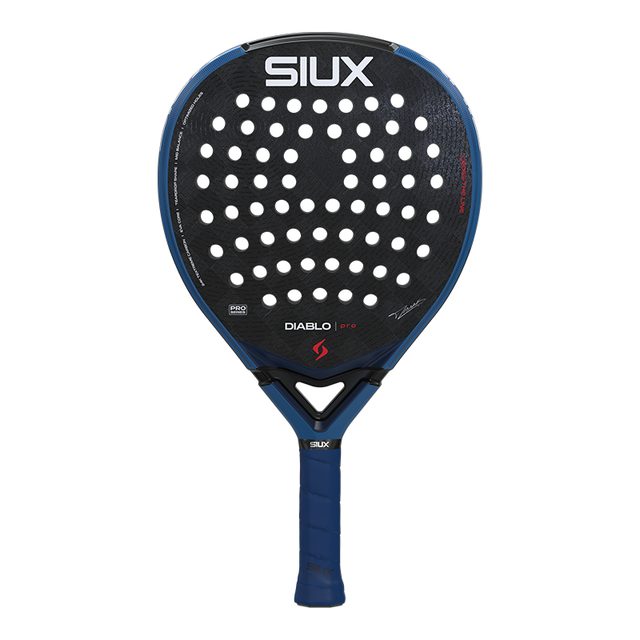
A list like this needs one frame it can defend to anyone, and this is ours. The Siux Diablo Pro Royal Blue is our Top Pick because it trades punches with the pure power flagships below it and costs less doing it: at €177, a teardrop that attacks like a specialist and defends like one too, for the player who has stopped wanting two rackets in one bag.
Siux spends the money where your hands are. The 24K carbon face is the densest weave on this list, and its stiffness holds across the whole hitting surface, so pace doesn't fall away when contact wanders from the middle. Behind it, an EVA Pro core in a medium density gives on a soft touch and firms up under a full swing, which is what lets one frame speak attack and defense in the same sentence. The rough finish grips a brushed ball, so spin arrives without a faster arm.
What that buys on court is options. At the net you can punch a volley flat or roll it short and the frame doesn't argue either way, the medium balance keeping the head obedient through fast exchanges. Pushed deep, blocks carry enough structure to buy the lob back, and a stretched reset still lands because the teardrop keeps its sweet spot near center. Overheads finish points: the víbora bites off the rough face and the smash carries real intent. The one honest ask is yours to bring: it rewards a grooved, advanced swing rather than covering for a developing one.

Some rackets negotiate with the ball. This one doesn't. The Adidas Metalbone HRD+ is the outright pace ceiling of this list, the 2026 edition of padel's most famous attack franchise, listed by retailers under Ale Galán's name and priced like the flagship it is at €248. You buy it to end points, and for no other reason.
Adidas builds it without a single concession. The EVA High Memory core runs hard here, the only hard core on this list, a foam that refuses to stay compressed: whatever speed you put into the swing comes back out as flat, direct pace instead of vanishing into cushion. The 16K aluminized carbon face wraps a metallized layer over the weave so the surface stays rigid under a full-force smash, and the rough texture means the víbora leaves with as much menace as the flat stuff.
From the back of the court you survive rather than settle in: the high balance drags on a late block, and defense wants early preparation and honest footwork. That is the tax, and adidas never pretends otherwise. The rebate arrives at the net and above it, where put-aways land with a finality nothing else here can match, smashes flat off the hard core, bandejas heavy, any loose ball a finished rally. It reports a mishit straight up your arm, and it will punish an unearned purchase too: below an advanced level it is all bill and no rebate. For the committed attacker, the ceiling keeps rising as long as your technique does.
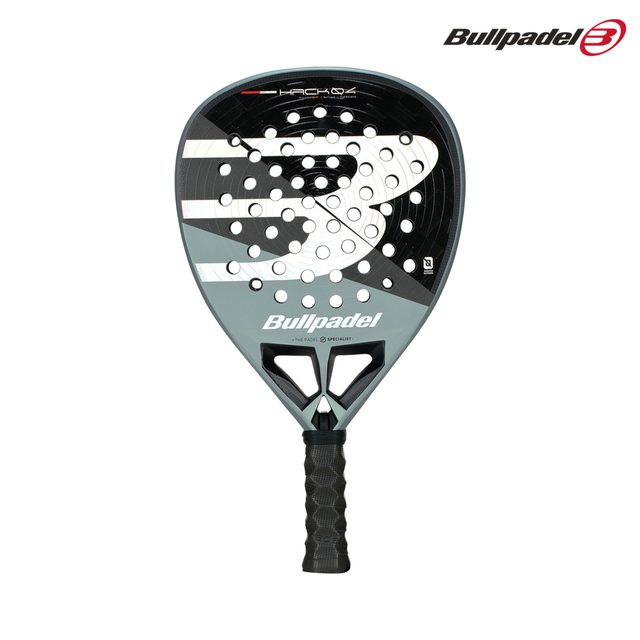
Power with a margin for error is rarer than power. The Bullpadel Hack 04 is the diamond for attackers who mishit like humans: serious smash weight over a forgiving middle, the frame Bullpadel stamps with Paquito Navarro's name for the Premier Padel season. At €206 it costs more than our Top Pick and brings an entirely different personality.
The forgiveness comes from the core. Bullpadel's MultiEVA stacks foam densities through the thickness, keeping the center of the face a step gentler than a classic power core, so a smash struck slightly off line stays in the court instead of in the glass. The pace comes from the skin: an 18K aluminized carbon face dense enough to stay rigid when you load a full overhead into it. And at 370g, the heaviest build here, the head arrives with mass the ball has to respect.
Around the court it behaves like heavyweight power with a safety net. Overheads are the headline, the high balance turning a decent smash into a rally-ender and the rough face keeping the víbora spiteful. Drop back and it holds together better than a power diamond should, the layered core taking enough sting out of blocks that defense stays a plan rather than a prayer. The net is where the bill lands: start the head early, because it will not hurry for you. A strong attacker grows into everything it offers; a counterpuncher who lives on reflex should shop lower on this page.
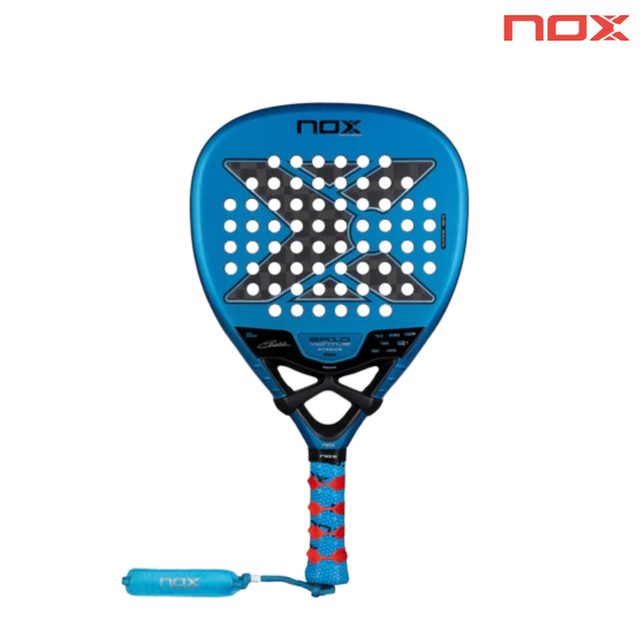
Attack does not have to mean flat. The Nox EA10 Ventus Attack 12K Xtreme is the diamond for the player whose put-away is a kicking topspin smash, not a flat one, the frame Nox lists under Edu Alonso's name, and at €187 the least expensive of the three attack diamonds here.
The signature is the skin: a 12K Xtrem Carbon face finished rough, stiff enough for direct pace while the texture bites into a brushed ball, so the víbora and the topspin smash come out of the frame instead of out of extra forearm. Beneath it, the MLD Black EVA core layers its densities so the middle stays composed on touch shots, a drop staying down instead of sitting up, which is not a power diamond's usual habit. A carbon frame keeps the head from twisting when you commit late.
The kick-smash off the back glass and the víbora that dies in the corner are why you buy it, and it produces both without demanding a tour swing. At the net there is enough presence in the head to put a high ball away for good. The compromises live behind you: the high balance means a hurried block asks more of your wrist than a round frame would, and resets reward preparation over reflex. Brush the ball and this is the most rewarding attack frame on the list, and the reward compounds as your technique sharpens.
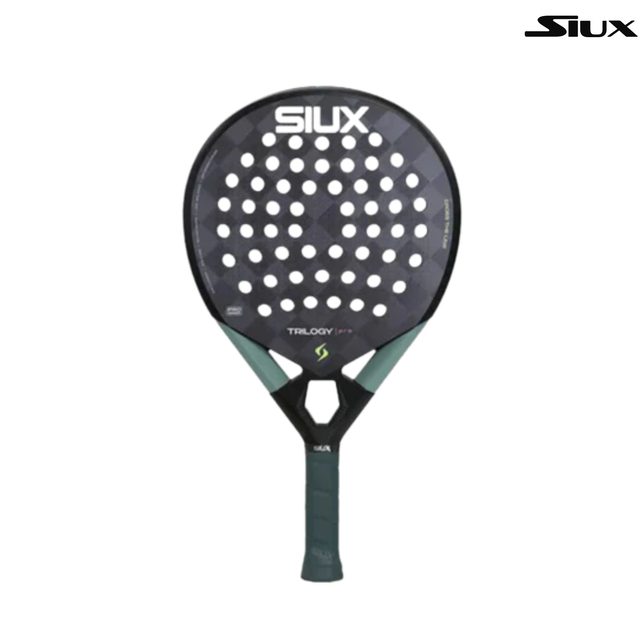
Here is the flagship recipe served cold. The Siux Trilogy Pro Noir Fog takes the same 24K carbon face as our Top Pick and mounts it on a round, low-balanced frame, which turns all that stiffness from a weapon into an instrument. At €170 it is the control buy of the advanced tier, a comfortable step under its Diablo sibling.
Siux backs the face with an EVA rubber core, a medium blend that soaks up incoming pace so the stiff skin can report where you struck without stinging your hand for the news. The control levers are the geometry: a round head that parks the sweet spot at dead center, and a low balance that keeps the mass by your hand so the face arrives square to a fast ball. The rough finish means slice and roll still take.
It plays like a frame that always has time. Blocks come back measured and low, lobs land within a stride of where you pictured them, and a stretched dig off the glass still leaves the face pointing the right way. Step forward and the low balance keeps your hands quick, volleys redirected rather than muscled, winning the exchanges the power frames above would rather skip. What it will not do is finish loose points with pace: the smash is placed, not fatal, and the point ends because you built it that way. Players who win with their brain have no better tool on this page.
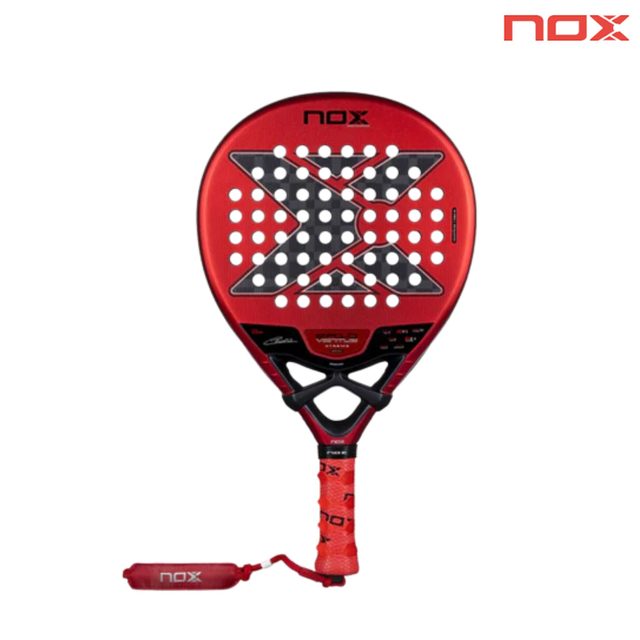
Same laboratory, different prescription. The Nox EA10 Ventus Hybrid 12K Xtreme takes the Attack's build and calms it into a teardrop: identical materials, with the head shape and balance pulled back toward the middle of the court, for the advanced player who plays all four phases of a point and refuses to be bad at any of them. It costs about what our Top Pick does, at €170.
You get the same rough 12K Xtrem Carbon face and layered MLD Black EVA core as the Attack; what changes everything is where Nox puts them. The teardrop head walks the sweet spot down toward center, and the medium balance splits the mass between whip and stability, so the stiff face now serves a block as faithfully as it serves a smash. Nothing to relearn between defending a point and finishing one.
Across a match it is the least moody racket here. At the net the medium balance leaves your hands quick enough for the exchange and heavy enough for the put-away; drop deep and resets come off with structure while lobs hold their length. Overheads sit one notch below the Attack's, spin intact, finality slightly negotiable. A complete game fits inside this frame, which is what an all-court advanced player is shopping for, and it will not need replacing as that game deepens.
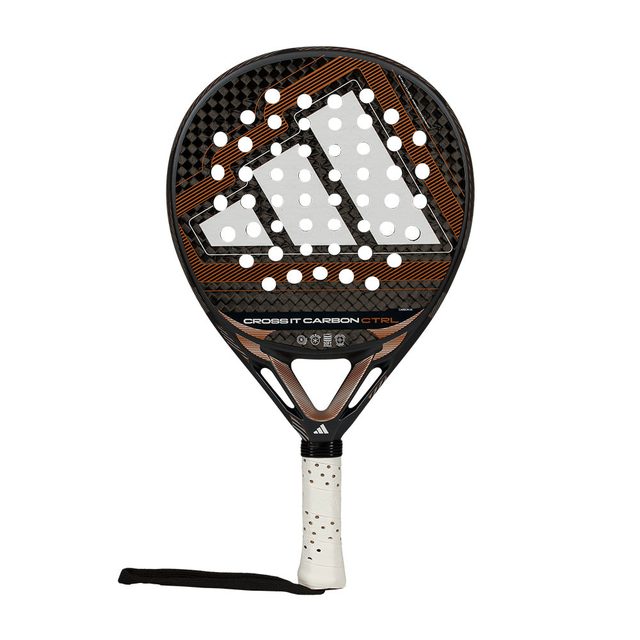
Defense wins more club matches than anyone posts about. The Adidas Cross It Carbon Ctrl is built on that unfashionable truth: a round aluminized-carbon frame that makes the hard balls simple, for the player whose whole game is getting one more ball back with interest. At €195 it is adidas charging less than its flagship and giving up little.
The face is Carbon Aluminized 15K, the same metallized-skin idea the attack frames above use, wrapped here around a round head so the stiffness serves predictability: the ball leaves at the pace you chose, again and again. Inside, EVA High Memory foam runs at a medium density, a step gentler than the hard tune the Metalbone carries, absorbing an opponent's pace before it reaches your grip. The rough texture keeps your slice heavy.
Long points feel shorter with it. Chiquitas stay low, blocks against a bigger hitter travel deep on borrowed pace, and a ball dug off the glass leaves your side with intent, because the round head keeps a stretched contact from twisting the face. It converts an opponent's chaos into your order, which is a defender's whole economy. At the net it volleys precisely and finishes politely; the smash wants a gap or the fence, not a hole through the court. A patient advanced player can build an identity on this frame, and it will hold up as that identity turns meaner.
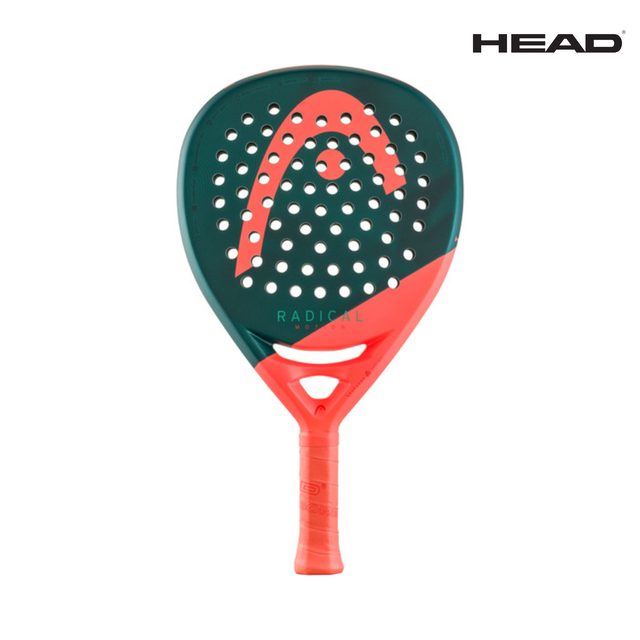
A price near the bottom of this list still had to earn its slot. The Head Radical Motion is a €128 control teardrop that plays above every number on its tag: a current-year frame from a brand with real tour pedigree, at a little over half what the flagships here ask.
Head builds it around a Control Foam core, a comfort-leaning foam that lets you take pace off the ball at will, faced in 3K carbon, a finer and more flexible weave than the dense skins above it, which trades some outright stiffness for touch you can feel through the grip. At 355g with a low balance, it is one of the two lightest frames here and the only one of them at this price.
Small-racket quickness, smart-racket scoring. Fast net exchanges suit it best, the light head early to every ball, and drop volleys come off the flexible face with enough feel to run a short game on. From the back, blocks want a touch more of your own legs than the heavier frames demand, but placement is precise and lobs are easy to measure. Overheads work on angles rather than violence. The argument is value: as a first advanced frame or a second racket that keeps up, nothing else here asks so little and still belongs. A season or two on, you may want a stiffer face; you will not feel shortchanged getting there.
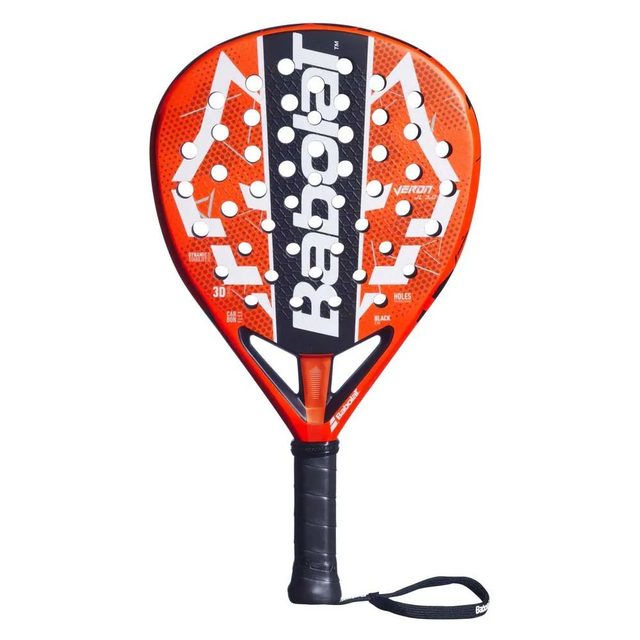
Most players who want a diamond do not want a pro racket. The Veron 3.0 is the diamond built for that player: Juan Lebrón's shape and balance, with a medium core and a face that flexes, so the attacking geometry comes without the demanding, direct feel of the top of the range.
The core is Black EVA, medium density, faced with Carbon Flex and framed in carbon. The 3D Spin+ texture on the face is a real grit rather than a coating, and Babolat's Vibrabsorb handle damping is what makes a high-balanced frame this comfortable to swing repeatedly.
At the net it is decisive without being twitchy: the head weight finishes the volley for you, and the flex face keeps a soft hand possible when you need to drop it short. From the baseline it defends better than its shape suggests, with the flex adding depth to blocks, and the rough face lifting a lob with spin. Keep swinging through the ball as your game grows; the frame has more in it than a first-year diamond player will use.

Every honest best-of list should tell you the least you can spend without regret. Here that number is about €135. The Starvie Drax + is the one intermediate-level frame on this page, and it holds the slot on merit: a 12K carbon face at this money is a small scandal, the same class of weave the Nox attack frames wear, on one of the cheapest rackets of the ten.
Starvie fits it with its M-EVA Balance core, and in this frame the medium foam's job is kindness: it meets an underhit ball with help and an overhit one with restraint, so an off day stays a playable day. The 12K Carbon face is the outlier at the price, even in its response across the teardrop's wide middle, so a strike that wanders off center still comes back honest.
You notice the completeness before any single trait. Defense is unhurried, the teardrop lifting lobs to a length without effort; the net game is tidy, volleys going where they are sent; and when a ball sits up, there is enough stiffness in the face to finish with intent. No phase sparkles the way the specialists above it sparkle. Every phase works. This is the safest money on the list, and it leaves an improving player room to grow before the frame becomes the limit. The day it does, you will know which lane is yours, and the rest of this page will be waiting.
Routing, not hedging: the hardest hitter of 2026 is the Metalbone HRD+, and it knows it. Point-builders take the Trilogy Pro Noir Fog for €170. If one bag gets one racket, our Top Pick Diablo Pro Royal Blue is the year's safest all-round bet, and if the outlay should stay small while the game grows, the Drax + belongs in that bag today. Still torn between lanes? Hand it to the free quiz: 12 questions, two minutes, and the pick is made for your game rather than the average of everyone else's.
The Siux Diablo Pro Royal Blue is our top pick of 2026: an advanced all-round teardrop with a 24K carbon face that attacks and defends at the same level. The truer answer depends on your lane, with the Adidas Metalbone HRD+ leading for power and the Siux Trilogy Pro Noir Fog for control.
This list runs from about €130 to €248, and the extra money mostly buys construction: denser carbon weaves and layered cores rather than a better fit. Advanced players get real returns near the top; improving players are better served around €130 to €170, where the Starvie Drax + and Head Radical Motion sit.
The K number counts the thousands of filaments in each strand of the carbon weave, so a 24K face is woven from thicker bundles than a 3K one. It describes the weave, not the stiffness: how stiff a face plays also depends on the resin, the layup, and the core behind it. Judge stiffness by how the racket hits, not by the K.
Mostly, with one exception on this list. Classic head-high diamonds like the Adidas Metalbone HRD+ demand technique and an attacking base to give anything back. The Babolat Veron Juan Lebrón 3.0 is the outlier: a diamond head with a medium core and a face that flexes, which keeps the attacking shape without the demanding feel.
Only when the build matches your game. The €248 Metalbone HRD+ is worth every cent to a committed attacker and a poor buy for everyone else, while the €135 Drax + outplays flagships in the wrong hands. If you're unsure where your money works hardest, the free app quiz matches a racket to your game in two minutes.
We start from a catalog of 800+ rackets, not a shortlist from a brand. From it we select the strongest frames across every segment this year, verify every price and stock status live at our approved shops before publishing, and re-check them on every update. Nobody pays for placement, and there are no invented test scores: specs come from the catalog and retailer listings, and the free two-minute quiz matches the same data to your game.
The app · free quiz
Take the free quiz in the app. We'll match a racket to your game, not the other way around.
Find my racketFree quiz. Sign in with email or Google to get your four picks.