Nox EA10 Ventus Attack 12K Xtreme 2026 Review
By Andres Jovem · Updated October 19, 2026
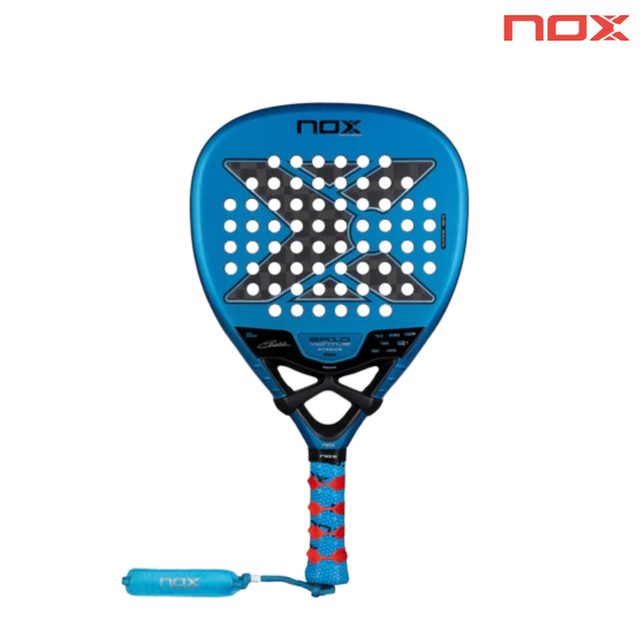
A diamond-shaped attacker with a layered core that keeps some mercy in it, built for the advanced player who wants power without a punishing frame.
The verdict
The Nox EA10 Ventus Attack 12K Xtreme is a diamond built to hit hard, and its one trick is refusing to be as cruel about it as most of its shape. The weight is stacked toward the tip, so an overhead lands with real mass behind it. Underneath that, a core laid up in layers keeps a strike that misses the middle from feeling like a slap. This is a racket for the advanced player who already swings with intent and wants pace without a frame that punishes every off-center hit through the arm.
It is still a diamond and still 367 grams stacked toward the head, so it is not a soft landing for anyone. What it offers over a pure-power stick is a wider margin for an off-center strike: clip the ball away from dead center and it still leaves the face with life. If your game runs on defense and touch more than the finish, read the skip list before you commit, because a head-heavy build you rarely use is a poor fit no matter how well it forgives.
The build
A layered core that softens the miss
Nox builds this frame on MLD Black EVA, a foam laid up in more than one density: softer through the middle where most contact sits, firmer as it reaches the frame. The point is the miss. A clean strike leaves fast off any diamond, but a shot that drifts toward the edge usually dies on a dense core. Here the softer center keeps that off-center ball alive, so pace holds even when your timing does not. It is the difference between a frame that only rewards perfection and one that grants you a shot or two a match.
A coarse carbon weave that spins the ball up
The hitting layer is 12K Xtrem Carbon Fiber, a heavy weave finished rough to the touch. Stiffness comes first: the weave barely yields at contact, so a flat smash leaves quick and low and the power the shape promises actually arrives. The texture is the payoff on cut shots. Drag the face up the back of the ball and the grain drags with it for a fraction, so a brushed bandeja climbs into topspin rather than skidding away past the baseline. On a frame this eager to attack, that extra rotation is what pulls your overheads down into the court instead of sailing them long.
A carbon frame carrying a high balance
The whole build sits in a carbon frame with the balance pushed high, mass loaded toward the tip. That distribution is what turns your swing speed into a heavy ball: the head carries its own momentum into contact and delivers it through the ball rather than letting your arm do all the work. The carbon holds the shape rigid so none of that energy bleeds off into flex. The cost is at the hand, where a tip-loaded head is a beat slower to whip around when a ball jumps at you late.
How it plays
On the smash, it hits heavy and asks less of your timing
Set your feet for an overhead and the ball leaves in a hurry, then folds down late and lands near the back corner. Catch one a touch above the middle and it still drives through with pace, where a firmer diamond would spray it long or clip it flat into the net. You get the finish this shape is built for without needing tour-level precision to unlock it. Rush the setup badly and it will still miss, but the margin you have to play with is generous for a diamond.
On the bandeja and víbora, a brush sits the ball down
Brush up the back of the ball on a bandeja and the face bites rotation into it, sitting the shot down deep so you stay in the point rather than floating a gift to the net player. The víbora cuts the same way, low and skidding off the bounce. Both shots reward a player who already brushes rather than blocks, because you need real racket-head speed to get anything out of them, and a flat, timid swipe comes back almost lifeless.
At the net, quick hands cost a little
The head-loaded balance shows up first here. Take the volley early, while the ball is still ahead of you, and the head drives it flat and deep with no give. React a fraction late, with the ball already at your hip, and the weight up top drags the frame a step behind your hand. It is a fair volleyer, not a fast one. If your forward game lives on reflex battles at the net, you will feel the tip pulling against you in the quick exchanges.
From the baseline, the block sits on the face a touch longer
Pushed deep and defending, a block dwells on the strings for an extra instant before it goes, and that pause is what lets you steer a lob deep instead of shanking it off a jumpy edge. It is not a control frame and it will not reset the point for you, but the ball parks on the face long enough for you to aim it. That margin is the whole pitch of this racket, and it shows up clearest when you are scrambling out of trouble.
On the arm, easier than most diamonds, not easy
A stiff, tip-heavy frame sends shock back through the wrist and elbow, and this one is no exception the moment you shank a smash off the edge of the face. A clean rally treats you better than a dense power stick would, so an honest afternoon does not leave the elbow ringing after every point. Still, 367 grams loaded high works the shoulder as the games pile up. If your shoulder is already sore by the end of a session, the tip-loaded weight will find it late in a long match.
Who it's for (and who should skip it)
Buy it if
- You attack for a living and want the diamond finish without a frame that only rewards flawless contact.
- Your bandeja and víbora run on brushed spin, and you want a coarse face that grips for it.
- You have played a while and can carry a head-heavy build, but you would rather not fight a truly punishing power stick.
Look elsewhere if
- You are new to the game or still grooving your swing, because this diamond will outrun your technique and tire your arm.
- Your game is built on defense, touch, and quick net hands more than the finish, so the head-heavy weight works against you most of the match.
- If your shoulder is already sore by the end of a session, a softer core helps but 367 grams up top still asks a lot of the joint late in a match.
Not sure it's your match? The free 2-minute quiz reads your level, style, and budget and tells you which racket is.
The bottom line
If you attack for a living but want a diamond that stays kinder to your arm over a long match, the EA10 Ventus Attack is the one to try before the harder frames above it. Still weighing power against comfort, or not sure a diamond suits your arm at all? The free 2-minute quiz matches a racket to your game in the time it takes to string a warm-up.
Where to buy
Prices shown in Euro, converted and approximate. You check out in the store's own currency.
Frequently asked
No, the EA10 Ventus Attack is an advanced racket and a beginner will struggle with it. The diamond shape and high, head-heavy balance demand a grooved swing to control, and at 367 grams loaded toward the tip it tires an untrained arm fast. A round, soft-cored frame around 360 grams will teach you more and hurt you less. Come back to this one once your smash is a weapon you trust.
Power, first and clearly. The diamond shape and high balance load the head for the smash, so the whole design points at the finish. What softens that verdict is the layered MLD Black EVA core, which keeps an off-center strike alive and lets a block dwell for an instant before it leaves. Read it as an attacking frame with a cushion, not a control racket.
Expect an upper-mid price for an advanced frame, below the pro-tier attackers Nox sells above it. The live figure and the shops carrying it in your currency sit in the where-to-buy block above, which we check against each retailer rather than quoting a number that goes stale. Availability moves week to week, so trust the live figure over any fixed price you read elsewhere.
The core is MLD Black EVA, a foam laid up in multiple densities so the center plays softer than the edges. The hitting surface is 12K Xtrem Carbon Fiber with a rough finish, stiff enough to keep the smash flat and coarse enough to grip the ball for spin. A carbon frame holds the high balance rigid. Together they aim for power that leaves a small margin for a missed strike.
The pricier Nox attackers hit flatter and faster and demand more precision to control, where the EA10 Ventus Attack trades the last sliver of raw pace for a layered core that keeps mishits alive. If you have the timing of a tournament player and want maximum power, look up the range. If you attack hard but want a frame that stays kinder to the arm across a long match, this is the softer landing. Not sure it is your match? The free 2-minute quiz reads your level, style, and budget and tells you.
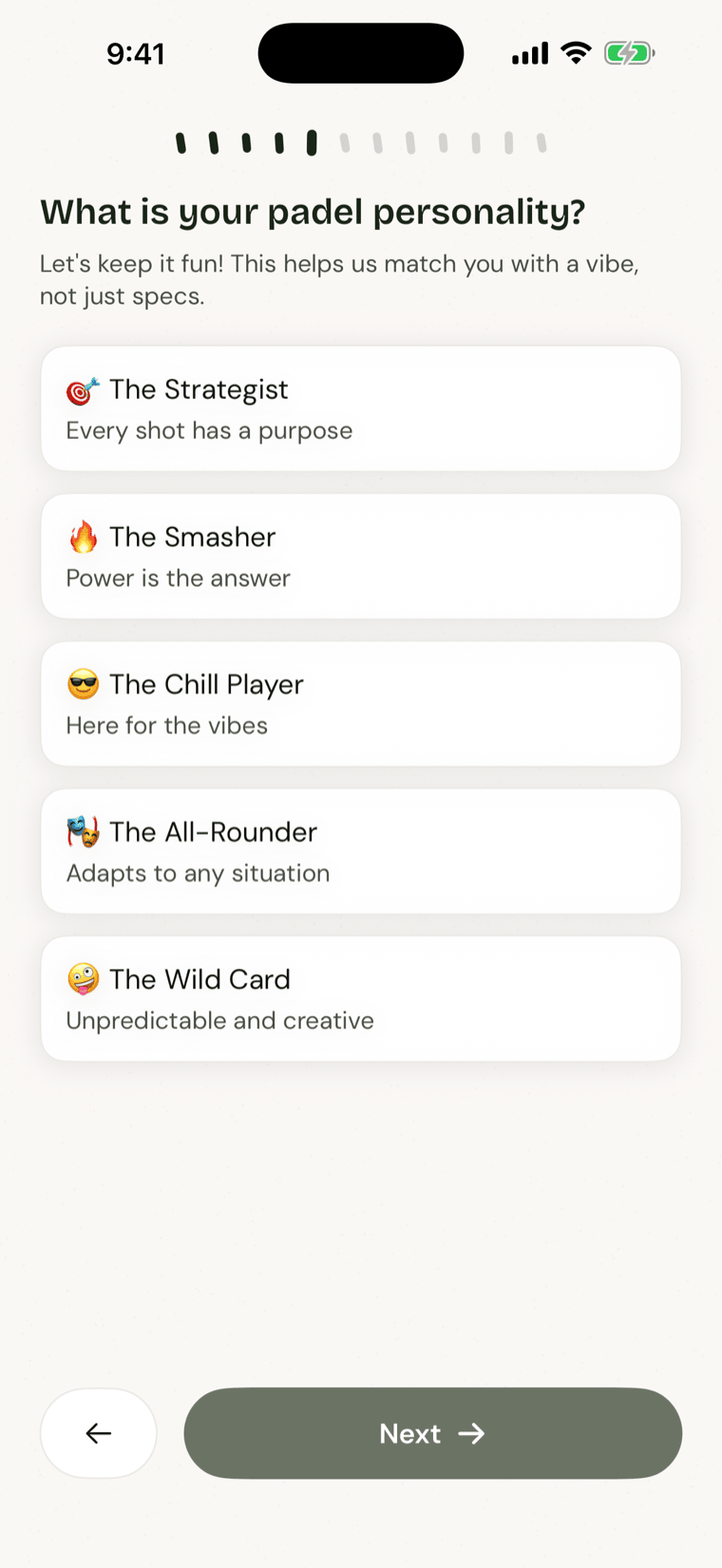
The app · free quiz
Not sure which one's you?
Take the free quiz in the app. We'll match a racket to your game, not the other way around.
Find my racketFree quiz. Sign in with email or Google to get your four picks.

Nox EA10 Ventus Attack 12K Xtreme 2026 Review
By Andres Jovem · Updated October 19, 2026
A diamond-shaped attacker with a layered core that keeps some mercy in it, built for the advanced player who wants power without a punishing frame.
The verdict
The Nox EA10 Ventus Attack 12K Xtreme is a diamond built to hit hard, and its one trick is refusing to be as cruel about it as most of its shape. The weight is stacked toward the tip, so an overhead lands with real mass behind it. Underneath that, a core laid up in layers keeps a strike that misses the middle from feeling like a slap. This is a racket for the advanced player who already swings with intent and wants pace without a frame that punishes every off-center hit through the arm.
It is still a diamond and still 367 grams stacked toward the head, so it is not a soft landing for anyone. What it offers over a pure-power stick is a wider margin for an off-center strike: clip the ball away from dead center and it still leaves the face with life. If your game runs on defense and touch more than the finish, read the skip list before you commit, because a head-heavy build you rarely use is a poor fit no matter how well it forgives.
The build
A layered core that softens the miss
Nox builds this frame on MLD Black EVA, a foam laid up in more than one density: softer through the middle where most contact sits, firmer as it reaches the frame. The point is the miss. A clean strike leaves fast off any diamond, but a shot that drifts toward the edge usually dies on a dense core. Here the softer center keeps that off-center ball alive, so pace holds even when your timing does not. It is the difference between a frame that only rewards perfection and one that grants you a shot or two a match.
A coarse carbon weave that spins the ball up
The hitting layer is 12K Xtrem Carbon Fiber, a heavy weave finished rough to the touch. Stiffness comes first: the weave barely yields at contact, so a flat smash leaves quick and low and the power the shape promises actually arrives. The texture is the payoff on cut shots. Drag the face up the back of the ball and the grain drags with it for a fraction, so a brushed bandeja climbs into topspin rather than skidding away past the baseline. On a frame this eager to attack, that extra rotation is what pulls your overheads down into the court instead of sailing them long.
A carbon frame carrying a high balance
The whole build sits in a carbon frame with the balance pushed high, mass loaded toward the tip. That distribution is what turns your swing speed into a heavy ball: the head carries its own momentum into contact and delivers it through the ball rather than letting your arm do all the work. The carbon holds the shape rigid so none of that energy bleeds off into flex. The cost is at the hand, where a tip-loaded head is a beat slower to whip around when a ball jumps at you late.
How it plays
On the smash, it hits heavy and asks less of your timing
Set your feet for an overhead and the ball leaves in a hurry, then folds down late and lands near the back corner. Catch one a touch above the middle and it still drives through with pace, where a firmer diamond would spray it long or clip it flat into the net. You get the finish this shape is built for without needing tour-level precision to unlock it. Rush the setup badly and it will still miss, but the margin you have to play with is generous for a diamond.
On the bandeja and víbora, a brush sits the ball down
Brush up the back of the ball on a bandeja and the face bites rotation into it, sitting the shot down deep so you stay in the point rather than floating a gift to the net player. The víbora cuts the same way, low and skidding off the bounce. Both shots reward a player who already brushes rather than blocks, because you need real racket-head speed to get anything out of them, and a flat, timid swipe comes back almost lifeless.
At the net, quick hands cost a little
The head-loaded balance shows up first here. Take the volley early, while the ball is still ahead of you, and the head drives it flat and deep with no give. React a fraction late, with the ball already at your hip, and the weight up top drags the frame a step behind your hand. It is a fair volleyer, not a fast one. If your forward game lives on reflex battles at the net, you will feel the tip pulling against you in the quick exchanges.
From the baseline, the block sits on the face a touch longer
Pushed deep and defending, a block dwells on the strings for an extra instant before it goes, and that pause is what lets you steer a lob deep instead of shanking it off a jumpy edge. It is not a control frame and it will not reset the point for you, but the ball parks on the face long enough for you to aim it. That margin is the whole pitch of this racket, and it shows up clearest when you are scrambling out of trouble.
On the arm, easier than most diamonds, not easy
A stiff, tip-heavy frame sends shock back through the wrist and elbow, and this one is no exception the moment you shank a smash off the edge of the face. A clean rally treats you better than a dense power stick would, so an honest afternoon does not leave the elbow ringing after every point. Still, 367 grams loaded high works the shoulder as the games pile up. If your shoulder is already sore by the end of a session, the tip-loaded weight will find it late in a long match.
Who it's for (and who should skip it)
Buy it if
- You attack for a living and want the diamond finish without a frame that only rewards flawless contact.
- Your bandeja and víbora run on brushed spin, and you want a coarse face that grips for it.
- You have played a while and can carry a head-heavy build, but you would rather not fight a truly punishing power stick.
Look elsewhere if
- You are new to the game or still grooving your swing, because this diamond will outrun your technique and tire your arm.
- Your game is built on defense, touch, and quick net hands more than the finish, so the head-heavy weight works against you most of the match.
- If your shoulder is already sore by the end of a session, a softer core helps but 367 grams up top still asks a lot of the joint late in a match.
Not sure it's your match? The free 2-minute quiz reads your level, style, and budget and tells you which racket is.
The bottom line
If you attack for a living but want a diamond that stays kinder to your arm over a long match, the EA10 Ventus Attack is the one to try before the harder frames above it. Still weighing power against comfort, or not sure a diamond suits your arm at all? The free 2-minute quiz matches a racket to your game in the time it takes to string a warm-up.
Where to buy
Prices shown in Euro, converted and approximate. You check out in the store's own currency.
Frequently asked
No, the EA10 Ventus Attack is an advanced racket and a beginner will struggle with it. The diamond shape and high, head-heavy balance demand a grooved swing to control, and at 367 grams loaded toward the tip it tires an untrained arm fast. A round, soft-cored frame around 360 grams will teach you more and hurt you less. Come back to this one once your smash is a weapon you trust.
Power, first and clearly. The diamond shape and high balance load the head for the smash, so the whole design points at the finish. What softens that verdict is the layered MLD Black EVA core, which keeps an off-center strike alive and lets a block dwell for an instant before it leaves. Read it as an attacking frame with a cushion, not a control racket.
Expect an upper-mid price for an advanced frame, below the pro-tier attackers Nox sells above it. The live figure and the shops carrying it in your currency sit in the where-to-buy block above, which we check against each retailer rather than quoting a number that goes stale. Availability moves week to week, so trust the live figure over any fixed price you read elsewhere.
The core is MLD Black EVA, a foam laid up in multiple densities so the center plays softer than the edges. The hitting surface is 12K Xtrem Carbon Fiber with a rough finish, stiff enough to keep the smash flat and coarse enough to grip the ball for spin. A carbon frame holds the high balance rigid. Together they aim for power that leaves a small margin for a missed strike.
The pricier Nox attackers hit flatter and faster and demand more precision to control, where the EA10 Ventus Attack trades the last sliver of raw pace for a layered core that keeps mishits alive. If you have the timing of a tournament player and want maximum power, look up the range. If you attack hard but want a frame that stays kinder to the arm across a long match, this is the softer landing. Not sure it is your match? The free 2-minute quiz reads your level, style, and budget and tells you.
The app · free quiz
Not sure which one's you?
Take the free quiz in the app. We'll match a racket to your game, not the other way around.
Find my racketFree quiz. Sign in with email or Google to get your four picks.