Nox AT10 Genius 12K 2026 Review
By Andres Jovem · Updated October 19, 2026
Agustín Tapia's control-and-spin weapon: a fast, medium-hard teardrop for the technical attacker who wins with spin and placement, not raw power.
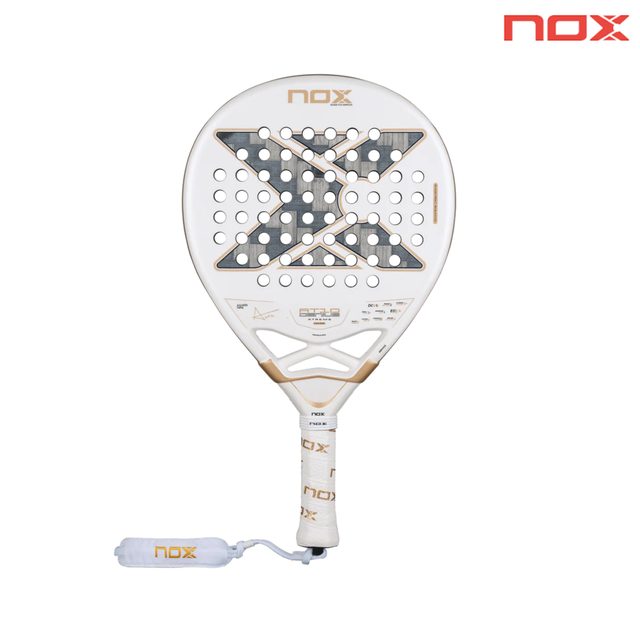
The verdict
The Nox AT10 Genius 12K is Agustín Tapia's racket, and it plays like the tool of a player who wins with precision rather than brute force. It is fast in the hand, medium-hard on the ball, and built to attack through spin and placement. This is an advanced frame that rewards clean technique and a player who constructs points.
What defines it is the pairing of a maneuverable teardrop with a forgiving, stable face. Most rackets this quick through the air give up something in stability. The Genius keeps the response linear and the sweet spot generous, so you can swing fast and still trust the ball to land where you aimed. That mix of speed and control is why it works as an all-court weapon.
It is not an easy-power racket, and it is not a beginner's. The medium-hard feel asks you to bring your own pace on defense, where a passive block sits short, and it passes more of the hit up the arm than a soft frame does. It rewards a committed swing and goes quiet on a passive one.
The build
The core
At the heart is the MLD Black EVA core, a multilayer rubber that stacks different densities to smooth the ball's exit. The payoff is versatility: it stays controlled and precise on a slow, placed shot, then firms up and hands back pace the moment you accelerate. The feel is medium-hard, so contact is crisp and informative rather than cushioned, which is what a technical player wants and a soft hitter finds demanding.
The surface
The hitting face is 12K Carbon finished with Nox's Exclusive Spin texture, a 3D hexagonal center and a rough sand pattern around it. That texture is the difference: it grips the ball to load heavy spin on the víbora, bandeja, and kick serve, and it helps an off-center hit still bite. The 12K weave keeps the face stiff for a fast, direct rebound while shaving weight.
Shape and feel
The mold is a teardrop with a medium balance, which is why it feels quick in the hand rather than head-heavy and sluggish. Nox's EOS Flap side channels cut drag so the head accelerates through the swing, and the Pulse System damps some of the vibration a stiff carbon frame sends back. The result is a head that moves faster than its weight suggests.
How it plays
At the net
Up at the net it's in its element. It is quick enough to react to a hard ball and take time away, and the firm face gives a predictable, controlled volley that does not wander or overreact. Put-aways leave fast off a compact swing, and the maneuverability lets you reset your hands between shots in a quick exchange.
From the baseline
Defending asks the most of you. There is little free rebound here, so a passive block drops short and a lob needs a firm push to float back deep. The wide face forgives where you catch the ball, not how softly you hit it: the firmness still won't lift a shot you don't drive. Commit to the stroke, though, and the reward is precise control at slow speeds, threading a reset low and into a corner. If your defense leans on the racket to do the work, expect a learning curve.
On the attack
Spin is where the AT10 earns its name. Your spin shots come alive: a víbora bites and skids, a bandeja drops heavy at the opponent's feet, and you can shape the ball hard without forcing the swing. The smash comes off fast and angled rather than only flat and heavy, and power ramps with your swing speed, so the cleaner and harder you hit, the more the racket gives back. It attacks with placement and spin more than raw mass.
Comfort and the arm
This is a stiff, firm frame, and the built-in damping only takes the edge off, not the whole of it. It still passes more feedback into the wrist and elbow than a soft frame does. The medium balance helps, sparing your arm the extra jolt a head-heavy bruiser adds. An advanced arm with sound technique will be fine; a sensitive elbow, or a game still being built, will feel it. And the sand texture that gives the spin will smooth with heavy use over time.
Who it's for (and who should skip it)
Buy it if
- You're an advanced, technical player who attacks with spin and placement
- You want a fast, maneuverable racket that stays forgiving on off-center hits
- You construct points and bring your own pace
Look elsewhere if
- You're a beginner or improver, or you want easy, effortless power
- Your game leans on the racket for rebound and defensive help
- Your elbow or shoulder is sensitive to a medium-hard, stiff frame
Not sure it's your match? The free 2-minute quiz reads your level, style, and budget and tells you which racket is.
The bottom line
So: if you want an attacking teardrop you can still whip through a fast net exchange, and you build points with spin and placement, the AT10 Genius 12K is one of the most complete frames of its kind, and there's a reason it's Agustín Tapia's weapon of choice. If you want easy power, or you're still building your game, look for something softer and rounder. Not sure it's your match? The free two-minute quiz reads your level, style, and budget and tells you which racket is.
Frequently asked
No. The AT10 Genius 12K is Agustín Tapia's advanced racket: a medium-hard MLD Black EVA core and a technical, spin-focused design that reward a grooved swing and your own pace. A beginner will find it hard work on defense and firm on the arm. Start with a round, soft-cored frame first.
The AT10 Genius 12K sits in the premium tier. None of our approved retailers had it in stock when we checked on 7 October 2026, so there is no live price to show right now.
The 12K and 18K refer to the carbon weave on the face. The 12K is a little more flexible for a slightly softer, more forgiving hit, where the 18K is stiffer and more direct. Tapia's Genius line comes in both; the 12K is the more maneuverable, spin-friendly choice.
It pairs a multilayer MLD Black EVA core with a 12K Carbon face and Nox's Exclusive Spin texture, a 3D hexagonal center and a sand pattern, over a 100% carbon frame. The multilayer core gives a versatile ball exit and the textured carbon face is built for spin.
Yes, spin is one of its strengths. The Exclusive Spin surface grips the ball to load heavy topspin and slice, which makes the víbora, bandeja, and kick serve bite and drop, and it helps an off-center hit still grab the ball.
Agustín Tapia plays the Nox AT10 line, his signature family; this review covers the AT10 Genius 12K Alum Xtreme, the 12K cut of it. The 18K Alum above it carries a denser face at a higher price, and both share the attacking profile his game is built on.
Its premium-tier price is fair for a pro-signature diamond with this face, provided your overhead already earns it. The racket adds spin and weight to a finished attack; it fixes nothing in an unfinished one, and that is the whole worth-it test.
The AT10 is the more aggressive tool: harder core, rougher face, more shape on every brushed overhead. The Hack 04 forgives more and asks less on off days. Buy the AT10 if spin is your finishing language; buy the Hack if you want tour power with a wider margin.

The app · free quiz
Not sure which one's you?
Take the free quiz in the app. We'll match a racket to your game, not the other way around.
Find my racketFree quiz. Sign in with email or Google to get your four picks.

Nox AT10 Genius 12K 2026 Review
By Andres Jovem · Updated October 19, 2026
Agustín Tapia's control-and-spin weapon: a fast, medium-hard teardrop for the technical attacker who wins with spin and placement, not raw power.
The verdict
The Nox AT10 Genius 12K is Agustín Tapia's racket, and it plays like the tool of a player who wins with precision rather than brute force. It is fast in the hand, medium-hard on the ball, and built to attack through spin and placement. This is an advanced frame that rewards clean technique and a player who constructs points.
What defines it is the pairing of a maneuverable teardrop with a forgiving, stable face. Most rackets this quick through the air give up something in stability. The Genius keeps the response linear and the sweet spot generous, so you can swing fast and still trust the ball to land where you aimed. That mix of speed and control is why it works as an all-court weapon.
It is not an easy-power racket, and it is not a beginner's. The medium-hard feel asks you to bring your own pace on defense, where a passive block sits short, and it passes more of the hit up the arm than a soft frame does. It rewards a committed swing and goes quiet on a passive one.
The build
The core
At the heart is the MLD Black EVA core, a multilayer rubber that stacks different densities to smooth the ball's exit. The payoff is versatility: it stays controlled and precise on a slow, placed shot, then firms up and hands back pace the moment you accelerate. The feel is medium-hard, so contact is crisp and informative rather than cushioned, which is what a technical player wants and a soft hitter finds demanding.
The surface
The hitting face is 12K Carbon finished with Nox's Exclusive Spin texture, a 3D hexagonal center and a rough sand pattern around it. That texture is the difference: it grips the ball to load heavy spin on the víbora, bandeja, and kick serve, and it helps an off-center hit still bite. The 12K weave keeps the face stiff for a fast, direct rebound while shaving weight.
Shape and feel
The mold is a teardrop with a medium balance, which is why it feels quick in the hand rather than head-heavy and sluggish. Nox's EOS Flap side channels cut drag so the head accelerates through the swing, and the Pulse System damps some of the vibration a stiff carbon frame sends back. The result is a head that moves faster than its weight suggests.
How it plays
At the net
Up at the net it's in its element. It is quick enough to react to a hard ball and take time away, and the firm face gives a predictable, controlled volley that does not wander or overreact. Put-aways leave fast off a compact swing, and the maneuverability lets you reset your hands between shots in a quick exchange.
From the baseline
Defending asks the most of you. There is little free rebound here, so a passive block drops short and a lob needs a firm push to float back deep. The wide face forgives where you catch the ball, not how softly you hit it: the firmness still won't lift a shot you don't drive. Commit to the stroke, though, and the reward is precise control at slow speeds, threading a reset low and into a corner. If your defense leans on the racket to do the work, expect a learning curve.
On the attack
Spin is where the AT10 earns its name. Your spin shots come alive: a víbora bites and skids, a bandeja drops heavy at the opponent's feet, and you can shape the ball hard without forcing the swing. The smash comes off fast and angled rather than only flat and heavy, and power ramps with your swing speed, so the cleaner and harder you hit, the more the racket gives back. It attacks with placement and spin more than raw mass.
Comfort and the arm
This is a stiff, firm frame, and the built-in damping only takes the edge off, not the whole of it. It still passes more feedback into the wrist and elbow than a soft frame does. The medium balance helps, sparing your arm the extra jolt a head-heavy bruiser adds. An advanced arm with sound technique will be fine; a sensitive elbow, or a game still being built, will feel it. And the sand texture that gives the spin will smooth with heavy use over time.
Who it's for (and who should skip it)
Buy it if
- You're an advanced, technical player who attacks with spin and placement
- You want a fast, maneuverable racket that stays forgiving on off-center hits
- You construct points and bring your own pace
Look elsewhere if
- You're a beginner or improver, or you want easy, effortless power
- Your game leans on the racket for rebound and defensive help
- Your elbow or shoulder is sensitive to a medium-hard, stiff frame
Not sure it's your match? The free 2-minute quiz reads your level, style, and budget and tells you which racket is.
The bottom line
So: if you want an attacking teardrop you can still whip through a fast net exchange, and you build points with spin and placement, the AT10 Genius 12K is one of the most complete frames of its kind, and there's a reason it's Agustín Tapia's weapon of choice. If you want easy power, or you're still building your game, look for something softer and rounder. Not sure it's your match? The free two-minute quiz reads your level, style, and budget and tells you which racket is.
Frequently asked
No. The AT10 Genius 12K is Agustín Tapia's advanced racket: a medium-hard MLD Black EVA core and a technical, spin-focused design that reward a grooved swing and your own pace. A beginner will find it hard work on defense and firm on the arm. Start with a round, soft-cored frame first.
The AT10 Genius 12K sits in the premium tier. None of our approved retailers had it in stock when we checked on 7 October 2026, so there is no live price to show right now.
The 12K and 18K refer to the carbon weave on the face. The 12K is a little more flexible for a slightly softer, more forgiving hit, where the 18K is stiffer and more direct. Tapia's Genius line comes in both; the 12K is the more maneuverable, spin-friendly choice.
It pairs a multilayer MLD Black EVA core with a 12K Carbon face and Nox's Exclusive Spin texture, a 3D hexagonal center and a sand pattern, over a 100% carbon frame. The multilayer core gives a versatile ball exit and the textured carbon face is built for spin.
Yes, spin is one of its strengths. The Exclusive Spin surface grips the ball to load heavy topspin and slice, which makes the víbora, bandeja, and kick serve bite and drop, and it helps an off-center hit still grab the ball.
Agustín Tapia plays the Nox AT10 line, his signature family; this review covers the AT10 Genius 12K Alum Xtreme, the 12K cut of it. The 18K Alum above it carries a denser face at a higher price, and both share the attacking profile his game is built on.
Its premium-tier price is fair for a pro-signature diamond with this face, provided your overhead already earns it. The racket adds spin and weight to a finished attack; it fixes nothing in an unfinished one, and that is the whole worth-it test.
The AT10 is the more aggressive tool: harder core, rougher face, more shape on every brushed overhead. The Hack 04 forgives more and asks less on off days. Buy the AT10 if spin is your finishing language; buy the Hack if you want tour power with a wider margin.
The app · free quiz
Not sure which one's you?
Take the free quiz in the app. We'll match a racket to your game, not the other way around.
Find my racketFree quiz. Sign in with email or Google to get your four picks.