Bullpadel
Best power racket overall
Control
Power
High balance
from€199.95
In stockBuying guide · Power
By Andres Jovem · Updated October 19, 2026
The bandeja sets the point up. The víbora bends it your way. Then comes the shot you bought the racket for. If your padel is organized around finishing, you want a diamond: mass carried toward the tip and the balance high, so the head arrives at the smash with everything behind it. All ten picks here are built that way on purpose, ranked by how much finishing power they deliver for what they ask of your arm and wallet.
The honest part comes first: hard diamonds demand things. The sweet spot sits high and small, so a strike that misses it gets punished instead of excused. Head-high mass raises the workload on your arm and shoulder with every swing, and the firm cores that make a smash leave flat also hand back more of each impact. What separates the ten is how each manages those demands: core density is the real divider, from unyielding rubber to tiered foams with margin built in, then face weave, weight, and price.
This list is right for power players in general; your level, your budget, and how much work your arm is up for all move the answer, and the free quiz's 12 questions find the specific racket that's yours. It runs from a €130 first diamond to a €250 heavyweight, each in stock with prices checked live.
The top 10 at a glance. Swipe through, or read the full breakdown below ↓
Power
The shape is the power. Mass carried toward the tip means the head brings more of itself to the smash, so the ball leaves heavier for the same swing. The bill is a sweet spot that sits high and small: catch the ball low on the face and a diamond gives back less than a round ever would. If overheads are not yet how you win points, bookmark this list for later.
Every pick here is a diamond; the core decides which kind. Hard cores barely compress, so your swing speed returns as ball speed, and so does part of the impact. Medium and tiered cores trade a fraction of that pace to keep mishits alive and arms happier. Pick hard if your contact is grooved. Pick margin if you're honest.
This list runs 355-370g with the balance high, and head-high mass is the expensive kind: your arm and shoulder lift and brake it on every swing, hundreds of times a match. A power racket you can no longer accelerate late in a match stops being a power racket. Torn between two picks? Take the lighter one.
Between €130 and €250, what changes most is the face. Coarse 3K weaves flex and forgive, dense 12K to 18K skins fire flatter and cost more, and aluminized threads stiffen a skin further still. Spend to match your contact quality, not your ambition: a clean strike on the €130 Veron 3.0 beats a mishit on a flagship.
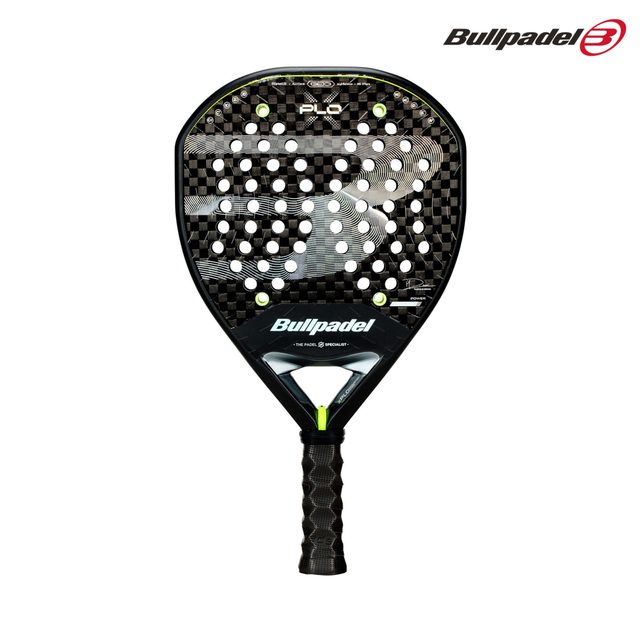
Power lists usually make you choose between hitting hard and having a match plan. The Bullpadel Xplo is our Top Pick because it declines the choice: pro-tour finishing power with a little margin built into the core, at around €210, for the finisher who wants the smash to end points without every other shot becoming a gamble.
The margin comes from Bullpadel's MultiEVA core, foam laid in tiers: firm through the middle so the smash leaves flat and fast, easing toward the edges so a strike that drifts off-center keeps some life instead of dying in your hand. Over it sits the Xtend Carbon 12K face, a stiff weave that returns energy the instant the ball arrives, and a rough surface that grips a brushed víbora. The carbon frame holds the head firm when you commit.
Point-ending is what it does best. The head drops into the smash already loaded, and the ball leaves heavy enough that the rebound rarely comes back over. At the net it punches volleys deep rather than floating them, and when a lob drags you to the back glass the tiered core saves you: blocks and stretched digs keep enough spring to reach the service line. A pro diamond that tolerates a human swinging it, which is rarer than it sounds.
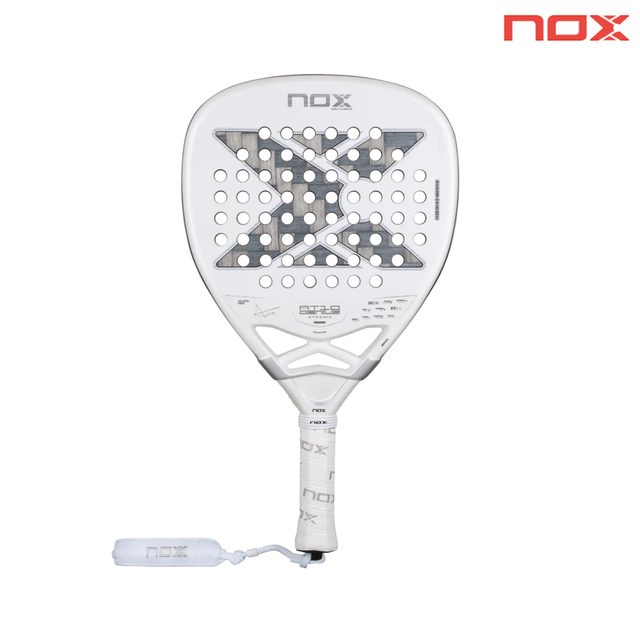
Somebody on this list has to be the extremist, and it's this one. The Nox AT10 Genius Attack is Agustín Tapia's frame, and the most direct, most demanding hitter here is a title it earns. Buy it if your overhead already wins points and you want it to win more of them.
Nothing in the build softens the deal. The HR3 Black EVA core is a dense rubber that hardly moves at contact, so the energy you load into a smash comes out the other side intact, and the 12K Alum Xtrem carbon face, stiffened with aluminum in the weave, keeps the skin rigid so the reply arrives before you finish the follow-through. The rough finish adds bite for the shots you shape rather than flatten.
What you feel first is what it refuses to do: help you. Find the middle and the ball leaves flatter and faster than anything else here; miss it and the frame reports the error straight to your hand. At the net it is put-aways and first volleys hit with intent, not touch. In defense, blocks come back firm and long, and the reset asks for softer hands than the racket will lend you. For a settled attacker, no pick here pays out purer.

Attack in 2026 happens at exchange speed, and most diamonds arrive late to it. The Adidas Metalbone HRD+ is the flagship answer: full diamond pace in a frame tied for the lightest on this list, 355g in a field that runs to 370g, for €248. The pick for the finisher whose weapon is speed of hand as much as force of arm.
Adidas gets there with the EVA High Memory core, a firm foam that refuses to stay dented, so each strike leaves at full pace. Above it, the 16K aluminized carbon face is a dense, metal-laced weave that holds the hitting surface rigid, firing the ball flat instead of letting it pocket. The rough texture handles spin, and the carbon frame stays composed when you swing as hard as the badge invites.
Play a fast pair and the argument makes itself inside two games. The head is on time to exchanges that leave heavier diamonds swatting air, recovery after a bandeja is immediate, and off the back glass you can whip up a late escape lob a slower frame would have buried. The smash concedes a little raw mass to the bruisers above and answers with placement and repetition. Speed of hand that lasts the whole match is what the premium buys.
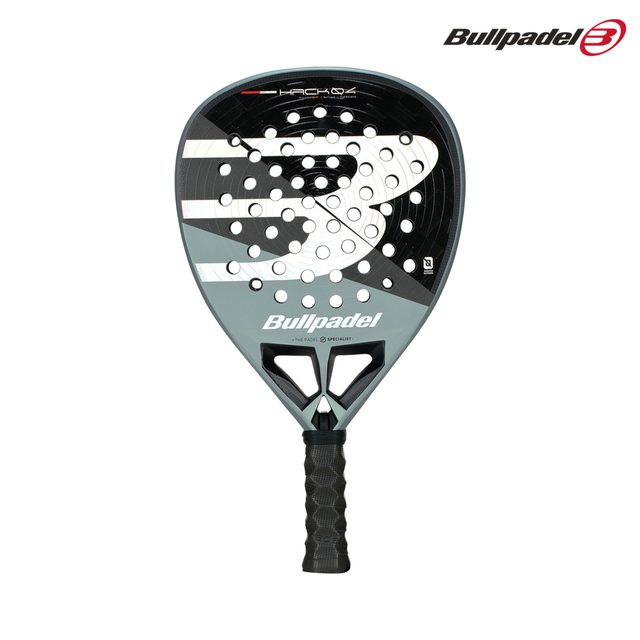
The Hack 04 is the Xplo's sterner sibling, and Bullpadel makes no secret of it. Same tiered core, denser skin, one mission: the workhorse diamond, built to hit the same heavy ball every week. Advanced attackers who want one frame to train on and compete with, start here.
The shared part is the MultiEVA core, tiered foam that stays firm where the smash lands while easing at the edges. The difference is the 18K Aluminized Carbon face, the densest weave on this list: it stiffens the hitting surface so the ball spends less time on the face and leaves harder. At €206 it sits beside its sibling in price and plays a step more serious.
Nothing about it changes week to week. The smash lands heavy today and identically heavy in March, volleys drive through instead of floating, and the high balance gives the bandeja a weight that keeps opponents pinned to the glass. Defense is where the sternness sends its bill: a firm face over a firm middle means resets need deliberate, soft hands. It never surprises you in either direction, and for a player who treats padel like a training block, that is the compliment.
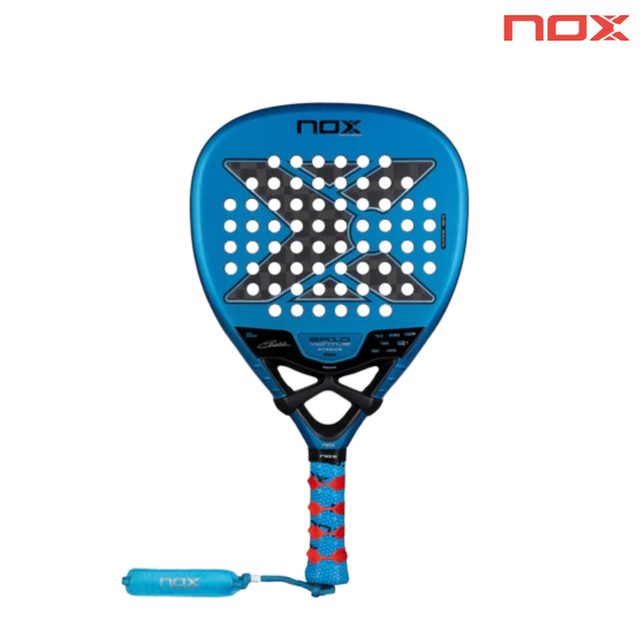
Every power list needs the diamond you can live with, and for Nox that is the EA10 Ventus Attack: the attack shape with a cushion built in, rated advanced rather than pro and priced at €187.
MLD Black EVA is the cushion. The core is laid up in multiple densities, softer where most contact lands and firmer toward the frame, so a strike that drifts still comes off with pace instead of a dead thud. The 12K Xtrem Carbon Fiber face stays stiff enough to keep the smash flat, the rough surface earns spin on the bandeja, and the carbon frame carries the high balance without complaint.
It plays like a negotiation that goes your way. Overheads carry real weight without demanding a pro's timing, hands stay quick at the net because the frame never fights them, and off the back glass the layered core gives blocks a softness the harder diamonds on this page refuse. What you concede is the last sliver of flat-out pace: the AT10 above hits harder and charges more skill for it. Attack with a margin for error is the offer, and for most advanced players the better one.
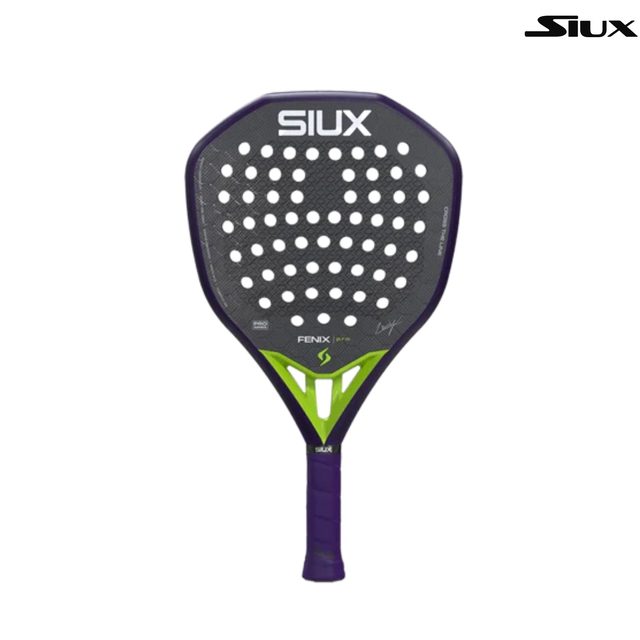
The spec sheet reads pro; the price tag doesn't. The Siux Fenix Pro Glow Purple runs a hard core, a dense carbon skin, and a pro rating, and sells for €172, which makes it the least expensive pro-rated hitter on this list.
The build declines every comfort. A hard EVA rubber core takes almost nothing off the ball, handing the smash back at the pace you gave it, and the 12K carbon face is a tight weave that keeps the reply instant across the upper half of the head, where a diamond wants your contact anyway. The rough surface loads brushed shots, and Siux, a Spanish brand that builds mostly for aggressors, saw no reason to soften any of it.
From the first rally the ball leaves the moment it arrives, which makes put-aways emphatic and half-volleys honest. At the net that immediacy is a gift. Stretched at the baseline it is homework: blocks fly long until your grip learns to take the pace off, because the frame won't do it for you. Bring a settled overhead and it returns flagship aggression at a mid-shelf price.
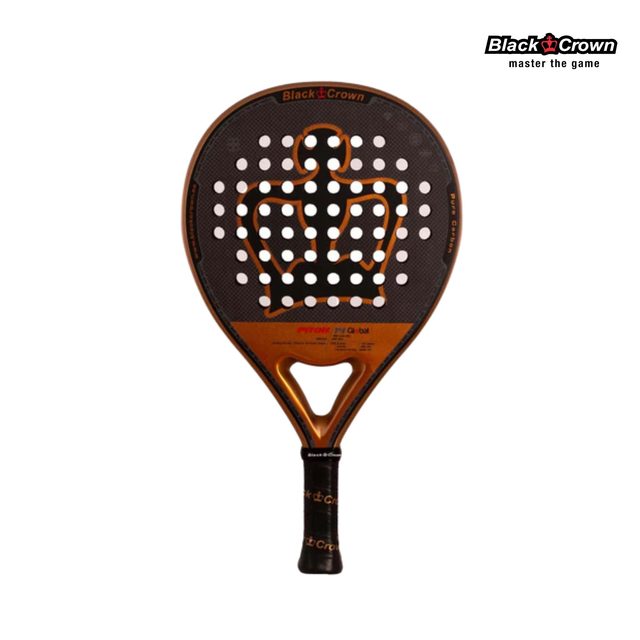
Not every finisher wants contact to feel like a slammed door. Black Crown's Piton 14 is here for the rest of you: a true diamond with the gentlest hands-on feel in this field, at €230 from the Spanish cult brand.
Medium White EVA does the softening. White EVA compresses deeper than the black and rubber cores elsewhere on this list, so the hit lands cushioned and your arm hears less of each strike. The face is 3K Aluminum carbon, an open weave with real flex that lets the ball sit a beat longer before it leaves, while the carbon frame and high balance still put mass where the smash needs it. The same diamond geometry as the rest, upholstered.
Long sessions are its home turf. The deeper pocket makes low volleys and glass resets easier to cushion than anything else here, the bandeja comes off measured instead of wild, and the smash still finishes because the balance, not stiffness, supplies the weight. Hard-core devotees will call the exit a fraction slow, and they're right. Anyone whose arm has ached after a stiff diamond will read that as power that doesn't bite the hand swinging it.
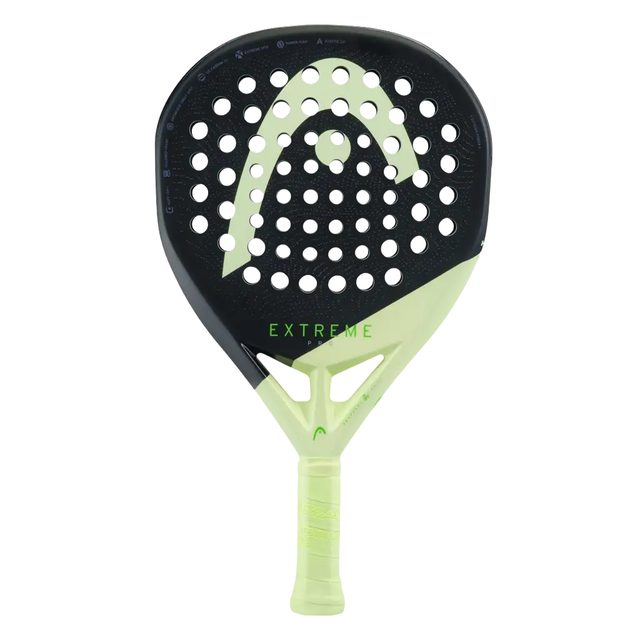
If you can handle the weight, this frame turns it into pace. The Extreme Pro is the heaviest racket in Head's Extreme range, a 370g diamond with a high balance, built for advanced attackers who finish from anywhere on the court.
Head pairs its fast-response Power Foam core with a UD carbon face carrying the Extreme Spin 3D texture, inside a rigid carbon frame. The firm foam returns energy on a full swing, the textured face grips the ball so the víbora and kicked smash bite, and Head's Auxetic 2.0 construction sends a clear read of each strike back to your hand.
Overhead, a full swing leaves the face fast, and a kick smash jumps off the back glass when you brush up through it. At the net, punched volleys go through the gap rather than being blocked back. It asks for timing on defense, since a head-weighted frame is slow to bring round for a late block.
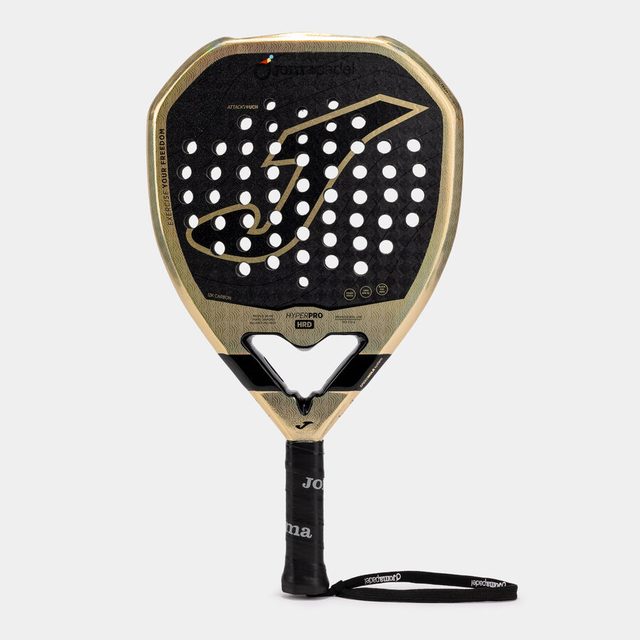
A hard core usually arrives with a flagship price tag. This one arrives at €175. The Joma Hyper Pro HRD is a hard-cored attack diamond rated advanced, not pro, which PadelShop lists as a power frame, for the finisher whose overhead already wins points and who wants a firm strike without paying top-shelf money.
The HRD in the name belongs to the core. Black EVA HRD is a high-density foam that PadelShop lists as firm and stable: it barely gives at contact, so the speed you put into a smash leaves with the ball instead of sinking into the racket. Over it sits a 12K carbon face, finished with a rough 3D texture that bites on brushed shots. The frame repeats the 12K carbon in Joma's Dualtech structure, and the dense core cushions little of the hit.
Contact is quick and unpadded, and your hand learns at once whether you found the middle. Overhead, the high balance drops the head into the smash already loaded, and the sweet spot sits high, which pays the player who takes the ball above their head instead of letting it fall. At the net, a short punch is enough to put a volley through the gap. Pinned at the back glass, it adds nothing to your defense: lobs and blocks need you to take the pace off early, or they sail. The víbora is its best trick, a brushed swing sending the ball low off the side wall.
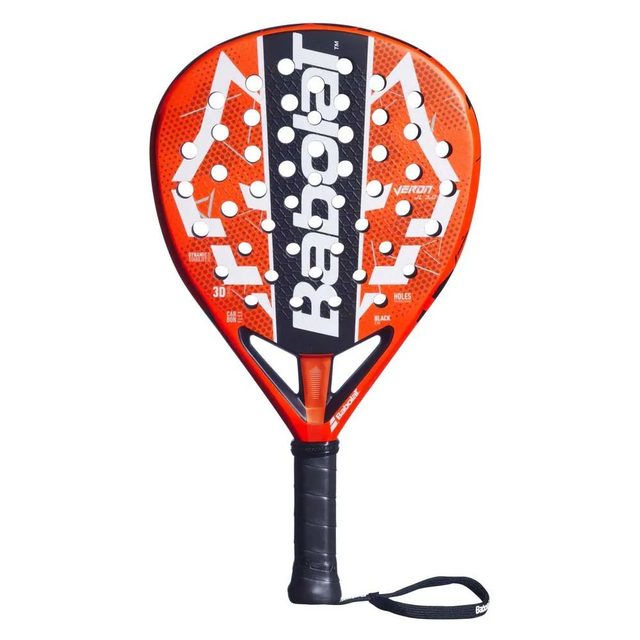
Most rackets on this page assume your overhead is finished. The Babolat Veron 3.0 assumes you're building it: Juan Lebrón's line in its intermediate-rated build, the one true on-ramp diamond here, around €130 at our tracked shops.
The concession is written into the face. Carbon Flex is a carbon skin tuned to bend at contact, letting the ball pocket where the stiff pro faces above would spit it straight back, and beneath it a medium-density Black EVA core absorbs part of each strike rather than none of it. The diamond mold and high balance stay untouched, so nothing about the shape you're learning is fake.
Forgiveness shows up wherever your technique runs out. A bandeja caught late still travels, a smash half a ball off-center still stays down, and at the net the softer middle keeps quick volleys from jarring your grip. In defense the extra face flex gives blocks off the glass more cushion than any pure attacker here. The trade is a ceiling you may one day meet: as your overhead hardens, the flex that protects you starts to blunt your top pace, and the stiffer frames here begin to make sense. Learn the diamond game on this one, and upgrade with a settled swing and no bad habits.
The map is short. Keeping the outlay small or building a first overhead, the Veron 3.0 at €130 covers both. A hard core without the flagship bill, the Joma Hyper Pro HRD. Fast hands, the Metalbone HRD+; soft hands, the Piton 14; the heaviest of Head's Extreme range, the Head Extreme Pro. Everyone else, start with the Top Pick: the Xplo finishes like a pro frame and forgives like nothing else in its class. And if it still feels like guessing, the free app quiz runs your game, arm, and budget through 12 questions and names the racket that's yours.
The best power padel racket in 2026 is the Bullpadel Xplo, a diamond with a tiered MultiEVA core and a stiff Xtend Carbon 12K face, at around €210. It hits with the pro flagships while keeping a margin most hard diamonds refuse, so a strike that drifts off-center still leaves with pace.
Three things build power into a padel racket: a diamond shape that carries mass toward the tip, a high balance that turns that mass into head speed on the smash, and a firm core with a stiff carbon face that returns energy instead of absorbing it. Every pick on this list has all three in some measure.
They ask more of your arm and shoulder, yes. Head-high mass raises the workload of every swing, and hard cores hand back more of each impact. A fit, technically sound player manages both; if your arm already complains, choose a medium-core pick like the Babolat Veron 3.0, or read our shoulder-pain guide first.
Budget from €130 to €250 based on this list. The Babolat Veron 3.0 opens it with a medium core; hard-core hitters can enter at the Joma Hyper Pro HRD, near €175, and the Head Extreme Pro tops it. Extra money buys denser face weaves and refinement, not more power; the shape and the balance do that job at every price.
Yes, if it's the right one. The Babolat Veron 3.0 is this list's intermediate-rated diamond, with a flexing Carbon Flex face and a medium core that forgive a developing overhead. Leave the hard-core pro frames until your smash is dependable. Unsure where you sit? The free app quiz's 12 questions will place you.
Some, by design. A diamond's sweet spot sits high and small, so placement depends on cleaner contact than a round racket demands, and firm cores give touch shots less dwell time on the face. The medium-core picks here, like the Xplo, EA10 Ventus, and Piton 14, hand back the most margin while keeping the finishing intent.
The list is built from our catalog of 800+ rackets. From it we select diamonds with honest notes on what they demand, verify every price and stock status live at our approved shops before publishing, and re-check them on every update. Nobody pays for placement, and there are no invented test scores: specs come from the catalog and retailer listings, and the free two-minute quiz matches the same data to your game.
The app · free quiz
Take the free quiz in the app. We'll match a racket to your game, not the other way around.
Find my racketFree quiz. Sign in with email or Google to get your four picks.