Babolat Veron Juan Lebrón 3.0 2026 Review
By Andres Jovem · Updated October 5, 2026
An intermediate-friendly attacking diamond: it teaches the attacking shape without a pro diamond's harshness.
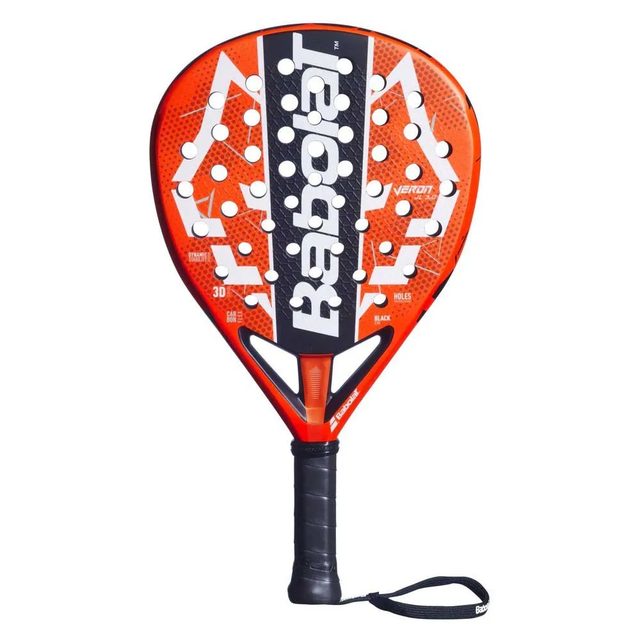
The verdict
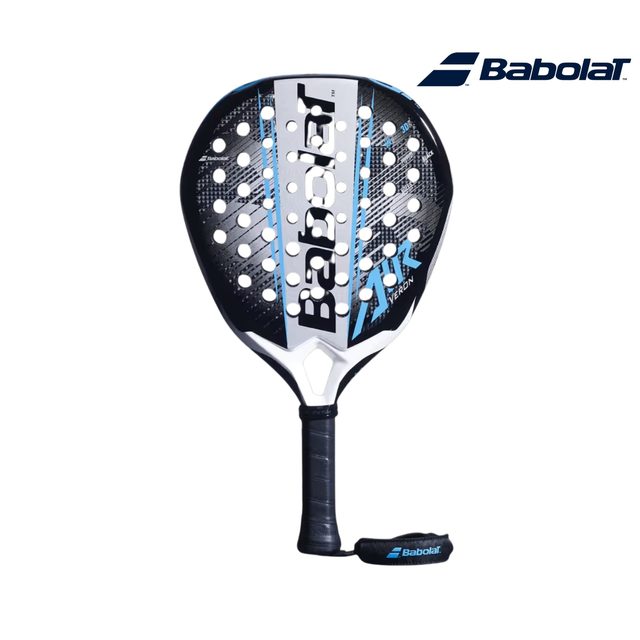
Diamond rackets usually assume you already hit clean and hit hard. The Babolat Veron Juan Lebrón 3.0 does not make that assumption. You get the pointed, tip-weighted head that finishes a smash, sitting over a foam Babolat rates as medium rather than the dense slab most attacking frames run, so a swing that lands a touch off the middle still clears the net instead of buzzing the arm and dying short.
This is a frame for the intermediate who has decided attacking is the direction and wants a racket that pulls their game that way. What you buy is the feel of a finisher's head with the sharpest edges filed down for someone still learning the shot. If a round head is all you have swung so far, read the comfort note before you commit, because a diamond leans on your timing far harder than a control frame does, softer foam or not.
The build
Black EVA, rated medium, so the arm survives the shape
Babolat builds the racket around a Black EVA foam it lists as medium, and that rating is the reason an intermediate can hold a diamond without dreading it. Medium foam gives a fraction under contact, so the ball dwells a moment longer and comes off with pace you added rather than pace a stiff core would just fling back. It stops short of babying a mishit the way a beginner's plush foam does. What it changes is the character of an off-center hit, which lands as a firm knock instead of a spike straight up the forearm, and that gap is what lets you finish the third set rather than favor your arm through it.
Carbon Flex face, rough to the touch, tuned for the brushing shot
Run a thumb across the hitting layer and you feel grit before you feel anything else. Babolat calls the surface Carbon Flex and gives it a rough finish, and on a víbora that you cut across rather than flatten, the grain drags on the ball long enough to spin it hard down the sideline. Behind the texture the carbon stays stiff, so the extra grip does not cost you a dead, spongy contact. Spin is the shot this face pays out on, which happens to be the shot an improving player is chasing.
Diamond head with the weight pushed toward the tip
This is a Diamond frame, and the mold pushes the bulk of the material up toward the top of the head where it does the most for an overhead. Because the load sits out at the tip, the head keeps swinging once you start it, so a smash lands with more behind it than your arm supplies alone. The cost of that layout shows the moment a ball jumps at your ribs and you have to wrench the head around with no time. The 360g on the label is not a heavy number, but the weight bias makes the racket feel tip-led, fast when you have set up and a half-step behind when you have not.
How it plays
The smash is the whole reason to hold it
Set your feet under a lob and pick your spot, and the overhead lands steep enough to jam the pair before they can set. This is the shot the frame is drawn around. That same tip-led swing turns on you the second the smash is rushed, because a late or early contact sails the ball long, so the put-away and the unforced error sit right next to each other on the same swing.
The net wants your hands ready before the ball arrives
Punch a volley with the contact point ahead of your body and it leaves flat and deep off almost no backswing, which is what the pointed head is for. Let the ball crowd you and the racket trails your hand, and now there is no room to bring it round in time. Ready your hands early and you stay in the point. React late and the reflex volley sprays.
Defense is your legs and your timing, not free rebound
Stretched wide at the back, the racket does not spring the ball back for you, so a deep reset out of trouble is your own reach and clean contact doing the work. The lifted lob is where it earns its keep on defense: get one up high and heavy and it buys you the seconds to scramble back into position while the pair backpedals off the net.
Comfort and the arm
Strike the ball clean and centered and the head stays quiet in the hand. Clip a high ball off the top of the frame, though, and the shock lands squarely in the elbow, sharp enough to feel a point later. An intermediate whose stroke is still bedding in should expect the odd one of those across a rough session, and anyone whose arm already aches after a long match should read that as a reason to look elsewhere.
Who it's for (and who should skip it)
Buy it if
- You are an intermediate stepping off a round head onto a diamond for the first time and want one built to teach the shape rather than punish you for learning it.
- You play forward and want a racket that pays out on a clean overhead and a brushed, spinning víbora.
- You bring your own pace and want the tip weight adding to your swing rather than a soft core carrying you.
Look elsewhere if
- You are a beginner still building a swing. A diamond will feed on your mishits and tire your arm long before your technique settles, and a round, soft frame teaches faster and hurts less.
- Your elbow or shoulder already aches after a long match. With this shape, the jolt of a shanked overhead is the tax it charges, and that tax does not get cheaper the more you play.
- You defend far more than you attack and want a frame that lobs and resets deep off the back glass on its own, because here that depth is your reach and your timing.
Not sure it's your match? The free 2-minute quiz reads your level, style, and budget and tells you which racket is.
The bottom line
There is no best racket, only the best one for the player holding it. If you are hunting the net, driving your own pace, and ready to let a frame reward the smash while going easy on the arm that hits it, the Veron Juan Lebrón 3.0 earns a place on your shortlist. If any of that gives you pause, take the free two-minute quiz and let it point you at the frame that fits your game today.
Where to buy
Prices shown in Euro, converted and approximate. You check out in the store's own currency.
Frequently asked
No, a true beginner should pass on this one. It is an intermediate diamond drawn around attacking, so its high, tip-led balance fights a new swing and the mishits land in the arm. The medium foam is kinder than a hard-cored pro diamond, but a round, soft frame around 360g teaches a new player faster and spares the elbow. Come to this racket once your stroke is grooved and you are hunting the net.
Power. The diamond head and high balance load the tip for the smash, and the stiff carbon face sends a clean ball back fast and flat. What control you get comes from the spin the rough surface grips, not from a soft, cushioning rebound, so you place the ball with brush and aim rather than leaning on a forgiving core.
Sitting under the strings is a Black EVA core that Babolat rates medium, paired with a rough-finished Carbon Flex surface over a carbon frame. That medium foam gives slightly at contact to blunt the worst of the shock, while the gritty face holds the ball long enough to load heavy spin onto a víbora or a lifted lob.
Where a full pro diamond runs a stiff, unforgiving core, the 3.0 swaps in a medium one, and that swap is the entire point of the build. The firmer frame gives a touch more raw pace and almost no mercy on a mishit. This racket keeps the attacking diamond shape yet plays softer through the ball, so an intermediate can swing it a full match without the arm paying for every miss.
An improving player making the jump to a diamond for the first time. If you have outgrown a round control frame, chase the net and the overhead, and supply your own pace, this racket rewards that game while asking less of your arm than a stiffer power frame. Not sure it is your match? The free 2-minute quiz reads your level, style, and budget and tells you.
The app · free quiz
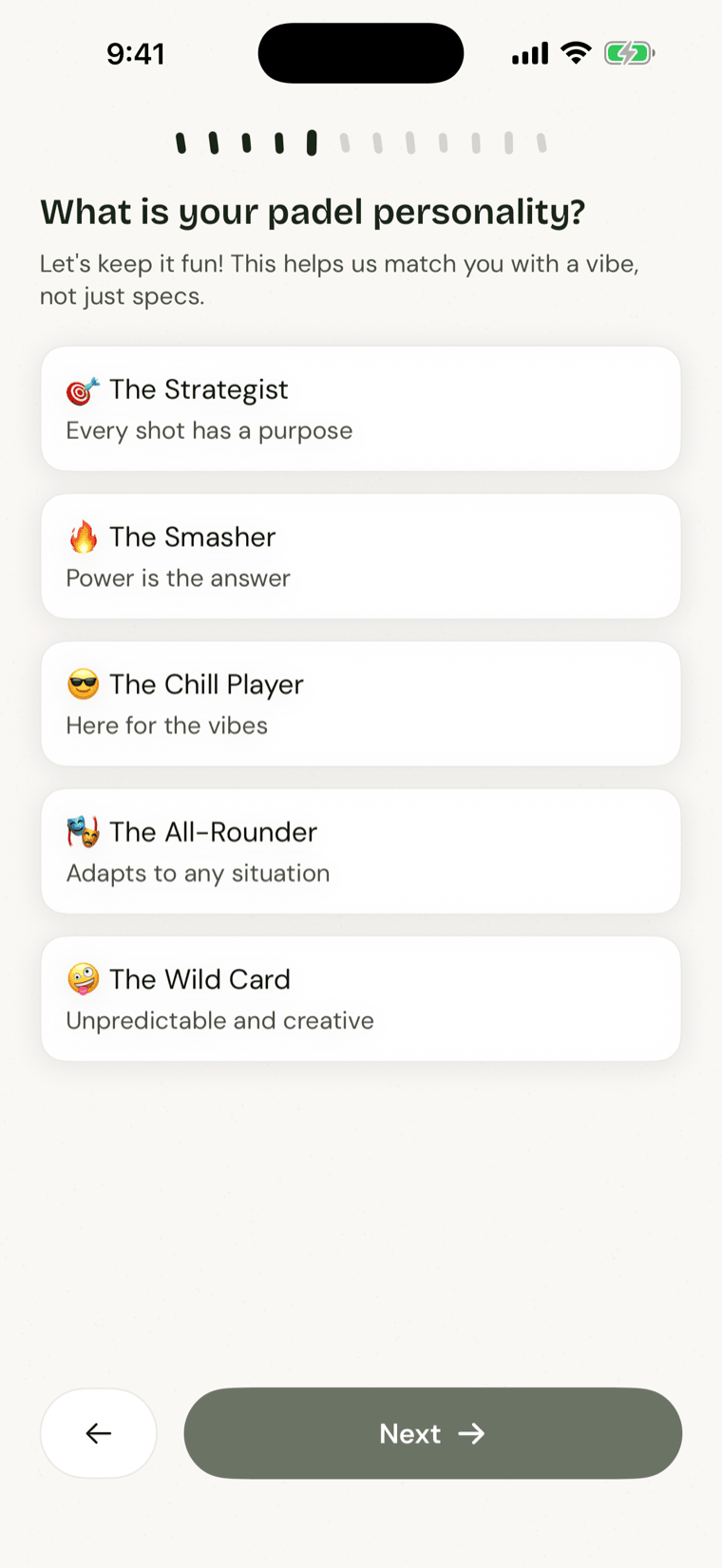
Not sure which one's you?
Take the free quiz in the app. We'll match a racket to your game, not the other way around.
Find my racketFree quiz. Sign in with email or Google to get your four picks.

Babolat Veron Juan Lebrón 3.0 2026 Review
By Andres Jovem · Updated October 5, 2026
An intermediate-friendly attacking diamond: it teaches the attacking shape without a pro diamond's harshness.
The verdict
Diamond rackets usually assume you already hit clean and hit hard. The Babolat Veron Juan Lebrón 3.0 does not make that assumption. You get the pointed, tip-weighted head that finishes a smash, sitting over a foam Babolat rates as medium rather than the dense slab most attacking frames run, so a swing that lands a touch off the middle still clears the net instead of buzzing the arm and dying short.
This is a frame for the intermediate who has decided attacking is the direction and wants a racket that pulls their game that way. What you buy is the feel of a finisher's head with the sharpest edges filed down for someone still learning the shot. If a round head is all you have swung so far, read the comfort note before you commit, because a diamond leans on your timing far harder than a control frame does, softer foam or not.
The build
Black EVA, rated medium, so the arm survives the shape
Babolat builds the racket around a Black EVA foam it lists as medium, and that rating is the reason an intermediate can hold a diamond without dreading it. Medium foam gives a fraction under contact, so the ball dwells a moment longer and comes off with pace you added rather than pace a stiff core would just fling back. It stops short of babying a mishit the way a beginner's plush foam does. What it changes is the character of an off-center hit, which lands as a firm knock instead of a spike straight up the forearm, and that gap is what lets you finish the third set rather than favor your arm through it.
Carbon Flex face, rough to the touch, tuned for the brushing shot
Run a thumb across the hitting layer and you feel grit before you feel anything else. Babolat calls the surface Carbon Flex and gives it a rough finish, and on a víbora that you cut across rather than flatten, the grain drags on the ball long enough to spin it hard down the sideline. Behind the texture the carbon stays stiff, so the extra grip does not cost you a dead, spongy contact. Spin is the shot this face pays out on, which happens to be the shot an improving player is chasing.
Diamond head with the weight pushed toward the tip
This is a Diamond frame, and the mold pushes the bulk of the material up toward the top of the head where it does the most for an overhead. Because the load sits out at the tip, the head keeps swinging once you start it, so a smash lands with more behind it than your arm supplies alone. The cost of that layout shows the moment a ball jumps at your ribs and you have to wrench the head around with no time. The 360g on the label is not a heavy number, but the weight bias makes the racket feel tip-led, fast when you have set up and a half-step behind when you have not.
How it plays
The smash is the whole reason to hold it
Set your feet under a lob and pick your spot, and the overhead lands steep enough to jam the pair before they can set. This is the shot the frame is drawn around. That same tip-led swing turns on you the second the smash is rushed, because a late or early contact sails the ball long, so the put-away and the unforced error sit right next to each other on the same swing.
The net wants your hands ready before the ball arrives
Punch a volley with the contact point ahead of your body and it leaves flat and deep off almost no backswing, which is what the pointed head is for. Let the ball crowd you and the racket trails your hand, and now there is no room to bring it round in time. Ready your hands early and you stay in the point. React late and the reflex volley sprays.
Defense is your legs and your timing, not free rebound
Stretched wide at the back, the racket does not spring the ball back for you, so a deep reset out of trouble is your own reach and clean contact doing the work. The lifted lob is where it earns its keep on defense: get one up high and heavy and it buys you the seconds to scramble back into position while the pair backpedals off the net.
Comfort and the arm
Strike the ball clean and centered and the head stays quiet in the hand. Clip a high ball off the top of the frame, though, and the shock lands squarely in the elbow, sharp enough to feel a point later. An intermediate whose stroke is still bedding in should expect the odd one of those across a rough session, and anyone whose arm already aches after a long match should read that as a reason to look elsewhere.
Who it's for (and who should skip it)
Buy it if
- You are an intermediate stepping off a round head onto a diamond for the first time and want one built to teach the shape rather than punish you for learning it.
- You play forward and want a racket that pays out on a clean overhead and a brushed, spinning víbora.
- You bring your own pace and want the tip weight adding to your swing rather than a soft core carrying you.
Look elsewhere if
- You are a beginner still building a swing. A diamond will feed on your mishits and tire your arm long before your technique settles, and a round, soft frame teaches faster and hurts less.
- Your elbow or shoulder already aches after a long match. With this shape, the jolt of a shanked overhead is the tax it charges, and that tax does not get cheaper the more you play.
- You defend far more than you attack and want a frame that lobs and resets deep off the back glass on its own, because here that depth is your reach and your timing.
Not sure it's your match? The free 2-minute quiz reads your level, style, and budget and tells you which racket is.
The bottom line
There is no best racket, only the best one for the player holding it. If you are hunting the net, driving your own pace, and ready to let a frame reward the smash while going easy on the arm that hits it, the Veron Juan Lebrón 3.0 earns a place on your shortlist. If any of that gives you pause, take the free two-minute quiz and let it point you at the frame that fits your game today.
Where to buy
Prices shown in Euro, converted and approximate. You check out in the store's own currency.
Frequently asked
No, a true beginner should pass on this one. It is an intermediate diamond drawn around attacking, so its high, tip-led balance fights a new swing and the mishits land in the arm. The medium foam is kinder than a hard-cored pro diamond, but a round, soft frame around 360g teaches a new player faster and spares the elbow. Come to this racket once your stroke is grooved and you are hunting the net.
Power. The diamond head and high balance load the tip for the smash, and the stiff carbon face sends a clean ball back fast and flat. What control you get comes from the spin the rough surface grips, not from a soft, cushioning rebound, so you place the ball with brush and aim rather than leaning on a forgiving core.
Sitting under the strings is a Black EVA core that Babolat rates medium, paired with a rough-finished Carbon Flex surface over a carbon frame. That medium foam gives slightly at contact to blunt the worst of the shock, while the gritty face holds the ball long enough to load heavy spin onto a víbora or a lifted lob.
Where a full pro diamond runs a stiff, unforgiving core, the 3.0 swaps in a medium one, and that swap is the entire point of the build. The firmer frame gives a touch more raw pace and almost no mercy on a mishit. This racket keeps the attacking diamond shape yet plays softer through the ball, so an intermediate can swing it a full match without the arm paying for every miss.
An improving player making the jump to a diamond for the first time. If you have outgrown a round control frame, chase the net and the overhead, and supply your own pace, this racket rewards that game while asking less of your arm than a stiffer power frame. Not sure it is your match? The free 2-minute quiz reads your level, style, and budget and tells you.
The app · free quiz
Not sure which one's you?
Take the free quiz in the app. We'll match a racket to your game, not the other way around.
Find my racketFree quiz. Sign in with email or Google to get your four picks.