Babolat Technical Origin+ 2026 Review
By Andres Jovem · Updated October 19, 2026
An even-balanced diamond with a fiberglass face and a soft EVA core: Babolat's way of handing an intermediate attacker the diamond's reach without the diamond's punishment.
The verdict
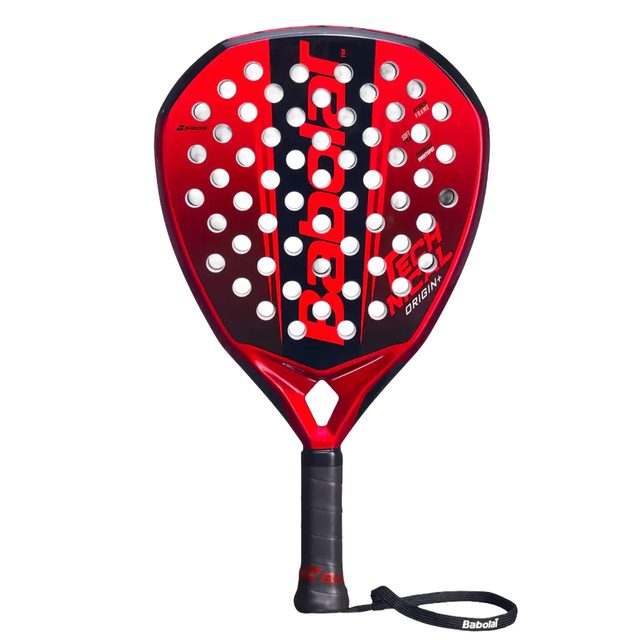
Most diamonds are built for the player who already has the overhead. The Technical Origin+ is built for the one who is learning it. It sits in Babolat's Technical Striker range, aimed at intermediates. Then it softens every part of the recipe that usually makes a diamond unforgiving: a fiberglass face, a soft EVA core, and a frame that mixes carbon with fiberglass.
The result is a racket that lets you practice the attacking shape of the game. Smash from the high sweet spot, step in, punch volleys, and skip the elbow bill at the end of the session. What it will not do is add much of its own pace. A soft core and a flexible face give power back only as flex, so a flat smash from this frame is only as heavy as the swing you put in.
If you are already finishing points with a firm diamond, this one will feel like a step down. If you are still getting there, it is one of the kinder ways up. Babolat's own pages disagree on the balance; we go with even. Its growth path is short by design: the day you want a firmer face is the day you have outgrown it, and that is a good day to have.
The build
Soft Fiber: a fiberglass face that gives
The surface is Soft Fiber, Babolat's fiberglass face. A carbon face stays rigid and fires the ball off at once. Fiberglass bends a little at contact and springs back. That spring is where Babolat's claim of effortless power with comfort and forgiveness comes from. For you, it means a ball struck out near the frame still travels, and the jolt of a mishit is mostly gone before it reaches your wrist.
A soft EVA core that absorbs first
Under the face sits a soft EVA core. Soft foam sinks under the ball and lets it go without a snap, so the contact is padded enough that a long session leaves the elbow quiet. The cost is pace: the ball spends a fraction longer on the face and leaves with less speed than a firm core would give it, and the rest is yours to supply.
A hybrid frame and a diamond head
Babolat's Hybrid Frame mixes carbon for stiffness and low weight with fiberglass for flex. The diamond mold sets the sweet spot high, up where the overhead is struck. At 355g with an even balance, the head does not drag: the diamond's reach is there, but the swing feels closer to a teardrop's.
A 38 mm profile and a plain face
The profile is 38mm, the standard thickness for an adult frame, and the face carries no texture technology. A plain face changes two shots. The víbora leans on your brush, which the next section covers, and the flat block off the glass comes off clean and predictable, with no grit to grab the ball and shorten it. For an intermediate still learning to read the glass, predictable is the kinder setting.
How it plays
Learning the overhead with a net underneath
Hit a smash on the high sweet spot and it goes where you aimed, with the speed you brought to the swing and nothing added. Miss by an inch and the face rounds off the error instead of punishing it. Which is the deal this frame offers: you can commit to the attacking shot and find out what works without paying for every mistake.
Spin off a face that gives
A fiberglass face is not the grittiest surface for spin, and Babolat does not claim a rough texture for it, so a víbora from this frame leans on your brush more than on the surface. What you get instead is time: the ball sits on the flexible face a fraction longer, and that dwell makes it easier to feel the brush and steer the ball toward the side glass. Less bite, more feel: the ball sits long enough on the face for you to steer it, which suits a player still learning the shot.
At the net, quicker than a diamond should be
An even balance means the tip is not fighting you on a reaction volley. Blocks at the body come round in time, even the ones at the hip that a heavier diamond turns into a shank. A punched volley lands deep, with the soft core taking the sting out of a hard-hit ball. A chiquita rolled at the net player's feet is easy to measure for the same reason: the ball sits, you shape it, it goes. You will not hit through a good blocker with it, but you will keep the exchange going.
Defending, the soft core is on your side
A smash that comes off the back glass settles on the face long enough to be steered, and a lob with a measured swing goes deep without needing a flawless strike. For a diamond this is unusual, and it is why Babolat can pitch it at intermediates who still spend half the point defending. The lob off a deep block is where the even balance pays a second time: the head is not loading up behind you, so a late swing still gets under the ball.
What the elbow gets
This is a gentle frame by any spec you read: soft core, flexible face, flexible frame. A mishit reaches the elbow dulled, and you will not be icing it after. One caveat. A 355g diamond, even with an even balance, still carries more of its mass toward the tip than a round frame. A wrist that tires in long matches will notice by the third set.
Who it's for (and who should skip it)
Buy it if
- You are an intermediate learning to attack and want the diamond shape with margin for error
- Your arm has complained about firm frames and you want a soft contact without giving up the overhead
- You supply the pace yourself and want a diamond that stays quick at the net
Look elsewhere if
- You already finish with a firm diamond: this one will feel slow off the face
- You want free power on a flat smash: a soft core hands back less than it takes
- Defense is your game and you want a round head that meets the ball mid-face
Not sure it's your match? The free 2-minute quiz reads your level, style, and budget and tells you which racket is.
The bottom line
One shop carries it at €149.90. For that money you get the rare diamond whose even balance stays quick at the net, and if the attacking shape is what you want to learn, that is the fair trade.
Where to buy
Prices shown in Euro, converted and approximate. You check out in the store's own currency.
Frequently asked
Closer than most diamonds, but no. The Technical Origin+ is an intermediate frame, and its 355g diamond head still sets the sweet spot up near the tip, a place a beginner rarely reaches. A round, soft frame will teach you faster; the Origin+ is the step after that, once you are starting to attack.
Power by shape, comfort by materials. The Technical Origin+ sits in Babolat's Technical Striker range, the power type, but the fiberglass face and soft core hand back only the pace you put in; nothing jumps off the face. Think of it as an attacking frame that keeps the attacker comfortable, not a cannon.
From €149.90 at PadelPROShop, the one shop we use that stocks the Technical Origin+. Nobody else we trust carries it right now.
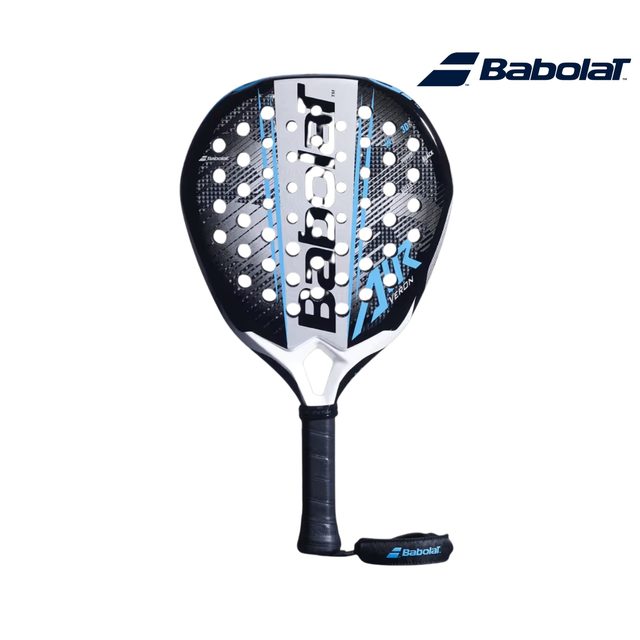
They weigh the same and balance the same, so the choice between the Technical Origin+ and the Air Veron 2.6 comes down to shape and face. The Air Veron 2.6 is 355g with an even balance: a teardrop with a Carbon Flex face and a Black EVA core underneath, so it plays firmer and more direct. The Origin+ is a diamond with a fiberglass face and a soft core, so it plays softer and the pace is yours to bring. Veron for an all-round intermediate game; Origin+ for an intermediate attacker who wants a padded contact.
Even, by Babolat's European page. Babolat's US page gives a head-heavy figure for the Technical Origin+ instead, and its description mentions a high balance, so the brand's own pages disagree. The shop that sells it has an even-balanced 355g diamond, and that is the frame you get.
On the left side the Technical Origin+ gives the overhead the diamond's reach while the even balance keeps the frame quick at the net. That is its role in the women's left-side guide. An advanced left-sider who already finishes with pace will outgrow it; an intermediate learning the role will not for a while.

The app · free quiz
Not sure which one's you?
Take the free quiz in the app. We'll match a racket to your game, not the other way around.
Find my racketFree quiz. Sign in with email or Google to get your four picks.

Babolat Technical Origin+ 2026 Review
By Andres Jovem · Updated October 19, 2026
An even-balanced diamond with a fiberglass face and a soft EVA core: Babolat's way of handing an intermediate attacker the diamond's reach without the diamond's punishment.
The verdict
Most diamonds are built for the player who already has the overhead. The Technical Origin+ is built for the one who is learning it. It sits in Babolat's Technical Striker range, aimed at intermediates. Then it softens every part of the recipe that usually makes a diamond unforgiving: a fiberglass face, a soft EVA core, and a frame that mixes carbon with fiberglass.
The result is a racket that lets you practice the attacking shape of the game. Smash from the high sweet spot, step in, punch volleys, and skip the elbow bill at the end of the session. What it will not do is add much of its own pace. A soft core and a flexible face give power back only as flex, so a flat smash from this frame is only as heavy as the swing you put in.
If you are already finishing points with a firm diamond, this one will feel like a step down. If you are still getting there, it is one of the kinder ways up. Babolat's own pages disagree on the balance; we go with even. Its growth path is short by design: the day you want a firmer face is the day you have outgrown it, and that is a good day to have.
The build
Soft Fiber: a fiberglass face that gives
The surface is Soft Fiber, Babolat's fiberglass face. A carbon face stays rigid and fires the ball off at once. Fiberglass bends a little at contact and springs back. That spring is where Babolat's claim of effortless power with comfort and forgiveness comes from. For you, it means a ball struck out near the frame still travels, and the jolt of a mishit is mostly gone before it reaches your wrist.
A soft EVA core that absorbs first
Under the face sits a soft EVA core. Soft foam sinks under the ball and lets it go without a snap, so the contact is padded enough that a long session leaves the elbow quiet. The cost is pace: the ball spends a fraction longer on the face and leaves with less speed than a firm core would give it, and the rest is yours to supply.
A hybrid frame and a diamond head
Babolat's Hybrid Frame mixes carbon for stiffness and low weight with fiberglass for flex. The diamond mold sets the sweet spot high, up where the overhead is struck. At 355g with an even balance, the head does not drag: the diamond's reach is there, but the swing feels closer to a teardrop's.
A 38 mm profile and a plain face
The profile is 38mm, the standard thickness for an adult frame, and the face carries no texture technology. A plain face changes two shots. The víbora leans on your brush, which the next section covers, and the flat block off the glass comes off clean and predictable, with no grit to grab the ball and shorten it. For an intermediate still learning to read the glass, predictable is the kinder setting.
How it plays
Learning the overhead with a net underneath
Hit a smash on the high sweet spot and it goes where you aimed, with the speed you brought to the swing and nothing added. Miss by an inch and the face rounds off the error instead of punishing it. Which is the deal this frame offers: you can commit to the attacking shot and find out what works without paying for every mistake.
Spin off a face that gives
A fiberglass face is not the grittiest surface for spin, and Babolat does not claim a rough texture for it, so a víbora from this frame leans on your brush more than on the surface. What you get instead is time: the ball sits on the flexible face a fraction longer, and that dwell makes it easier to feel the brush and steer the ball toward the side glass. Less bite, more feel: the ball sits long enough on the face for you to steer it, which suits a player still learning the shot.
At the net, quicker than a diamond should be
An even balance means the tip is not fighting you on a reaction volley. Blocks at the body come round in time, even the ones at the hip that a heavier diamond turns into a shank. A punched volley lands deep, with the soft core taking the sting out of a hard-hit ball. A chiquita rolled at the net player's feet is easy to measure for the same reason: the ball sits, you shape it, it goes. You will not hit through a good blocker with it, but you will keep the exchange going.
Defending, the soft core is on your side
A smash that comes off the back glass settles on the face long enough to be steered, and a lob with a measured swing goes deep without needing a flawless strike. For a diamond this is unusual, and it is why Babolat can pitch it at intermediates who still spend half the point defending. The lob off a deep block is where the even balance pays a second time: the head is not loading up behind you, so a late swing still gets under the ball.
What the elbow gets
This is a gentle frame by any spec you read: soft core, flexible face, flexible frame. A mishit reaches the elbow dulled, and you will not be icing it after. One caveat. A 355g diamond, even with an even balance, still carries more of its mass toward the tip than a round frame. A wrist that tires in long matches will notice by the third set.
Who it's for (and who should skip it)
Buy it if
- You are an intermediate learning to attack and want the diamond shape with margin for error
- Your arm has complained about firm frames and you want a soft contact without giving up the overhead
- You supply the pace yourself and want a diamond that stays quick at the net
Look elsewhere if
- You already finish with a firm diamond: this one will feel slow off the face
- You want free power on a flat smash: a soft core hands back less than it takes
- Defense is your game and you want a round head that meets the ball mid-face
Not sure it's your match? The free 2-minute quiz reads your level, style, and budget and tells you which racket is.
The bottom line
One shop carries it at €149.90. For that money you get the rare diamond whose even balance stays quick at the net, and if the attacking shape is what you want to learn, that is the fair trade.
Where to buy
Prices shown in Euro, converted and approximate. You check out in the store's own currency.
Frequently asked
Closer than most diamonds, but no. The Technical Origin+ is an intermediate frame, and its 355g diamond head still sets the sweet spot up near the tip, a place a beginner rarely reaches. A round, soft frame will teach you faster; the Origin+ is the step after that, once you are starting to attack.
Power by shape, comfort by materials. The Technical Origin+ sits in Babolat's Technical Striker range, the power type, but the fiberglass face and soft core hand back only the pace you put in; nothing jumps off the face. Think of it as an attacking frame that keeps the attacker comfortable, not a cannon.
From €149.90 at PadelPROShop, the one shop we use that stocks the Technical Origin+. Nobody else we trust carries it right now.
They weigh the same and balance the same, so the choice between the Technical Origin+ and the Air Veron 2.6 comes down to shape and face. The Air Veron 2.6 is 355g with an even balance: a teardrop with a Carbon Flex face and a Black EVA core underneath, so it plays firmer and more direct. The Origin+ is a diamond with a fiberglass face and a soft core, so it plays softer and the pace is yours to bring. Veron for an all-round intermediate game; Origin+ for an intermediate attacker who wants a padded contact.
Even, by Babolat's European page. Babolat's US page gives a head-heavy figure for the Technical Origin+ instead, and its description mentions a high balance, so the brand's own pages disagree. The shop that sells it has an even-balanced 355g diamond, and that is the frame you get.
On the left side the Technical Origin+ gives the overhead the diamond's reach while the even balance keeps the frame quick at the net. That is its role in the women's left-side guide. An advanced left-sider who already finishes with pace will outgrow it; an intermediate learning the role will not for a while.
The app · free quiz
Not sure which one's you?
Take the free quiz in the app. We'll match a racket to your game, not the other way around.
Find my racketFree quiz. Sign in with email or Google to get your four picks.