Head Coello Vibe 2026 Review
By Andres Jovem · Updated October 19, 2026
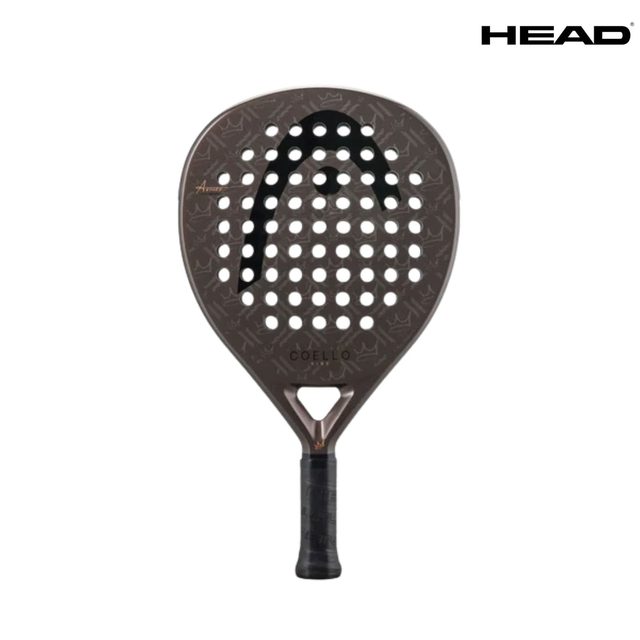
The beginner's door into Head's Coello collection: an oversized teardrop with a fiberglass face and a Power Foam core, built to put the sweet spot where a volley lands, for the new player who likes to come forward.
The verdict
The Coello Vibe is the beginner's racket in Head's Coello collection, and the name and the core are about all it shares with the diamond Arturo Coello plays. Head's own description is plain: easy power and a large sweet spot for beginners and casual players. The frame delivers that three ways. An oversized teardrop head pushes the sweet spot up toward where a volley meets the ball. A fiberglass face keeps contact gentle on the arm. A Power Foam core, which Head pitches as reactive, helps the ball leave even when your swing is still finding its timing.
That shape is the reason to pick it over the round starters it sits beside in our women's beginner guide, and the reason to think twice. A new player who likes to get to the net will find volleys landing on the sweet spot more often than a round frame manages, because the teardrop puts it there. A new player who spends the first season at the back, blocking and lobbing, will find a round head forgives a low, late contact better. Head built the Vibe for the first player. If you are the second, there are gentler choices on the same list for less money.
It also sits toward the top of our women's beginner guide on price. Head's full-carbon frames cost a good deal more, so the Vibe is where the collection starts rather than where the money is. For a beginner who wants a known brand, a forgiving head and a racket that nudges them toward the net, that is a fair place to begin.
The build
A Power Foam core that helps the ball leave
Power Foam fills the Vibe, the same core as the rest of the Coello collection, and it is built to spring back quickly after the ball compresses it. On the Coello Pro that reactivity sits inside a firm, head-heavy diamond and reads as pace. In the Vibe, wrapped in a fiberglass face and a mid balance, it should read as help. A block or a volley with not much swing behind it still leaves the face with some speed. A beginner's ball reaches the back of the court without being forced. The core is not soft in the way a SoftEVA starter is, and a player with a sensitive arm should read the arm section before assuming otherwise.
A fiberglass face on an oversized teardrop
Head covers the face in fiberglass, which flexes more than carbon and is the part of the build that keeps a mishit from stinging the wrist. The head is oversized, so the hitting area is bigger than a standard frame's and a ball taken near the rim still finds enough face to clear the net. The surface is not listed as textured, so the bandeja will carry modest slice, not the heavy rotation of a rough face. A bigger target first, spin later: for a first season that is the order to want.
A Power Frame with Innegra and a built-in protector
The chassis is a Power Frame with Tailored Frame construction, and it carries two named parts: Innegra, a fiber laid into the frame, and a Power Stabilizer. Head offers no explanation of either, so a name is all we give them. The Integrated Protector System is a bumper built into the frame rather than stuck on. For a first-year player that matters more than it sounds. The frame will meet the glass and the floor often in year one.
A mid balance with the mass nudged toward the head
The balance is mid, at the same figure Head gives the Extreme One diamond, on a 356g frame. That balance is what sets the Vibe apart from the low-balance round starters. There is more mass toward the head than those frames carry. It is enough to give a volley and a bandeja some depth without you swinging hard, and not so much that the racket drags when the exchange speeds up. A round frame balanced low will still turn over a fraction faster on a reaction block, and that is the trade a net-minded beginner makes here.
How it plays
At the net, the volley finds the sweet spot
Come forward with the Vibe and the first thing you should notice is that volleys land in the middle of the hitting area without you hunting for it. The shape has moved the sweet spot to where a volley naturally meets the ball. The extra mass up top gives a punch volley enough depth to push the opponents back, and the big face means a ball you take late still clears the net. The reaction block at your hip asks for more from you than a round frame would. Get the racket up early and the volley is clean. Wait on it and the head arrives a beat late.
Overhead, a bandeja with depth and a smash that resets
This shape was built for the bandeja. The sweet spot sits high on the face, so the overhead meets the ball where it wants to, and the weight up top carries the shot far enough to hold the net. The smash is a different matter: with a soft face and a mid rather than high balance, a flat overhead comes off slower than the Coello name suggests, and the ball tends to come back. Used to hold the net, the smash is fine. Used to finish, it will disappoint.
From the back, comfortable on the block, less forgiving low on the face
On a hard ball blocked from the baseline the contact is gentle and the ball lifts without much swing, so a long defensive point does not wear you out. The lob off the glass goes up without a fight. The caveat is where the ball meets the face. The sweet spot sits higher than a round frame's, so a defensive block caught low and late gives up more than it would on a round head. That matters to a beginner who lives at the back and matters less to one who defends to get forward.
Elbow and shoulder
The flexing face keeps most of a mishit's sting away from the wrist and elbow. The frame is light enough, even with a mid balance, that two hours of overheads do not wear the shoulder down. The core is the caveat. It is built to react rather than cushion, so the Vibe plays a touch firmer than the soft-cored starters on the same list. A player with a sensitive elbow will notice that on a hard, late block. Not harsh on the elbow, but not the softest frame at this price either.
Who it's for (and who should skip it)
Buy it if
- New to padel and already drawn to the net: the teardrop puts the sweet spot where your volley lands
- A bigger hitting area than a standard frame, with a face that keeps mishits gentle on the arm, is what you need
- A known brand appeals, and so does a frame that nudges you toward an attacking game rather than one you will have to leave behind to learn it
Look elsewhere if
- You spend your first season at the back of the court: a round, low-balance frame forgives a low, late block better and costs less
- Your elbow is sensitive: the Power Foam core plays firmer than the soft-cored starters beside it, and a SoftEVA or soft-EVA round frame is gentler
- You are buying the name: Arturo Coello plays the Coello Pro, a 370g head-heavy diamond, and nothing about that racket's game lives in this one
Not sure it's your match? The free 2-minute quiz reads your level, style, and budget and tells you which racket is.
The bottom line
A first racket for the beginner who already wants the net: if that is you, start here and grow into Head's heavier frames later; if you defend first, a round head will serve you better.
Where to buy
Prices shown in Euro, converted and approximate. You check out in the store's own currency.
Frequently asked
Yes. Head markets the Coello Vibe 2026 for beginners and recreational players, and the build backs it up. An oversized teardrop head gives a bigger hitting area. A fiberglass face keeps mishits gentle. A Power Foam core helps the ball leave when your swing is still finding its timing. It suits a beginner who likes to come to the net more than one who stays at the back.
Almost everything but the name. The Coello Pro is Arturo Coello's own racket. It is a 370g diamond with a firm Power Foam core, a Carbon Hybrid face and a high balance, built to finish points from above the net, at around 230 euros. The Coello Vibe is a 356g oversized teardrop with a fiberglass face and a mid balance, built for a beginner's volley, at under 100 euros. Same collection, same core family, two different players.
A beginner's power frame is the fair label for the Coello Vibe, which in practice means easy depth rather than a hard ball. The teardrop shape and the mid balance give a volley and a bandeja some carry without a full swing, and Head's Power Foam core helps the ball leave the face. It will not hit a smash through the court. A player who wants a true power racket should look at a diamond.
The Coello Vibe starts from €89.95 at PadelShop, with Tradeinn at €95.99 and PadelPROShop a little higher. PadelShop shows it marked down from €139.95.
Power Foam under fiberglass is the Coello Vibe's recipe, inside Head's Power Frame with Innegra fiber in the layup and an Integrated Protector System on the edge. The foam gives the ball some help off the face and the fiberglass keeps the contact gentle.
Head's figure for the Coello Vibe is 356g, a gram more than ours and inside the normal production spread, with a mid balance. That puts it a few grams above the lightest starters in our women's beginner guide and a little further toward the head in balance, which is where its volley depth comes from.
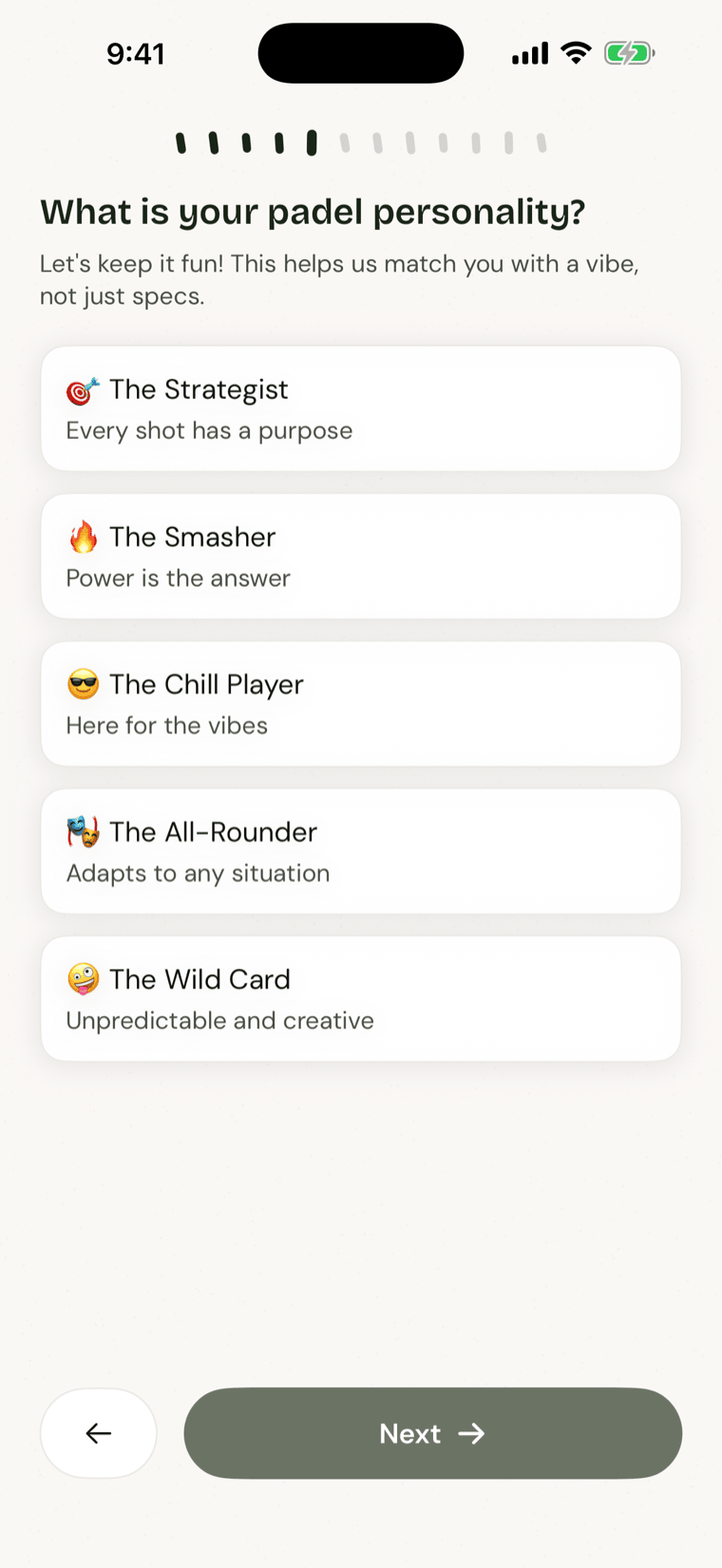
The app · free quiz
Not sure which one's you?
Take the free quiz in the app. We'll match a racket to your game, not the other way around.
Find my racketFree quiz. Sign in with email or Google to get your four picks.

Head Coello Vibe 2026 Review
By Andres Jovem · Updated October 19, 2026
The beginner's door into Head's Coello collection: an oversized teardrop with a fiberglass face and a Power Foam core, built to put the sweet spot where a volley lands, for the new player who likes to come forward.
The verdict
The Coello Vibe is the beginner's racket in Head's Coello collection, and the name and the core are about all it shares with the diamond Arturo Coello plays. Head's own description is plain: easy power and a large sweet spot for beginners and casual players. The frame delivers that three ways. An oversized teardrop head pushes the sweet spot up toward where a volley meets the ball. A fiberglass face keeps contact gentle on the arm. A Power Foam core, which Head pitches as reactive, helps the ball leave even when your swing is still finding its timing.
That shape is the reason to pick it over the round starters it sits beside in our women's beginner guide, and the reason to think twice. A new player who likes to get to the net will find volleys landing on the sweet spot more often than a round frame manages, because the teardrop puts it there. A new player who spends the first season at the back, blocking and lobbing, will find a round head forgives a low, late contact better. Head built the Vibe for the first player. If you are the second, there are gentler choices on the same list for less money.
It also sits toward the top of our women's beginner guide on price. Head's full-carbon frames cost a good deal more, so the Vibe is where the collection starts rather than where the money is. For a beginner who wants a known brand, a forgiving head and a racket that nudges them toward the net, that is a fair place to begin.
The build
A Power Foam core that helps the ball leave
Power Foam fills the Vibe, the same core as the rest of the Coello collection, and it is built to spring back quickly after the ball compresses it. On the Coello Pro that reactivity sits inside a firm, head-heavy diamond and reads as pace. In the Vibe, wrapped in a fiberglass face and a mid balance, it should read as help. A block or a volley with not much swing behind it still leaves the face with some speed. A beginner's ball reaches the back of the court without being forced. The core is not soft in the way a SoftEVA starter is, and a player with a sensitive arm should read the arm section before assuming otherwise.
A fiberglass face on an oversized teardrop
Head covers the face in fiberglass, which flexes more than carbon and is the part of the build that keeps a mishit from stinging the wrist. The head is oversized, so the hitting area is bigger than a standard frame's and a ball taken near the rim still finds enough face to clear the net. The surface is not listed as textured, so the bandeja will carry modest slice, not the heavy rotation of a rough face. A bigger target first, spin later: for a first season that is the order to want.
A Power Frame with Innegra and a built-in protector
The chassis is a Power Frame with Tailored Frame construction, and it carries two named parts: Innegra, a fiber laid into the frame, and a Power Stabilizer. Head offers no explanation of either, so a name is all we give them. The Integrated Protector System is a bumper built into the frame rather than stuck on. For a first-year player that matters more than it sounds. The frame will meet the glass and the floor often in year one.
A mid balance with the mass nudged toward the head
The balance is mid, at the same figure Head gives the Extreme One diamond, on a 356g frame. That balance is what sets the Vibe apart from the low-balance round starters. There is more mass toward the head than those frames carry. It is enough to give a volley and a bandeja some depth without you swinging hard, and not so much that the racket drags when the exchange speeds up. A round frame balanced low will still turn over a fraction faster on a reaction block, and that is the trade a net-minded beginner makes here.
How it plays
At the net, the volley finds the sweet spot
Come forward with the Vibe and the first thing you should notice is that volleys land in the middle of the hitting area without you hunting for it. The shape has moved the sweet spot to where a volley naturally meets the ball. The extra mass up top gives a punch volley enough depth to push the opponents back, and the big face means a ball you take late still clears the net. The reaction block at your hip asks for more from you than a round frame would. Get the racket up early and the volley is clean. Wait on it and the head arrives a beat late.
Overhead, a bandeja with depth and a smash that resets
This shape was built for the bandeja. The sweet spot sits high on the face, so the overhead meets the ball where it wants to, and the weight up top carries the shot far enough to hold the net. The smash is a different matter: with a soft face and a mid rather than high balance, a flat overhead comes off slower than the Coello name suggests, and the ball tends to come back. Used to hold the net, the smash is fine. Used to finish, it will disappoint.
From the back, comfortable on the block, less forgiving low on the face
On a hard ball blocked from the baseline the contact is gentle and the ball lifts without much swing, so a long defensive point does not wear you out. The lob off the glass goes up without a fight. The caveat is where the ball meets the face. The sweet spot sits higher than a round frame's, so a defensive block caught low and late gives up more than it would on a round head. That matters to a beginner who lives at the back and matters less to one who defends to get forward.
Elbow and shoulder
The flexing face keeps most of a mishit's sting away from the wrist and elbow. The frame is light enough, even with a mid balance, that two hours of overheads do not wear the shoulder down. The core is the caveat. It is built to react rather than cushion, so the Vibe plays a touch firmer than the soft-cored starters on the same list. A player with a sensitive elbow will notice that on a hard, late block. Not harsh on the elbow, but not the softest frame at this price either.
Who it's for (and who should skip it)
Buy it if
- New to padel and already drawn to the net: the teardrop puts the sweet spot where your volley lands
- A bigger hitting area than a standard frame, with a face that keeps mishits gentle on the arm, is what you need
- A known brand appeals, and so does a frame that nudges you toward an attacking game rather than one you will have to leave behind to learn it
Look elsewhere if
- You spend your first season at the back of the court: a round, low-balance frame forgives a low, late block better and costs less
- Your elbow is sensitive: the Power Foam core plays firmer than the soft-cored starters beside it, and a SoftEVA or soft-EVA round frame is gentler
- You are buying the name: Arturo Coello plays the Coello Pro, a 370g head-heavy diamond, and nothing about that racket's game lives in this one
Not sure it's your match? The free 2-minute quiz reads your level, style, and budget and tells you which racket is.
The bottom line
A first racket for the beginner who already wants the net: if that is you, start here and grow into Head's heavier frames later; if you defend first, a round head will serve you better.
Where to buy
Prices shown in Euro, converted and approximate. You check out in the store's own currency.
Frequently asked
Yes. Head markets the Coello Vibe 2026 for beginners and recreational players, and the build backs it up. An oversized teardrop head gives a bigger hitting area. A fiberglass face keeps mishits gentle. A Power Foam core helps the ball leave when your swing is still finding its timing. It suits a beginner who likes to come to the net more than one who stays at the back.
Almost everything but the name. The Coello Pro is Arturo Coello's own racket. It is a 370g diamond with a firm Power Foam core, a Carbon Hybrid face and a high balance, built to finish points from above the net, at around 230 euros. The Coello Vibe is a 356g oversized teardrop with a fiberglass face and a mid balance, built for a beginner's volley, at under 100 euros. Same collection, same core family, two different players.
A beginner's power frame is the fair label for the Coello Vibe, which in practice means easy depth rather than a hard ball. The teardrop shape and the mid balance give a volley and a bandeja some carry without a full swing, and Head's Power Foam core helps the ball leave the face. It will not hit a smash through the court. A player who wants a true power racket should look at a diamond.
The Coello Vibe starts from €89.95 at PadelShop, with Tradeinn at €95.99 and PadelPROShop a little higher. PadelShop shows it marked down from €139.95.
Power Foam under fiberglass is the Coello Vibe's recipe, inside Head's Power Frame with Innegra fiber in the layup and an Integrated Protector System on the edge. The foam gives the ball some help off the face and the fiberglass keeps the contact gentle.
Head's figure for the Coello Vibe is 356g, a gram more than ours and inside the normal production spread, with a mid balance. That puts it a few grams above the lightest starters in our women's beginner guide and a little further toward the head in balance, which is where its volley depth comes from.
The app · free quiz
Not sure which one's you?
Take the free quiz in the app. We'll match a racket to your game, not the other way around.
Find my racketFree quiz. Sign in with email or Google to get your four picks.