Nox
Best overall value
Control
Power
Even balance
from€59.95
In stockBuying guide · Beginners
By Andres Jovem · Updated October 19, 2026
Your first racket decides whether padel feels like a game you want to keep playing or a fight with your own equipment. Grab a stiff, head-heavy pro frame and it fires every off-center hit straight back into your elbow, long before your swing is grooved enough to deserve it. A racket built for a beginner does the opposite: it forgives while you learn.
For a new player that comes down to three things. A round head, where the sweet spot sits low and central so mishits still go where you aimed. A soft core that flexes on contact and spares your arm the sting. And a weight you can swing for a full match without your forearm quitting on you. Every racket here clears that bar, so what separates them is the fine print: a few grams either way, the price, and the brand's character. Some are value staples. One or two are featherweights for smaller players. A couple feel a step more premium.
All ten are in stock with live prices right now, so you're not chasing a deal that vanished last week. Match one to your budget and your hand, and let it do the forgiving while you do the learning.
The top 10 at a glance. Swipe through, or read the full breakdown below ↓
Beginners
A round head keeps the sweet spot low and central, so the off-center hits you'll make all day still land where you aimed. Diamond and teardrop frames chase power but punish those misses; every pick here is round for a reason.
Beginner frames run 340-365g: lighter swings faster and suits smaller players, heavier feels more planted once your timing settles. Torn? Go lighter. You grow into weight, not out of it.
A soft core flexes on contact, cushioning the hit so you build pace through timing, and soaking up the vibration a stiff frame fires into your elbow. Padel elbow is real, and a soft core is your first defense.
A great beginner frame costs a fraction of a pro model and lasts a year or two. Under about €110 a round-and-soft racket beats an expensive stiff one for a new player, so put the savings toward court time.

Your first few months on court, half your shots will catch the frame somewhere off the middle. The X Hero Red forgives all of it, which makes it the most beginner-friendly frame on this list. It suits a total newcomer who'd rather enjoy the learning curve than fight it, and it's the sensible place to start reading.
Nox builds it around an HR3 White EVA core, a medium-soft foam that sinks under the ball and hands it back gently, so pace comes from your timing rather than a violent swing while the flex spares your elbow the jolt a stiff frame sends back. Over that sits a 3K fiberglass face that gives on contact instead of punishing a slightly late hit. A carbon-fiber frame underneath keeps the round head from twisting when you catch one off-center.
Contact feels soft and muffled, so a long session doesn't leave your arm aching. At the net the head stays quick enough to fend off a body shot without turning in your hand. Drop back to defend and blocks float deep almost on their own, lobs lift without harsh feedback through the handle. Power stays deliberately mild, so the frame keeps your errors in play while your timing does the driving. Placement is the reward here, not brute force.

Every regular ends up wanting a spare, and this is the one to keep in the bag or press on the friend you finally talked onto a court. The X Zero Red is the backup that plays like the Hero, running the same beginner recipe at the same price, round and soft and honest about your mishits.
It shares the HR3 White EVA core with its sibling: a medium-soft foam that cushions the strike, so mishits stay in play and your forearm stays quiet through a long match. The 3K fiberglass face flexes on impact rather than firing vibration back, which keeps the whole racket calm and undramatic. A carbon-fiber frame steadies the round head so an off-center hit doesn't torque out of your grip.
Nothing it does surprises you. Block a lob off the back glass and it settles soft, no fuss, no fight. Work the ball into a corner and a clean stroke comes back clean. Up at the net there's modest, usable pop while your hands sharpen, and quick exchanges stay manageable rather than frantic. The ball comes off slower than a powerful racket, so your shots stay in while your swing finds its rhythm. It's the spare you lend without a thought, or a first buy if the Hero has sold out.
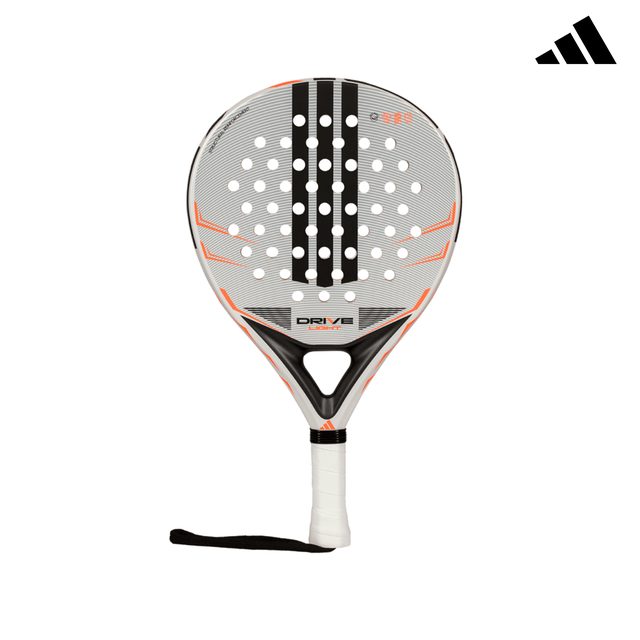
Adidas trims a few grams off the standard starter frame, and the Drive Light is the tidy result for a beginner who wants some brand shine without paying up for it. Its appeal is a nimble frame that keeps its composure, round and soft and the second-lightest of the ten.
An EVA Soft Performance core anchors it, a forgiving foam that flexes under the ball to smooth out contact and keep the sting off your wrist and elbow. The fiberglass face wrapping it gives a little on impact too, so mishits land soft instead of jarring your wrist, and the round head parks a broad sweet spot dead center where a learner actually connects. At 352g the frame stays quick without going hollow through the hit.
Speed shows up first on the volley: the head comes around fast enough to punch a reaction shot before your feet have set, so scrambles at the net feel survivable early. Defense stays comfortable, blocks and lobs coming off the strings softly and dropping deep. Reach for placement and a smooth, deliberate stroke gets rewarded. The ball doesn't fly off on its own, so a controlled hit is easy to keep in the court. It's a safe pick more than a thrilling one, and it keeps pace as your strokes tidy up.

When your elbow flares after a long session, the Evo Speed is the frame that keeps you on court. Its calling card is a cushioned landing on every shot, leaning on Head's racket-sports pedigree to look after the joint. Round and soft, and the lightest of the mid-pack.
Head fills it with a Black EVA Soft core, a plush foam that lets contact arrive gently, so a three-set afternoon doesn't leave your forearm aching. Over the core sits a soft fiberglass face, plush and forgiving where a stiff carbon one would sting, so the shock of contact is absorbed before it reaches your arm, and Head's Innegra layer adds a further measure of damping. The wide, forgiving sweet spot keeps even off-center hits soft, so a mishit stays gentle in the hand.
Follow the comfort around the court. Defending, blocks off the back wall come back muffled and secure, and lobs lift with no bite through the handle. Working for control, the face is forgiving and easy to place onto a target. At the net it's light and willing enough to react in a scramble, and the power stays gentle and progressive, asking you to build pace through technique instead of handing it over. Few beginner frames make the comfort case this convincingly. Your elbow feels it least after set three.
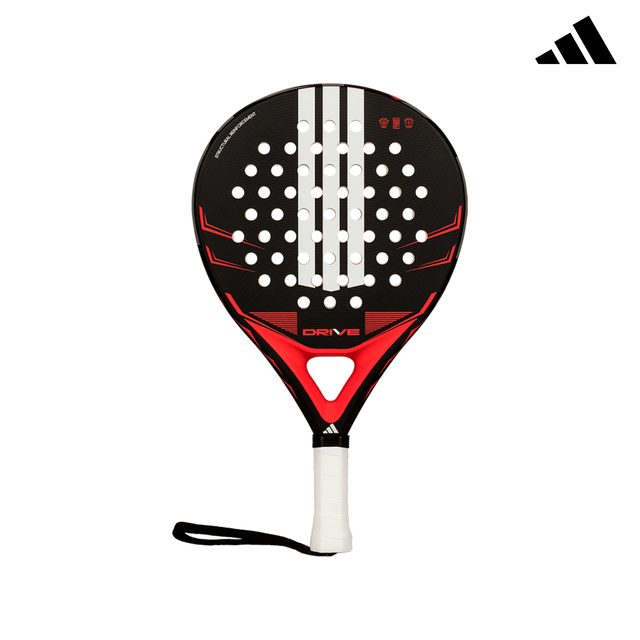
Some beginners would rather feel planted than flicky, and the Drive Black is built for them. It's the steadier, slightly fuller twin of the Drive Light, the one to pick when you want solidity over quickness. Round and soft, from Adidas's dependable Drive line.
The same EVA Soft Performance core as its lighter sibling drives it, a soft foam that flexes on impact to soak up shock and keep contact easy on the wrist. The fiberglass face over it gives just enough to keep mishits forgiving rather than jarring. What tips it toward stability is the extra mass: at a planted 355g the round head meets a hard ball with weight behind it instead of getting shoved around, and the central sweet spot stays forgiving while you learn to time it.
Solidity runs through everything it does. Blocks off the back glass come back absorbed and controlled, lobs lift cleanly when you're stretched wide, and the stillness turns into consistency as you start aiming for real placement. On the volley the head holds its line, a touch slower to whip around but dependable when the ball arrives fast. On contact the racket sits still in your hand instead of twisting, so an off-center hit still goes roughly where you meant. It plays close to the Drive Light, so choose this when steadiness matters to you more than speed.

Here the list starts to feel expensive in the good way, for the beginner who wants quality they can sense on the very first swing. The Starvie Nyra's pitch is premium touch from day one, Spanish-made, round and soft, and the lightest frame in the middle band.
An S-EVA Flex core sits at the heart of it, a responsive foam that returns the ball with a clean, precise exit budget frames can't quite match, so control shots come off properly satisfying. Wrapped around it is an X Glass Tech face, Starvie's fiberglass weave, tuned so you can feel where the ball meets the face, which helps you learn to aim. A carbon-fiber frame holds the round head firm, so the generous central sweet spot stays forgiving for the mishits you'll still make.
Sharpness is what coaches your game here. At the baseline a back-wall lob settles soft, then a corner target answers with real precision when you thread it. At the net it's quick and confident, reacting to a body shot without spraying it wide. Power sits in a controlled middle, enough to finish a point and never enough to run away from you. The feedback tells you plainly what a good strike feels like. A total newcomer may find it more racket than the first few weeks need, but give it two weeks and the refinement starts pulling your game up with it.
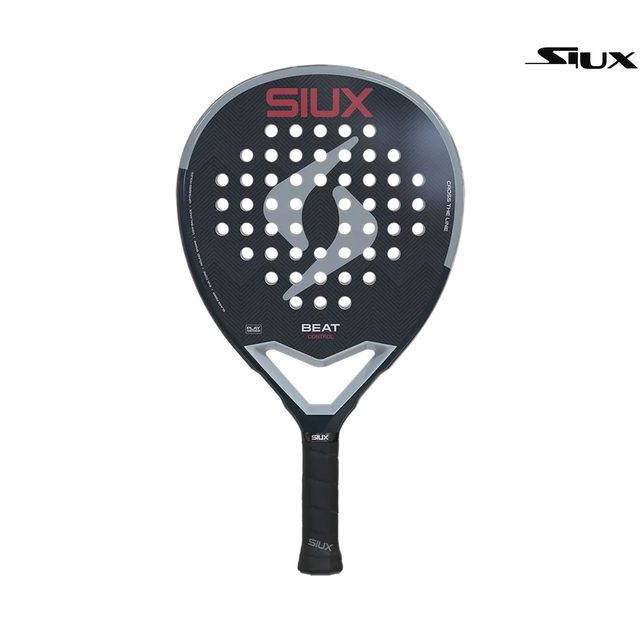
If your first months have been about getting the ball back, the Beat Control 3 is the frame that makes the next step feel safe. Siux built it for players who want to keep the forgiveness of a beginner racket while the technique tightens up, and it lands at the price where a second racket stops being a gamble.
Siux packs a soft EVA core into a round, low-balanced head and faces it with 3K fiberglass on a 38 mm profile. Fiberglass flexes more than carbon, so the ball sinks in and comes off with a little help, and the low balance keeps all that mass close to your hand.
At the net it feels light and quick to turn, so volleys go where you point them and mishits stay in play. Defending from the back, blocks and lobs come off quiet and deep, so a late swing still clears the net. It will not add a smash to your game, and that is the point: it lets you build one.

For smaller players and anyone crossing over from tennis, the featherweight of the group is the obvious call. The Radical Team Light's whole appeal is being the lightest frame here at 340g, channeling Head's racket-sports know-how into a stick you can whip into position with almost no effort. Round and soft.
A Control FOAM core shapes the character, a soft foam that keeps the light frame calm and arm-friendly rather than harsh, cushioning contact so the quick swing never buys you a sore elbow. The fiberglass face gives on impact and holds the response predictable, and the round head parks the sweet spot central, so shedding grams doesn't cost you accuracy on the off-center hits every beginner makes.
Quick hands are where it pays off. At the net it reacts to a body shot before you've thought about it and snaps off quick put-aways, while on defense you'll love how fast the face gets behind a ball to block or lob. Control shots land precise thanks to the easy handling. The trade is that more of the power comes from your arm, the ball leaving crisp rather than heavy. It can feel a shade loose on your biggest hits, a cost fast-handed players happily pay.
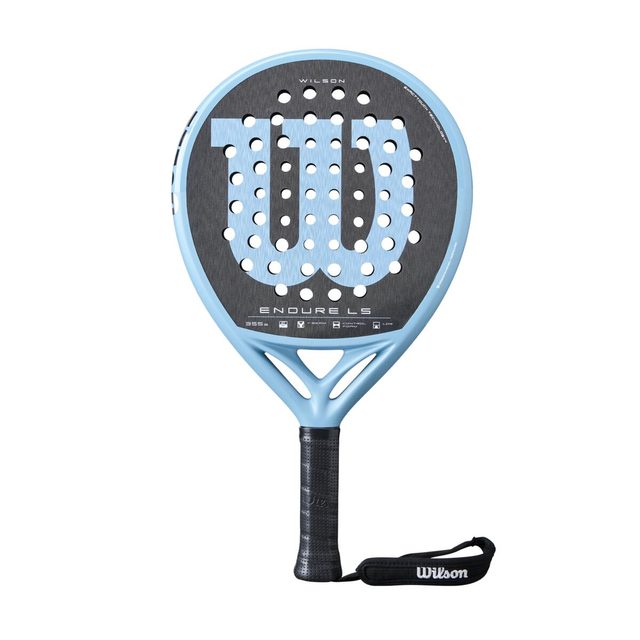
This is the one pick here you grow into, not out of. The Endure LS is a Wilson (yes, that Wilson), and it sits a step above the pure beginner frames: still round and easy to handle, but firmer and more responsive, built for a player who wants to improve fast. Buy it if you already know padel's your sport and you'd rather not upgrade again in a season.
A firmer, medium-density core is why it lasts you longer: unlike the soft beginner foams here, it hands back more of your own pace once your timing sharpens instead of muffling it. Around it, the round head still keeps a big sweet spot dead center, so mishits stay in play while you get there, and this is Wilson's arm-friendly Endure line, so it keeps the sting down over a long session. It's a beginner's shape with an improver's core.
On court it asks a little more of you, and gives more back. At the net the low balance keeps it quick in your hand, so you can react without the head feeling heavy. From the back the round head still forgives an off-center block, but the firmer core means the ball comes back deep only if you put something into it, which nudges you to swing properly. The trade for that headroom is less help on a bad day than the softer picks here. That's the deal: a bit less forgiveness now, more racket to grow into later.
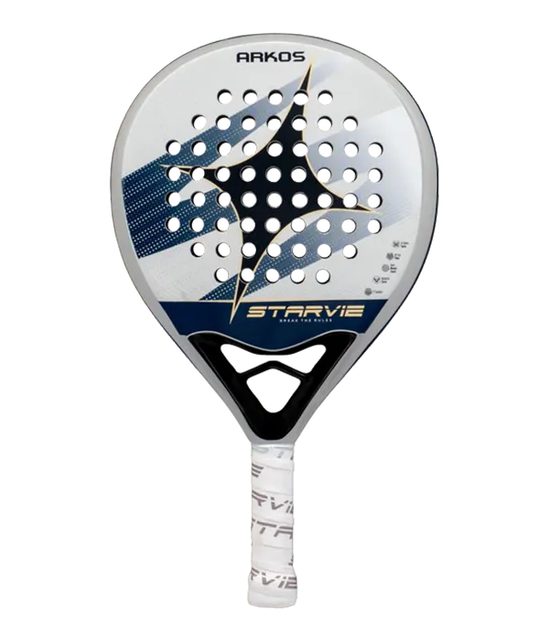
Most starter rackets ask you to wait for spin. The Arkos gives you a little from the first lesson: a soft round frame with a rough-finished face, built by Starvie in Spain for a player who is new to padel and wants to learn properly.
Starvie pairs an S-EVA Flex core, its soft foam, with an X Glass Tech fiberglass face and a carbon frame. The foam gives way on contact so a late swing still clears the net, while the textured fiberglass grips the ball enough that a sliced lob or a brushed volley starts to curve the way your coach drew it.
From the back, blocks and lobs come off with a cushioned contact that forgives a stretched swing. Step in to the net and the low balance keeps the head quick for a reflex volley. It is not a power frame; the reward is control you can feel improving week by week.
So, to route you: the best value is the Nox X Hero Red, and the kindest to a flaring elbow is the Head Evo Speed. Smallest hands or fastest feet, take the featherweight Radical Team Light. Ready to spend up and buy once? The Wilson Endure LS is the splurge you grow into. Not sure where to start? Our Top Pick, the Nox X Hero Red, fits almost anyone. Or skip the reading and let the free app quiz match a racket to your game, budget, and style in two minutes.
The best beginner padel rackets in 2026 are round-shaped frames with a soft core and a weight around 348 to 365g, the combination that gives you the most control, forgiveness and comfort. Standout picks include the Nox X Hero Red at 355g, the Head Evo Speed at 350g, and the Starvie Arkos at 367g, all under about €110. Our free app quiz matches one to your playing style in two minutes.
Spend roughly €60 to €135 on your first padel racket. Quality beginner frames cost well under €100 and outperform pro sticks for a new player, because stiff, diamond-shaped rackets are harder to control and rougher on the elbow. Put the money you keep toward court time and coaching, which improve your game far faster than pricier gear. You don't need to spend more, but if you already know padel's your sport, one 'room to grow' frame you'll keep, like the Wilson Endure LS, is a fair splurge.
A beginner should use a round padel racket, never a diamond. Round frames place the sweet spot low and central, giving the biggest margin for error and the most control on off-center contact. Diamond rackets shift weight to the head for power but shrink the sweet spot and punish mishits, so they only reward advanced players with a grooved, consistent swing.
The best padel racket weight for beginners is around 350 to 365g, the range that balances an easy swing with enough mass to stay steady on contact. Smaller or younger players can drop to 340 to 352g, like the Head Radical Team Light at 340g, while a frame near 365g adds stability once your technique settles. Pair whatever weight you choose with a soft core to protect your arm.
A soft core flexes on contact, cushioning the vibration a stiff frame throws back at your elbow and giving a gentler, more forgiving feel. The trade is that you build pace through timing rather than getting free power. Beginners should choose one anyway: every racket on this list uses a soft core precisely because it cuts the elbow strain that advanced-level cores inflict on new players.
You're ready to upgrade when you consistently find the sweet spot and start wanting more power and spin than a soft, round frame gives, usually after one to two years of regular play. When that day comes, step up to a teardrop shape with a medium core rather than leaping straight to a diamond. Grow into the next racket the way you grew into this one.
Every pick starts in our catalog of 800+ rackets. From it we select round, soft frames a new player can improve with, verify every price and stock status live at our approved shops before publishing, and re-check them on every update. Nobody pays for placement, and there are no invented test scores: specs come from the catalog and retailer listings, and the free two-minute quiz matches the same data to your game.
The app · free quiz
Take the free quiz in the app. We'll match a racket to your game, not the other way around.
Find my racketFree quiz. Sign in with email or Google to get your four picks.