Starvie Nyra 2026 Review
By Andres Jovem · Updated October 19, 2026
A soft, round, even-balanced beginner racket that trades raw power for a plush, arm-friendly hit and easy control.

The verdict
The Starvie Nyra 2026 is a beginner's racket that feels a class above its brief. Round through the head, even in the hand, and built on a soft core, it flatters a learning swing instead of testing it. Contact lands gentle, mishits stay in play, and your arm walks off the court about as fresh as it walked on. This is the frame for a new player who wants the game to feel good while the technique arrives.
What it is not is a weapon. There is little free power waiting in the head, so the pace on your shots is the pace you put there. If you already swing hard, you will want a leaping face this frame refuses to give you, and the skip list below points you elsewhere. For a player still grooving a stroke, that softness is what buys the confidence to keep swinging.
The build
S-EVA Flex: a foam that gives under the ball
Starvie builds the Nyra on S-EVA Flex, a soft foam that compresses at contact rather than resisting it. Because the core sinks under the ball this readily, it soaks up the shock a stiffer frame would fire back up your forearm, so a long session lands lighter on the elbow and shoulder. The same give also slows the launch: the ball dwells on the face a fraction longer and leaves under control rather than fizzing off. You give up a little top-end pace for a hit that stays comfortable and predictable, which is the deal a beginner wants.
A smooth glass face that keeps things easy
The hitting layer is X Glass Tech, a fiberglass surface that flexes on impact where a carbon face would stay rigid. That flex widens the margin on off-center contact, so a ball caught low or toward the edge still comes back honest instead of dying or spraying. Fiberglass is the forgiving choice here, and it plays to the same brief as the core: less punishment for a swing that is still finding the middle of the strings.
A round head, even balance, light in the hand
The Nyra runs a round mold with the weight sat even at 348g, which puts the sweet spot low and central, right where a learner tends to make contact. Nothing about the shape pushes power toward the tip, and the even balance keeps the head from feeling like a load to drag around. At this weight it comes through the swing quickly and asks little of the wrist, so you can steer it late and still get the face there in time.
How it plays
The first thing you notice is the softness
Contact arrives as a muffled, cushioned knock, never a hard ping that rings up the arm. That is the sensation that carries the whole racket. It means a shot caught off the middle still feels like a shot, not a jolt, and it means an hour of rallies leaves your elbow quiet. For a player whose technique is not yet repeatable, that forgiveness on the bad hits is worth more than power on the good ones.
At the net it turns up on time
Because the head is light and the balance sits back, the Nyra reacts fast when a ball jumps at you. You can get the face in front of a quick volley without wrestling the frame around, and a block sits down softly instead of ricocheting long. Punch a volley and it goes where you aimed rather than where the racket wanted, which is the point at this level: placement you can trust before power you cannot yet aim.
From the baseline it holds the ball and lets you place it
Sit behind a lob or a defensive reset and the ball settles on the face for a beat, long enough to feel where it is going before it leaves. Off that hold you can float length deep with a short, calm swing, and if you want a touch more on a reset you add it with your own timing rather than a fast rebound. That is the honest character of a control frame. The payoff is that resets and lobs stay in the court while you are still learning to place them, so a scramble turns into a point played rather than a point gifted away.
On the attack it wants placement, not brute force
Line up an overhead and the Nyra will put the ball away if you aim it, but it will not blast through anyone for you. The pace is what your arm supplies. Try to muscle a smash and you will feel the racket top out well before you do. Played to its strengths, angled and placed rather than hammered, it finishes the rallies a beginner actually wins.
The comfort is the quiet headline
Play an hour and the ache that usually creeps into the elbow and shoulder never really shows up. This is the difference between booking the next session and sitting one out to let your arm settle. If a stiffer racket has left you sore after a long match, the Nyra is the sort of frame that lets you play twice as often, and for a lot of new players that is the whole reason they stick with the sport.
Who it's for (and who should skip it)
Buy it if
- You are new to padel and want a racket that forgives a mishit while you build a swing.
- Your arm is sensitive, or a stiffer frame has left your elbow sore, and comfort comes first.
- You want a beginner racket that feels a step more premium than the cheapest starters, without jumping to an advanced frame.
Look elsewhere if
- You already generate your own pace and want a ball that leaps off the face; this frame holds power back on purpose.
- You are an aggressive player hunting the smash and the net put-away, and you want mass behind the ball.
- You want a stiff, high-balance frame that rewards a grooved, powerful swing; the Nyra is built for the opposite player.
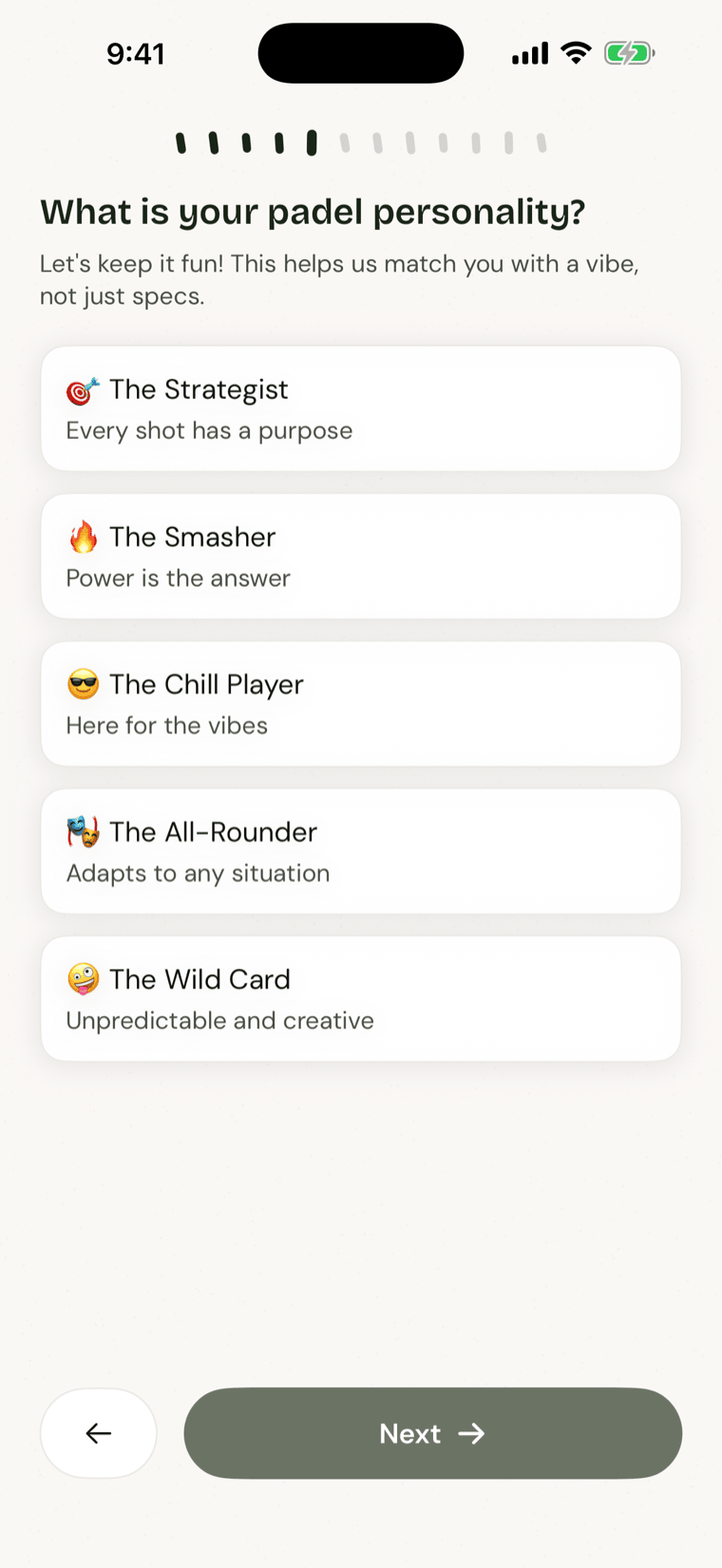
Not sure it's your match? The free 2-minute quiz reads your level, style, and budget and tells you which racket is.
The bottom line
If your priority as a new player is a racket that feels good, forgives your mistakes, and leaves your arm fresh, the Starvie Nyra 2026 is an easy one to recommend. Just go in knowing the pace is yours to supply. Not sure it is your match? The free 2-minute quiz reads your level, style, and budget and names the one that is.
Where to buy
Prices shown in Euro, converted and approximate. You check out in the store's own currency.
Frequently asked
Yes, the Nyra 2026 is built for beginners. It pairs a round head, a soft S-EVA Flex core, and a light 348g even balance, so the sweet spot sits low and central and mishits stay in play. It also keeps shock off the arm, which matters when your technique is still arriving. It is one of the easier first rackets to enjoy.
Control, not power. The soft core and flexing X Glass Tech face cushion the ball rather than launch it, and the round, even-balanced head keeps power off the tip. You supply the pace and place the ball, while the racket keeps your shots accurate and forgiving instead of hitting through opponents for you.
The Starvie Nyra 2026 sits in the affordable-to-mid beginner bracket. None of our approved retailers had it in stock when we checked on 5 October 2026, so there is no live price to show right now.
No, the Nyra is one of the gentler beginner frames on the elbow and shoulder. Its soft S-EVA Flex core compresses at contact and the fiberglass face flexes instead of ringing, so far less vibration reaches your arm. That makes it a sensible pick if a stiffer racket has left you sore after a long match.
A soft S-EVA Flex core under an X Glass Tech fiberglass face is the pairing that defines this racket. The soft foam cushions contact for comfort and control, while the glass surface flexes on impact to widen the margin on off-center hits. Both choices point the same way: a forgiving, arm-friendly racket rather than a stiff, powerful one.
Choose the Nyra if you are still learning and want forgiveness and comfort over raw power. Pick a heavier, higher-balanced attacking frame only if you already generate pace and hunt the smash. Not sure which side you fall on? The free 2-minute quiz reads your level, style, and budget and tells you the racket that fits.
The app · free quiz
Not sure which one's you?
Take the free quiz in the app. We'll match a racket to your game, not the other way around.
Find my racketFree quiz. Sign in with email or Google to get your four picks.

Starvie Nyra 2026 Review
By Andres Jovem · Updated October 19, 2026
A soft, round, even-balanced beginner racket that trades raw power for a plush, arm-friendly hit and easy control.
The verdict
The Starvie Nyra 2026 is a beginner's racket that feels a class above its brief. Round through the head, even in the hand, and built on a soft core, it flatters a learning swing instead of testing it. Contact lands gentle, mishits stay in play, and your arm walks off the court about as fresh as it walked on. This is the frame for a new player who wants the game to feel good while the technique arrives.
What it is not is a weapon. There is little free power waiting in the head, so the pace on your shots is the pace you put there. If you already swing hard, you will want a leaping face this frame refuses to give you, and the skip list below points you elsewhere. For a player still grooving a stroke, that softness is what buys the confidence to keep swinging.
The build
S-EVA Flex: a foam that gives under the ball
Starvie builds the Nyra on S-EVA Flex, a soft foam that compresses at contact rather than resisting it. Because the core sinks under the ball this readily, it soaks up the shock a stiffer frame would fire back up your forearm, so a long session lands lighter on the elbow and shoulder. The same give also slows the launch: the ball dwells on the face a fraction longer and leaves under control rather than fizzing off. You give up a little top-end pace for a hit that stays comfortable and predictable, which is the deal a beginner wants.
A smooth glass face that keeps things easy
The hitting layer is X Glass Tech, a fiberglass surface that flexes on impact where a carbon face would stay rigid. That flex widens the margin on off-center contact, so a ball caught low or toward the edge still comes back honest instead of dying or spraying. Fiberglass is the forgiving choice here, and it plays to the same brief as the core: less punishment for a swing that is still finding the middle of the strings.
A round head, even balance, light in the hand
The Nyra runs a round mold with the weight sat even at 348g, which puts the sweet spot low and central, right where a learner tends to make contact. Nothing about the shape pushes power toward the tip, and the even balance keeps the head from feeling like a load to drag around. At this weight it comes through the swing quickly and asks little of the wrist, so you can steer it late and still get the face there in time.
How it plays
The first thing you notice is the softness
Contact arrives as a muffled, cushioned knock, never a hard ping that rings up the arm. That is the sensation that carries the whole racket. It means a shot caught off the middle still feels like a shot, not a jolt, and it means an hour of rallies leaves your elbow quiet. For a player whose technique is not yet repeatable, that forgiveness on the bad hits is worth more than power on the good ones.
At the net it turns up on time
Because the head is light and the balance sits back, the Nyra reacts fast when a ball jumps at you. You can get the face in front of a quick volley without wrestling the frame around, and a block sits down softly instead of ricocheting long. Punch a volley and it goes where you aimed rather than where the racket wanted, which is the point at this level: placement you can trust before power you cannot yet aim.
From the baseline it holds the ball and lets you place it
Sit behind a lob or a defensive reset and the ball settles on the face for a beat, long enough to feel where it is going before it leaves. Off that hold you can float length deep with a short, calm swing, and if you want a touch more on a reset you add it with your own timing rather than a fast rebound. That is the honest character of a control frame. The payoff is that resets and lobs stay in the court while you are still learning to place them, so a scramble turns into a point played rather than a point gifted away.
On the attack it wants placement, not brute force
Line up an overhead and the Nyra will put the ball away if you aim it, but it will not blast through anyone for you. The pace is what your arm supplies. Try to muscle a smash and you will feel the racket top out well before you do. Played to its strengths, angled and placed rather than hammered, it finishes the rallies a beginner actually wins.
The comfort is the quiet headline
Play an hour and the ache that usually creeps into the elbow and shoulder never really shows up. This is the difference between booking the next session and sitting one out to let your arm settle. If a stiffer racket has left you sore after a long match, the Nyra is the sort of frame that lets you play twice as often, and for a lot of new players that is the whole reason they stick with the sport.
Who it's for (and who should skip it)
Buy it if
- You are new to padel and want a racket that forgives a mishit while you build a swing.
- Your arm is sensitive, or a stiffer frame has left your elbow sore, and comfort comes first.
- You want a beginner racket that feels a step more premium than the cheapest starters, without jumping to an advanced frame.
Look elsewhere if
- You already generate your own pace and want a ball that leaps off the face; this frame holds power back on purpose.
- You are an aggressive player hunting the smash and the net put-away, and you want mass behind the ball.
- You want a stiff, high-balance frame that rewards a grooved, powerful swing; the Nyra is built for the opposite player.
Not sure it's your match? The free 2-minute quiz reads your level, style, and budget and tells you which racket is.
The bottom line
If your priority as a new player is a racket that feels good, forgives your mistakes, and leaves your arm fresh, the Starvie Nyra 2026 is an easy one to recommend. Just go in knowing the pace is yours to supply. Not sure it is your match? The free 2-minute quiz reads your level, style, and budget and names the one that is.
Where to buy
Prices shown in Euro, converted and approximate. You check out in the store's own currency.
Frequently asked
Yes, the Nyra 2026 is built for beginners. It pairs a round head, a soft S-EVA Flex core, and a light 348g even balance, so the sweet spot sits low and central and mishits stay in play. It also keeps shock off the arm, which matters when your technique is still arriving. It is one of the easier first rackets to enjoy.
Control, not power. The soft core and flexing X Glass Tech face cushion the ball rather than launch it, and the round, even-balanced head keeps power off the tip. You supply the pace and place the ball, while the racket keeps your shots accurate and forgiving instead of hitting through opponents for you.
The Starvie Nyra 2026 sits in the affordable-to-mid beginner bracket. None of our approved retailers had it in stock when we checked on 5 October 2026, so there is no live price to show right now.
No, the Nyra is one of the gentler beginner frames on the elbow and shoulder. Its soft S-EVA Flex core compresses at contact and the fiberglass face flexes instead of ringing, so far less vibration reaches your arm. That makes it a sensible pick if a stiffer racket has left you sore after a long match.
A soft S-EVA Flex core under an X Glass Tech fiberglass face is the pairing that defines this racket. The soft foam cushions contact for comfort and control, while the glass surface flexes on impact to widen the margin on off-center hits. Both choices point the same way: a forgiving, arm-friendly racket rather than a stiff, powerful one.
Choose the Nyra if you are still learning and want forgiveness and comfort over raw power. Pick a heavier, higher-balanced attacking frame only if you already generate pace and hunt the smash. Not sure which side you fall on? The free 2-minute quiz reads your level, style, and budget and tells you the racket that fits.
The app · free quiz
Not sure which one's you?
Take the free quiz in the app. We'll match a racket to your game, not the other way around.
Find my racketFree quiz. Sign in with email or Google to get your four picks.