Starvie Polaris 2026 Review
By Andres Jovem · Updated October 19, 2026
A soft, round control frame for the developing player who wants one racket to grow into, not power to muscle through.
The verdict
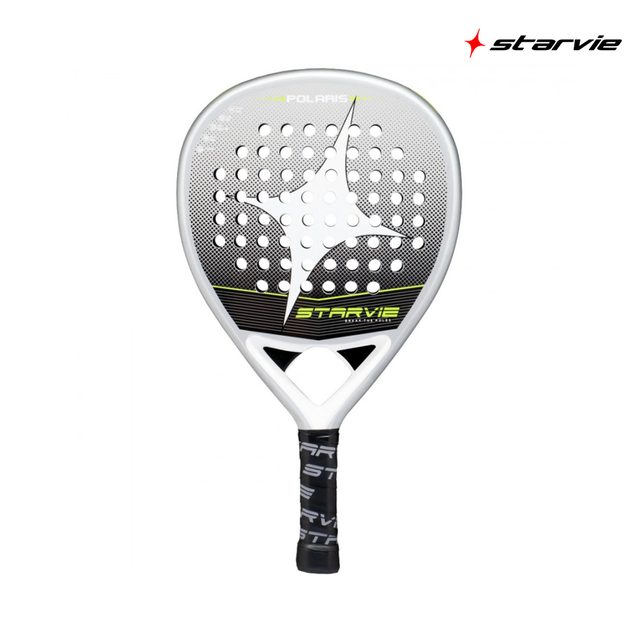
The Starvie Polaris is a control racket that plays it straight. It is round, soft all the way through, and built low in the balance, so the sweet spot sits where a still-developing swing actually lands and the ball leaves clean instead of wild. This is the frame for the player who is past the first few sessions, has a stroke starting to take shape, and wants a racket that rewards placement over raw pace. It will not win you a smash contest, and it does not try to.
What makes it worth a longer look is that it holds up as you improve. The forgiveness a beginner needs on day one is still there in month six, but the frame stays composed when your net exchanges get quicker and the incoming ball gets heavier. If you are shopping for one racket to carry you through the awkward stretch between beginner and intermediate, this is squarely aimed at you. If you already generate your own power and want the ball to jump off the face, keep reading and then keep looking.
The build
The core
Starvie fills the Polaris with an S-EVA Flex core, a soft foam that gives under the ball at contact. That compression is the whole character of the racket. A soft core cushions the hit, so a strike caught slightly off the middle still clears the net rather than dying in the tape, and the shock that a firm frame fires back into your elbow gets absorbed before it reaches you. The trade is honest: you supply the pace, because a foam this forgiving will not hand it to you for free.
The face
The hitting layer is Starvie's X Glass Tech surface, a fiberglass-based face with a smooth finish. Fiberglass flexes on contact where carbon stays rigid, so the ball sits on the face a fraction longer and comes back gently and predictably instead of snapping away. The smooth texture is a deliberate choice: it grips the ball less than a rough face would, which costs you some spin bite on a brushed shot but gives you a cleaner, flatter exit that suits placed, direct padel. For a player learning to aim, predictable beats grabby.
Shape, frame and balance
The mold is a round head on a carbon fiber frame, weighing in at 367g with the balance set low, toward the handle. Round puts the sweet spot low and central, right under where a developing contact tends to fall, which is why the shape forgives. The low balance keeps the weight in your hand rather than out at the head, so the racket feels lighter to swing than the gram figure suggests and turns quickly when a volley jumps at you. The carbon frame is the one stiff element here, and its job is structural: it holds the round head from twisting when you catch a ball off-center.
How it plays
From the baseline
Defense is where the Polaris feels most at home. Sit behind a lob and the soft face carries it deep off a short, unhurried swing, doing work your technique cannot yet do on its own. Blocks and resets under pressure hold their line rather than spraying, because the cushioned contact swallows the pace of a hard incoming ball instead of firing it back at you. This is a frame that keeps a rally alive while you figure out where you want the point to go.
At the net
The low balance earns its keep up front. Because the weight sits near your hand, the head comes around quickly, so a reaction volley at your hip arrives on time and a body shot does not catch you turning the racket in your grip. Punch a volley once you are planted and it goes where you point it, flat and controlled. What you will not get is a put-away that ends the point by force. The pace has to come from your setup and your placement, not from the racket doing the finishing.
On the attack
Overheads are the honest limit. The soft core and low balance mean there is no stored head weight to load behind a smash, so the ball comes off steady and placed rather than steep and heavy. That is the right tool for a developing player, whose overhead is still a shot to keep in play and aim, not a weapon to swing for. A bandeja sits comfortably, dropped deep with control, and the smooth face keeps it clean. Ask the Polaris to hit through a strong pair and you will feel the ceiling.
Comfort and the arm
This is the frame's quiet strength. The soft S-EVA Flex core and flexing fiberglass face take the sting out of contact, so a long session does not leave your elbow and shoulder aching the way a stiff, head-heavy advanced racket would. For anyone whose arm has grumbled after padel before, or who simply wants to play three sets without paying for it the next morning, the Polaris is one of the kinder frames you can pick up at this money. The 367g weight is the one thing to watch: it is not heavy, but a smaller or quicker player may want to swing it a few times before committing.
Who it's for (and who should skip it)
Buy it if
- You are past your first few sessions and want a control-first racket that rewards placement while your power catches up.
- You are buying one racket to grow into, and want a frame that stays composed as your net exchanges get faster.
- Your arm is sensitive, or you play long matches and want a soft frame that keeps the elbow and shoulder quiet.
Look elsewhere if
- You already generate your own pace and want the ball to jump off the face, because this soft core gives nothing back for free.
- You want spin as your main weapon, since the smooth face grips the ball less than a rough-textured one for a brushed shot.
- You are a smaller or quicker player who finds 367g a lot to move, in which case a lighter round frame will suit your hands better.
Not sure it's your match? The free 2-minute quiz reads your level, style, and budget and tells you which racket is.
The bottom line
There is no single best padel racket, only the one that fits your game, and the Polaris fits a specific reader: the developing player who wants control now and room to improve later, without paying for it in the elbow. If you attack more than you defend, or hunt spin off the face, one of our power or spin-friendly picks will serve you better. Not sure the Polaris is your match? The free 2-minute quiz reads your level, style, and budget and tells you the racket that is yours.
Where to buy
Prices shown in Euro, converted and approximate. You check out in the store's own currency.
Frequently asked
Yes, the Starvie Polaris suits beginners and improvers well. It is a round, soft-cored frame at 367g, so the sweet spot sits low and central where a new player's contact lands, and mishits stay forgiving. A complete first-timer might prefer a lighter starter, but a player with a stroke taking shape will find it easy to control and kind to the arm.
The Polaris is a control racket, not a power one. Its round shape, soft S-EVA Flex core, and low balance are all tuned for placement and forgiveness rather than pace, so the ball leaves the face clean and predictable. You supply the power through timing and setup; the racket rewards you for putting the ball where your opponents are not.
None of our approved retailers had the Starvie Polaris in stock when we checked on 5 October 2026: the one shop in our network that carried it no longer lists it, so there is no live price to show right now.
The Polaris uses Starvie's S-EVA Flex core, a soft foam that cushions contact, under an X Glass Tech surface, a smooth fiberglass-based face. Together they flex on the hit for a gentle, predictable reply that suits flat, placed shots over spin. A carbon fiber frame holds the round head steady when you catch a ball off-center.
The Polaris is one of the more arm-friendly rackets in its class. The soft core and flexing fiberglass face absorb the shock of contact before it reaches your elbow and shoulder, which is exactly what stiff, head-heavy frames fail to do. It is a sensible pick for anyone whose arm has flared up after long matches, though no racket replaces good technique and a proper warm-up.

The app · free quiz
Not sure which one's you?
Take the free quiz in the app. We'll match a racket to your game, not the other way around.
Find my racketFree quiz. Sign in with email or Google to get your four picks.

Starvie Polaris 2026 Review
By Andres Jovem · Updated October 19, 2026
A soft, round control frame for the developing player who wants one racket to grow into, not power to muscle through.
The verdict
The Starvie Polaris is a control racket that plays it straight. It is round, soft all the way through, and built low in the balance, so the sweet spot sits where a still-developing swing actually lands and the ball leaves clean instead of wild. This is the frame for the player who is past the first few sessions, has a stroke starting to take shape, and wants a racket that rewards placement over raw pace. It will not win you a smash contest, and it does not try to.
What makes it worth a longer look is that it holds up as you improve. The forgiveness a beginner needs on day one is still there in month six, but the frame stays composed when your net exchanges get quicker and the incoming ball gets heavier. If you are shopping for one racket to carry you through the awkward stretch between beginner and intermediate, this is squarely aimed at you. If you already generate your own power and want the ball to jump off the face, keep reading and then keep looking.
The build
The core
Starvie fills the Polaris with an S-EVA Flex core, a soft foam that gives under the ball at contact. That compression is the whole character of the racket. A soft core cushions the hit, so a strike caught slightly off the middle still clears the net rather than dying in the tape, and the shock that a firm frame fires back into your elbow gets absorbed before it reaches you. The trade is honest: you supply the pace, because a foam this forgiving will not hand it to you for free.
The face
The hitting layer is Starvie's X Glass Tech surface, a fiberglass-based face with a smooth finish. Fiberglass flexes on contact where carbon stays rigid, so the ball sits on the face a fraction longer and comes back gently and predictably instead of snapping away. The smooth texture is a deliberate choice: it grips the ball less than a rough face would, which costs you some spin bite on a brushed shot but gives you a cleaner, flatter exit that suits placed, direct padel. For a player learning to aim, predictable beats grabby.
Shape, frame and balance
The mold is a round head on a carbon fiber frame, weighing in at 367g with the balance set low, toward the handle. Round puts the sweet spot low and central, right under where a developing contact tends to fall, which is why the shape forgives. The low balance keeps the weight in your hand rather than out at the head, so the racket feels lighter to swing than the gram figure suggests and turns quickly when a volley jumps at you. The carbon frame is the one stiff element here, and its job is structural: it holds the round head from twisting when you catch a ball off-center.
How it plays
From the baseline
Defense is where the Polaris feels most at home. Sit behind a lob and the soft face carries it deep off a short, unhurried swing, doing work your technique cannot yet do on its own. Blocks and resets under pressure hold their line rather than spraying, because the cushioned contact swallows the pace of a hard incoming ball instead of firing it back at you. This is a frame that keeps a rally alive while you figure out where you want the point to go.
At the net
The low balance earns its keep up front. Because the weight sits near your hand, the head comes around quickly, so a reaction volley at your hip arrives on time and a body shot does not catch you turning the racket in your grip. Punch a volley once you are planted and it goes where you point it, flat and controlled. What you will not get is a put-away that ends the point by force. The pace has to come from your setup and your placement, not from the racket doing the finishing.
On the attack
Overheads are the honest limit. The soft core and low balance mean there is no stored head weight to load behind a smash, so the ball comes off steady and placed rather than steep and heavy. That is the right tool for a developing player, whose overhead is still a shot to keep in play and aim, not a weapon to swing for. A bandeja sits comfortably, dropped deep with control, and the smooth face keeps it clean. Ask the Polaris to hit through a strong pair and you will feel the ceiling.
Comfort and the arm
This is the frame's quiet strength. The soft S-EVA Flex core and flexing fiberglass face take the sting out of contact, so a long session does not leave your elbow and shoulder aching the way a stiff, head-heavy advanced racket would. For anyone whose arm has grumbled after padel before, or who simply wants to play three sets without paying for it the next morning, the Polaris is one of the kinder frames you can pick up at this money. The 367g weight is the one thing to watch: it is not heavy, but a smaller or quicker player may want to swing it a few times before committing.
Who it's for (and who should skip it)
Buy it if
- You are past your first few sessions and want a control-first racket that rewards placement while your power catches up.
- You are buying one racket to grow into, and want a frame that stays composed as your net exchanges get faster.
- Your arm is sensitive, or you play long matches and want a soft frame that keeps the elbow and shoulder quiet.
Look elsewhere if
- You already generate your own pace and want the ball to jump off the face, because this soft core gives nothing back for free.
- You want spin as your main weapon, since the smooth face grips the ball less than a rough-textured one for a brushed shot.
- You are a smaller or quicker player who finds 367g a lot to move, in which case a lighter round frame will suit your hands better.
Not sure it's your match? The free 2-minute quiz reads your level, style, and budget and tells you which racket is.
The bottom line
There is no single best padel racket, only the one that fits your game, and the Polaris fits a specific reader: the developing player who wants control now and room to improve later, without paying for it in the elbow. If you attack more than you defend, or hunt spin off the face, one of our power or spin-friendly picks will serve you better. Not sure the Polaris is your match? The free 2-minute quiz reads your level, style, and budget and tells you the racket that is yours.
Where to buy
Prices shown in Euro, converted and approximate. You check out in the store's own currency.
Frequently asked
Yes, the Starvie Polaris suits beginners and improvers well. It is a round, soft-cored frame at 367g, so the sweet spot sits low and central where a new player's contact lands, and mishits stay forgiving. A complete first-timer might prefer a lighter starter, but a player with a stroke taking shape will find it easy to control and kind to the arm.
The Polaris is a control racket, not a power one. Its round shape, soft S-EVA Flex core, and low balance are all tuned for placement and forgiveness rather than pace, so the ball leaves the face clean and predictable. You supply the power through timing and setup; the racket rewards you for putting the ball where your opponents are not.
None of our approved retailers had the Starvie Polaris in stock when we checked on 5 October 2026: the one shop in our network that carried it no longer lists it, so there is no live price to show right now.
The Polaris uses Starvie's S-EVA Flex core, a soft foam that cushions contact, under an X Glass Tech surface, a smooth fiberglass-based face. Together they flex on the hit for a gentle, predictable reply that suits flat, placed shots over spin. A carbon fiber frame holds the round head steady when you catch a ball off-center.
The Polaris is one of the more arm-friendly rackets in its class. The soft core and flexing fiberglass face absorb the shock of contact before it reaches your elbow and shoulder, which is exactly what stiff, head-heavy frames fail to do. It is a sensible pick for anyone whose arm has flared up after long matches, though no racket replaces good technique and a proper warm-up.
The app · free quiz
Not sure which one's you?
Take the free quiz in the app. We'll match a racket to your game, not the other way around.
Find my racketFree quiz. Sign in with email or Google to get your four picks.