Starvie Kenta + 2026 Review
By Andres Jovem · Updated October 19, 2026
A round, soft-cored control frame with a gritty carbon face, built for the intermediate who wins points on placement and wants an arm that lasts.
The verdict
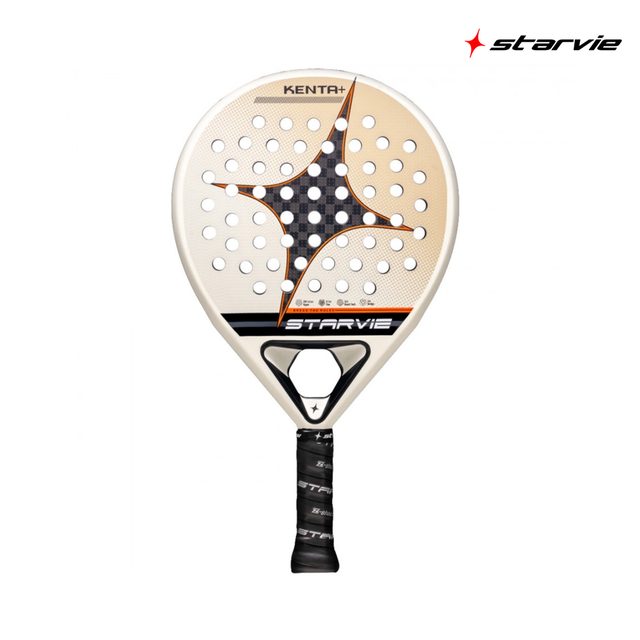
The Starvie Kenta + 2026 is a control player's racket, and it plays like one from the first ball. A round head keeps the sweet spot low and central, a soft core cushions the strike, and at 358g it sits balanced in the hand rather than loaded toward the tip. That mix rewards the improver who already thinks about where the ball goes and wants a frame that helps rather than fights. This is not a bludgeon for the smash-first attacker.
What lifts it above a plain beginner control frame is the 12K carbon face. The build gives you a clean, connected read on the ball without the harsh feedback a stiffer power racket sends up the arm. If you train weekly and want to sharpen your touch while keeping your elbow quiet, this frame is squarely for you. If you swing for winners and expect the racket to supply the pace, look at the next section before you buy.
The build
Core
Starvie builds the Kenta + on an S-eva Flex foam, a soft core that flexes under the ball at contact. It holds the ball on the face a fraction longer, so you feel where it is going and can steer it, and it swallows the shock a firmer racket would fire back into your forearm. Pace here comes from your timing and swing speed, not from a core that springs the ball off on its own. The reward is a placement tool that stays kind to the arm across a long session.
Surface
The hitting layer is a 12K carbon weave with a rough finish. Carbon keeps the face crisp and responsive, so contact reads clean and the ball leaves without the mushy delay a very soft racket can have. The coarse texture is the second half of the story: the rough weave catches the felt on contact, so a brushing swing loads real rotation onto the ball. On a sliced defensive ball or a rolled víbora, that grip is what turns a flat push into a shot that dips and bites.
Shape and balance
The Kenta + runs a round head with an even, medium balance, and the two work together. A round mold puts the sweet spot in the geometric center, right where an improving player makes contact, so an off-center strike still comes off clean instead of twisting the frame in your hand. That forgiveness is the round shape's edge over a diamond mold, which stacks its sweet spot high and punishes the same low, mishit contact. The balance keeps the racket quick to move and easy to point rather than stacking mass behind an overhead you have to wind up for. This is a maneuverable, honest platform, not a head-heavy cannon.
How it plays
At the net
This is where the Kenta + feels most at home. You get the face to the ball early, so a fast exchange up front does not leave you a step behind, and a punched volley comes off controlled and placed, landing where you aim rather than sailing long. When a hard-driven ball arrives at your body, the contact feels muted and settled in the hand instead of hot and jumpy, so a rushed reaction block dies into the court rather than spraying off toward the fence. The trade is that you have to add the sting yourself. A put-away volley wants a firm, committed punch through the ball, because the frame will place it for you but it will not spike the pace on its own. For a player who lives on angles and quick hands at the net, that is a fair bargain, and after a few sessions you stop reaching for extra power and start trusting the placement.
From the baseline
Pushed back and defending, you get a frame that helps you survive the point. Lobs and resets come off with a calm, deadened response in the hand, so it is simpler to float a defensive ball deep and buy yourself the time to recover court position. A stretched, off-center dig from a wide corner still finds enough of the middle to stay alive rather than dying on impact, which is the difference between resetting the rally and handing over the point. What the frame will not do is hand you cheap counter-pace. When you want to flip defense into attack from the back glass, the power to change the point has to come from your legs and swing, not from a spring in the racket. Play it as a shield that keeps you in rallies you would otherwise lose, and it rewards you; ask it to fire winners off the back wall and it comes up short.
On the attack
The smash is the honest limit here. With the weight sitting toward the middle of the frame rather than up in the head, an overhead lands accurate but drops shorter of the back glass than a head-loaded racket would push it, so you win the attack by threading it into a gap rather than trying to crush it flat past everyone. The bandeja and víbora are the stronger attacking shots for this racket. Lean into a brushing, spin-first swing and the ball grips, dips, and skids off the surface the way it should, so a well-shaped bandeja keeps your opponents pinned deep and hands you control of the net. Point this frame at the corners and the seams of the court, not through the glass, and the attacking game holds up. Go looking for a flat, one-hit knockout smash and you will feel where the ceiling sits.
Comfort and the arm
This is one of the kinder frames you can pick at this level. Contact stays soft and settled in the palm, so most of the buzz a stiffer frame drives up into the wrist and elbow never reaches you, and a long match or a heavy training week does not leave your arm ringing afterward. That makes it a sensible pick if your elbow has flared up before and you want to keep training without inviting a fresh setback, since the frame is doing some of the shock-eating for you rather than passing every jolt straight through. The one honest caveat is timing. A badly late shank still buzzes the hand, because no frame hides a genuinely mistimed strike, but even that comes through far more gently than a firmer racket would deliver it.
Who it's for (and who should skip it)
Buy it if
- You are an intermediate who wins points on placement and touch, and wants a frame that supports that game.
- You train regularly and want a control racket that stays kind to your elbow and shoulder over long sessions.
- You like a maneuverable, round frame with quick hands at the net over a heavy head you have to wind up.
Look elsewhere if
- You are a smash-first attacker who wants the frame to add its own pace to the overhead.
- You are a raw beginner who would be better served by an even softer, cheaper first frame while your swing settles.
- You want free counter-pace off the back glass rather than a control frame that asks you to generate your own.
Not sure it's your match? The free 2-minute quiz reads your level, style, and budget and tells you which racket is.
The bottom line
There is no best racket, only the best one for your game. If yours is built on placement, quick hands, and an arm you want to protect, the Kenta + is an easy frame to recommend, and the round, soft build makes it forgiving while your touch sharpens. If you would rather crush the overhead than thread it, look to a head-heavier frame instead. Not sure which side of that line you fall on? The free 2-minute quiz reads your level, style, and budget and points you to the one that fits.
Where to buy
Prices shown in Euro, converted and approximate. You check out in the store's own currency.
Frequently asked
The Starvie Kenta + suits an improving intermediate more than a total beginner. Its round head and soft S-eva Flex core are forgiving and easy on the arm, which a new player will appreciate, but the 12K carbon face and control-first character reward a swing that is already forming. A brand-new player learns just as much on a softer, cheaper first frame and can step up to this one once their contact is consistent.
The Kenta + is a control racket. The round shape centers the sweet spot for accuracy, the soft core deadens the ball for placement over pace, and the medium balance keeps it quick rather than loading the head for power. You supply the pace through timing; the frame supplies the precision and a calm read on where the ball is going.
Two materials define it: an S-eva Flex soft core and a 12K carbon face finished rough. The soft core flexes at contact to cushion the strike and protect the arm, while the coarse carbon surface grips the ball for spin and keeps contact feeling crisp and connected. It is a control-oriented build with real bite on the víbora and bandeja.
Yes, the Kenta + is one of the more arm-friendly frames at this level. Its soft S-eva Flex core absorbs much of the vibration a stiffer carbon racket sends into the wrist and elbow, so long matches and heavy training weeks are gentler on the joint. If a sore arm has interrupted your play before, this is a sensible frame to train on. Not sure it is your match? The free 2-minute quiz reads your level, style, and budget and tells you.
At 358g it is a middleweight most intermediates can swing all match. Paired with its medium balance, that weight sits evenly in the hand rather than in the head, so the racket stays quick to move at the net and easy to point on defense without tiring your arm the way a head-heavy frame can.


The app · free quiz
Not sure which one's you?
Take the free quiz in the app. We'll match a racket to your game, not the other way around.
Find my racketFree quiz. Sign in with email or Google to get your four picks.

Starvie Kenta + 2026 Review
By Andres Jovem · Updated October 19, 2026
A round, soft-cored control frame with a gritty carbon face, built for the intermediate who wins points on placement and wants an arm that lasts.
The verdict
The Starvie Kenta + 2026 is a control player's racket, and it plays like one from the first ball. A round head keeps the sweet spot low and central, a soft core cushions the strike, and at 358g it sits balanced in the hand rather than loaded toward the tip. That mix rewards the improver who already thinks about where the ball goes and wants a frame that helps rather than fights. This is not a bludgeon for the smash-first attacker.
What lifts it above a plain beginner control frame is the 12K carbon face. The build gives you a clean, connected read on the ball without the harsh feedback a stiffer power racket sends up the arm. If you train weekly and want to sharpen your touch while keeping your elbow quiet, this frame is squarely for you. If you swing for winners and expect the racket to supply the pace, look at the next section before you buy.
The build
Core
Starvie builds the Kenta + on an S-eva Flex foam, a soft core that flexes under the ball at contact. It holds the ball on the face a fraction longer, so you feel where it is going and can steer it, and it swallows the shock a firmer racket would fire back into your forearm. Pace here comes from your timing and swing speed, not from a core that springs the ball off on its own. The reward is a placement tool that stays kind to the arm across a long session.
Surface
The hitting layer is a 12K carbon weave with a rough finish. Carbon keeps the face crisp and responsive, so contact reads clean and the ball leaves without the mushy delay a very soft racket can have. The coarse texture is the second half of the story: the rough weave catches the felt on contact, so a brushing swing loads real rotation onto the ball. On a sliced defensive ball or a rolled víbora, that grip is what turns a flat push into a shot that dips and bites.
Shape and balance
The Kenta + runs a round head with an even, medium balance, and the two work together. A round mold puts the sweet spot in the geometric center, right where an improving player makes contact, so an off-center strike still comes off clean instead of twisting the frame in your hand. That forgiveness is the round shape's edge over a diamond mold, which stacks its sweet spot high and punishes the same low, mishit contact. The balance keeps the racket quick to move and easy to point rather than stacking mass behind an overhead you have to wind up for. This is a maneuverable, honest platform, not a head-heavy cannon.
How it plays
At the net
This is where the Kenta + feels most at home. You get the face to the ball early, so a fast exchange up front does not leave you a step behind, and a punched volley comes off controlled and placed, landing where you aim rather than sailing long. When a hard-driven ball arrives at your body, the contact feels muted and settled in the hand instead of hot and jumpy, so a rushed reaction block dies into the court rather than spraying off toward the fence. The trade is that you have to add the sting yourself. A put-away volley wants a firm, committed punch through the ball, because the frame will place it for you but it will not spike the pace on its own. For a player who lives on angles and quick hands at the net, that is a fair bargain, and after a few sessions you stop reaching for extra power and start trusting the placement.
From the baseline
Pushed back and defending, you get a frame that helps you survive the point. Lobs and resets come off with a calm, deadened response in the hand, so it is simpler to float a defensive ball deep and buy yourself the time to recover court position. A stretched, off-center dig from a wide corner still finds enough of the middle to stay alive rather than dying on impact, which is the difference between resetting the rally and handing over the point. What the frame will not do is hand you cheap counter-pace. When you want to flip defense into attack from the back glass, the power to change the point has to come from your legs and swing, not from a spring in the racket. Play it as a shield that keeps you in rallies you would otherwise lose, and it rewards you; ask it to fire winners off the back wall and it comes up short.
On the attack
The smash is the honest limit here. With the weight sitting toward the middle of the frame rather than up in the head, an overhead lands accurate but drops shorter of the back glass than a head-loaded racket would push it, so you win the attack by threading it into a gap rather than trying to crush it flat past everyone. The bandeja and víbora are the stronger attacking shots for this racket. Lean into a brushing, spin-first swing and the ball grips, dips, and skids off the surface the way it should, so a well-shaped bandeja keeps your opponents pinned deep and hands you control of the net. Point this frame at the corners and the seams of the court, not through the glass, and the attacking game holds up. Go looking for a flat, one-hit knockout smash and you will feel where the ceiling sits.
Comfort and the arm
This is one of the kinder frames you can pick at this level. Contact stays soft and settled in the palm, so most of the buzz a stiffer frame drives up into the wrist and elbow never reaches you, and a long match or a heavy training week does not leave your arm ringing afterward. That makes it a sensible pick if your elbow has flared up before and you want to keep training without inviting a fresh setback, since the frame is doing some of the shock-eating for you rather than passing every jolt straight through. The one honest caveat is timing. A badly late shank still buzzes the hand, because no frame hides a genuinely mistimed strike, but even that comes through far more gently than a firmer racket would deliver it.
Who it's for (and who should skip it)
Buy it if
- You are an intermediate who wins points on placement and touch, and wants a frame that supports that game.
- You train regularly and want a control racket that stays kind to your elbow and shoulder over long sessions.
- You like a maneuverable, round frame with quick hands at the net over a heavy head you have to wind up.
Look elsewhere if
- You are a smash-first attacker who wants the frame to add its own pace to the overhead.
- You are a raw beginner who would be better served by an even softer, cheaper first frame while your swing settles.
- You want free counter-pace off the back glass rather than a control frame that asks you to generate your own.
Not sure it's your match? The free 2-minute quiz reads your level, style, and budget and tells you which racket is.
The bottom line
There is no best racket, only the best one for your game. If yours is built on placement, quick hands, and an arm you want to protect, the Kenta + is an easy frame to recommend, and the round, soft build makes it forgiving while your touch sharpens. If you would rather crush the overhead than thread it, look to a head-heavier frame instead. Not sure which side of that line you fall on? The free 2-minute quiz reads your level, style, and budget and points you to the one that fits.
Where to buy
Prices shown in Euro, converted and approximate. You check out in the store's own currency.
Frequently asked
The Starvie Kenta + suits an improving intermediate more than a total beginner. Its round head and soft S-eva Flex core are forgiving and easy on the arm, which a new player will appreciate, but the 12K carbon face and control-first character reward a swing that is already forming. A brand-new player learns just as much on a softer, cheaper first frame and can step up to this one once their contact is consistent.
The Kenta + is a control racket. The round shape centers the sweet spot for accuracy, the soft core deadens the ball for placement over pace, and the medium balance keeps it quick rather than loading the head for power. You supply the pace through timing; the frame supplies the precision and a calm read on where the ball is going.
Two materials define it: an S-eva Flex soft core and a 12K carbon face finished rough. The soft core flexes at contact to cushion the strike and protect the arm, while the coarse carbon surface grips the ball for spin and keeps contact feeling crisp and connected. It is a control-oriented build with real bite on the víbora and bandeja.
Yes, the Kenta + is one of the more arm-friendly frames at this level. Its soft S-eva Flex core absorbs much of the vibration a stiffer carbon racket sends into the wrist and elbow, so long matches and heavy training weeks are gentler on the joint. If a sore arm has interrupted your play before, this is a sensible frame to train on. Not sure it is your match? The free 2-minute quiz reads your level, style, and budget and tells you.
At 358g it is a middleweight most intermediates can swing all match. Paired with its medium balance, that weight sits evenly in the hand rather than in the head, so the racket stays quick to move at the net and easy to point on defense without tiring your arm the way a head-heavy frame can.
The app · free quiz
Not sure which one's you?
Take the free quiz in the app. We'll match a racket to your game, not the other way around.
Find my racketFree quiz. Sign in with email or Google to get your four picks.