Lok Be Hype Gen 2 2026 Review
By Andres Jovem · Updated October 5, 2026
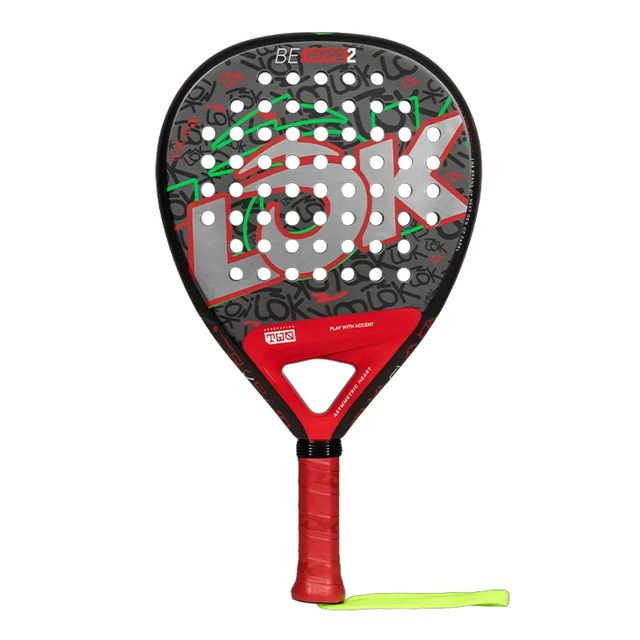
A diamond-shaped frame softened for real people: the attacker's silhouette on a forgiving fiberglass build, aimed at the improving player who wants to swing for the smash without a stiff carbon punishing every miss.
The verdict
The Lok Be Hype Gen 2 is a diamond that decided not to bully you. The shape leans the mass toward the tip, the classic attacking layout that lifts the sweet spot high and asks you to swing for the overhead. Then Lok fills it with a soft EVA rubber core and wraps it in fiberglass, and the result plays far kinder than a diamond usually does. You get the geometry of a finisher's racket with a build that pads your misses rather than firing them back at your arm.
That is a deliberate combination, and it lands on a specific player: the improver who has found their footing, wants to start hunting the smash, and is not ready for a stiff carbon frame that demands perfect timing. Lok is a newer name going up against the established brands, and the pitch here is an attacking shape at a price that undercuts the carbon diamonds. If you are on your very first racket, or you play most of your points from the back of the court, the next two sections will tell you why to keep looking.
The build
A soft EVA rubber core that takes the edge off
Lok builds the Be Hype Gen 2 on a soft EVA rubber core, and this is the decision that defines the whole racket. A softer foam squashes under the ball at contact and eases it back rather than snapping it, so the shock a firm frame sends up your arm mostly stays in the foam. An off-center hit lands as a soft, muted contact, and it does not bite into your palm the way a dense core would. The cost of that softness is a little pop: you supply pace through a full swing here, because the core will not spring the ball back on its own.
A smooth fiberglass face that flexes with you
The hitting surface is fiberglass, not carbon, and it plays softer for it. Fiberglass bends on impact where a carbon weave stays rigid, so the face gives a touch under the ball and adds to the muffled, cushioned feel across the string bed. The surface is smooth rather than textured, so a brushed shot skids off with modest bite rather than the heavy grip a rough carbon face lends. And a soft, flexing face returns the ball slower and shorter, which suits a placement game more than a put-away one. This is a build tuned for comfort and control, not for pace off the strings.
A diamond head on a flexible fiberglass frame
The mold is a diamond, so the mass gathers toward the tip and sits behind your overhead. That is what makes it swing like an attacking racket: as the head comes over the top, the weight up front tips forward and drops into the ball, adding force to the strike your arm alone would not muster. Lok runs the frame in fiberglass too, which keeps the whole structure flexible rather than stiff, so the diamond shape never turns as harsh or as punishing as a carbon-framed version of the same silhouette. At 367g it sits toward the heavier end of the shelf, and that mass holds the head steady so an off-center strike does not twist it in your grip, though a smaller player will feel the swing weight by the third set.
How it plays
On the smash, the shape answers
Set your feet under a high ball and the Be Hype Gen 2 rewards you for committing. The tip-loaded head comes over the top and pushes down through the contact, so a clean overhead carries force behind it once your timing is there. It wants a full, driven swing far more than a jab. Rush it, catch the ball late off the top of the head, and the soft build turns the contact dead and dull rather than a clean crack. This is a racket that asks you to attack, and to mean it.
At the net, forgiving hands over fast ones
Up close, the cushioned face does the work and the head weight is the tax. Meet a volley cleanly and the cushioned face soaks up the incoming pace and drops the ball short and controlled, which is exactly what a developing net player needs. The catch is speed. When a hard ball arrives quick and low, the head reaches the contact point a fraction after the ball has already gone past, so you punch fresh air where a lighter racket would have met it. You have time for the volley you read early, less for the one that surprises you.
From the baseline, comfort but you bring the engine
Defending deep is where the cushioning pays. Blocks and lobs come off the face gently and settle in the court instead of running long, so resets under pressure stay calm and controllable while your technique catches up. What the frame will not give you is cheap depth. There is little spring here, so a lob that has to travel the length of the court needs a real swing behind it, not a nudge. On defense the racket keeps you safe, then leaves the work to you.
The arm, and the honest catch
This frame stays quiet in the joint. Where a stiffer racket buzzes the elbow on every contact, here the sting is gone and a long session leaves the arm loose rather than sore. The fatigue that arrives is muscular, not jarring. The head carries its weight up front, which is a lot to swing across two hours, and a smaller or slighter player will feel it in the shoulder well before their elbow ever complains. Kind against vibration, yes. A light racket, no.
Who it's for (and who should skip it)
Buy it if
- You are an improving player ready to start attacking, and you want a diamond shape that will not punish every mistimed swing.
- Your arm is on the sensitive side and you want an attacking silhouette without the stiff, buzzy contact of a carbon diamond.
- You have the strength to swing a heavier head comfortably and you want a lot of racket for a modest outlay from a challenger brand.
Look elsewhere if
- You are on your very first racket. A diamond head, even a soft one, lifts the sweet spot high where a beginner's contact rarely lands. A round frame around 360g will flatter your misses far more.
- You are small, quick, or want fast hands at the net. With the weight gathered toward the tip, this racket is slow to move, and no amount of forgiveness rescues a head you cannot bring across in time.
- You rely on heavy spin or want free power off the face. The smooth fiberglass surface grips the ball less than a rough carbon sheet, and the soft build gives back placement, not pace.
Not sure it's your match? The free 2-minute quiz reads your level, style, and budget and tells you which racket is.
The bottom line
The Lok Be Hype Gen 2 is the rare frame that gives an improving player the shape of an attacker's racket without the stiff-frame tax on the arm or the wallet. Swing it if you are ready to hunt the smash and your body can handle a heavier head. Sit it out if you are still on your first racket or you live at the net. If you are not sure which side of that line you fall on, let the free app quiz read your game and point you at the racket that is yours.
Where to buy
Prices shown in Euro, converted and approximate. You check out in the store's own currency.
Frequently asked
No, not for a true first-timer. Its soft core and flexible fiberglass make it forgiving and easy on the arm, but the diamond head lifts the sweet spot high, where a total beginner's contact rarely lands. Played a season or two and ready to start attacking? It fits. Picking up your first racket? A round frame around 360g will suit you better.
Neither, cleanly. The diamond shape is built for power on the smash, with the mass gathered behind the overhead, yet the soft EVA rubber core and flexing fiberglass face pull the feel back toward comfort and control, so the ball leaves gently rather than fast. Read it as an attacking shape tuned for a controlled, forgiving strike, not a raw power weapon.
Spin is not its strong suit. The face is smooth fiberglass rather than a rough carbon weave, so it grips the ball less than the textured surfaces built for heavy rotation. You can still brush a víbora, but the bite will be modest. If sharp topspin and slice sit at the center of your game, look toward a rough carbon face instead.
Under the hood sits a soft EVA rubber core with a smooth fiberglass face, and the frame is fiberglass as well. That all-soft build is why a diamond-shaped racket plays far gentler than most: the foam cushions contact and the fiberglass flexes, keeping vibration out of your arm. The trade is less pop and less spin grip than a carbon build would give you.
Yes, it lands toward the heavier end of the shelf, and the diamond mold carries that weight forward toward the tip. The upside is a steady head that resists twisting on an off-center hit, which helps a developing player. The downside is a slower swing that tires a smaller or slighter player sooner. Want a light, fast racket? This is not the one. Not sure it is your match? The free 2-minute quiz reads your level, style, and budget and tells you.


The app · free quiz
Not sure which one's you?
Take the free quiz in the app. We'll match a racket to your game, not the other way around.
Find my racketFree quiz. Sign in with email or Google to get your four picks.

Lok Be Hype Gen 2 2026 Review
By Andres Jovem · Updated October 5, 2026
A diamond-shaped frame softened for real people: the attacker's silhouette on a forgiving fiberglass build, aimed at the improving player who wants to swing for the smash without a stiff carbon punishing every miss.
The verdict
The Lok Be Hype Gen 2 is a diamond that decided not to bully you. The shape leans the mass toward the tip, the classic attacking layout that lifts the sweet spot high and asks you to swing for the overhead. Then Lok fills it with a soft EVA rubber core and wraps it in fiberglass, and the result plays far kinder than a diamond usually does. You get the geometry of a finisher's racket with a build that pads your misses rather than firing them back at your arm.
That is a deliberate combination, and it lands on a specific player: the improver who has found their footing, wants to start hunting the smash, and is not ready for a stiff carbon frame that demands perfect timing. Lok is a newer name going up against the established brands, and the pitch here is an attacking shape at a price that undercuts the carbon diamonds. If you are on your very first racket, or you play most of your points from the back of the court, the next two sections will tell you why to keep looking.
The build
A soft EVA rubber core that takes the edge off
Lok builds the Be Hype Gen 2 on a soft EVA rubber core, and this is the decision that defines the whole racket. A softer foam squashes under the ball at contact and eases it back rather than snapping it, so the shock a firm frame sends up your arm mostly stays in the foam. An off-center hit lands as a soft, muted contact, and it does not bite into your palm the way a dense core would. The cost of that softness is a little pop: you supply pace through a full swing here, because the core will not spring the ball back on its own.
A smooth fiberglass face that flexes with you
The hitting surface is fiberglass, not carbon, and it plays softer for it. Fiberglass bends on impact where a carbon weave stays rigid, so the face gives a touch under the ball and adds to the muffled, cushioned feel across the string bed. The surface is smooth rather than textured, so a brushed shot skids off with modest bite rather than the heavy grip a rough carbon face lends. And a soft, flexing face returns the ball slower and shorter, which suits a placement game more than a put-away one. This is a build tuned for comfort and control, not for pace off the strings.
A diamond head on a flexible fiberglass frame
The mold is a diamond, so the mass gathers toward the tip and sits behind your overhead. That is what makes it swing like an attacking racket: as the head comes over the top, the weight up front tips forward and drops into the ball, adding force to the strike your arm alone would not muster. Lok runs the frame in fiberglass too, which keeps the whole structure flexible rather than stiff, so the diamond shape never turns as harsh or as punishing as a carbon-framed version of the same silhouette. At 367g it sits toward the heavier end of the shelf, and that mass holds the head steady so an off-center strike does not twist it in your grip, though a smaller player will feel the swing weight by the third set.
How it plays
On the smash, the shape answers
Set your feet under a high ball and the Be Hype Gen 2 rewards you for committing. The tip-loaded head comes over the top and pushes down through the contact, so a clean overhead carries force behind it once your timing is there. It wants a full, driven swing far more than a jab. Rush it, catch the ball late off the top of the head, and the soft build turns the contact dead and dull rather than a clean crack. This is a racket that asks you to attack, and to mean it.
At the net, forgiving hands over fast ones
Up close, the cushioned face does the work and the head weight is the tax. Meet a volley cleanly and the cushioned face soaks up the incoming pace and drops the ball short and controlled, which is exactly what a developing net player needs. The catch is speed. When a hard ball arrives quick and low, the head reaches the contact point a fraction after the ball has already gone past, so you punch fresh air where a lighter racket would have met it. You have time for the volley you read early, less for the one that surprises you.
From the baseline, comfort but you bring the engine
Defending deep is where the cushioning pays. Blocks and lobs come off the face gently and settle in the court instead of running long, so resets under pressure stay calm and controllable while your technique catches up. What the frame will not give you is cheap depth. There is little spring here, so a lob that has to travel the length of the court needs a real swing behind it, not a nudge. On defense the racket keeps you safe, then leaves the work to you.
The arm, and the honest catch
This frame stays quiet in the joint. Where a stiffer racket buzzes the elbow on every contact, here the sting is gone and a long session leaves the arm loose rather than sore. The fatigue that arrives is muscular, not jarring. The head carries its weight up front, which is a lot to swing across two hours, and a smaller or slighter player will feel it in the shoulder well before their elbow ever complains. Kind against vibration, yes. A light racket, no.
Who it's for (and who should skip it)
Buy it if
- You are an improving player ready to start attacking, and you want a diamond shape that will not punish every mistimed swing.
- Your arm is on the sensitive side and you want an attacking silhouette without the stiff, buzzy contact of a carbon diamond.
- You have the strength to swing a heavier head comfortably and you want a lot of racket for a modest outlay from a challenger brand.
Look elsewhere if
- You are on your very first racket. A diamond head, even a soft one, lifts the sweet spot high where a beginner's contact rarely lands. A round frame around 360g will flatter your misses far more.
- You are small, quick, or want fast hands at the net. With the weight gathered toward the tip, this racket is slow to move, and no amount of forgiveness rescues a head you cannot bring across in time.
- You rely on heavy spin or want free power off the face. The smooth fiberglass surface grips the ball less than a rough carbon sheet, and the soft build gives back placement, not pace.
Not sure it's your match? The free 2-minute quiz reads your level, style, and budget and tells you which racket is.
The bottom line
The Lok Be Hype Gen 2 is the rare frame that gives an improving player the shape of an attacker's racket without the stiff-frame tax on the arm or the wallet. Swing it if you are ready to hunt the smash and your body can handle a heavier head. Sit it out if you are still on your first racket or you live at the net. If you are not sure which side of that line you fall on, let the free app quiz read your game and point you at the racket that is yours.
Where to buy
Prices shown in Euro, converted and approximate. You check out in the store's own currency.
Frequently asked
No, not for a true first-timer. Its soft core and flexible fiberglass make it forgiving and easy on the arm, but the diamond head lifts the sweet spot high, where a total beginner's contact rarely lands. Played a season or two and ready to start attacking? It fits. Picking up your first racket? A round frame around 360g will suit you better.
Neither, cleanly. The diamond shape is built for power on the smash, with the mass gathered behind the overhead, yet the soft EVA rubber core and flexing fiberglass face pull the feel back toward comfort and control, so the ball leaves gently rather than fast. Read it as an attacking shape tuned for a controlled, forgiving strike, not a raw power weapon.
Spin is not its strong suit. The face is smooth fiberglass rather than a rough carbon weave, so it grips the ball less than the textured surfaces built for heavy rotation. You can still brush a víbora, but the bite will be modest. If sharp topspin and slice sit at the center of your game, look toward a rough carbon face instead.
Under the hood sits a soft EVA rubber core with a smooth fiberglass face, and the frame is fiberglass as well. That all-soft build is why a diamond-shaped racket plays far gentler than most: the foam cushions contact and the fiberglass flexes, keeping vibration out of your arm. The trade is less pop and less spin grip than a carbon build would give you.
Yes, it lands toward the heavier end of the shelf, and the diamond mold carries that weight forward toward the tip. The upside is a steady head that resists twisting on an off-center hit, which helps a developing player. The downside is a slower swing that tires a smaller or slighter player sooner. Want a light, fast racket? This is not the one. Not sure it is your match? The free 2-minute quiz reads your level, style, and budget and tells you.
The app · free quiz
Not sure which one's you?
Take the free quiz in the app. We'll match a racket to your game, not the other way around.
Find my racketFree quiz. Sign in with email or Google to get your four picks.