Drop Shot Quantum Soft Women 2026 Review
By Andres Jovem · Updated October 3, 2026
A diamond-shaped attacking racket for the advanced woman who finishes points, built with a soft core so the power does not travel back through her arm.

The verdict
The Drop Shot Quantum Soft Women 2026 is an attacking frame that has had some of its bite talked down, and it is honest about that. The shape is all offense: a diamond head with the weight stacked high, the layout you reach for when you want the ball to leave with something behind it. The twist is the core, which Drop Shot builds soft. On a diamond that usually reads as one thing, power, this one adds a second gear the shape rarely offers, a contact your arm can live with across three sets.
Its owner is narrow. This is a racket for an advanced player who already generates her own pace and wants the frame to add to it, not cover for a loose swing. The soft core buys comfort and a touch of hold on the ball, but it does not widen the margin on a mishit. The sweet spot on a head this shape is still small, and finding it is still on you. If your overhead is not yet the shot you win points with, read the who-should-skip list before you spend, because this frame is written for a game you may not be playing yet.
The build
A soft core that changes who this diamond is for
The core is the reason this frame exists apart from a standard Drop Shot diamond, and it is soft rather than the dense foam most attacking heads run. Drop Shot does not give this core a brand name we can source, so we will not invent one for it. What a soft foam does is flex more under the ball, so it returns the hit with less of the flat, snappy jolt a firm attacking core throws back at your hand. The result is comfort on a shape that normally gives you none, a diamond you can hit all match without your forearm keeping score. The cost is that the very top end of a firmer weapon's pop is softened, so pace here is built by your swing working with a face that cooperates, not by a core that fires on its own.
A rough face for working the ball
The hitting layer is finished rough, and Drop Shot does not attach a named surface tech to it that we can cite, so we describe it as what it is: a coarse face. What that grit buys you is options. On a víbora you can wrap across the ball and trust it to bend down into the corner rather than float, and a cut bandeja will drop and check instead of sitting up for the return. On a flat drive the texture does little; this is a face that pays you back only when you commit to brushing. If your game already leans on spin, that coarse surface widens what you can try on the attack. If it does not, the finish is doing less for you than the shape is.
A head-heavy diamond built to finish
The mass sits high and the head is cut to a diamond, and this is the part of the frame doing the attacking work. Weight up top means the head keeps its own momentum swinging down through an overhead, so a smash carries force you did not have to supply from the shoulder alone. The sweet spot rides high toward the tip, up where a finisher strikes on the attack. The same shape sets the terms. At the net, a fast volley aimed at your body arrives before the head does unless your hand is already moving, because a diamond this top-heavy is slower to turn than a rounder frame.
How it plays
On the smash, the head carries the shot
Set your feet under an overhead and the ball leaves heavy and drops deep toward the fence, and late in a match the soft core keeps that contact off your shoulder the way a rigid weapon never does. This is the shot the frame was drawn around. Give it a clean setup and it ends the point. Reach for one off balance, though, and the head that felt so eager a second ago turns into weight you are fighting to bring around, arriving a half-beat behind where you needed it.
At the net, it wants your hand ahead of the ball
On a volley you feel the weight sitting up in the head, and the frame wants a firm block placed early rather than a flick. Set the face and let the mass do the punching and the ball goes deep with weight on it. The moment that catches this racket out is the fast body shot at your hip, where a top-heavy diamond needs an extra beat to swing into line. The soft contact keeps a rushed block from spraying long, but a slow hand stays a slow hand, and no core softness buys back the reaction time.
From the baseline, it defends better than its shape lets on
Pushed deep behind the service line, this is where the soft core quietly earns its place on an attacking frame. A lob comes off gentle enough to control the height instead of sailing long, and a reset sits down rather than springing back hot, so you can buy a breath and steady the point. Depth off the back glass is still yours to hit and not the racket's to give, so a deep ball out of defense asks your swing to supply it. The payoff for grinding through a long defensive exchange is that your arm finishes the point in better shape than a stiff diamond would leave it.
Comfort and the arm
This is the gentlest-feeling frame on our shelf in this attacking shape. The soft core spares your arm and shoulder the sharp shock a firm diamond drives up on every clean hit, so fatigue arrives later across a long three-setter, and the racket that felt heavy in the second set still swings clean in the third. That cushion is for the good shot hit again and again. It cannot rescue a bad strike, though. Catch one out toward the rim on a head this top-heavy and the twist still snaps into your wrist, no softer for the foam behind it.
Who it's for (and who should skip it)
Buy it if
- Your overhead already wins you points and you want a diamond that will not tax your arm every time you hit hard.
- You brush your víbora and bandeja and want a coarse face plus a little hold on the ball to bend spin into the corners.
- You have the technique for a small, high sweet spot and want the comfort of a soft core without dropping to a rounder shape.
Look elsewhere if
- You mishit often and want a wide, central sweet spot that keeps loose contact in play, because a diamond this shape will not cover for you.
- You want the flat-out fastest pop off the face, since the soft core rounds off the sharpest edge a firm attacking core delivers.
- You spend most of a match defending and want a rounder control frame that returns depth off the back glass on its own.
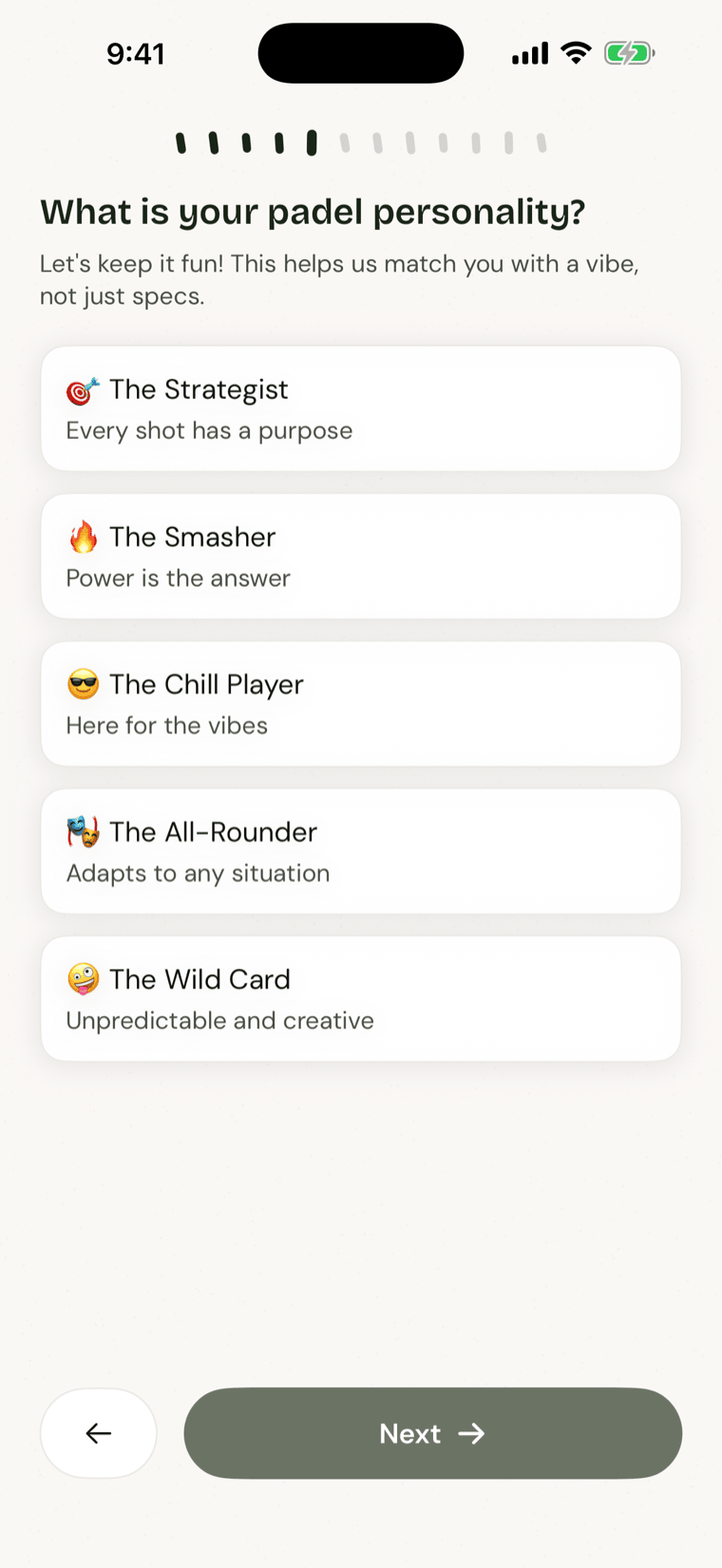
Not sure it's your match? The free 2-minute quiz reads your level, style, and budget and tells you which racket is.
The bottom line
Route it plainly: this is the racket for the advanced attacker whose overhead already ends points and whose arm has started asking for a break. Try the honest test before you buy, which is whether you finish more points with your smash than you lose setting it up. If you do, the soft core lets you keep swinging that shot deep into a third set without your forearm paying for it. If you do not yet, spend your money where the return is bigger this season and come back once the overhead is a weapon. Still on the fence? The free app quiz matches a racket to your level, style, and budget in two minutes.
Where to buy
Prices shown in Euro, converted and approximate. You check out in the store's own currency.
Frequently asked
No, this is an advanced racket. Its diamond head is head-heavy and asks for a clean, well-timed strike, so a newer player will wrestle the shape and struggle to find the sweet spot high toward the tip. The soft core does make it kinder on the arm than most diamonds, but kind and forgiving are not the same thing. Start on a round, soft frame near 350 to 360g that keeps your mishits in play, and pick this one up once you are finishing points on the attack.
Power, first and clearly. The diamond head and high balance are built to finish off the smash and the víbora, which puts pace and attack ahead of pinpoint placement. The soft core and rough face pull it a step toward control, since the core holds the ball a fraction longer and the coarse surface lets you shape spin, but the shape still sets the agenda. Read it as an attacker that treats your arm more gently than its shape suggests, not as a control frame.
A soft foam core behind a rough-finished hitting face. Drop Shot lists both by feel rather than a named technology we can source, so we describe them plainly: the soft core flexes under the ball for a cushioned, arm-friendly contact and a touch more hold, which is unusual on an attacking diamond, and the coarse face grips for spin on the víbora and bandeja. Together they make a diamond that is easier on the arm and more spin-friendly than a firm one.
Two players in particular. A defender who lives at the back of the court and wants free depth off the glass will find this frame asking her to supply what a rounder control racket would give. So will anyone whose contact still wanders, since a high, small sweet spot punishes a loose strike no matter how soft the core feels. Both are better served on a round, forgiving shape. There is no best racket, only the best one for how you play.
It swaps a sliver of top-end pop for a contact your arm can tolerate. A firmer attacking diamond sends the ball back faster and flatter and asks even more of your timing, but it also drives more shock into the arm and shoulder across a long match. This one keeps the finishing shape and high balance while cushioning the strike, which suits an advanced attacker whose arm has begun to feel the toll of a stiff frame. Unsure it fits you? The free two-minute quiz reads your level, style, and budget and points you to the match.
The app · free quiz
Not sure which one's you?
Take the free quiz in the app. We'll match a racket to your game, not the other way around.
Find my racketFree quiz. Sign in with email or Google to get your four picks.

Drop Shot Quantum Soft Women 2026 Review
By Andres Jovem · Updated October 3, 2026
A diamond-shaped attacking racket for the advanced woman who finishes points, built with a soft core so the power does not travel back through her arm.
The verdict
The Drop Shot Quantum Soft Women 2026 is an attacking frame that has had some of its bite talked down, and it is honest about that. The shape is all offense: a diamond head with the weight stacked high, the layout you reach for when you want the ball to leave with something behind it. The twist is the core, which Drop Shot builds soft. On a diamond that usually reads as one thing, power, this one adds a second gear the shape rarely offers, a contact your arm can live with across three sets.
Its owner is narrow. This is a racket for an advanced player who already generates her own pace and wants the frame to add to it, not cover for a loose swing. The soft core buys comfort and a touch of hold on the ball, but it does not widen the margin on a mishit. The sweet spot on a head this shape is still small, and finding it is still on you. If your overhead is not yet the shot you win points with, read the who-should-skip list before you spend, because this frame is written for a game you may not be playing yet.
The build
A soft core that changes who this diamond is for
The core is the reason this frame exists apart from a standard Drop Shot diamond, and it is soft rather than the dense foam most attacking heads run. Drop Shot does not give this core a brand name we can source, so we will not invent one for it. What a soft foam does is flex more under the ball, so it returns the hit with less of the flat, snappy jolt a firm attacking core throws back at your hand. The result is comfort on a shape that normally gives you none, a diamond you can hit all match without your forearm keeping score. The cost is that the very top end of a firmer weapon's pop is softened, so pace here is built by your swing working with a face that cooperates, not by a core that fires on its own.
A rough face for working the ball
The hitting layer is finished rough, and Drop Shot does not attach a named surface tech to it that we can cite, so we describe it as what it is: a coarse face. What that grit buys you is options. On a víbora you can wrap across the ball and trust it to bend down into the corner rather than float, and a cut bandeja will drop and check instead of sitting up for the return. On a flat drive the texture does little; this is a face that pays you back only when you commit to brushing. If your game already leans on spin, that coarse surface widens what you can try on the attack. If it does not, the finish is doing less for you than the shape is.
A head-heavy diamond built to finish
The mass sits high and the head is cut to a diamond, and this is the part of the frame doing the attacking work. Weight up top means the head keeps its own momentum swinging down through an overhead, so a smash carries force you did not have to supply from the shoulder alone. The sweet spot rides high toward the tip, up where a finisher strikes on the attack. The same shape sets the terms. At the net, a fast volley aimed at your body arrives before the head does unless your hand is already moving, because a diamond this top-heavy is slower to turn than a rounder frame.
How it plays
On the smash, the head carries the shot
Set your feet under an overhead and the ball leaves heavy and drops deep toward the fence, and late in a match the soft core keeps that contact off your shoulder the way a rigid weapon never does. This is the shot the frame was drawn around. Give it a clean setup and it ends the point. Reach for one off balance, though, and the head that felt so eager a second ago turns into weight you are fighting to bring around, arriving a half-beat behind where you needed it.
At the net, it wants your hand ahead of the ball
On a volley you feel the weight sitting up in the head, and the frame wants a firm block placed early rather than a flick. Set the face and let the mass do the punching and the ball goes deep with weight on it. The moment that catches this racket out is the fast body shot at your hip, where a top-heavy diamond needs an extra beat to swing into line. The soft contact keeps a rushed block from spraying long, but a slow hand stays a slow hand, and no core softness buys back the reaction time.
From the baseline, it defends better than its shape lets on
Pushed deep behind the service line, this is where the soft core quietly earns its place on an attacking frame. A lob comes off gentle enough to control the height instead of sailing long, and a reset sits down rather than springing back hot, so you can buy a breath and steady the point. Depth off the back glass is still yours to hit and not the racket's to give, so a deep ball out of defense asks your swing to supply it. The payoff for grinding through a long defensive exchange is that your arm finishes the point in better shape than a stiff diamond would leave it.
Comfort and the arm
This is the gentlest-feeling frame on our shelf in this attacking shape. The soft core spares your arm and shoulder the sharp shock a firm diamond drives up on every clean hit, so fatigue arrives later across a long three-setter, and the racket that felt heavy in the second set still swings clean in the third. That cushion is for the good shot hit again and again. It cannot rescue a bad strike, though. Catch one out toward the rim on a head this top-heavy and the twist still snaps into your wrist, no softer for the foam behind it.
Who it's for (and who should skip it)
Buy it if
- Your overhead already wins you points and you want a diamond that will not tax your arm every time you hit hard.
- You brush your víbora and bandeja and want a coarse face plus a little hold on the ball to bend spin into the corners.
- You have the technique for a small, high sweet spot and want the comfort of a soft core without dropping to a rounder shape.
Look elsewhere if
- You mishit often and want a wide, central sweet spot that keeps loose contact in play, because a diamond this shape will not cover for you.
- You want the flat-out fastest pop off the face, since the soft core rounds off the sharpest edge a firm attacking core delivers.
- You spend most of a match defending and want a rounder control frame that returns depth off the back glass on its own.
Not sure it's your match? The free 2-minute quiz reads your level, style, and budget and tells you which racket is.
The bottom line
Route it plainly: this is the racket for the advanced attacker whose overhead already ends points and whose arm has started asking for a break. Try the honest test before you buy, which is whether you finish more points with your smash than you lose setting it up. If you do, the soft core lets you keep swinging that shot deep into a third set without your forearm paying for it. If you do not yet, spend your money where the return is bigger this season and come back once the overhead is a weapon. Still on the fence? The free app quiz matches a racket to your level, style, and budget in two minutes.
Where to buy
Prices shown in Euro, converted and approximate. You check out in the store's own currency.
Frequently asked
No, this is an advanced racket. Its diamond head is head-heavy and asks for a clean, well-timed strike, so a newer player will wrestle the shape and struggle to find the sweet spot high toward the tip. The soft core does make it kinder on the arm than most diamonds, but kind and forgiving are not the same thing. Start on a round, soft frame near 350 to 360g that keeps your mishits in play, and pick this one up once you are finishing points on the attack.
Power, first and clearly. The diamond head and high balance are built to finish off the smash and the víbora, which puts pace and attack ahead of pinpoint placement. The soft core and rough face pull it a step toward control, since the core holds the ball a fraction longer and the coarse surface lets you shape spin, but the shape still sets the agenda. Read it as an attacker that treats your arm more gently than its shape suggests, not as a control frame.
A soft foam core behind a rough-finished hitting face. Drop Shot lists both by feel rather than a named technology we can source, so we describe them plainly: the soft core flexes under the ball for a cushioned, arm-friendly contact and a touch more hold, which is unusual on an attacking diamond, and the coarse face grips for spin on the víbora and bandeja. Together they make a diamond that is easier on the arm and more spin-friendly than a firm one.
Two players in particular. A defender who lives at the back of the court and wants free depth off the glass will find this frame asking her to supply what a rounder control racket would give. So will anyone whose contact still wanders, since a high, small sweet spot punishes a loose strike no matter how soft the core feels. Both are better served on a round, forgiving shape. There is no best racket, only the best one for how you play.
It swaps a sliver of top-end pop for a contact your arm can tolerate. A firmer attacking diamond sends the ball back faster and flatter and asks even more of your timing, but it also drives more shock into the arm and shoulder across a long match. This one keeps the finishing shape and high balance while cushioning the strike, which suits an advanced attacker whose arm has begun to feel the toll of a stiff frame. Unsure it fits you? The free two-minute quiz reads your level, style, and budget and points you to the match.
The app · free quiz
Not sure which one's you?
Take the free quiz in the app. We'll match a racket to your game, not the other way around.
Find my racketFree quiz. Sign in with email or Google to get your four picks.