Bullpadel Ionic Light 2026 Review
By Andres Jovem · Updated October 19, 2026
A light, medium-balanced teardrop with a cushioned dual-density core and a rough Glaphite face: the Bullpadel for the player who wants one all-court frame that never asks for muscle.

The verdict
Plenty of Bullpadel rackets are built to finish points. The Ionic Light is the one built to play them: a 350 to 360g teardrop, balanced mid-frame, with a cushioned core. Every contact lands softly, before the hit can climb into your elbow or shoulder. Its shops list it for intermediates (one says advanced). Intermediate is where it belongs: a complete all-court frame for the player who defends, builds, and finishes in roughly equal measure. You should still be able to swing it in the third set.
It is not a weapon. A big hitter will want more head on the smash, and the face is softer than a carbon one, so a flat put-away carries your pace and adds none. Those are the two limits. Everything else is why it keeps turning up in our guides for women, for tennis converts, and for players managing a sore shoulder. Quick hands at the net. An arm that still feels fresh late on. It is also one of the cheaper ways into a current Bullpadel build.
The build
A dual-density core that cushions the middle
Bullpadel's MultiEVA stacks two foam densities in one core, and this version is the soft one. Bullpadel does not publish where each density sits, so we will not guess. What the pairing is built to give is a cushioned middle. The ball sinks in and the contact reaches your hand as a press, not a crack. There is enough firmness in the structure to keep a clean hit from going vague.
A Glaphite face with grit on it
The hitting face is Glaphite, Bullpadel's graphite-and-glass weave. Glass in the mix lets the face bend with the ball, which widens the area that still sends a shot on line and keeps the harshness out of a hard block. Over it runs the 3D Grain rough finish, a molded grit that holds the ball a beat longer under a brushed swing. The grit, not extra arm, is what puts rotation on a sliced lob or a víbora.
A teardrop carried in the middle, in a carbon frame
The head is a teardrop, which puts the sweet spot a touch above center and gives an overhead more reach than a round frame would. The balance sits medium, so the mass rests mid-frame and not out at the tip, and the whole thing weighs 350 to 360g. The frame is Bullpadel's CarbonTube, listed as 100% carbon, with XForce reinforcement named on the 2026 sheet; neither comes with a stated benefit. On a hard volley the racket feels like one piece, which is what a carbon rim on a light frame is there for.
How it plays
At the net, the head is already there
Reaction volleys are where a light, mid-balanced frame shows its hand first. When a ball comes at your hip, the head arrives without a wind-up, and a block dropped short at their feet lands with a soft, dead contact that gives them nothing to work with. Quick exchanges stay quick. You are never dragging the racket through the swing, which is the thing a tennis convert with fast hands is looking for. The volley it does best is the one played with the wrist still, taken early and angled across the court. The frame is stable enough for the ball to go where the face pointed. It is soft enough that the angle, not the pace, wins the point.
Defending, the lob comes off deep and quiet
Pinned on the back glass, you want two things: a ball that comes off the face slow enough to control, and enough depth to send the other pair back off the net. The Ionic Light gives you both with a short swing. A late block still lands, a lob makes the back corner without a big backswing, and the grit on the face lets you cut a slice that stays low off the wall. What you give up is counterpunch: there is no stiff rebound to borrow, so a hard, flat reply comes from your own swing or not at all.
Overhead, bandeja first, smash second
Of the three overheads, the bandeja is the one this frame does most for. The teardrop gives you the reach, the medium balance drops the head into the ball without effort, and the texture lets you cut it short and reset the net. The smash is where the limit lives: a sitter goes away cleanly, but a well-covered ball comes back, because the frame adds no mass of its own to the finish. The víbora sits in between, with enough bite from the surface to skid the ball low off the side glass when you brush it well.
Two hours in, the arm still feels like yours
This is the quiet reason the Ionic Light appears in our shoulder-pain guide. The cushion under every contact and the weight kept short of the tip do two things. The shoulder is not lifting a head-heavy frame through a hundred overheads. The elbow is not absorbing a stiff crack on every block. Sessions end with your arm tired the normal way, from playing, not buzzing from the racket. If you are managing an old injury, it is one of the safer teardrops to do it with. The player it suits least on this count is the one who plays through pain already and wants a frame that hides it. There is cushion here, but there is no magic. A shoulder that hurts on every overhead needs a round, low-balanced frame and a coach before it needs a new racket.
Who it's for (and who should skip it)
Buy it if
- You want one racket for the whole court, from the lob to the put-away, that never asks for muscle
- You play fast hands at the net and a brushed game from the back, and a heavy head slows both
- Your shoulder or elbow needs every contact cushioned, and you still want a big-brand build
Look elsewhere if
- You finish points with a flat smash: the frame adds no mass to the put-away, and a head-heavy diamond like the Ionic Power will reward your swing better
- You want a contact that tells you where on the face you hit: this one blurs it
- You are in your first season: a round, low-balanced frame will teach the middle of the racket faster than a teardrop will
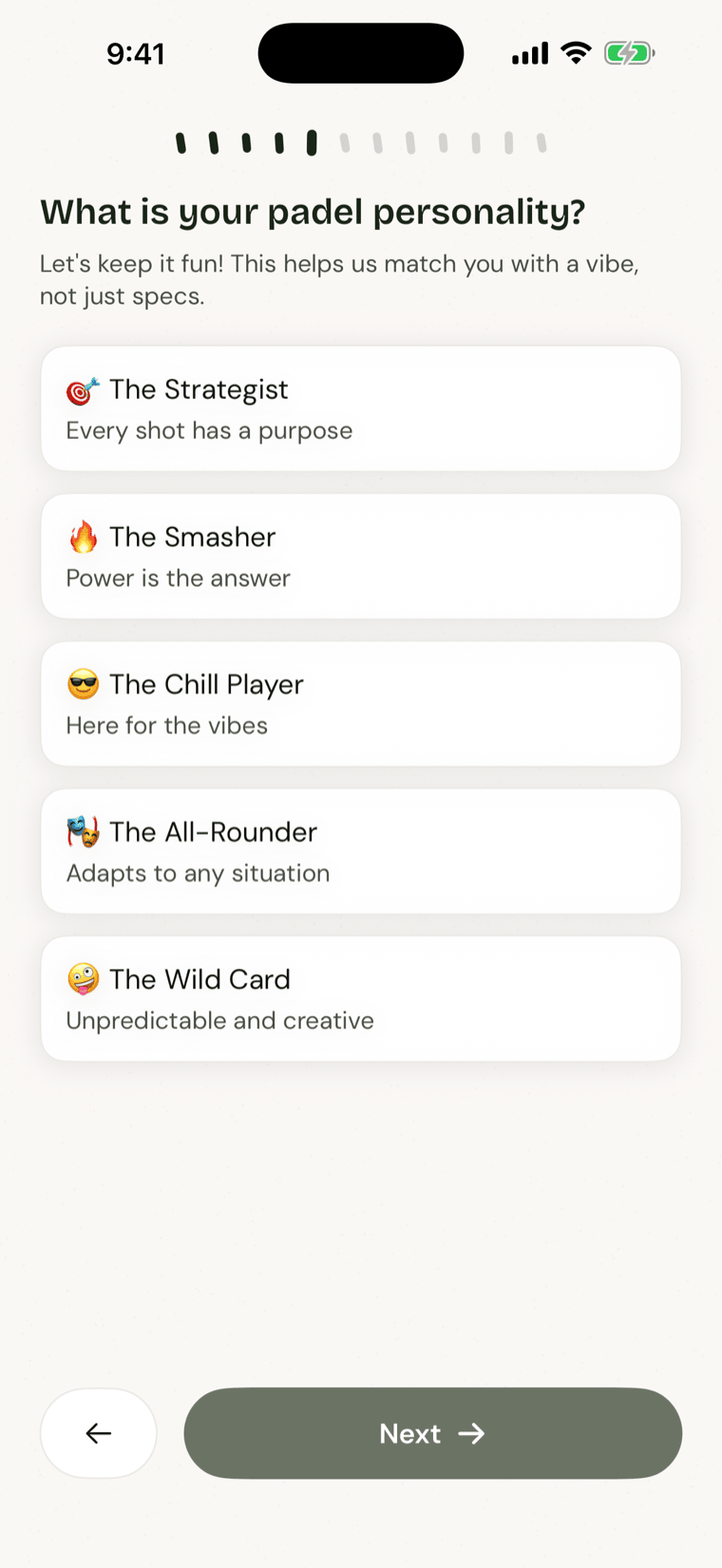
Not sure it's your match? The free 2-minute quiz reads your level, style, and budget and tells you which racket is.
The bottom line
If the third set is where your arm usually gives up, this is the Bullpadel that lets you finish it.
Where to buy
Prices shown in Euro, converted and approximate. You check out in the store's own currency.
Frequently asked
Only a confident one, because the Ionic Light is pitched at intermediates by its shops, and the numbers back that up. At 350 to 360g with a soft dual-density core it is light and kind to a mishit. A teardrop puts its sweet spot a touch above a round head's, though, so the middle of the racket takes slightly longer to find. A season in, it is a natural second racket.
Control first, with an all-court lean: the Ionic Light's soft MultiEVA core and medium balance point it at placement and comfort, not raw pace. The teardrop shape and rough 3D Grain face give an overhead reach and spin, so it finishes points with angle and bite instead of mass.
From around €98, the Ionic Light sits at the lower end for a current Bullpadel teardrop, and a second shop asks a good deal more. The gap between shops on this model is wide, so the lowest figure moves; the comparison above is the one to trust on the day.
The Ionic Control is the round, heavier twin: 370g, low and even balance, built for the lob and the block from deep. The Ionic Light is a 350 to 360g teardrop with a medium balance, built to swing fast and reach an overhead. Both share Bullpadel's MultiEVA core and Glaphite face, so the cushioned contact is common to the pair. Take the Light if you play the whole court on quick hands; take the Control if you win on placement. The Ionic Control has a full review of its own here.
No, the Ionic Light is listed unisex by Tradeinn. The specs that make it work, 350 to 360g, a medium balance, and a soft core, suit any player who wants a complete frame at a weight they can swing all match. One shop files it under women's rackets because that weight and balance are where many women players choose to play. The frame does not care.
MultiEVA under Glaphite: the Ionic Light runs Bullpadel's dual-density foam under a face with the brand's 3D Grain rough finish. The two-density foam cushions the hit; the Glaphite weave flexes a little on contact for margin; the molded grit holds a brushed ball long enough to spin it.
The app · free quiz
Not sure which one's you?
Take the free quiz in the app. We'll match a racket to your game, not the other way around.
Find my racketFree quiz. Sign in with email or Google to get your four picks.

Bullpadel Ionic Light 2026 Review
By Andres Jovem · Updated October 19, 2026
A light, medium-balanced teardrop with a cushioned dual-density core and a rough Glaphite face: the Bullpadel for the player who wants one all-court frame that never asks for muscle.
The verdict
Plenty of Bullpadel rackets are built to finish points. The Ionic Light is the one built to play them: a 350 to 360g teardrop, balanced mid-frame, with a cushioned core. Every contact lands softly, before the hit can climb into your elbow or shoulder. Its shops list it for intermediates (one says advanced). Intermediate is where it belongs: a complete all-court frame for the player who defends, builds, and finishes in roughly equal measure. You should still be able to swing it in the third set.
It is not a weapon. A big hitter will want more head on the smash, and the face is softer than a carbon one, so a flat put-away carries your pace and adds none. Those are the two limits. Everything else is why it keeps turning up in our guides for women, for tennis converts, and for players managing a sore shoulder. Quick hands at the net. An arm that still feels fresh late on. It is also one of the cheaper ways into a current Bullpadel build.
The build
A dual-density core that cushions the middle
Bullpadel's MultiEVA stacks two foam densities in one core, and this version is the soft one. Bullpadel does not publish where each density sits, so we will not guess. What the pairing is built to give is a cushioned middle. The ball sinks in and the contact reaches your hand as a press, not a crack. There is enough firmness in the structure to keep a clean hit from going vague.
A Glaphite face with grit on it
The hitting face is Glaphite, Bullpadel's graphite-and-glass weave. Glass in the mix lets the face bend with the ball, which widens the area that still sends a shot on line and keeps the harshness out of a hard block. Over it runs the 3D Grain rough finish, a molded grit that holds the ball a beat longer under a brushed swing. The grit, not extra arm, is what puts rotation on a sliced lob or a víbora.
A teardrop carried in the middle, in a carbon frame
The head is a teardrop, which puts the sweet spot a touch above center and gives an overhead more reach than a round frame would. The balance sits medium, so the mass rests mid-frame and not out at the tip, and the whole thing weighs 350 to 360g. The frame is Bullpadel's CarbonTube, listed as 100% carbon, with XForce reinforcement named on the 2026 sheet; neither comes with a stated benefit. On a hard volley the racket feels like one piece, which is what a carbon rim on a light frame is there for.
How it plays
At the net, the head is already there
Reaction volleys are where a light, mid-balanced frame shows its hand first. When a ball comes at your hip, the head arrives without a wind-up, and a block dropped short at their feet lands with a soft, dead contact that gives them nothing to work with. Quick exchanges stay quick. You are never dragging the racket through the swing, which is the thing a tennis convert with fast hands is looking for. The volley it does best is the one played with the wrist still, taken early and angled across the court. The frame is stable enough for the ball to go where the face pointed. It is soft enough that the angle, not the pace, wins the point.
Defending, the lob comes off deep and quiet
Pinned on the back glass, you want two things: a ball that comes off the face slow enough to control, and enough depth to send the other pair back off the net. The Ionic Light gives you both with a short swing. A late block still lands, a lob makes the back corner without a big backswing, and the grit on the face lets you cut a slice that stays low off the wall. What you give up is counterpunch: there is no stiff rebound to borrow, so a hard, flat reply comes from your own swing or not at all.
Overhead, bandeja first, smash second
Of the three overheads, the bandeja is the one this frame does most for. The teardrop gives you the reach, the medium balance drops the head into the ball without effort, and the texture lets you cut it short and reset the net. The smash is where the limit lives: a sitter goes away cleanly, but a well-covered ball comes back, because the frame adds no mass of its own to the finish. The víbora sits in between, with enough bite from the surface to skid the ball low off the side glass when you brush it well.
Two hours in, the arm still feels like yours
This is the quiet reason the Ionic Light appears in our shoulder-pain guide. The cushion under every contact and the weight kept short of the tip do two things. The shoulder is not lifting a head-heavy frame through a hundred overheads. The elbow is not absorbing a stiff crack on every block. Sessions end with your arm tired the normal way, from playing, not buzzing from the racket. If you are managing an old injury, it is one of the safer teardrops to do it with. The player it suits least on this count is the one who plays through pain already and wants a frame that hides it. There is cushion here, but there is no magic. A shoulder that hurts on every overhead needs a round, low-balanced frame and a coach before it needs a new racket.
Who it's for (and who should skip it)
Buy it if
- You want one racket for the whole court, from the lob to the put-away, that never asks for muscle
- You play fast hands at the net and a brushed game from the back, and a heavy head slows both
- Your shoulder or elbow needs every contact cushioned, and you still want a big-brand build
Look elsewhere if
- You finish points with a flat smash: the frame adds no mass to the put-away, and a head-heavy diamond like the Ionic Power will reward your swing better
- You want a contact that tells you where on the face you hit: this one blurs it
- You are in your first season: a round, low-balanced frame will teach the middle of the racket faster than a teardrop will
Not sure it's your match? The free 2-minute quiz reads your level, style, and budget and tells you which racket is.
The bottom line
If the third set is where your arm usually gives up, this is the Bullpadel that lets you finish it.
Where to buy
Prices shown in Euro, converted and approximate. You check out in the store's own currency.
Frequently asked
Only a confident one, because the Ionic Light is pitched at intermediates by its shops, and the numbers back that up. At 350 to 360g with a soft dual-density core it is light and kind to a mishit. A teardrop puts its sweet spot a touch above a round head's, though, so the middle of the racket takes slightly longer to find. A season in, it is a natural second racket.
Control first, with an all-court lean: the Ionic Light's soft MultiEVA core and medium balance point it at placement and comfort, not raw pace. The teardrop shape and rough 3D Grain face give an overhead reach and spin, so it finishes points with angle and bite instead of mass.
From around €98, the Ionic Light sits at the lower end for a current Bullpadel teardrop, and a second shop asks a good deal more. The gap between shops on this model is wide, so the lowest figure moves; the comparison above is the one to trust on the day.
The Ionic Control is the round, heavier twin: 370g, low and even balance, built for the lob and the block from deep. The Ionic Light is a 350 to 360g teardrop with a medium balance, built to swing fast and reach an overhead. Both share Bullpadel's MultiEVA core and Glaphite face, so the cushioned contact is common to the pair. Take the Light if you play the whole court on quick hands; take the Control if you win on placement. The Ionic Control has a full review of its own here.
No, the Ionic Light is listed unisex by Tradeinn. The specs that make it work, 350 to 360g, a medium balance, and a soft core, suit any player who wants a complete frame at a weight they can swing all match. One shop files it under women's rackets because that weight and balance are where many women players choose to play. The frame does not care.
MultiEVA under Glaphite: the Ionic Light runs Bullpadel's dual-density foam under a face with the brand's 3D Grain rough finish. The two-density foam cushions the hit; the Glaphite weave flexes a little on contact for margin; the molded grit holds a brushed ball long enough to spin it.
The app · free quiz
Not sure which one's you?
Take the free quiz in the app. We'll match a racket to your game, not the other way around.
Find my racketFree quiz. Sign in with email or Google to get your four picks.