Starvie Raptor + 2026 Review
By Andres Jovem · Updated October 19, 2026
A pro-level teardrop attacker with a medium balance that keeps it swingable, for the aggressive player who wants tour-style bite without the full head-heavy punishment.
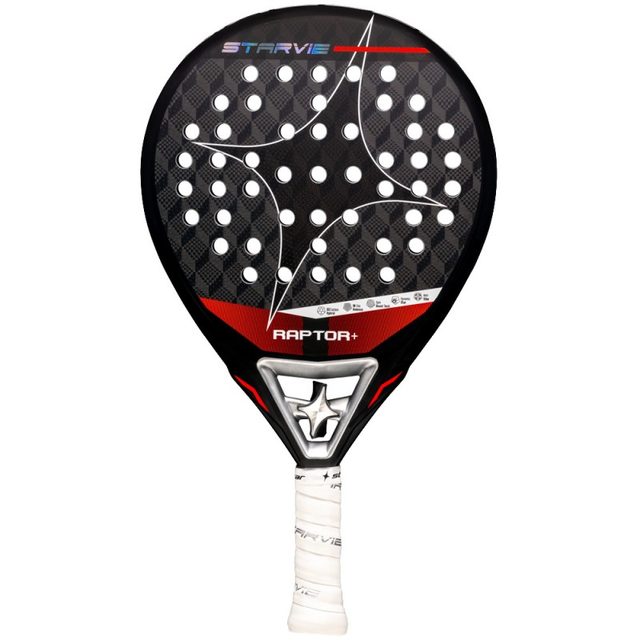
The verdict
The Starvie Raptor + 2026 is a teardrop attacker built for the net, and its trick is a medium balance that keeps the whole thing quick in the hand. It carries a pro-level billing and wants you finishing points up front, but Starvie stopped short of piling every gram into the tip. The result swings clean through a long third set instead of dragging your arm around after it.
This is the frame for the aggressive player whose technique is most of the way there and who wants a stick that drives forward without fighting back on every reach. It rewards a committed swing and clean contact. Turn up flat-footed or late, and the firm face lets you know. If your game still runs on defense and steady resets, the buy-and-skip lists below spell out why this one will feel like too much racket for you.
The build
The core
Starvie builds the Raptor + on M-EVA Balance, a foam it rates as medium. Medium here means it flexes a little at contact without going spongy, so the ball sits on the face for a fraction longer and leaves with pace you can aim. You get back some of the rebound a rock-hard core keeps for itself, plus a bit more information through the hand about where the ball met the strings. It is the spec that keeps a pro-level racket from feeling like a board, and the reason a strong intermediate can live with this frame rather than wrestle it.
The face
The hitting layer is 18K Carbon with a rough finish. Carbon this dense stays firm under load, so a ball struck flush comes off quick and clean rather than sinking in. The texture is what your spin shots trade on. When you drag the face up the back of the ball on a víbora, the grit bites long enough to grab and spin it hard, which is how the shot dips and swerves off the wall. On a frame this stiff, that texture is doing most of the work to keep the ball on a leash.
Shape and balance
The mold is a teardrop, the attacker's middle ground: more mass carried toward the top than a round head, so there is weight behind the swing, but a sweet spot that still sits lower and wider than a full diamond. At a listed 365g with a balance Starvie describes as medium, the load is spread rather than stacked in the nose, so the head does not flop and haul you around on quick exchanges. You feel the mass when you commit to a full swing and lose it when you need fast hands, which is the balance this frame is chasing.
How it plays
On the attack
This is where the Raptor + wants to live. Set your feet under a high ball, put a full swing through it, and the contact is firm and quick, the ball springing off with an arc you can steer deep or drop short. The bandeja is the standout: the head comes around fast enough that you can carve under the ball and drop it into the corner without hauling the racket into position first, so you keep the net instead of ceding it. Give it a lazy, arm-only swing and the payoff shrinks in a hurry. This frame rewards commitment.
Up at the net
The net game splits in two, and the divide is how much time you have. When there is a beat to load, the put-away is the reward: a high ball sits up and the stiff face buries it with a short jab, no windup needed. The block off a hard drive is the other side of the coin. That same firmness throws pace straight back instead of soaking it up, so a reset you meet a fraction late tends to sail long on you. Give yourself the racket set early and this is a weapon at the net. Reach for it in a hurry and the sharp feel turns into a guessing game.
Digging out of trouble
Pinned deep and scrambling, you are the one supplying the touch on the ball. The face returns enough pace that a lob does not need a big swing to reach the back, but a stretched reset is on you to shape, since a firm frame like this will not soften a jab you had no time to set up. Meet the ball cleanly and it goes where you point it. Catch it off the edge on the run and it sprays wider than a plush control pala would forgive. It defends fine with a moment to breathe and turns brittle when you have none.
Comfort and the arm
This is a stiff, top-weighted frame, and the honest note is that it sends a fair amount back up the arm. The foam has a little give, so it is not the harshest thing we stock, and a flush strike feels alive rather than jarring. Clip one off the edge, or grind through a two-hour match with tired timing, and your elbow and shoulder will register every mishit. If your arm already complains after long sessions, demo this one before you commit rather than buying it on the spec sheet.
Who it's for (and who should skip it)
Buy it if
- You play forward and want a teardrop that finishes points but still lets you defend when the rally turns
- Your swing is grooved enough to supply your own pace and you want the racket to reward a clean, committed strike
- You want pro-level attacking feel and would rather keep the frame quick in the hand than chase the last drop of head weight
Look elsewhere if
- You are new to the game and still finding the middle of the strings, and you need a round head that stays honest when contact drifts wide
- A shanked ball off the 18K face snaps the wrist and stings the forearm, so if a stiff pala has ever left your elbow sore mid-match, this is not the frame to grow into
- You win most of your points from the back of the court on patience and placement, and you want a pala that adds its own pace to a passive shot rather than one that only pays out when you swing hard
Not sure it's your match? The free 2-minute quiz reads your level, style, and budget and tells you which racket is.
The bottom line
There is no best racket, only the best one for your game. If you are the aggressive player who wants tour-style attack and would rather keep the frame quick in the hand than chase the last gram of head weight, the Starvie Raptor + is a smart place to land. Not sure it is your match? The free 2-minute quiz reads your level, style, and budget and tells you.
Where to buy
Prices shown in Euro, converted and approximate. You check out in the store's own currency.
Frequently asked
No. This is a pro-level attacking frame, and a beginner will fight its stiff 18K carbon face and teardrop head while feeling every mishit up the arm. A round, soft-cored racket around 350 to 360g teaches cleaner contact and stays kinder to the elbow. Circle back to the Raptor + once your swing is grooved and you are hunting the net.
Power is the lean. The teardrop shape puts mass behind the swing for the smash and bandeja, and the 18K carbon face plays quick and firm rather than muffled. Its M-EVA Balance core and medium balance point claw back a little steering and swing speed, so think of it as an attacker you can aim, not a pure control frame.
Starvie pairs an M-EVA Balance core, which it rates as medium, with an 18K Carbon face in a rough finish. The medium foam holds the ball on the strings a touch longer for aimable pace, while the dense carbon and its textured surface give the face the stiffness for punch and the grip for spin on a brushed shot.
The listed weight is 365g, set on a balance point Starvie calls medium. That mass is spread out rather than stacked in the tip, so the head stays quick enough to react on fast net exchanges while still carrying enough behind it to drive a smash. It is the setup that lets an aggressive player attack without the racket lagging a beat behind the hand.
Anyone chasing forgiveness over bite. If your game is built on defense and resets, or your arm is sensitive to stiff frames, this pala will frustrate more than it helps, because the firm face offers little cushion on a mishit and the top-loaded head demands a committed swing. The player who wants an easy, generous margin is better served elsewhere.



The app · free quiz
Not sure which one's you?
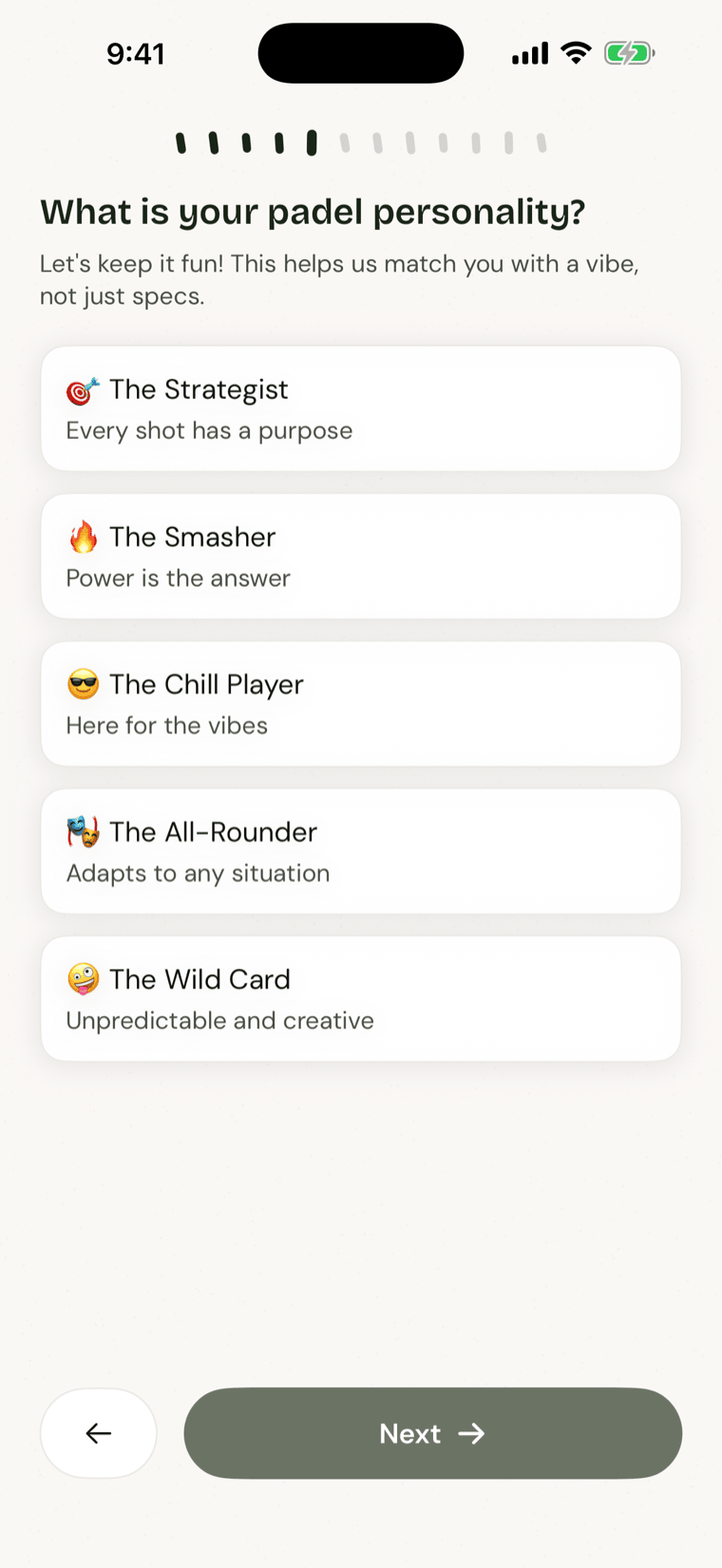
Take the free quiz in the app. We'll match a racket to your game, not the other way around.
Find my racketFree quiz. Sign in with email or Google to get your four picks.

Starvie Raptor + 2026 Review
By Andres Jovem · Updated October 19, 2026
A pro-level teardrop attacker with a medium balance that keeps it swingable, for the aggressive player who wants tour-style bite without the full head-heavy punishment.
The verdict
The Starvie Raptor + 2026 is a teardrop attacker built for the net, and its trick is a medium balance that keeps the whole thing quick in the hand. It carries a pro-level billing and wants you finishing points up front, but Starvie stopped short of piling every gram into the tip. The result swings clean through a long third set instead of dragging your arm around after it.
This is the frame for the aggressive player whose technique is most of the way there and who wants a stick that drives forward without fighting back on every reach. It rewards a committed swing and clean contact. Turn up flat-footed or late, and the firm face lets you know. If your game still runs on defense and steady resets, the buy-and-skip lists below spell out why this one will feel like too much racket for you.
The build
The core
Starvie builds the Raptor + on M-EVA Balance, a foam it rates as medium. Medium here means it flexes a little at contact without going spongy, so the ball sits on the face for a fraction longer and leaves with pace you can aim. You get back some of the rebound a rock-hard core keeps for itself, plus a bit more information through the hand about where the ball met the strings. It is the spec that keeps a pro-level racket from feeling like a board, and the reason a strong intermediate can live with this frame rather than wrestle it.
The face
The hitting layer is 18K Carbon with a rough finish. Carbon this dense stays firm under load, so a ball struck flush comes off quick and clean rather than sinking in. The texture is what your spin shots trade on. When you drag the face up the back of the ball on a víbora, the grit bites long enough to grab and spin it hard, which is how the shot dips and swerves off the wall. On a frame this stiff, that texture is doing most of the work to keep the ball on a leash.
Shape and balance
The mold is a teardrop, the attacker's middle ground: more mass carried toward the top than a round head, so there is weight behind the swing, but a sweet spot that still sits lower and wider than a full diamond. At a listed 365g with a balance Starvie describes as medium, the load is spread rather than stacked in the nose, so the head does not flop and haul you around on quick exchanges. You feel the mass when you commit to a full swing and lose it when you need fast hands, which is the balance this frame is chasing.
How it plays
On the attack
This is where the Raptor + wants to live. Set your feet under a high ball, put a full swing through it, and the contact is firm and quick, the ball springing off with an arc you can steer deep or drop short. The bandeja is the standout: the head comes around fast enough that you can carve under the ball and drop it into the corner without hauling the racket into position first, so you keep the net instead of ceding it. Give it a lazy, arm-only swing and the payoff shrinks in a hurry. This frame rewards commitment.
Up at the net
The net game splits in two, and the divide is how much time you have. When there is a beat to load, the put-away is the reward: a high ball sits up and the stiff face buries it with a short jab, no windup needed. The block off a hard drive is the other side of the coin. That same firmness throws pace straight back instead of soaking it up, so a reset you meet a fraction late tends to sail long on you. Give yourself the racket set early and this is a weapon at the net. Reach for it in a hurry and the sharp feel turns into a guessing game.
Digging out of trouble
Pinned deep and scrambling, you are the one supplying the touch on the ball. The face returns enough pace that a lob does not need a big swing to reach the back, but a stretched reset is on you to shape, since a firm frame like this will not soften a jab you had no time to set up. Meet the ball cleanly and it goes where you point it. Catch it off the edge on the run and it sprays wider than a plush control pala would forgive. It defends fine with a moment to breathe and turns brittle when you have none.
Comfort and the arm
This is a stiff, top-weighted frame, and the honest note is that it sends a fair amount back up the arm. The foam has a little give, so it is not the harshest thing we stock, and a flush strike feels alive rather than jarring. Clip one off the edge, or grind through a two-hour match with tired timing, and your elbow and shoulder will register every mishit. If your arm already complains after long sessions, demo this one before you commit rather than buying it on the spec sheet.
Who it's for (and who should skip it)
Buy it if
- You play forward and want a teardrop that finishes points but still lets you defend when the rally turns
- Your swing is grooved enough to supply your own pace and you want the racket to reward a clean, committed strike
- You want pro-level attacking feel and would rather keep the frame quick in the hand than chase the last drop of head weight
Look elsewhere if
- You are new to the game and still finding the middle of the strings, and you need a round head that stays honest when contact drifts wide
- A shanked ball off the 18K face snaps the wrist and stings the forearm, so if a stiff pala has ever left your elbow sore mid-match, this is not the frame to grow into
- You win most of your points from the back of the court on patience and placement, and you want a pala that adds its own pace to a passive shot rather than one that only pays out when you swing hard
Not sure it's your match? The free 2-minute quiz reads your level, style, and budget and tells you which racket is.
The bottom line
There is no best racket, only the best one for your game. If you are the aggressive player who wants tour-style attack and would rather keep the frame quick in the hand than chase the last gram of head weight, the Starvie Raptor + is a smart place to land. Not sure it is your match? The free 2-minute quiz reads your level, style, and budget and tells you.
Where to buy
Prices shown in Euro, converted and approximate. You check out in the store's own currency.
Frequently asked
No. This is a pro-level attacking frame, and a beginner will fight its stiff 18K carbon face and teardrop head while feeling every mishit up the arm. A round, soft-cored racket around 350 to 360g teaches cleaner contact and stays kinder to the elbow. Circle back to the Raptor + once your swing is grooved and you are hunting the net.
Power is the lean. The teardrop shape puts mass behind the swing for the smash and bandeja, and the 18K carbon face plays quick and firm rather than muffled. Its M-EVA Balance core and medium balance point claw back a little steering and swing speed, so think of it as an attacker you can aim, not a pure control frame.
Starvie pairs an M-EVA Balance core, which it rates as medium, with an 18K Carbon face in a rough finish. The medium foam holds the ball on the strings a touch longer for aimable pace, while the dense carbon and its textured surface give the face the stiffness for punch and the grip for spin on a brushed shot.
The listed weight is 365g, set on a balance point Starvie calls medium. That mass is spread out rather than stacked in the tip, so the head stays quick enough to react on fast net exchanges while still carrying enough behind it to drive a smash. It is the setup that lets an aggressive player attack without the racket lagging a beat behind the hand.
Anyone chasing forgiveness over bite. If your game is built on defense and resets, or your arm is sensitive to stiff frames, this pala will frustrate more than it helps, because the firm face offers little cushion on a mishit and the top-loaded head demands a committed swing. The player who wants an easy, generous margin is better served elsewhere.
The app · free quiz
Not sure which one's you?
Take the free quiz in the app. We'll match a racket to your game, not the other way around.
Find my racketFree quiz. Sign in with email or Google to get your four picks.