Drop Shot Axion Attack Soft 2026 Review
By Andres Jovem · Updated October 19, 2026
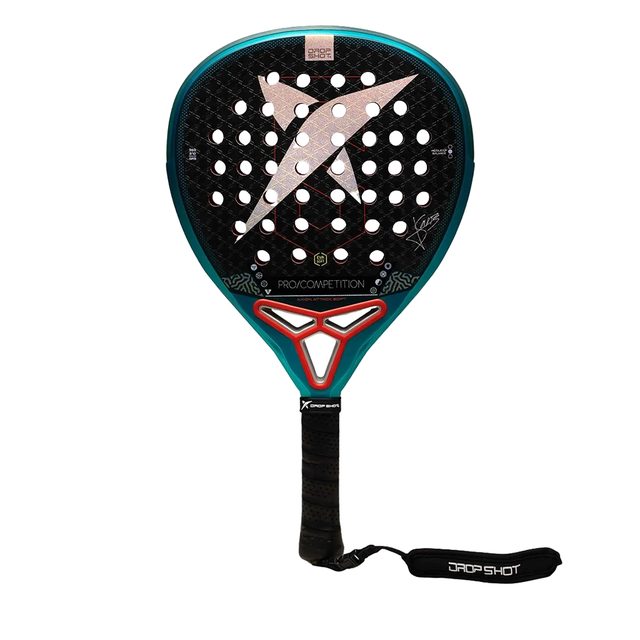
An attacking teardrop with a soft core: it gives an intermediate the overhead reach of a finisher without the harsh, arm-jarring contact most head-heavy frames punish you with.
The verdict
The Drop Shot Axion Attack Soft 2026 is built for the intermediate who wants to attack but has an arm that keeps score. It is a teardrop, so the mass sits toward the head and the frame is set up to hit down and finish. What separates it from most frames in that class is the core, which stays soft where attacking rackets usually go firm. You get the reach and the drop of a finisher's head without the contact that leaves your forearm sore by the last game.
That soft core is the whole pitch, and it also draws the boundary. This is not the stiffest, most explosive power racket on the wall, and a strong ball-striker chasing the absolute hardest smash will feel it hold something back. It is for the player one rung below that: someone whose overhead is coming along, who plays forward on the court, and who would rather protect the shoulder and elbow than shave a fraction off the flattest kill. If your arm is fine and you only want raw pace, keep reading, because the next section says who should walk past this one.
The build
A soft core that cushions the hit
Drop Shot builds the Axion Attack on a soft foam, and that choice runs through everything else the racket does. A softer core flexes further when the ball lands, so contact spreads over a longer moment instead of snapping back at once. Less of the shock travels up the handle into your wrist and elbow, which is the point of the whole frame. The cost is a touch of the instant, flat pop a dense core hands back. You trade a sliver of top-end pace for a hit your arm can take match after match.
A rough face that works the spin shots
The hitting surface has a coarse, sandy finish rather than a slick one. On a shot you brush rather than flatten, that grit lets you start the racket lower and drag up the back of the ball later than a smooth face would allow, and the ball still leaves with bite. Off a kicked serve it means the bounce jumps sideways at the returner instead of sitting up to be crushed. This is the surface that lets the frame hurt people with shape rather than with sheer pace.
A head-heavy teardrop, weighted to hit down
The teardrop mold stretches the sweet spot up toward the tip and stacks the weight there, so the balance reads clearly head-heavy. That layout points the racket downward on an overhead: you wind up, let the top of the frame lead, and the ball goes down into the court with less muscle from you. It reads as an all-court frame rather than a thin blade, so mishits low on the face still hold together. At 367 grams it settles behind the ball on a full swing, and you feel that mass most in a rushed hand at the net, where there is more racket to move than a lighter frame asks of you.
How it plays
On the attack, it rewards the wind-up more than the wrist
Give yourself time to load an overhead and the racket comes into its own. The head swings itself down onto the ball and the finish carries deep, the shot an improving attacker is trying to own. Where it really pays you back is on the shaped attacks: a carved víbora leaves low and dips fast, landing short and jumping away toward the side fence, which pulls the returner off the court and opens the middle for the next ball. That is the pattern this frame keeps handing you.
At the net, it wants planted feet
Get your body behind the ball early and the block drops heavy into a gap, simple to place. A ball that jumps at you late is where you notice the head: your hand has to be quick and deliberate, and a lazy wrist lets the frame arrive a beat behind the ball, so the volley floats instead of dropping. This is a racket that punches rather than flicks, so set early and it is dependable up front, and get caught flat-footed and the put-away you should have had sails long.
From the baseline, it stays patient under pressure
Pushed back to the glass and scrambling, the ball off the face hangs on the strings a touch longer before it leaves, so a reset you catch late or off center still comes back deep rather than dropping into no-man's-land. That buys you the extra half-step to recover position. It is a steadier defensive tool than most attacking teardrops, which tend to fire a rushed defensive ball long. You can float a high lob, trust it to clear the net player, and get yourself back into the point.
Comfort is the reason to pick it
Here is the honest heart of it. By a long third set your forearm is noticeably fresher than it would be off a firm attacking frame; the ache that usually creeps in never really arrives. It is not weightless, and 367 grams swung through a two-hour match will still tire a smaller player's shoulder late on. But of the frames that let you play forward and hit down, this is one of the kinder ones on the joints, and that is who it was built for.
Who it's for (and who should skip it)
Buy it if
- You are an intermediate who plays forward and wants to attack, but your elbow or shoulder complains after firm rackets.
- Your overhead is coming together and you want a head-heavy frame that helps you hit down without a harsh contact.
- You lean on spin, the víbora and the bandeja, more than on the flattest, fastest kill.
Look elsewhere if
- You are a strong ball-striker with a healthy arm who wants the hardest, flattest smash on the wall. A firmer core hits through the ball better.
- You are a true beginner. A round, lighter frame will forgive your contact and move faster at the net while your swing is still forming.
- You want a quick, whippy racket for fast hands at the net. At 367 grams with the weight up top, this one wants a full swing, not a flick.
Not sure it's your match? The free 2-minute quiz reads your level, style, and budget and tells you which racket is.
The bottom line
If you want to attack but your arm has started keeping a tally, this is the frame to try: it is one of the few head-heavy teardrops that lets you hit down without a sore joint the morning after. If your arm is fine and you only want raw pace, a firmer core will serve you better. Not sure which side of that line you fall on? The free 2-minute quiz reads your level, style, and budget and points you to the racket that fits.
Frequently asked
Not really. The Axion Attack Soft is an intermediate attacking racket at 367g with a head-heavy teardrop shape, so a beginner will find it slow to move at the net and demanding on timing. A round, lighter frame around 355g will forgive your contact and teach you more. Its soft core is kind to the arm, though, so come back to this one once your overhead is grooved.
Power, but a gentler read on it than most. The teardrop shape and head-heavy balance are built to attack and finish overheads, while the soft core trades a little of the hardest, flattest pace for a contact your arm can absorb. Think of it as an offensive frame tuned for comfort rather than an outright control racket.
A soft foam core sits behind a rough, textured hitting face. The soft core flexes on contact to cushion the shock reaching your elbow and shoulder, and the coarse surface helps you shape brushed shots like the víbora and bandeja instead of hitting everything flat.
Yes, more than most attacking frames, which is why it makes our tennis-elbow guide. Its soft core spreads impact over a longer moment so less shock reaches the joint, where the firm cores most head-heavy rackets use send more of it back. It is not weightless at 367g, so a smaller player's shoulder can still tire late in a long match.
367g, with the balance set high toward the head, which is on the substantial side. That weight suits a physically capable intermediate who plays forward and swings fully, since the mass helps drive the smash down. If you rely on quick hands at the net or you are small in stature, a lighter frame will feel easier to whip around. Not sure it is your match? The free 2-minute quiz reads your level, style, and budget and tells you.


The app · free quiz
Not sure which one's you?
Take the free quiz in the app. We'll match a racket to your game, not the other way around.
Find my racketFree quiz. Sign in with email or Google to get your four picks.

Drop Shot Axion Attack Soft 2026 Review
By Andres Jovem · Updated October 19, 2026
An attacking teardrop with a soft core: it gives an intermediate the overhead reach of a finisher without the harsh, arm-jarring contact most head-heavy frames punish you with.
The verdict
The Drop Shot Axion Attack Soft 2026 is built for the intermediate who wants to attack but has an arm that keeps score. It is a teardrop, so the mass sits toward the head and the frame is set up to hit down and finish. What separates it from most frames in that class is the core, which stays soft where attacking rackets usually go firm. You get the reach and the drop of a finisher's head without the contact that leaves your forearm sore by the last game.
That soft core is the whole pitch, and it also draws the boundary. This is not the stiffest, most explosive power racket on the wall, and a strong ball-striker chasing the absolute hardest smash will feel it hold something back. It is for the player one rung below that: someone whose overhead is coming along, who plays forward on the court, and who would rather protect the shoulder and elbow than shave a fraction off the flattest kill. If your arm is fine and you only want raw pace, keep reading, because the next section says who should walk past this one.
The build
A soft core that cushions the hit
Drop Shot builds the Axion Attack on a soft foam, and that choice runs through everything else the racket does. A softer core flexes further when the ball lands, so contact spreads over a longer moment instead of snapping back at once. Less of the shock travels up the handle into your wrist and elbow, which is the point of the whole frame. The cost is a touch of the instant, flat pop a dense core hands back. You trade a sliver of top-end pace for a hit your arm can take match after match.
A rough face that works the spin shots
The hitting surface has a coarse, sandy finish rather than a slick one. On a shot you brush rather than flatten, that grit lets you start the racket lower and drag up the back of the ball later than a smooth face would allow, and the ball still leaves with bite. Off a kicked serve it means the bounce jumps sideways at the returner instead of sitting up to be crushed. This is the surface that lets the frame hurt people with shape rather than with sheer pace.
A head-heavy teardrop, weighted to hit down
The teardrop mold stretches the sweet spot up toward the tip and stacks the weight there, so the balance reads clearly head-heavy. That layout points the racket downward on an overhead: you wind up, let the top of the frame lead, and the ball goes down into the court with less muscle from you. It reads as an all-court frame rather than a thin blade, so mishits low on the face still hold together. At 367 grams it settles behind the ball on a full swing, and you feel that mass most in a rushed hand at the net, where there is more racket to move than a lighter frame asks of you.
How it plays
On the attack, it rewards the wind-up more than the wrist
Give yourself time to load an overhead and the racket comes into its own. The head swings itself down onto the ball and the finish carries deep, the shot an improving attacker is trying to own. Where it really pays you back is on the shaped attacks: a carved víbora leaves low and dips fast, landing short and jumping away toward the side fence, which pulls the returner off the court and opens the middle for the next ball. That is the pattern this frame keeps handing you.
At the net, it wants planted feet
Get your body behind the ball early and the block drops heavy into a gap, simple to place. A ball that jumps at you late is where you notice the head: your hand has to be quick and deliberate, and a lazy wrist lets the frame arrive a beat behind the ball, so the volley floats instead of dropping. This is a racket that punches rather than flicks, so set early and it is dependable up front, and get caught flat-footed and the put-away you should have had sails long.
From the baseline, it stays patient under pressure
Pushed back to the glass and scrambling, the ball off the face hangs on the strings a touch longer before it leaves, so a reset you catch late or off center still comes back deep rather than dropping into no-man's-land. That buys you the extra half-step to recover position. It is a steadier defensive tool than most attacking teardrops, which tend to fire a rushed defensive ball long. You can float a high lob, trust it to clear the net player, and get yourself back into the point.
Comfort is the reason to pick it
Here is the honest heart of it. By a long third set your forearm is noticeably fresher than it would be off a firm attacking frame; the ache that usually creeps in never really arrives. It is not weightless, and 367 grams swung through a two-hour match will still tire a smaller player's shoulder late on. But of the frames that let you play forward and hit down, this is one of the kinder ones on the joints, and that is who it was built for.
Who it's for (and who should skip it)
Buy it if
- You are an intermediate who plays forward and wants to attack, but your elbow or shoulder complains after firm rackets.
- Your overhead is coming together and you want a head-heavy frame that helps you hit down without a harsh contact.
- You lean on spin, the víbora and the bandeja, more than on the flattest, fastest kill.
Look elsewhere if
- You are a strong ball-striker with a healthy arm who wants the hardest, flattest smash on the wall. A firmer core hits through the ball better.
- You are a true beginner. A round, lighter frame will forgive your contact and move faster at the net while your swing is still forming.
- You want a quick, whippy racket for fast hands at the net. At 367 grams with the weight up top, this one wants a full swing, not a flick.
Not sure it's your match? The free 2-minute quiz reads your level, style, and budget and tells you which racket is.
The bottom line
If you want to attack but your arm has started keeping a tally, this is the frame to try: it is one of the few head-heavy teardrops that lets you hit down without a sore joint the morning after. If your arm is fine and you only want raw pace, a firmer core will serve you better. Not sure which side of that line you fall on? The free 2-minute quiz reads your level, style, and budget and points you to the racket that fits.
Frequently asked
Not really. The Axion Attack Soft is an intermediate attacking racket at 367g with a head-heavy teardrop shape, so a beginner will find it slow to move at the net and demanding on timing. A round, lighter frame around 355g will forgive your contact and teach you more. Its soft core is kind to the arm, though, so come back to this one once your overhead is grooved.
Power, but a gentler read on it than most. The teardrop shape and head-heavy balance are built to attack and finish overheads, while the soft core trades a little of the hardest, flattest pace for a contact your arm can absorb. Think of it as an offensive frame tuned for comfort rather than an outright control racket.
A soft foam core sits behind a rough, textured hitting face. The soft core flexes on contact to cushion the shock reaching your elbow and shoulder, and the coarse surface helps you shape brushed shots like the víbora and bandeja instead of hitting everything flat.
Yes, more than most attacking frames, which is why it makes our tennis-elbow guide. Its soft core spreads impact over a longer moment so less shock reaches the joint, where the firm cores most head-heavy rackets use send more of it back. It is not weightless at 367g, so a smaller player's shoulder can still tire late in a long match.
367g, with the balance set high toward the head, which is on the substantial side. That weight suits a physically capable intermediate who plays forward and swings fully, since the mass helps drive the smash down. If you rely on quick hands at the net or you are small in stature, a lighter frame will feel easier to whip around. Not sure it is your match? The free 2-minute quiz reads your level, style, and budget and tells you.
The app · free quiz
Not sure which one's you?
Take the free quiz in the app. We'll match a racket to your game, not the other way around.
Find my racketFree quiz. Sign in with email or Google to get your four picks.