Siux Diablo Elite 6 2026 Review
By Andres Jovem · Updated October 19, 2026
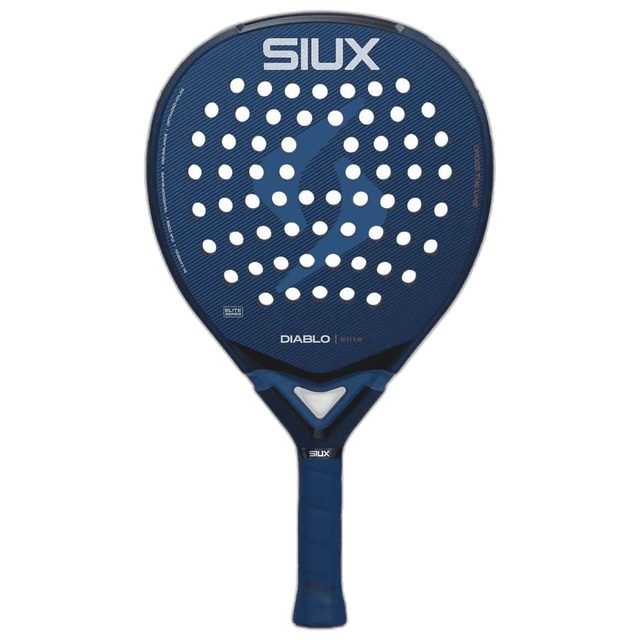
A teardrop spin-attacker with a rough 24K carbon face and a medium core, built for the advanced player who works the ball rather than just crushes it.
The verdict
The Siux Diablo Elite 6 is a spin racket first and a power racket second, and that order is the whole story. Siux gives it a teardrop head, a medium EVA PRO core, and a coarse 24K carbon face, so it rewards a player who brushes up the back of the ball and shapes a shot rather than one who only wants to flatten it. The medium balance keeps the swing weight sitting more evenly in the hand, which means quicker reactions at the net and less of a chore to haul through a rally, but the coarse face and the advanced billing still ask for real racket-head speed to pay off.
This is a frame for the advanced player whose game runs on rotation: the kicking víbora, the biting bandeja, the second serve that jumps sideways off the wall. If you brush the ball and generate your own pace, the Diablo hands that work back as spin you can see. If you are early in your padel and hoping a racket supplies the power, this one will feel demanding and a little flat. Read the skip list below before you spend.
The build
The core
Siux builds the Diablo Elite 6 on an EVA PRO foam it rates as medium, and medium is the honest word for how it plays: firm enough to send the ball out fast and direct, but with a touch more give than a rock-hard advanced core. The give keeps a little sting off your arm on a clean strike, and it lets the ball dwell a heartbeat longer, the moment a brushed shot needs to grab rotation. It is not a soft, forgiving foam. Catch one off the sweet spot and the response goes dull and short, so a clean hit is still the price of entry.
The face
The hitting layer is a 24K carbon weave with a coarse, gritty finish, and this is where the racket makes its name. The texture catches the ball at contact and drags it into rotation, so a brushed topspin drive climbs off the strings and dips hard rather than flying long. On a víbora the roughness turns what would be a flat slice into a ball that kicks sideways off the side glass. The carbon weave stays stiff behind that grit, so pace holds up while the spin does the shaping.
The shape and balance
Sitting under all of it is a teardrop carbon frame with the weight set at a medium balance point, and that combination is what makes the Diablo more livable than its advanced label suggests. The teardrop pushes the sweet spot up toward the top third, so an overhead loads with mass behind it, while the medium balance keeps that mass from piling into the head. Against a nose-heavy diamond, which stacks weight forward for the biggest raw smash, this frame trades a slice of top-end power for a head that comes around faster and asks less of the shoulder on a long point. The net effect is enough punch on the smash to finish, without a swing that fights you every time the ball speeds up.
How it plays
On the attack
The Diablo comes alive when you are shaping a shot over the net rather than nuking it. Load a víbora with a full brush and the ball leaves low and spinning, then jumps off the side wall at an angle that drags your opponent out of position. The bandeja is the shot this racket most wants to hit: swing across the ball and it settles deep with heavy rotation, buying you the time to stay at the net. On the flat smash the ball comes off with weight behind it, though the reward tracks your technique closely. Time it and it finishes clean; rush it and the depth drains away before the ball reaches the back glass.
At the net
Here the medium balance earns its money. The head comes around fast when a volley leaps at you late, so quick hands stay quick and a body shot does not turn the frame in your grip. Take the volley early and you can angle it short with the grit doing the steering; wait on it and the firmness sends it deeper than you meant. This is not a plush blocker that deadens everything, so a hard, low volley still asks you to steer it, but the reactions are there when the rally speeds up.
From the baseline
On a reset off a heavy smash you feel how little the strings give back; block it a touch early or the ball runs long. A defensive lob wants a full swing to carry deep, because you will not get a free ride off the strings. Where the Diablo helps you is in shaping the escape: brush under a low ball and the spin lifts it up and out of the danger zone rather than sending it flat into the net tape. Placement and rotation are your defense here, not raw rebound.
Comfort and the arm
Contact lands with a firm, direct feel that runs up into the wrist, more of a clean thud than a jolt on a well-struck ball, sharper on a mishit. The firmer you brush, the more the elbow drives the acceleration, so a warm arm rides it fine while a cold or tired one starts to notice by the second set. This is not the most punishing frame we stock, but it is honest company for a player whose arm is already sound. If yours flares easily, the repeated brushing motion is the part that will find it.
Who it's for (and who should skip it)
Buy it if
- You are an advanced or strong intermediate player whose game runs on spin, and you brush the ball to shape a víbora, bandeja, or kicking serve.
- You generate your own pace and want a face that turns that racket-head speed into visible rotation, not a racket that hits for you.
- You want an attacking frame that stays quick and manageable at the net, with a swing weight that will not wear your shoulder down over a long match.
Look elsewhere if
- You are a beginner or still grooving your swing. The firm core and coarse spin face reward technique you are still building, and a round, softer frame will keep more of your mishits in play while it settles.
- Your elbow flares up easily. This is a firm, spin-led racket, and the repeated brushing acceleration leans hard on the joint most prone to padel elbow.
- You want the racket to supply free power or an easy rebound off the back glass. The Diablo pays you in spin and shot-shaping, and it asks you to bring the pace yourself.
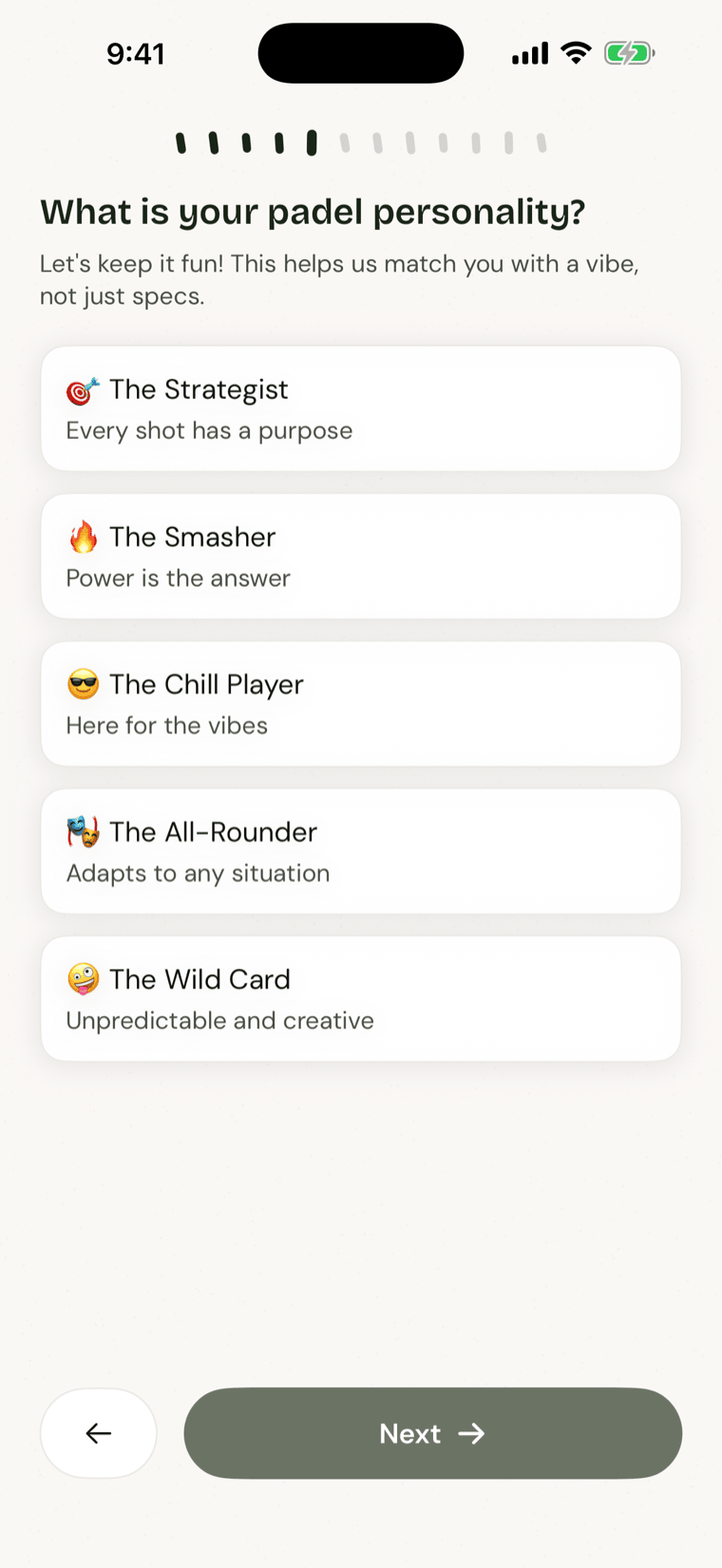
Not sure it's your match? The free 2-minute quiz reads your level, style, and budget and tells you which racket is.
The bottom line
The Siux Diablo Elite 6 is a spin merchant's tool, not a shortcut to power, and it is at its best in the hand of an advanced player who already brushes the ball to shape the point. There is no best racket, only the best racket for you. If that sounds like your game, this one belongs on your shortlist. If you are not sure it is your match, the free 2-minute quiz reads your level, style, and budget and points you at the frame that is.
Where to buy
Prices shown in Euro, converted and approximate. You check out in the store's own currency.
Frequently asked
No. The Diablo Elite 6 is an advanced teardrop built for spin, with a firm EVA PRO core and a coarse 24K carbon face that both reward a grooved swing and punish a mishit with a dull, short response. A beginner will spend the match fighting the frame and paying for every off-center hit. Look instead at a forgiving round frame in the mid-360s that keeps mishits in play while your swing settles, then come back to the Diablo once your spin is dependable.
It is a spin racket that leans toward power, not a pure control frame. The teardrop shape and medium balance put mass behind the smash for finishing pace, while the rough 24K carbon face is tuned for rotation rather than a huge sweet spot. You get control through spin and placement here, by shaping shots, more than through a soft, plush, forgiving feel.
The catalog lists a medium EVA PRO core paired with a 24K carbon face in a coarse, rough finish. That combination is what defines its character: the foam plays firm but keeps a little give for arm comfort and ball dwell, while the gritty surface grabs the ball for topspin on the víbora and bandeja. The frame is carbon, cut to a teardrop shape at a medium balance point.
Only if your arm is already sensitive. It is a firm, spin-oriented frame, so a mishit or a tired arm registers the contact up through the wrist, and the repeated brushing acceleration keeps the elbow working. Warm up properly and it stays manageable for a sound arm. Anyone prone to padel elbow should look at a softer, rounder frame instead.
Pricing sits in the mid advanced tier, and the live figure with our current retailer is in the where-to-buy block below, localized to your currency and checked against the shop the day this went up. Because stock and prices shift, we show the live number rather than baking one into the text. Right now it is stocked at a single approved retailer, so the price you see is the one to beat.
It depends on your game. A diamond frame stacks more weight in the head for the biggest raw smash, at the cost of slower hands and a harsher, less forgiving feel. The Diablo Elite 6 trades a little of that top-end power for a medium balance that stays quicker at the net and a face built to reward spin. If you shape shots and want to stay sharp in fast exchanges, the teardrop suits you. If you only want maximum flat power, a diamond may edge it. Not sure which is your match? The free 2-minute quiz reads your level, style, and budget and tells you.

The app · free quiz
Not sure which one's you?
Take the free quiz in the app. We'll match a racket to your game, not the other way around.
Find my racketFree quiz. Sign in with email or Google to get your four picks.

Siux Diablo Elite 6 2026 Review
By Andres Jovem · Updated October 19, 2026
A teardrop spin-attacker with a rough 24K carbon face and a medium core, built for the advanced player who works the ball rather than just crushes it.
The verdict
The Siux Diablo Elite 6 is a spin racket first and a power racket second, and that order is the whole story. Siux gives it a teardrop head, a medium EVA PRO core, and a coarse 24K carbon face, so it rewards a player who brushes up the back of the ball and shapes a shot rather than one who only wants to flatten it. The medium balance keeps the swing weight sitting more evenly in the hand, which means quicker reactions at the net and less of a chore to haul through a rally, but the coarse face and the advanced billing still ask for real racket-head speed to pay off.
This is a frame for the advanced player whose game runs on rotation: the kicking víbora, the biting bandeja, the second serve that jumps sideways off the wall. If you brush the ball and generate your own pace, the Diablo hands that work back as spin you can see. If you are early in your padel and hoping a racket supplies the power, this one will feel demanding and a little flat. Read the skip list below before you spend.
The build
The core
Siux builds the Diablo Elite 6 on an EVA PRO foam it rates as medium, and medium is the honest word for how it plays: firm enough to send the ball out fast and direct, but with a touch more give than a rock-hard advanced core. The give keeps a little sting off your arm on a clean strike, and it lets the ball dwell a heartbeat longer, the moment a brushed shot needs to grab rotation. It is not a soft, forgiving foam. Catch one off the sweet spot and the response goes dull and short, so a clean hit is still the price of entry.
The face
The hitting layer is a 24K carbon weave with a coarse, gritty finish, and this is where the racket makes its name. The texture catches the ball at contact and drags it into rotation, so a brushed topspin drive climbs off the strings and dips hard rather than flying long. On a víbora the roughness turns what would be a flat slice into a ball that kicks sideways off the side glass. The carbon weave stays stiff behind that grit, so pace holds up while the spin does the shaping.
The shape and balance
Sitting under all of it is a teardrop carbon frame with the weight set at a medium balance point, and that combination is what makes the Diablo more livable than its advanced label suggests. The teardrop pushes the sweet spot up toward the top third, so an overhead loads with mass behind it, while the medium balance keeps that mass from piling into the head. Against a nose-heavy diamond, which stacks weight forward for the biggest raw smash, this frame trades a slice of top-end power for a head that comes around faster and asks less of the shoulder on a long point. The net effect is enough punch on the smash to finish, without a swing that fights you every time the ball speeds up.
How it plays
On the attack
The Diablo comes alive when you are shaping a shot over the net rather than nuking it. Load a víbora with a full brush and the ball leaves low and spinning, then jumps off the side wall at an angle that drags your opponent out of position. The bandeja is the shot this racket most wants to hit: swing across the ball and it settles deep with heavy rotation, buying you the time to stay at the net. On the flat smash the ball comes off with weight behind it, though the reward tracks your technique closely. Time it and it finishes clean; rush it and the depth drains away before the ball reaches the back glass.
At the net
Here the medium balance earns its money. The head comes around fast when a volley leaps at you late, so quick hands stay quick and a body shot does not turn the frame in your grip. Take the volley early and you can angle it short with the grit doing the steering; wait on it and the firmness sends it deeper than you meant. This is not a plush blocker that deadens everything, so a hard, low volley still asks you to steer it, but the reactions are there when the rally speeds up.
From the baseline
On a reset off a heavy smash you feel how little the strings give back; block it a touch early or the ball runs long. A defensive lob wants a full swing to carry deep, because you will not get a free ride off the strings. Where the Diablo helps you is in shaping the escape: brush under a low ball and the spin lifts it up and out of the danger zone rather than sending it flat into the net tape. Placement and rotation are your defense here, not raw rebound.
Comfort and the arm
Contact lands with a firm, direct feel that runs up into the wrist, more of a clean thud than a jolt on a well-struck ball, sharper on a mishit. The firmer you brush, the more the elbow drives the acceleration, so a warm arm rides it fine while a cold or tired one starts to notice by the second set. This is not the most punishing frame we stock, but it is honest company for a player whose arm is already sound. If yours flares easily, the repeated brushing motion is the part that will find it.
Who it's for (and who should skip it)
Buy it if
- You are an advanced or strong intermediate player whose game runs on spin, and you brush the ball to shape a víbora, bandeja, or kicking serve.
- You generate your own pace and want a face that turns that racket-head speed into visible rotation, not a racket that hits for you.
- You want an attacking frame that stays quick and manageable at the net, with a swing weight that will not wear your shoulder down over a long match.
Look elsewhere if
- You are a beginner or still grooving your swing. The firm core and coarse spin face reward technique you are still building, and a round, softer frame will keep more of your mishits in play while it settles.
- Your elbow flares up easily. This is a firm, spin-led racket, and the repeated brushing acceleration leans hard on the joint most prone to padel elbow.
- You want the racket to supply free power or an easy rebound off the back glass. The Diablo pays you in spin and shot-shaping, and it asks you to bring the pace yourself.
Not sure it's your match? The free 2-minute quiz reads your level, style, and budget and tells you which racket is.
The bottom line
The Siux Diablo Elite 6 is a spin merchant's tool, not a shortcut to power, and it is at its best in the hand of an advanced player who already brushes the ball to shape the point. There is no best racket, only the best racket for you. If that sounds like your game, this one belongs on your shortlist. If you are not sure it is your match, the free 2-minute quiz reads your level, style, and budget and points you at the frame that is.
Where to buy
Prices shown in Euro, converted and approximate. You check out in the store's own currency.
Frequently asked
No. The Diablo Elite 6 is an advanced teardrop built for spin, with a firm EVA PRO core and a coarse 24K carbon face that both reward a grooved swing and punish a mishit with a dull, short response. A beginner will spend the match fighting the frame and paying for every off-center hit. Look instead at a forgiving round frame in the mid-360s that keeps mishits in play while your swing settles, then come back to the Diablo once your spin is dependable.
It is a spin racket that leans toward power, not a pure control frame. The teardrop shape and medium balance put mass behind the smash for finishing pace, while the rough 24K carbon face is tuned for rotation rather than a huge sweet spot. You get control through spin and placement here, by shaping shots, more than through a soft, plush, forgiving feel.
The catalog lists a medium EVA PRO core paired with a 24K carbon face in a coarse, rough finish. That combination is what defines its character: the foam plays firm but keeps a little give for arm comfort and ball dwell, while the gritty surface grabs the ball for topspin on the víbora and bandeja. The frame is carbon, cut to a teardrop shape at a medium balance point.
Only if your arm is already sensitive. It is a firm, spin-oriented frame, so a mishit or a tired arm registers the contact up through the wrist, and the repeated brushing acceleration keeps the elbow working. Warm up properly and it stays manageable for a sound arm. Anyone prone to padel elbow should look at a softer, rounder frame instead.
Pricing sits in the mid advanced tier, and the live figure with our current retailer is in the where-to-buy block below, localized to your currency and checked against the shop the day this went up. Because stock and prices shift, we show the live number rather than baking one into the text. Right now it is stocked at a single approved retailer, so the price you see is the one to beat.
It depends on your game. A diamond frame stacks more weight in the head for the biggest raw smash, at the cost of slower hands and a harsher, less forgiving feel. The Diablo Elite 6 trades a little of that top-end power for a medium balance that stays quicker at the net and a face built to reward spin. If you shape shots and want to stay sharp in fast exchanges, the teardrop suits you. If you only want maximum flat power, a diamond may edge it. Not sure which is your match? The free 2-minute quiz reads your level, style, and budget and tells you.
The app · free quiz
Not sure which one's you?
Take the free quiz in the app. We'll match a racket to your game, not the other way around.
Find my racketFree quiz. Sign in with email or Google to get your four picks.