Oxdog Hyper Tour X 2.0 2026 Review
By Andres Jovem · Updated October 19, 2026
An even-balanced teardrop that leans to attack, built for the advanced player who wants direct feedback without a head-heavy penalty.
The verdict
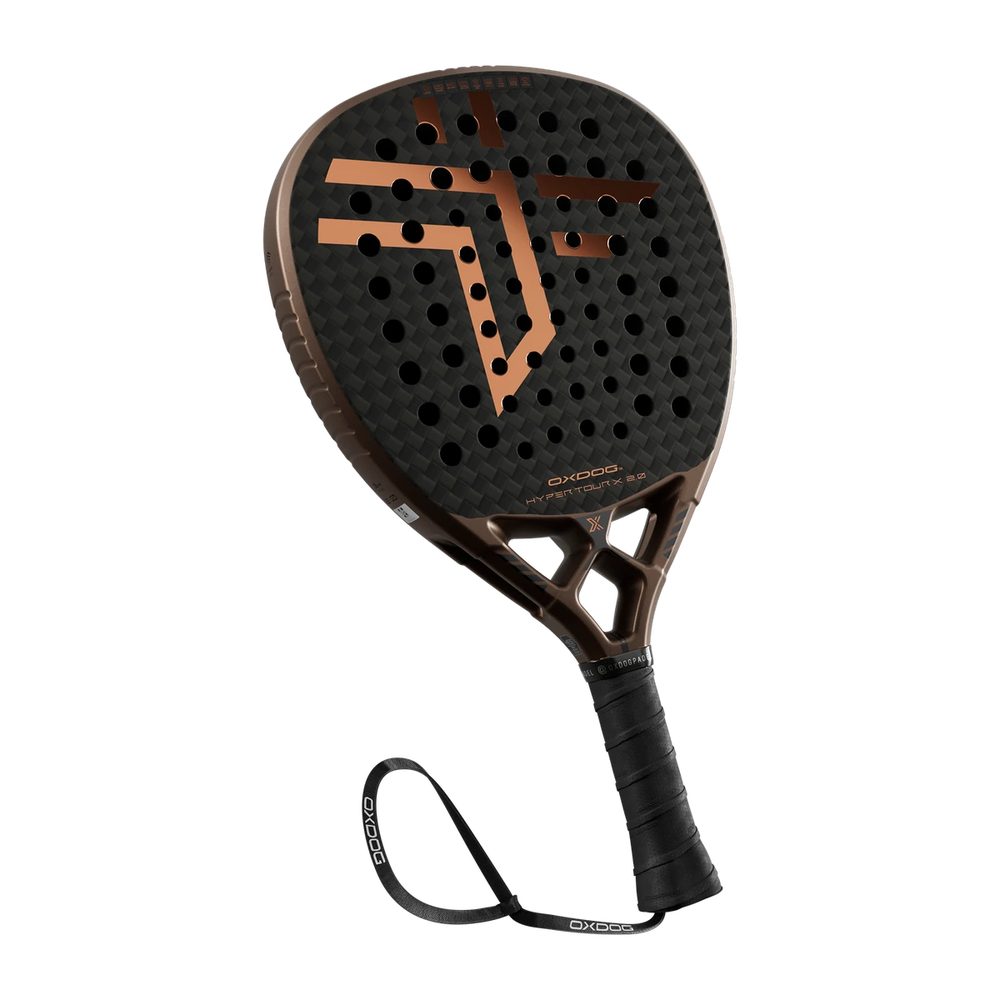
The Oxdog Hyper Tour X 2.0 is a teardrop with the balance sitting in the middle, and that single choice tells you almost everything about who it suits. It gives you the shape an advanced player reaches for, a tip that carries a little extra mass into the smash, without stacking so much weight in the head that the racket turns slow in your hand. What you get is a frame you can attack with and still whip around at the net in the same rally. It reads as an all-court racket that leans toward offense, for someone who already hits clean and wants the honest version of a padel racket rather than a padded one.
This is a frame for the player who has stopped needing forgiveness and started asking for feedback. The 360g weight is squarely standard, and the medium core plays firmer than the number suggests: a clean drive leaves with pace, but a thin hit runs straight up your forearm. The balance keeps the racket obedient the moment you have to change direction. If you are still fighting the ball around the court, this is not the racket that carries you. Read the who-should-skip list before you spend, because the Hyper Tour X asks for a grooved swing and repays the player who has one.
The build
A medium core you can feel through the ball
Oxdog builds the Hyper Tour X on a medium-density foam, and that is the number that governs how the whole racket answers you. A medium core sinks a little under the ball at contact, then springs it back, so you feel exactly where the ball met the strings without the jarring rebound a harder foam sends up the arm. It sits between the two extremes on purpose. There is enough compression to hold the ball for a beat of touch on a reset, and enough resistance underneath that a flat drive still leaves with pace behind it. You supply the swing speed and the core repays it in kind rather than adding or subtracting much of its own. The flip side is that a thin hit goes flat and short, and the strings tell you so at once.
A smooth face that plays clean
The hitting surface is finished smooth rather than gritted or sanded, so this is not a racket built to chew spin into the ball. Where a coarse texture bites and drags on the ball to spin it, this face lets it release quickly and cleanly, which trades away some of that grip and gives you back a truer, more predictable strike. Off a flat volley or a driven bandeja the ball leaves the face on the line you chose rather than kicking away off a rough surface. If spin is the shot you live on, this is the limit of the frame, and it is worth knowing up front.
A teardrop mold with the balance kept even
The shape is a teardrop, so the widest part of the head sits a touch higher than a round frame, nudging the sweet spot up toward the top third and putting a little more mass behind an overhead. What keeps this racket from feeling like a pure power stick is the balance, which Oxdog holds at medium rather than loading the head. The result is a teardrop that swings closer to neutral in the hand. You get the upper-court sweet spot and some of the tip weight that helps a smash, without the drag that a head-heavy frame brings to a fast exchange at the net.
How it plays
At the net it stays quick and answers late
The racket comes around fast when a volley jumps at you with no time to set. You can take the ball early, block a hard drive back deep, and get your hands back in front of you before the next ball arrives. Contact reads clearly through the handle here, so a soft touch volley drops short when you want it and a firm punch carries when you lean on it. Rally after rally, that quickness in the hands is what keeps you from ever feeling half a beat behind the exchange.
From the baseline it rewards a clean strike over a lazy one
Defending deep, a controlled block floats back long and a lob sits up over the net player when your timing is there, because the frame hands you back a fair share of the pace you put in. What it will not do is bail you out of a rushed, off-center swing the way a soft round frame does. Meet the ball late or thin and the return goes flat and short, and you feel exactly how far off you were. That honesty is what draws the right player to it and what wears the wrong one down.
On the attack the ball leaves flat and fast
Come up under a kicked smash and the ball comes off the top of the face high and heavy, driving down on the line you swung without skidding sideways. You feel the shot flatten out and go, and there is enough behind it to finish the point clean. The catch is spin: a víbora or a heavily brushed smash gets less grab than a rough-faced racket would give, so your kick and slice come from your own wrist and racket path, not from help baked into the surface. Trust your own hand and the finish is severe.
Comfort asks your arm to carry its share
An even-balanced teardrop like this is kinder to the elbow than a stiff, head-heavy frame, and this racket sits in the more forgiving half of that scale. On a clean hit the feedback is pleasant and direct. Catch one thin, though, and you feel it in the forearm long after the point is over, and a long night of off-center contacts will leave the arm tired. Players who fight arm trouble should treat that as a warning and demo before they commit. This racket rewards the player whose arm and technique are both up to a firmer, more communicative hit.
Who it's for (and who should skip it)
Buy it if
- You already hit clean and want a teardrop that attacks without turning slow at the net.
- You play a full all-court game and value direct feedback over built-in forgiveness.
- You generate your own spin from wrist and racket path and do not need a rough face doing it for you.
Look elsewhere if
- You are a beginner or still grooving your swing, because this frame gives feedback rather than forgiveness and will punish a thin, off-center hit.
- Spin is the core of your game, since the smooth face releases the ball too fast to load the heavy kick and slice you want.
- You are prone to elbow or wrist trouble and need a plush, cushioned core, because this one sends a firm, clean contact straight back through the hand.
Not sure it's your match? The free 2-minute quiz reads your level, style, and budget and tells you which racket is.
The bottom line
If you already hit clean and want feedback over forgiveness, the Hyper Tour X 2.0 gives you a racket that tells the truth about every contact and stays quick in your hands when a point speeds up. Look elsewhere if you live on spin or need a cushioned frame to protect the arm. Not sure it is your match? The free 2-minute quiz reads your level, style, and budget and tells you.
Where to buy
Prices shown in Euro, converted and approximate. You check out in the store's own currency.
Frequently asked
No. The Hyper Tour X 2.0 is an advanced teardrop at 360g with a medium core, built to reward a clean, grooved swing rather than to flatter mishits. A beginner will find it demanding and feel every off-center hit through the arm. A round, soft-cored frame around 355g will teach you more and tire you less, and this racket will still be here when your technique catches up.
It sits between the two and tips toward power. The teardrop head lifts the sweet spot and puts a little mass behind the smash, while the medium balance keeps the racket quick and controllable instead of loading everything into the tip. Think of it as an attack-leaning all-court frame for an advanced player who wants to hit through the ball and still defend with the same stick.
A medium-density foam core sits behind a smooth face. That core plays firmer than the medium label suggests, with just enough compression for touch on a reset, well short of a beginner's plush foam. The surface is finished clean rather than roughened, so it returns a truer, more repeatable strike and asks you to supply your own spin from wrist and racket path.
None of our approved retailers had it in stock when we checked on 5 October 2026, so there is no live price to show right now. Availability moves week to week.
Yes, more than most. The medium core plays on the firm side and the smooth face gives no help on mishits, so a thin or late contact sends a jolt up the forearm and the ball goes flat and short. It suits a player with a grooved swing and a healthy arm. If you fatigue quickly or manage elbow trouble, a softer, more cushioned frame will treat you better across a long match.

The app · free quiz
Not sure which one's you?
Take the free quiz in the app. We'll match a racket to your game, not the other way around.
Find my racketFree quiz. Sign in with email or Google to get your four picks.

Oxdog Hyper Tour X 2.0 2026 Review
By Andres Jovem · Updated October 19, 2026
An even-balanced teardrop that leans to attack, built for the advanced player who wants direct feedback without a head-heavy penalty.
The verdict
The Oxdog Hyper Tour X 2.0 is a teardrop with the balance sitting in the middle, and that single choice tells you almost everything about who it suits. It gives you the shape an advanced player reaches for, a tip that carries a little extra mass into the smash, without stacking so much weight in the head that the racket turns slow in your hand. What you get is a frame you can attack with and still whip around at the net in the same rally. It reads as an all-court racket that leans toward offense, for someone who already hits clean and wants the honest version of a padel racket rather than a padded one.
This is a frame for the player who has stopped needing forgiveness and started asking for feedback. The 360g weight is squarely standard, and the medium core plays firmer than the number suggests: a clean drive leaves with pace, but a thin hit runs straight up your forearm. The balance keeps the racket obedient the moment you have to change direction. If you are still fighting the ball around the court, this is not the racket that carries you. Read the who-should-skip list before you spend, because the Hyper Tour X asks for a grooved swing and repays the player who has one.
The build
A medium core you can feel through the ball
Oxdog builds the Hyper Tour X on a medium-density foam, and that is the number that governs how the whole racket answers you. A medium core sinks a little under the ball at contact, then springs it back, so you feel exactly where the ball met the strings without the jarring rebound a harder foam sends up the arm. It sits between the two extremes on purpose. There is enough compression to hold the ball for a beat of touch on a reset, and enough resistance underneath that a flat drive still leaves with pace behind it. You supply the swing speed and the core repays it in kind rather than adding or subtracting much of its own. The flip side is that a thin hit goes flat and short, and the strings tell you so at once.
A smooth face that plays clean
The hitting surface is finished smooth rather than gritted or sanded, so this is not a racket built to chew spin into the ball. Where a coarse texture bites and drags on the ball to spin it, this face lets it release quickly and cleanly, which trades away some of that grip and gives you back a truer, more predictable strike. Off a flat volley or a driven bandeja the ball leaves the face on the line you chose rather than kicking away off a rough surface. If spin is the shot you live on, this is the limit of the frame, and it is worth knowing up front.
A teardrop mold with the balance kept even
The shape is a teardrop, so the widest part of the head sits a touch higher than a round frame, nudging the sweet spot up toward the top third and putting a little more mass behind an overhead. What keeps this racket from feeling like a pure power stick is the balance, which Oxdog holds at medium rather than loading the head. The result is a teardrop that swings closer to neutral in the hand. You get the upper-court sweet spot and some of the tip weight that helps a smash, without the drag that a head-heavy frame brings to a fast exchange at the net.
How it plays
At the net it stays quick and answers late
The racket comes around fast when a volley jumps at you with no time to set. You can take the ball early, block a hard drive back deep, and get your hands back in front of you before the next ball arrives. Contact reads clearly through the handle here, so a soft touch volley drops short when you want it and a firm punch carries when you lean on it. Rally after rally, that quickness in the hands is what keeps you from ever feeling half a beat behind the exchange.
From the baseline it rewards a clean strike over a lazy one
Defending deep, a controlled block floats back long and a lob sits up over the net player when your timing is there, because the frame hands you back a fair share of the pace you put in. What it will not do is bail you out of a rushed, off-center swing the way a soft round frame does. Meet the ball late or thin and the return goes flat and short, and you feel exactly how far off you were. That honesty is what draws the right player to it and what wears the wrong one down.
On the attack the ball leaves flat and fast
Come up under a kicked smash and the ball comes off the top of the face high and heavy, driving down on the line you swung without skidding sideways. You feel the shot flatten out and go, and there is enough behind it to finish the point clean. The catch is spin: a víbora or a heavily brushed smash gets less grab than a rough-faced racket would give, so your kick and slice come from your own wrist and racket path, not from help baked into the surface. Trust your own hand and the finish is severe.
Comfort asks your arm to carry its share
An even-balanced teardrop like this is kinder to the elbow than a stiff, head-heavy frame, and this racket sits in the more forgiving half of that scale. On a clean hit the feedback is pleasant and direct. Catch one thin, though, and you feel it in the forearm long after the point is over, and a long night of off-center contacts will leave the arm tired. Players who fight arm trouble should treat that as a warning and demo before they commit. This racket rewards the player whose arm and technique are both up to a firmer, more communicative hit.
Who it's for (and who should skip it)
Buy it if
- You already hit clean and want a teardrop that attacks without turning slow at the net.
- You play a full all-court game and value direct feedback over built-in forgiveness.
- You generate your own spin from wrist and racket path and do not need a rough face doing it for you.
Look elsewhere if
- You are a beginner or still grooving your swing, because this frame gives feedback rather than forgiveness and will punish a thin, off-center hit.
- Spin is the core of your game, since the smooth face releases the ball too fast to load the heavy kick and slice you want.
- You are prone to elbow or wrist trouble and need a plush, cushioned core, because this one sends a firm, clean contact straight back through the hand.
Not sure it's your match? The free 2-minute quiz reads your level, style, and budget and tells you which racket is.
The bottom line
If you already hit clean and want feedback over forgiveness, the Hyper Tour X 2.0 gives you a racket that tells the truth about every contact and stays quick in your hands when a point speeds up. Look elsewhere if you live on spin or need a cushioned frame to protect the arm. Not sure it is your match? The free 2-minute quiz reads your level, style, and budget and tells you.
Where to buy
Prices shown in Euro, converted and approximate. You check out in the store's own currency.
Frequently asked
No. The Hyper Tour X 2.0 is an advanced teardrop at 360g with a medium core, built to reward a clean, grooved swing rather than to flatter mishits. A beginner will find it demanding and feel every off-center hit through the arm. A round, soft-cored frame around 355g will teach you more and tire you less, and this racket will still be here when your technique catches up.
It sits between the two and tips toward power. The teardrop head lifts the sweet spot and puts a little mass behind the smash, while the medium balance keeps the racket quick and controllable instead of loading everything into the tip. Think of it as an attack-leaning all-court frame for an advanced player who wants to hit through the ball and still defend with the same stick.
A medium-density foam core sits behind a smooth face. That core plays firmer than the medium label suggests, with just enough compression for touch on a reset, well short of a beginner's plush foam. The surface is finished clean rather than roughened, so it returns a truer, more repeatable strike and asks you to supply your own spin from wrist and racket path.
None of our approved retailers had it in stock when we checked on 5 October 2026, so there is no live price to show right now. Availability moves week to week.
Yes, more than most. The medium core plays on the firm side and the smooth face gives no help on mishits, so a thin or late contact sends a jolt up the forearm and the ball goes flat and short. It suits a player with a grooved swing and a healthy arm. If you fatigue quickly or manage elbow trouble, a softer, more cushioned frame will treat you better across a long match.
The app · free quiz
Not sure which one's you?
Take the free quiz in the app. We'll match a racket to your game, not the other way around.
Find my racketFree quiz. Sign in with email or Google to get your four picks.