Siux Valkiria Elite 2 2026 Review
By Andres Jovem · Updated October 3, 2026
A soft, medium-balanced teardrop that gives an improving player spin and control without the shock of a stiff head-heavy frame.

The verdict
The Siux Valkiria Elite 2 is a step-up racket for a player who has left the beginner stage behind and wants a frame that lets them push. It sits in a teardrop shape but carries a soft core and a balance that stays close to the middle, and it earns its keep on the two things that stage of player wants most: a rough face that grips the ball for spin, and a softness that keeps every strike easy on the hand. That combination is the pitch. You get a little reach into your attack and a face built to shape a ball, and you keep the forgiveness that a firm, tip-heavy racket takes away.
It is built for the improver who is starting to hit through the ball but is not ready to be punished for every late swing. If you already smash for a living and want a frame that loads up behind your head, this is not that racket, and the who-should-skip-it section below says so plainly. Read on before you decide it is yours.
The build
Core
Siux builds the Valkiria Elite 2 on an EVA Soft foam, and that soft core is the first thing your hand notices. A soft foam compresses under the ball at contact and hands it back with a longer dwell, so contact lands cushioned instead of jarring. Two things follow. Your mishits stay alive, because a strike off the middle sinks into the foam rather than pinging away wild, and less of the buzz from each hit travels up into your forearm. The price you pay is raw pace: a soft core returns less of your swing speed than a firm one, so power here comes from your timing and your legs, not from the foam firing the ball back.
Face
The hitting layer is a 3K carbon weave finished rough rather than smooth. Run a finger across it and you can feel the fine ridges of the weave standing proud, and those ridges are what catch the ball when you brush up the back of it. On a slow, deliberate topspin lob that grab is what lets the shot clear the net cord and still drop before the back glass instead of sailing long. The 3K carbon itself is a mid-weight lay-up, stiffer and more direct than a fiberglass face but well short of the dense high-modulus carbons on the top attacking frames. For a player learning to shape a ball, that combination of grip and give is where a lot of the fun lives.
Shape and balance
The mold is a teardrop, but the mass sits at a medium balance rather than stacked toward the tip. That keeps the sweet spot a touch higher than a round frame gives you, so there is a little more punch behind an overhead, without the racket turning into a head-heavy club that drags through the swing. A carbon frame holds the head steady when you catch one off center, so the shape flatters an improving swing instead of demanding a grooved one. This is the lever that separates the Valkiria Elite 2 from the finishers: same outline, gentler weight distribution.
How it plays
From the baseline
This is where the frame feels most at home. Sit behind a lob or a reset and the cushioned contact lets you steer the ball deep off a compact swing, so defending out of a tight corner asks for placement rather than muscle. The ball comes off the face controlled, and you win the rally by putting it where your opponents are not. Ask it to blast a flat drive through the court and you feel the ceiling: the frame wants you to build the point, not end it in one swing.
At the net
The head whips up fast to meet a body shot, so quick hands stay quick and a block goes back deep without a big move. Step in early and the volley goes where you aim it; hang back and it floats. There is no free power waiting in the frame, so a put-away is about angle and timing more than muscle, and a lazy poke will sit up. The reward comes to the player who takes the ball early rather than waiting for it to arrive.
On the attack
The rough face is the star of your overhead game. A brushed bandeja or a víbora grips and drops with sideways spin, the shot that keeps the point in your hands and pins opponents to the back wall. Flatten it out into a straight smash and the ball climbs after it lands, kicking up off the back glass and over the fence rather than skidding low where your opponents can dig it back. You are working the angles instead of trying to punch through four players. It suits a spin-and-placement attacker far more than a raw power hitter.
Comfort and the arm
This is the quiet reason to choose it. Play two hours on it and your elbow is not ringing at the end the way it does after a stiff teardrop, and your wrist stays loose enough through the last few games to keep shaping your shots. It is one of the gentler frames on the arm at this level. Nothing is free: the extra swinging it takes to hit a heavy ball is real, so a shoulder that tires late in a match will feel that work more than the arm ever does.
Who it's for (and who should skip it)
Buy it if
- You have moved past the beginner round frame and want a first taste of teardrop reach without a punishing head-heavy weight.
- You are learning to shape víboras and topspin lobs and want a rough face that grips the ball.
- You want an advanced-level racket that stays kind to a forearm that is still building strength.
Look elsewhere if
- You are a brand-new player. A round, soft frame will forgive your contact more widely and teach you faster than a teardrop, even a gentle one.
- You are a heavy hitter chasing free power off the smash. This frame hands back placement and spin, so a firm head-heavy diamond will suit you better.
- You want the racket to supply the pace for you. Here you generate it, and a player who wants the frame to do the work will find this one asks too much.
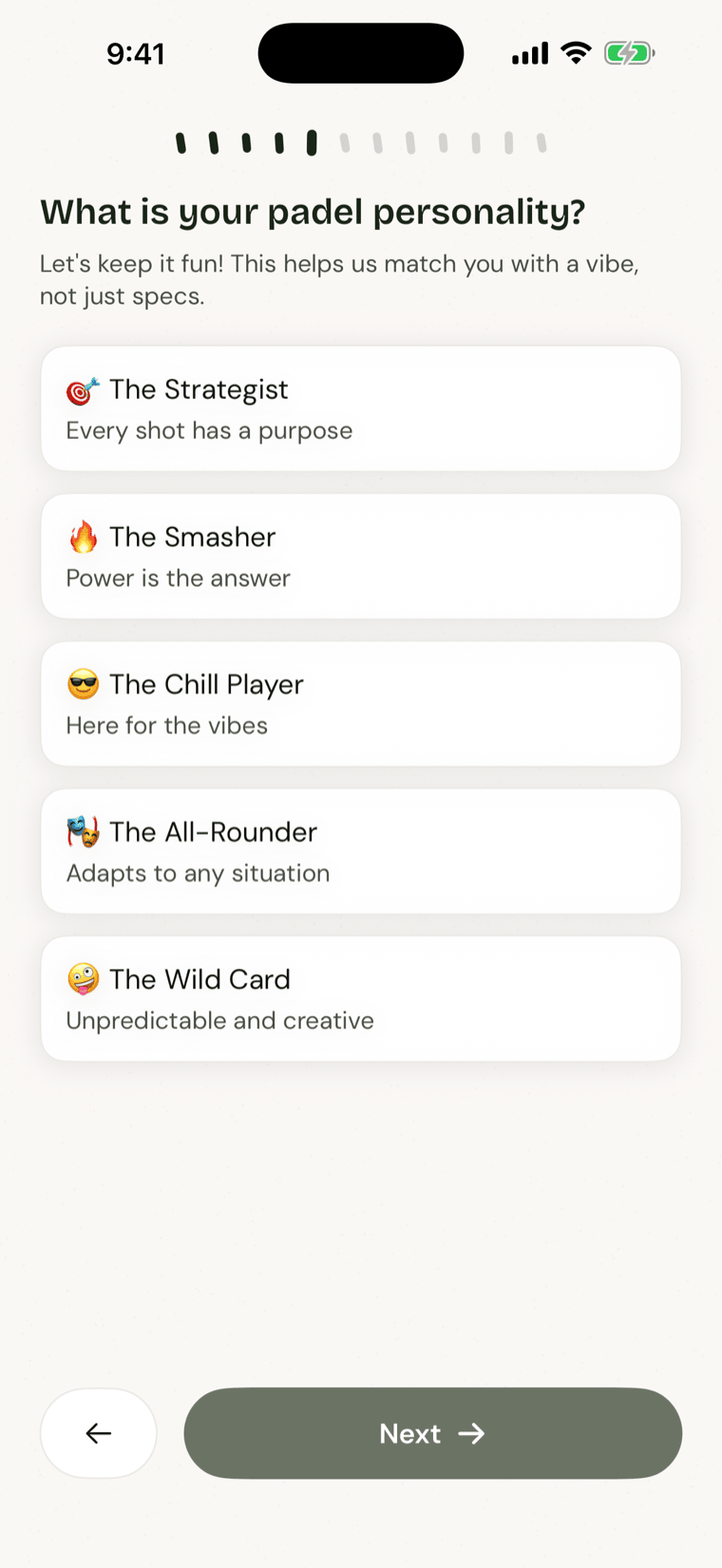
Not sure it's your match? The free 2-minute quiz reads your level, style, and budget and tells you which racket is.
The bottom line
There is no best racket, only the best one for you, and the Valkiria Elite 2 is for the improver who wants a gentle way into a teardrop: spin off the rough face, a touch more reach on the overhead, and a soft core that keeps the whole thing kind to the arm. If that is your stage, it earns a look. If you are just starting, or you want the frame to hit for you, take the two-minute quiz and let it point you somewhere that fits.
Where to buy
Prices shown in Euro, converted and approximate. You check out in the store's own currency.
Frequently asked
Not really. The Valkiria Elite 2 is an advanced-level teardrop, and while its soft core and medium balance make it one of the gentler frames in that class, a true beginner will learn faster on a round, soft racket that forgives a wider spread of mishits. Think of this as the frame you step up to once your contact is reliable, not the one you start on.
The Valkiria Elite 2 is a control racket first. Its soft EVA core cushions the ball and returns pace through your timing rather than firing it back, and the medium balance keeps the head manageable instead of loading it for power. You get a little more attack than a round frame offers, but the racket is built for placement and spin, not for blasting flat winners.
A soft EVA core and a 3K carbon face in a rough finish. The foam keeps contact cushioned and easy on the arm, while the rough 3K carbon surface grips the ball for spin on brushed shots like the víbora and the topspin lob. It is a materials pairing aimed at control and shape rather than raw pace.
Yes, for an advanced racket. The soft core absorbs a good share of the vibration that a stiffer teardrop sends back into the forearm, so it treats the elbow and wrist more kindly than most frames at this level. The catch is that you supply your own power, so a tiring shoulder does the extra work over a long match.
Siux positions the Valkiria Elite 2 in its women's line, but the spec is what matters, not the label. At 350g with a soft core and a medium balance, it fits any improving player who wants a manageable teardrop that is kind to the arm. If those numbers suit your game, the badge is beside the point. Not sure it is your match? The free 2-minute quiz reads your level, style, and budget and tells you.

The app · free quiz
Not sure which one's you?
Take the free quiz in the app. We'll match a racket to your game, not the other way around.
Find my racketFree quiz. Sign in with email or Google to get your four picks.

Siux Valkiria Elite 2 2026 Review
By Andres Jovem · Updated October 3, 2026
A soft, medium-balanced teardrop that gives an improving player spin and control without the shock of a stiff head-heavy frame.
The verdict
The Siux Valkiria Elite 2 is a step-up racket for a player who has left the beginner stage behind and wants a frame that lets them push. It sits in a teardrop shape but carries a soft core and a balance that stays close to the middle, and it earns its keep on the two things that stage of player wants most: a rough face that grips the ball for spin, and a softness that keeps every strike easy on the hand. That combination is the pitch. You get a little reach into your attack and a face built to shape a ball, and you keep the forgiveness that a firm, tip-heavy racket takes away.
It is built for the improver who is starting to hit through the ball but is not ready to be punished for every late swing. If you already smash for a living and want a frame that loads up behind your head, this is not that racket, and the who-should-skip-it section below says so plainly. Read on before you decide it is yours.
The build
Core
Siux builds the Valkiria Elite 2 on an EVA Soft foam, and that soft core is the first thing your hand notices. A soft foam compresses under the ball at contact and hands it back with a longer dwell, so contact lands cushioned instead of jarring. Two things follow. Your mishits stay alive, because a strike off the middle sinks into the foam rather than pinging away wild, and less of the buzz from each hit travels up into your forearm. The price you pay is raw pace: a soft core returns less of your swing speed than a firm one, so power here comes from your timing and your legs, not from the foam firing the ball back.
Face
The hitting layer is a 3K carbon weave finished rough rather than smooth. Run a finger across it and you can feel the fine ridges of the weave standing proud, and those ridges are what catch the ball when you brush up the back of it. On a slow, deliberate topspin lob that grab is what lets the shot clear the net cord and still drop before the back glass instead of sailing long. The 3K carbon itself is a mid-weight lay-up, stiffer and more direct than a fiberglass face but well short of the dense high-modulus carbons on the top attacking frames. For a player learning to shape a ball, that combination of grip and give is where a lot of the fun lives.
Shape and balance
The mold is a teardrop, but the mass sits at a medium balance rather than stacked toward the tip. That keeps the sweet spot a touch higher than a round frame gives you, so there is a little more punch behind an overhead, without the racket turning into a head-heavy club that drags through the swing. A carbon frame holds the head steady when you catch one off center, so the shape flatters an improving swing instead of demanding a grooved one. This is the lever that separates the Valkiria Elite 2 from the finishers: same outline, gentler weight distribution.
How it plays
From the baseline
This is where the frame feels most at home. Sit behind a lob or a reset and the cushioned contact lets you steer the ball deep off a compact swing, so defending out of a tight corner asks for placement rather than muscle. The ball comes off the face controlled, and you win the rally by putting it where your opponents are not. Ask it to blast a flat drive through the court and you feel the ceiling: the frame wants you to build the point, not end it in one swing.
At the net
The head whips up fast to meet a body shot, so quick hands stay quick and a block goes back deep without a big move. Step in early and the volley goes where you aim it; hang back and it floats. There is no free power waiting in the frame, so a put-away is about angle and timing more than muscle, and a lazy poke will sit up. The reward comes to the player who takes the ball early rather than waiting for it to arrive.
On the attack
The rough face is the star of your overhead game. A brushed bandeja or a víbora grips and drops with sideways spin, the shot that keeps the point in your hands and pins opponents to the back wall. Flatten it out into a straight smash and the ball climbs after it lands, kicking up off the back glass and over the fence rather than skidding low where your opponents can dig it back. You are working the angles instead of trying to punch through four players. It suits a spin-and-placement attacker far more than a raw power hitter.
Comfort and the arm
This is the quiet reason to choose it. Play two hours on it and your elbow is not ringing at the end the way it does after a stiff teardrop, and your wrist stays loose enough through the last few games to keep shaping your shots. It is one of the gentler frames on the arm at this level. Nothing is free: the extra swinging it takes to hit a heavy ball is real, so a shoulder that tires late in a match will feel that work more than the arm ever does.
Who it's for (and who should skip it)
Buy it if
- You have moved past the beginner round frame and want a first taste of teardrop reach without a punishing head-heavy weight.
- You are learning to shape víboras and topspin lobs and want a rough face that grips the ball.
- You want an advanced-level racket that stays kind to a forearm that is still building strength.
Look elsewhere if
- You are a brand-new player. A round, soft frame will forgive your contact more widely and teach you faster than a teardrop, even a gentle one.
- You are a heavy hitter chasing free power off the smash. This frame hands back placement and spin, so a firm head-heavy diamond will suit you better.
- You want the racket to supply the pace for you. Here you generate it, and a player who wants the frame to do the work will find this one asks too much.
Not sure it's your match? The free 2-minute quiz reads your level, style, and budget and tells you which racket is.
The bottom line
There is no best racket, only the best one for you, and the Valkiria Elite 2 is for the improver who wants a gentle way into a teardrop: spin off the rough face, a touch more reach on the overhead, and a soft core that keeps the whole thing kind to the arm. If that is your stage, it earns a look. If you are just starting, or you want the frame to hit for you, take the two-minute quiz and let it point you somewhere that fits.
Where to buy
Prices shown in Euro, converted and approximate. You check out in the store's own currency.
Frequently asked
Not really. The Valkiria Elite 2 is an advanced-level teardrop, and while its soft core and medium balance make it one of the gentler frames in that class, a true beginner will learn faster on a round, soft racket that forgives a wider spread of mishits. Think of this as the frame you step up to once your contact is reliable, not the one you start on.
The Valkiria Elite 2 is a control racket first. Its soft EVA core cushions the ball and returns pace through your timing rather than firing it back, and the medium balance keeps the head manageable instead of loading it for power. You get a little more attack than a round frame offers, but the racket is built for placement and spin, not for blasting flat winners.
A soft EVA core and a 3K carbon face in a rough finish. The foam keeps contact cushioned and easy on the arm, while the rough 3K carbon surface grips the ball for spin on brushed shots like the víbora and the topspin lob. It is a materials pairing aimed at control and shape rather than raw pace.
Yes, for an advanced racket. The soft core absorbs a good share of the vibration that a stiffer teardrop sends back into the forearm, so it treats the elbow and wrist more kindly than most frames at this level. The catch is that you supply your own power, so a tiring shoulder does the extra work over a long match.
Siux positions the Valkiria Elite 2 in its women's line, but the spec is what matters, not the label. At 350g with a soft core and a medium balance, it fits any improving player who wants a manageable teardrop that is kind to the arm. If those numbers suit your game, the badge is beside the point. Not sure it is your match? The free 2-minute quiz reads your level, style, and budget and tells you.
The app · free quiz
Not sure which one's you?
Take the free quiz in the app. We'll match a racket to your game, not the other way around.
Find my racketFree quiz. Sign in with email or Google to get your four picks.