Siux Electra Pro Fire Red 2026 Review
By Andres Jovem · Updated October 19, 2026
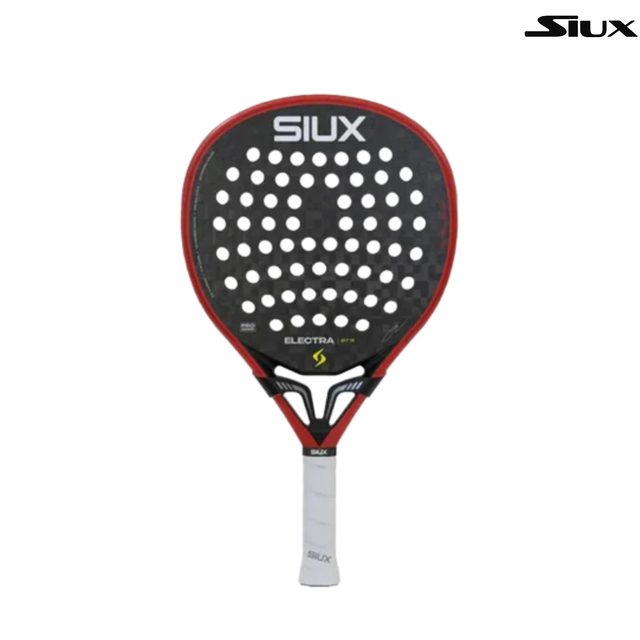
Franco Stupaczuk's signature teardrop: a firm, direct attacking frame for the advanced player who takes the net and finishes points, with more back-court precision than its power profile suggests.
The verdict
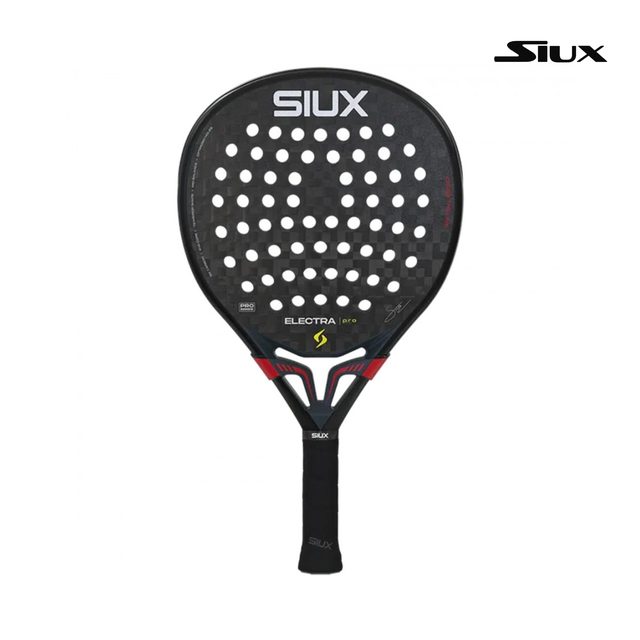
The Siux Electra Pro Fire Red 2026 carries Franco Stupaczuk's name, and it is built for the player who ends points rather than extends them. A teardrop mold, 15K carbon faces, and a hard EVA core add up to a firm, direct attacking frame with a clean, solid contact. Siux pitches it as a hybrid, and the label holds: it attacks first, but it does not throw away precision from the back of the court to do it.
Part of the case right now is money. At our last check it sold from about €165, less than half the €350 compare-at price on that same listing, and every retailer we list had it available. For a current-season signature frame, that is top-shelf hardware at a mid-range price.
The honesty first, though: this is not a frame that helps you. The hard core gives back little at low swing speed, so defensive blocks and lobs need your own push behind them, and the firm contact reports to your arm over a long match. If your swing is still forming, or your elbow already complains, the Electra Pro will make both problems louder.
The build
A core listed hard, logged medium
The listed core is EVA Hard, and here is the footnote we refuse to hide: our own catalog logs the density a step softer, at medium, while the Shadow Red sibling of this same mold lists hard outright. Plan around firm. At low swing speed the core barely gives, so a gentle block comes off quiet and lands short. Accelerate and it answers, the ball leaving fast and flat off a committed stroke. That on-off character is what makes it a finisher's core and a defender's chore.
15K carbon faces
The hitting surface is 15K carbon with a rough finish, a denser weave than the 12K used on the Shadow Red variant. A denser weave plays stiffer, so contact is crisp and dry and the ball leaves direct instead of sinking into the face. The rough texture is what makes that stiffness usable: it grips the ball for the beat it sits on the surface, so a brushed shot picks up spin instead of sliding off flat.
The Revolution Frame
The chassis is carbon fiber on Siux's Revolution Frame construction, aimed at structural firmness and minimal deformation at impact. The less a frame twists and flexes, the less of your swing is spent bending the racket, which suits the player who hits through the ball rather than around it. Because a build this stiff sends vibration somewhere, Siux fits two dampers, the AVS system and ShockOut inserts, both there to cut frame buzz on off-center hits.
Teardrop, medium balance
The mold is a teardrop at a nominal 367g (360-375g range) with a medium balance, so the mass sits just above center: enough head presence to load the offensive shots, not so much that your hands slow down. That balance choice is what keeps the hybrid pitch honest. A full diamond would hit harder and react slower; this stays quick enough to live at the net, where its owner is supposed to be.
How it plays
Finishing points
This is the job description. Give it a short ball and a committed swing becomes a smash that stays put away, fast, flat, and heavy off the glass. The angled finishers behave too: a víbora skids low enough to be a problem, and a bandeja drops at the feet instead of sitting up to be punished. Acceleration is the currency here. Swing hard and the response is immediate; swing tentatively and nothing much happens.
Quick hands at the net
Up front it feels like a racket that wants the point over. A punch volley comes off firm and final, and the head resets fast between shots in a quick exchange, so you can keep taking the ball early and keep the pressure on. What it will not do is cushion for you. A late, defensive volley leaves with more pace than you asked for, so drop volleys and touch shots are on your hands, not the frame.
The back of the court
Defense is where the bill arrives. A passive block sits short, and a lob needs a full, deliberate push to travel deep, because nothing here rebounds for free at low speed. Commit to the stroke and the trade turns fair: a driven reset goes where you aimed it, with none of the drift a softer frame adds under pressure. If you spend most of a match surviving at the back wall, this is the wrong tool. If you defend for two shots to earn the third, it holds up.
Comfort and the arm
A stiff face over a firm core sends more of each hit up the arm than a soft all-rounder would, and the anti-vibration hardware takes some of the sting, not all of it. Expect to know about a long match in your elbow. The medium balance is the mercy, sparing you the extra jolt a head-heavy attacker adds at the end of every swing. A grooved, advanced arm will manage; a tender elbow should take the skip list below at its word.
Who it's for (and who should skip it)
Buy it if
- You play advanced, competitive padel and win your points at the net, not from behind
- You want an attacking frame that still puts the ball where you aim from the back
- You bring your own pace and a grooved, committed swing
Look elsewhere if
- You are still building technique and need a racket that forgives a soft or late swing
- Your elbow or shoulder is sensitive to firm, stiff contact
- Your game is defense-first and you lean on the racket for depth and rebound
Not sure it's your match? The free 2-minute quiz reads your level, style, and budget and tells you which racket is.
The bottom line
So: if you take the net by choice and end rallies on your own terms, the Electra Pro Fire Red belongs on your shortlist, and the wide shop coverage below means you compare prices instead of hunting stock. If you need a frame that supplies depth and cushions your learning while your game grows, go rounder and softer, and revisit this one when your swing is grooved. Not sure which side of that line you sit on? The free two-minute quiz reads your level, style, and budget and names the racket that fits.
Where to buy
Prices shown in Euro, converted and approximate. You check out in the store's own currency.
Frequently asked
No. The Electra Pro Fire Red is an advanced attacking frame: a hard EVA core and stiff 15K carbon faces give back little on a slow swing and send firm feedback into the arm. A beginner will fight it on defense and feel it in the elbow. Start with a round shape and a softer core, and come back once your swing is grooved.
It leans power, with more control than the attack profile suggests. The teardrop shape and medium balance keep placement honest from the back of the court, while the hard core and stiff faces turn an accelerated swing into fast, flat pace. Siux builds it as an attacking hybrid, and that is how it plays: offense first, precision kept.
At our last check the Electra Pro Fire Red sold from about €165, with our approved shops in euros ranging up to around €199. The compare-at prices on the same listings sit around €350, so current street prices run well under list. The comparison below shows live prices in your currency.
The face weave is the documented difference: the Fire Red carries 15K carbon faces where the Shadow Red lists 12K. A denser weave plays a touch stiffer and more direct, so the Fire Red is the firmer-hitting of the pair. Both sit in Siux's Electra line for 2026.
Franco Stupaczuk plays the Siux Electra Pro, his signature line. The Electra Pro is Franco Stupaczuk's signature line at Siux, and the Fire Red is its 2026 colorway, sold under his name at every shop we track. A signature badge tells you the design brief, an aggressive, net-forward game, more than it tells you the racket will suit yours.
An EVA Hard core, rough-finished 15K carbon faces, and a carbon fiber frame Siux calls the Revolution Frame. One honest footnote: our catalog logs the core density as medium rather than hard, so treat firm as the safe assumption when you judge comfort.
At its current price near €165, unusually so: that's mid-range money for Stupaczuk's actual signature spec. All-round advanced players get the most from it; pure defenders and pure sluggers each have better-targeted spends elsewhere on this site, and the quiz will point to them.
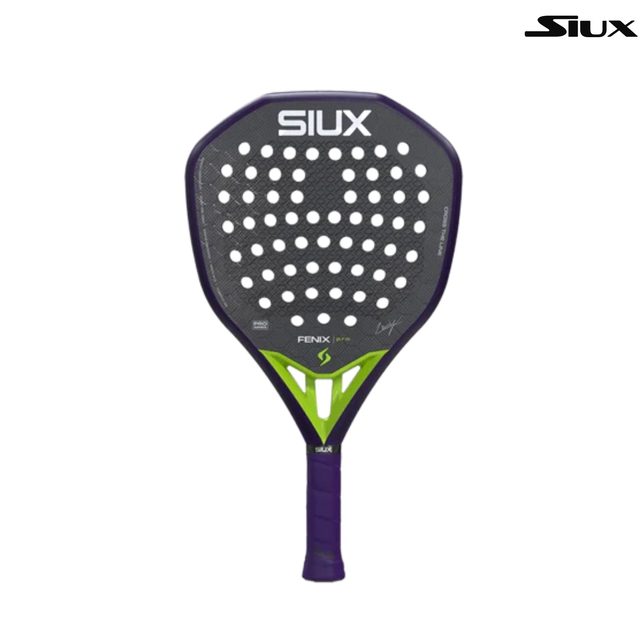
Same brand, different jobs. The Electra Pro is the all-round pick, a medium teardrop that attacks and defends in the same rally. The Fenix Pro is a hard attacking diamond that lives at the net. Choose the Electra unless your game is already built around the smash.
The app · free quiz
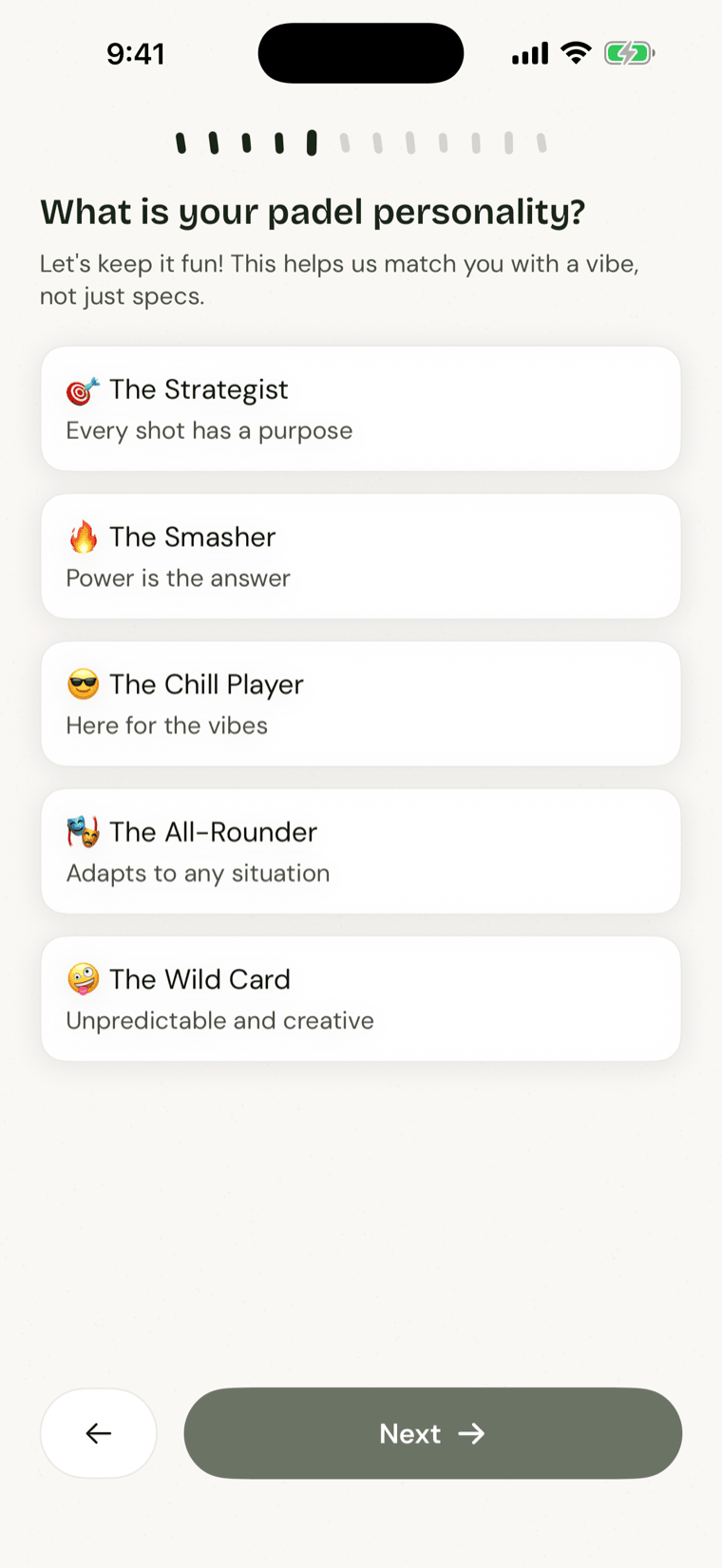
Not sure which one's you?
Take the free quiz in the app. We'll match a racket to your game, not the other way around.
Find my racketFree quiz. Sign in with email or Google to get your four picks.

Siux Electra Pro Fire Red 2026 Review
By Andres Jovem · Updated October 19, 2026
Franco Stupaczuk's signature teardrop: a firm, direct attacking frame for the advanced player who takes the net and finishes points, with more back-court precision than its power profile suggests.
The verdict
The Siux Electra Pro Fire Red 2026 carries Franco Stupaczuk's name, and it is built for the player who ends points rather than extends them. A teardrop mold, 15K carbon faces, and a hard EVA core add up to a firm, direct attacking frame with a clean, solid contact. Siux pitches it as a hybrid, and the label holds: it attacks first, but it does not throw away precision from the back of the court to do it.
Part of the case right now is money. At our last check it sold from about €165, less than half the €350 compare-at price on that same listing, and every retailer we list had it available. For a current-season signature frame, that is top-shelf hardware at a mid-range price.
The honesty first, though: this is not a frame that helps you. The hard core gives back little at low swing speed, so defensive blocks and lobs need your own push behind them, and the firm contact reports to your arm over a long match. If your swing is still forming, or your elbow already complains, the Electra Pro will make both problems louder.
The build
A core listed hard, logged medium
The listed core is EVA Hard, and here is the footnote we refuse to hide: our own catalog logs the density a step softer, at medium, while the Shadow Red sibling of this same mold lists hard outright. Plan around firm. At low swing speed the core barely gives, so a gentle block comes off quiet and lands short. Accelerate and it answers, the ball leaving fast and flat off a committed stroke. That on-off character is what makes it a finisher's core and a defender's chore.
15K carbon faces
The hitting surface is 15K carbon with a rough finish, a denser weave than the 12K used on the Shadow Red variant. A denser weave plays stiffer, so contact is crisp and dry and the ball leaves direct instead of sinking into the face. The rough texture is what makes that stiffness usable: it grips the ball for the beat it sits on the surface, so a brushed shot picks up spin instead of sliding off flat.
The Revolution Frame
The chassis is carbon fiber on Siux's Revolution Frame construction, aimed at structural firmness and minimal deformation at impact. The less a frame twists and flexes, the less of your swing is spent bending the racket, which suits the player who hits through the ball rather than around it. Because a build this stiff sends vibration somewhere, Siux fits two dampers, the AVS system and ShockOut inserts, both there to cut frame buzz on off-center hits.
Teardrop, medium balance
The mold is a teardrop at a nominal 367g (360-375g range) with a medium balance, so the mass sits just above center: enough head presence to load the offensive shots, not so much that your hands slow down. That balance choice is what keeps the hybrid pitch honest. A full diamond would hit harder and react slower; this stays quick enough to live at the net, where its owner is supposed to be.
How it plays
Finishing points
This is the job description. Give it a short ball and a committed swing becomes a smash that stays put away, fast, flat, and heavy off the glass. The angled finishers behave too: a víbora skids low enough to be a problem, and a bandeja drops at the feet instead of sitting up to be punished. Acceleration is the currency here. Swing hard and the response is immediate; swing tentatively and nothing much happens.
Quick hands at the net
Up front it feels like a racket that wants the point over. A punch volley comes off firm and final, and the head resets fast between shots in a quick exchange, so you can keep taking the ball early and keep the pressure on. What it will not do is cushion for you. A late, defensive volley leaves with more pace than you asked for, so drop volleys and touch shots are on your hands, not the frame.
The back of the court
Defense is where the bill arrives. A passive block sits short, and a lob needs a full, deliberate push to travel deep, because nothing here rebounds for free at low speed. Commit to the stroke and the trade turns fair: a driven reset goes where you aimed it, with none of the drift a softer frame adds under pressure. If you spend most of a match surviving at the back wall, this is the wrong tool. If you defend for two shots to earn the third, it holds up.
Comfort and the arm
A stiff face over a firm core sends more of each hit up the arm than a soft all-rounder would, and the anti-vibration hardware takes some of the sting, not all of it. Expect to know about a long match in your elbow. The medium balance is the mercy, sparing you the extra jolt a head-heavy attacker adds at the end of every swing. A grooved, advanced arm will manage; a tender elbow should take the skip list below at its word.
Who it's for (and who should skip it)
Buy it if
- You play advanced, competitive padel and win your points at the net, not from behind
- You want an attacking frame that still puts the ball where you aim from the back
- You bring your own pace and a grooved, committed swing
Look elsewhere if
- You are still building technique and need a racket that forgives a soft or late swing
- Your elbow or shoulder is sensitive to firm, stiff contact
- Your game is defense-first and you lean on the racket for depth and rebound
Not sure it's your match? The free 2-minute quiz reads your level, style, and budget and tells you which racket is.
The bottom line
So: if you take the net by choice and end rallies on your own terms, the Electra Pro Fire Red belongs on your shortlist, and the wide shop coverage below means you compare prices instead of hunting stock. If you need a frame that supplies depth and cushions your learning while your game grows, go rounder and softer, and revisit this one when your swing is grooved. Not sure which side of that line you sit on? The free two-minute quiz reads your level, style, and budget and names the racket that fits.
Where to buy
Prices shown in Euro, converted and approximate. You check out in the store's own currency.
Frequently asked
No. The Electra Pro Fire Red is an advanced attacking frame: a hard EVA core and stiff 15K carbon faces give back little on a slow swing and send firm feedback into the arm. A beginner will fight it on defense and feel it in the elbow. Start with a round shape and a softer core, and come back once your swing is grooved.
It leans power, with more control than the attack profile suggests. The teardrop shape and medium balance keep placement honest from the back of the court, while the hard core and stiff faces turn an accelerated swing into fast, flat pace. Siux builds it as an attacking hybrid, and that is how it plays: offense first, precision kept.
At our last check the Electra Pro Fire Red sold from about €165, with our approved shops in euros ranging up to around €199. The compare-at prices on the same listings sit around €350, so current street prices run well under list. The comparison below shows live prices in your currency.
The face weave is the documented difference: the Fire Red carries 15K carbon faces where the Shadow Red lists 12K. A denser weave plays a touch stiffer and more direct, so the Fire Red is the firmer-hitting of the pair. Both sit in Siux's Electra line for 2026.
Franco Stupaczuk plays the Siux Electra Pro, his signature line. The Electra Pro is Franco Stupaczuk's signature line at Siux, and the Fire Red is its 2026 colorway, sold under his name at every shop we track. A signature badge tells you the design brief, an aggressive, net-forward game, more than it tells you the racket will suit yours.
An EVA Hard core, rough-finished 15K carbon faces, and a carbon fiber frame Siux calls the Revolution Frame. One honest footnote: our catalog logs the core density as medium rather than hard, so treat firm as the safe assumption when you judge comfort.
At its current price near €165, unusually so: that's mid-range money for Stupaczuk's actual signature spec. All-round advanced players get the most from it; pure defenders and pure sluggers each have better-targeted spends elsewhere on this site, and the quiz will point to them.
Same brand, different jobs. The Electra Pro is the all-round pick, a medium teardrop that attacks and defends in the same rally. The Fenix Pro is a hard attacking diamond that lives at the net. Choose the Electra unless your game is already built around the smash.
The app · free quiz
Not sure which one's you?
Take the free quiz in the app. We'll match a racket to your game, not the other way around.
Find my racketFree quiz. Sign in with email or Google to get your four picks.