Stealth Avenger 2025 Review
By Andres Jovem · Updated October 3, 2026
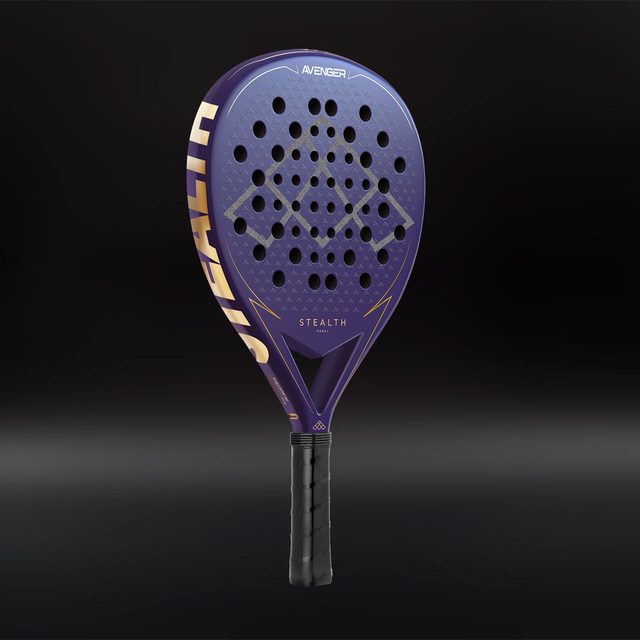
A medium-balanced teardrop that hands an improving player attacking shape without the harsh, all-or-nothing feel of a pure finisher.
The verdict
The Stealth Avenger 2025 is the racket for a player who has outgrown a soft round starter frame and wants to start hitting through the ball, without jumping straight to something that bites back. It is a teardrop, so the head carries a little extra mass and the sweet spot climbs toward the top, but the balance sits square in the middle rather than stacked forward. That one choice is the whole pitch: attacking geometry paired with a swing weight an intermediate can still control late in a match.
Read that as a frame that meets you halfway. It asks for a cleaner strike than a beginner racket, and it repays the effort with more shape on the ball. If you already generate your own pace and want the sharpest, most demanding finisher on the shelf, this is not that racket, and the last section says so plainly. If you are still turning a decent swing into a reliable one, keep reading.
The build
The core
Stealth builds the Avenger on an EVA Ctrl+ foam, a medium-density core tuned toward control rather than raw rebound. A medium foam flexes just enough to keep the hit from feeling glassy while still carrying your swing speed into the ball instead of letting it sink into the pad. The practical result is a middle setting. You supply more of the pace than a soft beginner core would gift you, and in return the ball goes closer to where you aimed it. On a mishit it does not punish you the way a firmer, denser pad would, so the learning curve stays gentle even as the demands rise.
The face
The hitting layer is a 6K Carbon Twill weave finished smooth. Carbon keeps the striking surface stiff and consistent across the face, so a strike an inch off center still comes back close to true rather than dying on you. The finish is the honest catch here. A smooth face slides across the ball more than a rough, gritty one, so the heavy topspin some players chase off a coarse surface is not this racket's strength. What you get instead is a clean, predictable contact that does not fight your timing, and a face that stays honest shot after shot rather than grabbing on one ball and skidding on the next.
The frame and shape
The mold is a teardrop, and the hoop is wrapped in carbon to hold that shape steady. The weight lands at a manageable 360g. A stiff carbon hoop keeps the head from flexing and twisting when you catch one off the middle, which is exactly the support a teardrop needs, since its sweet spot rides higher than a round frame's and lower than the punishing top edge of a stacked diamond. The balance is set to medium, so the mass is not loaded into the tip. That is the deliberate compromise across the whole build: attacking shape kept on a frame you can still whip around at the net in the third set.
How it plays
Building the point from the back
From the baseline the Avenger plays steadier than its attacking shape suggests. Because the weight is not thrown into the head, a defensive lob comes back with less effort than a front-loaded finisher demands, and a reset off a hard ball does not require you to muscle a heavy tip into position. There is a touch of cushion on those low, awkward digs, so a ball taken late off the back wall stays in play rather than spraying long. This is where an improving player will feel most at home.
Hands at the net
Up front the even balance is the payoff. The head is light enough to turn and meet a ball driven at your body, so a quick block or a punched volley arrives on time instead of a beat behind. Bring the racket forward to close out a floating ball and the contact is firm and clean, no mushy give under the strike. You will not out-react a featherweight control frame here, but nothing about the Avenger feels like dead weight when the exchange speeds up.
Going for the finish
The catalog files this racket as a finishing tool, and the shape backs that up on the overhead. Set your feet under a smash and the extra mass up top drives the ball down with real weight behind it. The result is a controlled put-away, aimed and firm: the ball leaves the strings placed and heavy, not a rattling bomb you can barely aim. Placing a bandeja or a víbora feels precise and repeatable, the ball leaving exactly where you steered it, so you win those points by picking your spot rather than by loading them with spin. The reward here is repeatability, the sense that the same swing lands the same shot twice.
What the arm feels
This is a forgiving frame for its category, and your elbow will notice. Each hit lands with enough give that a long session does not leave the joint aching the way a stiff, dense finisher can, and the shock stays even rather than spiking on a hard middle. It is not a soft beginner racket, so an arm-sensitive player pushing through a nagging elbow will still feel a firm frame at work. For most improvers, the comfort here sits comfortably on the kind side of the line.
Who it's for (and who should skip it)
Buy it if
- You have moved past a soft round starter and want an attacking teardrop shape you can control.
- You build points off the back of the court and want a frame that defends and resets as willingly as it finishes.
- You want manageable weight and a forgiving contact more than the last ounce of raw power.
Look elsewhere if
- You are a hard-hitting advanced player who wants the most demanding, head-loaded finisher on the shelf. This one is deliberately tamer.
- Heavy topspin is central to your game. The smooth face slides where a rough one would grab, so a spin-first player should look at a gritty-surfaced frame.
- You are brand new to padel and still learning to time a swing. A round, softer frame will flatter your contact more and cost you less.
Not sure it's your match? The free 2-minute quiz reads your level, style, and budget and tells you which racket is.
The bottom line
If you have earned your way past a first racket and want attacking shape without a frame that demands perfect timing on every ball, the Stealth Avenger is a sensible next step. It finishes when you set your feet and stays honest when you have to defend. Still weighing it against the alternatives? The free app quiz matches a racket to your game, budget, and style in two minutes.
Where to buy
Prices shown in Euro, converted and approximate. You check out in the store's own currency.
Frequently asked
No, not for a first racket. The Stealth Avenger is an intermediate teardrop, so its sweet spot rides higher and it asks for a cleaner strike than a true beginner racket does. A round, softer frame around 360g will forgive more of your early mishits and teach you contact faster. Come to the Avenger once your swing is grooved and you want attacking shape.
Call it controlled power. The teardrop mold and carbon face put enough weight behind a smash to finish points, while the medium-density core and mid balance keep the ball placed rather than sprayed. Expect firm, aimed attacking shots you can repeat, not an all-out bomb you swing at and hope.
An EVA Ctrl+ core, a medium-density foam tuned toward control, sits behind a 6K Carbon Twill face with a smooth finish. That medium core keeps the hit from feeling harsh while still returning your pace, and the carbon face gives a consistent, predictable contact across the hitting area.
Grip is not this frame's strong suit. Its carbon face is finished smooth, so it slides across the ball rather than biting it the way a rough, gritty surface does. You can still shape a shot, but a player who lives on heavy topspin will get more purchase from a textured frame. The Avenger wins on clean placement instead.
An improving player ready to leave a soft round starter behind and start hitting through the ball is the target here. The even balance and 360g weight stay controllable at the net and on defense, while the teardrop head adds punch on the smash. If you are unsure it fits your game, the free 2-minute quiz reads your level, style, and budget and tells you.
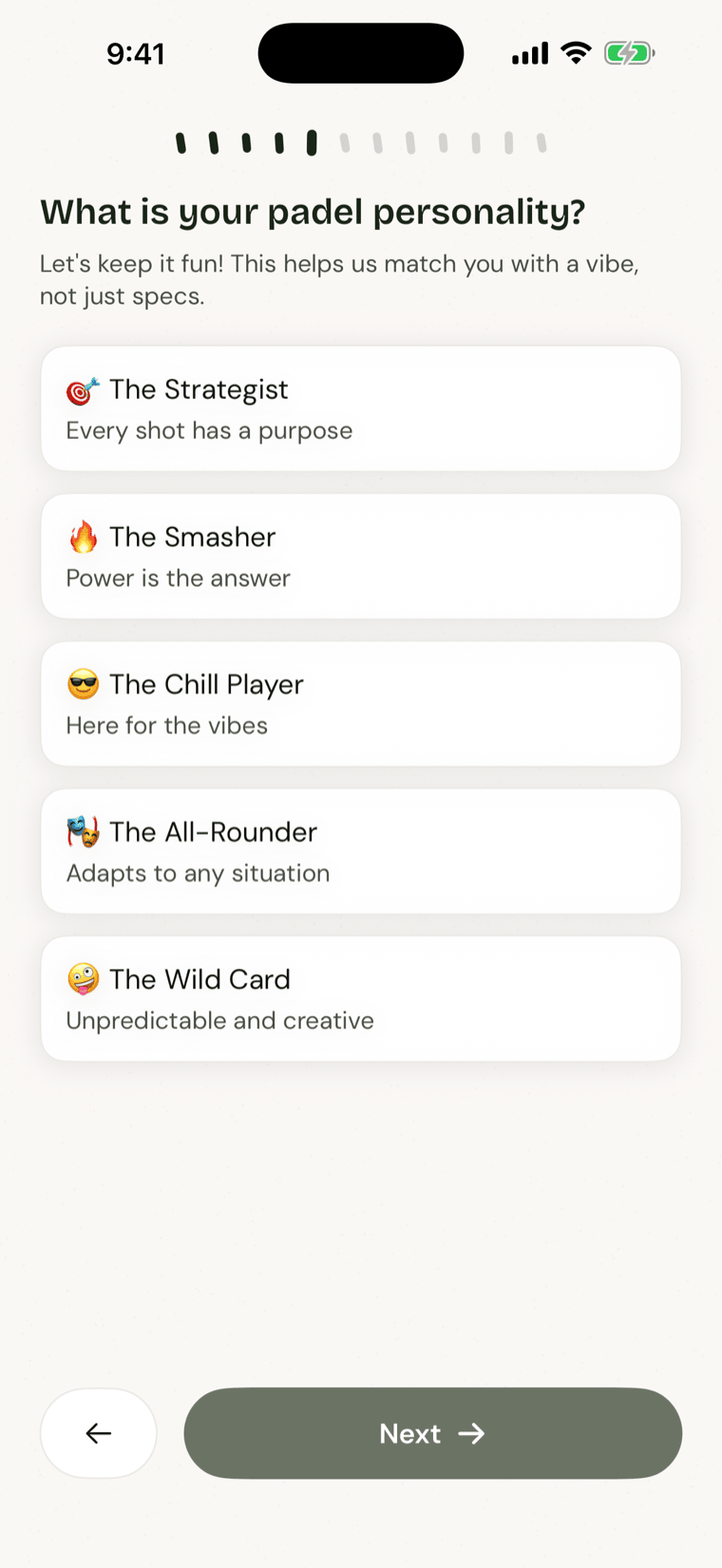
The app · free quiz
Not sure which one's you?
Take the free quiz in the app. We'll match a racket to your game, not the other way around.
Find my racketFree quiz. Sign in with email or Google to get your four picks.

Stealth Avenger 2025 Review
By Andres Jovem · Updated October 3, 2026
A medium-balanced teardrop that hands an improving player attacking shape without the harsh, all-or-nothing feel of a pure finisher.
The verdict
The Stealth Avenger 2025 is the racket for a player who has outgrown a soft round starter frame and wants to start hitting through the ball, without jumping straight to something that bites back. It is a teardrop, so the head carries a little extra mass and the sweet spot climbs toward the top, but the balance sits square in the middle rather than stacked forward. That one choice is the whole pitch: attacking geometry paired with a swing weight an intermediate can still control late in a match.
Read that as a frame that meets you halfway. It asks for a cleaner strike than a beginner racket, and it repays the effort with more shape on the ball. If you already generate your own pace and want the sharpest, most demanding finisher on the shelf, this is not that racket, and the last section says so plainly. If you are still turning a decent swing into a reliable one, keep reading.
The build
The core
Stealth builds the Avenger on an EVA Ctrl+ foam, a medium-density core tuned toward control rather than raw rebound. A medium foam flexes just enough to keep the hit from feeling glassy while still carrying your swing speed into the ball instead of letting it sink into the pad. The practical result is a middle setting. You supply more of the pace than a soft beginner core would gift you, and in return the ball goes closer to where you aimed it. On a mishit it does not punish you the way a firmer, denser pad would, so the learning curve stays gentle even as the demands rise.
The face
The hitting layer is a 6K Carbon Twill weave finished smooth. Carbon keeps the striking surface stiff and consistent across the face, so a strike an inch off center still comes back close to true rather than dying on you. The finish is the honest catch here. A smooth face slides across the ball more than a rough, gritty one, so the heavy topspin some players chase off a coarse surface is not this racket's strength. What you get instead is a clean, predictable contact that does not fight your timing, and a face that stays honest shot after shot rather than grabbing on one ball and skidding on the next.
The frame and shape
The mold is a teardrop, and the hoop is wrapped in carbon to hold that shape steady. The weight lands at a manageable 360g. A stiff carbon hoop keeps the head from flexing and twisting when you catch one off the middle, which is exactly the support a teardrop needs, since its sweet spot rides higher than a round frame's and lower than the punishing top edge of a stacked diamond. The balance is set to medium, so the mass is not loaded into the tip. That is the deliberate compromise across the whole build: attacking shape kept on a frame you can still whip around at the net in the third set.
How it plays
Building the point from the back
From the baseline the Avenger plays steadier than its attacking shape suggests. Because the weight is not thrown into the head, a defensive lob comes back with less effort than a front-loaded finisher demands, and a reset off a hard ball does not require you to muscle a heavy tip into position. There is a touch of cushion on those low, awkward digs, so a ball taken late off the back wall stays in play rather than spraying long. This is where an improving player will feel most at home.
Hands at the net
Up front the even balance is the payoff. The head is light enough to turn and meet a ball driven at your body, so a quick block or a punched volley arrives on time instead of a beat behind. Bring the racket forward to close out a floating ball and the contact is firm and clean, no mushy give under the strike. You will not out-react a featherweight control frame here, but nothing about the Avenger feels like dead weight when the exchange speeds up.
Going for the finish
The catalog files this racket as a finishing tool, and the shape backs that up on the overhead. Set your feet under a smash and the extra mass up top drives the ball down with real weight behind it. The result is a controlled put-away, aimed and firm: the ball leaves the strings placed and heavy, not a rattling bomb you can barely aim. Placing a bandeja or a víbora feels precise and repeatable, the ball leaving exactly where you steered it, so you win those points by picking your spot rather than by loading them with spin. The reward here is repeatability, the sense that the same swing lands the same shot twice.
What the arm feels
This is a forgiving frame for its category, and your elbow will notice. Each hit lands with enough give that a long session does not leave the joint aching the way a stiff, dense finisher can, and the shock stays even rather than spiking on a hard middle. It is not a soft beginner racket, so an arm-sensitive player pushing through a nagging elbow will still feel a firm frame at work. For most improvers, the comfort here sits comfortably on the kind side of the line.
Who it's for (and who should skip it)
Buy it if
- You have moved past a soft round starter and want an attacking teardrop shape you can control.
- You build points off the back of the court and want a frame that defends and resets as willingly as it finishes.
- You want manageable weight and a forgiving contact more than the last ounce of raw power.
Look elsewhere if
- You are a hard-hitting advanced player who wants the most demanding, head-loaded finisher on the shelf. This one is deliberately tamer.
- Heavy topspin is central to your game. The smooth face slides where a rough one would grab, so a spin-first player should look at a gritty-surfaced frame.
- You are brand new to padel and still learning to time a swing. A round, softer frame will flatter your contact more and cost you less.
Not sure it's your match? The free 2-minute quiz reads your level, style, and budget and tells you which racket is.
The bottom line
If you have earned your way past a first racket and want attacking shape without a frame that demands perfect timing on every ball, the Stealth Avenger is a sensible next step. It finishes when you set your feet and stays honest when you have to defend. Still weighing it against the alternatives? The free app quiz matches a racket to your game, budget, and style in two minutes.
Where to buy
Prices shown in Euro, converted and approximate. You check out in the store's own currency.
Frequently asked
No, not for a first racket. The Stealth Avenger is an intermediate teardrop, so its sweet spot rides higher and it asks for a cleaner strike than a true beginner racket does. A round, softer frame around 360g will forgive more of your early mishits and teach you contact faster. Come to the Avenger once your swing is grooved and you want attacking shape.
Call it controlled power. The teardrop mold and carbon face put enough weight behind a smash to finish points, while the medium-density core and mid balance keep the ball placed rather than sprayed. Expect firm, aimed attacking shots you can repeat, not an all-out bomb you swing at and hope.
An EVA Ctrl+ core, a medium-density foam tuned toward control, sits behind a 6K Carbon Twill face with a smooth finish. That medium core keeps the hit from feeling harsh while still returning your pace, and the carbon face gives a consistent, predictable contact across the hitting area.
Grip is not this frame's strong suit. Its carbon face is finished smooth, so it slides across the ball rather than biting it the way a rough, gritty surface does. You can still shape a shot, but a player who lives on heavy topspin will get more purchase from a textured frame. The Avenger wins on clean placement instead.
An improving player ready to leave a soft round starter behind and start hitting through the ball is the target here. The even balance and 360g weight stay controllable at the net and on defense, while the teardrop head adds punch on the smash. If you are unsure it fits your game, the free 2-minute quiz reads your level, style, and budget and tells you.
The app · free quiz
Not sure which one's you?
Take the free quiz in the app. We'll match a racket to your game, not the other way around.
Find my racketFree quiz. Sign in with email or Google to get your four picks.