Wilson Blade V4 2026 Review
By Andres Jovem · Updated October 19, 2026
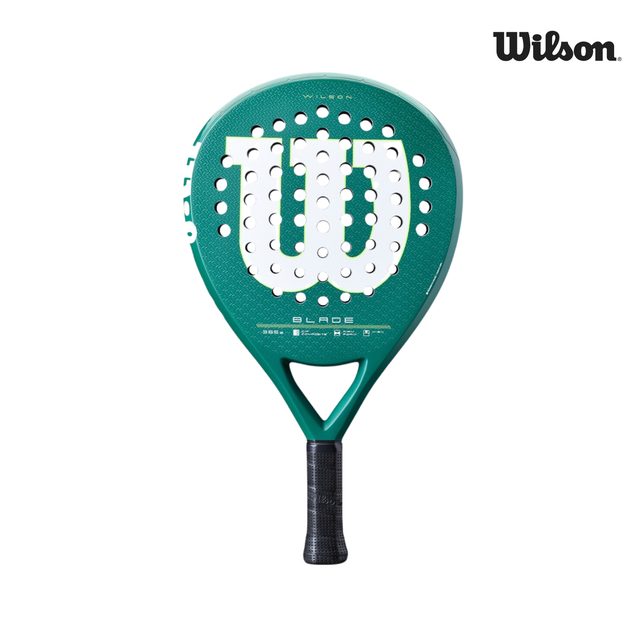
A firm-cored teardrop with its weight near the hand, built to attack with placement rather than mass: the Blade for the left-sider who would rather hit the gap than hit through the wall.
The verdict
The Wilson Blade V4 is an attacking teardrop that finishes with placement, not mass: firm foam, weight near the hand, and a head that stays still when the volley comes back at you. Wilson's pitch, explosive power and precise control, sells it short on the second half, because the control is the part that makes it worth owning.
Set your expectations on the overhead before you buy. One big European shop says in print that the smash is not this racket's strongest attribute and that it gives up a little pace to Wilson's Bela line in exchange for control. The build points the same way. The Blade V4 is for the left-side player who ends rallies with a bandeja into the corner and a volley through the gap, and who needs the frame to behave between those shots.
The price helps the case. PadelShop had it at €133.95, down from a €189.95 list price. That puts a carbon teardrop from a major brand in the price band of the fiberglass rackets in our beginners guide.
The build
Firm foam for a quick, predictable exit
Wilson builds the Blade V4 around firm foam, which it says gives a stable feel even on off-center hits. A firm foam compresses less when the ball arrives. The ball comes off quickly and at the angle you presented. A strike a little off the middle still leaves close to where you aimed instead of dying in the core. The cost is the usual one for firm cores: less cushion on a defensive block, and more of the hit reaching your wrist.
A carbon composite face, textured for grip
Wilson lists the face as a carbon fiberglass composite; the shops call it 3K carbon with a 3D texture. Either way it plays firmer than the soft-cored Blade LS V4, so a flat volley leaves with more snap, and the texture holds a brushed ball long enough for a bandeja to carry some slice. It is not a rough sand finish. If spin is the center of your game a grittier face will bite harder, and the left-side guide has several, but a smoother face also wears more evenly over a season.
A teardrop with the weight near your hand
The balance sits medium, with the weight near the handle, and Wilson does not print a balance at all. The teardrop shape raises the sweet spot above a round frame's center for the overhead, with more face around the sweet spot than a diamond gives. The near-hand balance is what makes the head easy to bring around in a fast exchange. If you were hoping for a head-heavy finisher, this is not it.
A carbon frame that does not twist on a high strike
It weighs about 365g, a weight that gives a volley some authority without turning the frame into a workout. The carbon frame keeps the teardrop stiff when a smash lands high on the face, so the frame holds its shape and the shot does not spray. No named technologies, and none are missed.
How it plays
At the net, the head stays still and the ball goes through the gap
A volley into your hip arrives and the frame does not twist, because the weight is near your hand and the core does not let the face fold. The block comes off square and short. Step in on a slow ball and the same firmness turns a punch volley into a flat, quick winner through the space between your opponents. Aim it at the feet of the player at the net and it stays down, which is the whole trick of the left side. This is the shot the Blade V4 is best at, and it is the shot a left-side player hits more than any other. The soft version works too. Take pace off a volley with a loose grip and the firm core still gives you enough feel to drop it short. A soft round frame does that with less concentration.
The bandeja is the finisher, not the smash
Overhead, the frame rewards a shaped shot more than a hammered one. A bandeja cut across the ball with the textured face carries enough slice to stay low off the glass and pin your opponents back, and the teardrop sweet spot forgives the one you catch late. Load up for a smash off the back glass (a por tres) and the ball leaves firm and fairly flat. Without a high balance to pile mass behind it, though, the kill shot is a placement shot.
Defending, you take the ball early or you work hard
You get no cushion off the back glass with a core this dense, so a ball coming in fast needs early, soft hands to redirect it deep. Do that and the Blade's directness is an asset: the ball goes where the face pointed, which is more than a soft frame can promise. Wait on the ball instead and the frame gives you nothing for free. On a tired third set that means a lot of short returns. The lob you hit late will land short, and the one you hit on time will land where you looked. Players who defend by absorbing pace will find the baseline tiring; players who defend by taking time away will find it exact.
What it does to your elbow
Expect a firm core under a carbon face to pass more of each strike into your forearm than a soft frame would, and a long match of late blocks will register there. It is not a harsh racket by attacking-teardrop standards, because the balance keeps the shock close to the hand instead of levering it through the forearm, but it is not a comfort frame either. If your elbow is already a conversation, the Blade LS V4's soft core is the kinder version of this shape.
Who it's for (and who should skip it)
Buy it if
- You play the left side at an intermediate or advanced level and finish points with a volley through the gap or a bandeja into the corner
- You want a firm, direct exit on the volley with a head that stays still when a ball comes back at you
- You want a big-brand carbon teardrop at a fiberglass price on the current sale
Look elsewhere if
- Your game is the smash: a head-heavy diamond will give you the mass the Blade V4 deliberately leaves out
- You defend by absorbing pace: the firm core will make the baseline hard work
- Your elbow is already sore: the Blade LS V4 runs a soft core in the same shape
Not sure it's your match? The free 2-minute quiz reads your level, style, and budget and tells you which racket is.
The bottom line
On this sale it is the cheapest carbon teardrop from Wilson we list. Off it, compare it against the Blade LS before you pay full price.
Where to buy
Prices shown in Euro, converted and approximate. You check out in the store's own currency.
Frequently asked
No, and not because it is harsh: because a beginner's late hits leave fast and wrong instead of soft and short. The Wilson Blade V4 2026 is a firm-cored carbon teardrop that Wilson aims at intermediate to advanced players. The Blade LS V4, with its soft core and lower balance, is the version of this shape built for someone still learning.
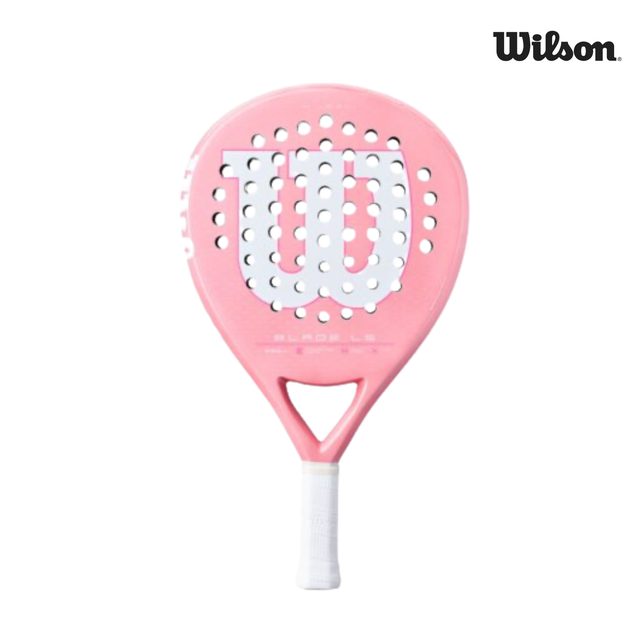
The Blade LS V4 is the soft, low-balanced version of this teardrop at 355g. The Blade V4 runs firm foam at about 365g under a carbon composite face. Same shape, two jobs. The V4 is the direct, attacking one. The LS is the one that rounds off a mishit and spares the elbow.
More control than power, for a frame Wilson sells as both. A firm core and a carbon composite face give a direct ball you can place. A medium balance leaves out the mass a diamond puts behind the smash. So the Blade V4 finishes with the volley and the bandeja, not the overhead.
From €133.95 at PadelShop for the Wilson Blade V4 2026, cut from a €189.95 list price there; PadelPROShop and PadelMarket also stock it, for more. Sale prices move, so trust the comparison at the top of this page over any figure in a forum.
No. The Wilson Blade V4 is medium-balanced with the weight near the handle; Wilson gives no figure, and the one big European shop that does says medium. We once had it down as head-heavy, and the build supports medium. If you want tip mass behind the smash, look at a diamond instead.
The Wilson Blade V4 runs a firm EVA foam core under a carbon fiberglass composite face with a 3D texture, on a carbon frame.
The app · free quiz
Not sure which one's you?
Take the free quiz in the app. We'll match a racket to your game, not the other way around.
Find my racketFree quiz. Sign in with email or Google to get your four picks.

Wilson Blade V4 2026 Review
By Andres Jovem · Updated October 19, 2026
A firm-cored teardrop with its weight near the hand, built to attack with placement rather than mass: the Blade for the left-sider who would rather hit the gap than hit through the wall.
The verdict
The Wilson Blade V4 is an attacking teardrop that finishes with placement, not mass: firm foam, weight near the hand, and a head that stays still when the volley comes back at you. Wilson's pitch, explosive power and precise control, sells it short on the second half, because the control is the part that makes it worth owning.
Set your expectations on the overhead before you buy. One big European shop says in print that the smash is not this racket's strongest attribute and that it gives up a little pace to Wilson's Bela line in exchange for control. The build points the same way. The Blade V4 is for the left-side player who ends rallies with a bandeja into the corner and a volley through the gap, and who needs the frame to behave between those shots.
The price helps the case. PadelShop had it at €133.95, down from a €189.95 list price. That puts a carbon teardrop from a major brand in the price band of the fiberglass rackets in our beginners guide.
The build
Firm foam for a quick, predictable exit
Wilson builds the Blade V4 around firm foam, which it says gives a stable feel even on off-center hits. A firm foam compresses less when the ball arrives. The ball comes off quickly and at the angle you presented. A strike a little off the middle still leaves close to where you aimed instead of dying in the core. The cost is the usual one for firm cores: less cushion on a defensive block, and more of the hit reaching your wrist.
A carbon composite face, textured for grip
Wilson lists the face as a carbon fiberglass composite; the shops call it 3K carbon with a 3D texture. Either way it plays firmer than the soft-cored Blade LS V4, so a flat volley leaves with more snap, and the texture holds a brushed ball long enough for a bandeja to carry some slice. It is not a rough sand finish. If spin is the center of your game a grittier face will bite harder, and the left-side guide has several, but a smoother face also wears more evenly over a season.
A teardrop with the weight near your hand
The balance sits medium, with the weight near the handle, and Wilson does not print a balance at all. The teardrop shape raises the sweet spot above a round frame's center for the overhead, with more face around the sweet spot than a diamond gives. The near-hand balance is what makes the head easy to bring around in a fast exchange. If you were hoping for a head-heavy finisher, this is not it.
A carbon frame that does not twist on a high strike
It weighs about 365g, a weight that gives a volley some authority without turning the frame into a workout. The carbon frame keeps the teardrop stiff when a smash lands high on the face, so the frame holds its shape and the shot does not spray. No named technologies, and none are missed.
How it plays
At the net, the head stays still and the ball goes through the gap
A volley into your hip arrives and the frame does not twist, because the weight is near your hand and the core does not let the face fold. The block comes off square and short. Step in on a slow ball and the same firmness turns a punch volley into a flat, quick winner through the space between your opponents. Aim it at the feet of the player at the net and it stays down, which is the whole trick of the left side. This is the shot the Blade V4 is best at, and it is the shot a left-side player hits more than any other. The soft version works too. Take pace off a volley with a loose grip and the firm core still gives you enough feel to drop it short. A soft round frame does that with less concentration.
The bandeja is the finisher, not the smash
Overhead, the frame rewards a shaped shot more than a hammered one. A bandeja cut across the ball with the textured face carries enough slice to stay low off the glass and pin your opponents back, and the teardrop sweet spot forgives the one you catch late. Load up for a smash off the back glass (a por tres) and the ball leaves firm and fairly flat. Without a high balance to pile mass behind it, though, the kill shot is a placement shot.
Defending, you take the ball early or you work hard
You get no cushion off the back glass with a core this dense, so a ball coming in fast needs early, soft hands to redirect it deep. Do that and the Blade's directness is an asset: the ball goes where the face pointed, which is more than a soft frame can promise. Wait on the ball instead and the frame gives you nothing for free. On a tired third set that means a lot of short returns. The lob you hit late will land short, and the one you hit on time will land where you looked. Players who defend by absorbing pace will find the baseline tiring; players who defend by taking time away will find it exact.
What it does to your elbow
Expect a firm core under a carbon face to pass more of each strike into your forearm than a soft frame would, and a long match of late blocks will register there. It is not a harsh racket by attacking-teardrop standards, because the balance keeps the shock close to the hand instead of levering it through the forearm, but it is not a comfort frame either. If your elbow is already a conversation, the Blade LS V4's soft core is the kinder version of this shape.
Who it's for (and who should skip it)
Buy it if
- You play the left side at an intermediate or advanced level and finish points with a volley through the gap or a bandeja into the corner
- You want a firm, direct exit on the volley with a head that stays still when a ball comes back at you
- You want a big-brand carbon teardrop at a fiberglass price on the current sale
Look elsewhere if
- Your game is the smash: a head-heavy diamond will give you the mass the Blade V4 deliberately leaves out
- You defend by absorbing pace: the firm core will make the baseline hard work
- Your elbow is already sore: the Blade LS V4 runs a soft core in the same shape
Not sure it's your match? The free 2-minute quiz reads your level, style, and budget and tells you which racket is.
The bottom line
On this sale it is the cheapest carbon teardrop from Wilson we list. Off it, compare it against the Blade LS before you pay full price.
Where to buy
Prices shown in Euro, converted and approximate. You check out in the store's own currency.
Frequently asked
No, and not because it is harsh: because a beginner's late hits leave fast and wrong instead of soft and short. The Wilson Blade V4 2026 is a firm-cored carbon teardrop that Wilson aims at intermediate to advanced players. The Blade LS V4, with its soft core and lower balance, is the version of this shape built for someone still learning.
The Blade LS V4 is the soft, low-balanced version of this teardrop at 355g. The Blade V4 runs firm foam at about 365g under a carbon composite face. Same shape, two jobs. The V4 is the direct, attacking one. The LS is the one that rounds off a mishit and spares the elbow.
More control than power, for a frame Wilson sells as both. A firm core and a carbon composite face give a direct ball you can place. A medium balance leaves out the mass a diamond puts behind the smash. So the Blade V4 finishes with the volley and the bandeja, not the overhead.
From €133.95 at PadelShop for the Wilson Blade V4 2026, cut from a €189.95 list price there; PadelPROShop and PadelMarket also stock it, for more. Sale prices move, so trust the comparison at the top of this page over any figure in a forum.
No. The Wilson Blade V4 is medium-balanced with the weight near the handle; Wilson gives no figure, and the one big European shop that does says medium. We once had it down as head-heavy, and the build supports medium. If you want tip mass behind the smash, look at a diamond instead.
The Wilson Blade V4 runs a firm EVA foam core under a carbon fiberglass composite face with a 3D texture, on a carbon frame.
The app · free quiz
Not sure which one's you?
Take the free quiz in the app. We'll match a racket to your game, not the other way around.
Find my racketFree quiz. Sign in with email or Google to get your four picks.