Siux Fenix Elite 6 2026 Review
By Andres Jovem · Updated October 19, 2026
A hard-cored diamond finisher at a starter price, built for the attacker learning to trust an overhead.
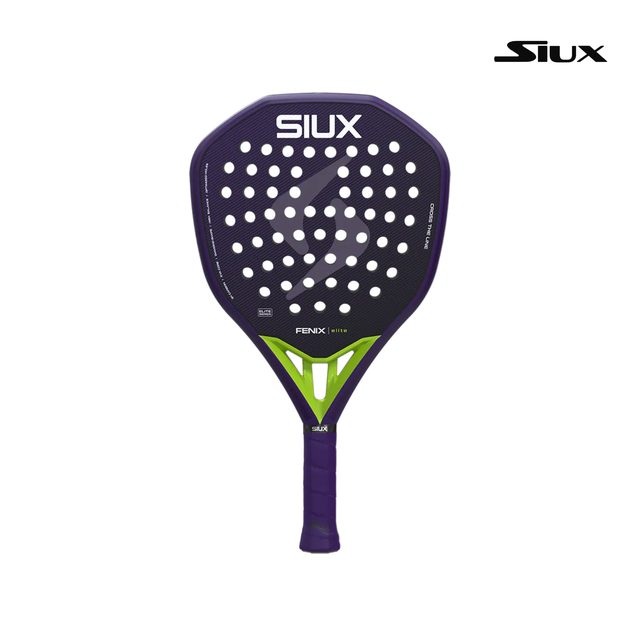
The verdict
The Siux Fenix Elite 6 is a finisher's racket wearing a beginner's price tag, and that combination is the whole reason to look at it. A hard core and a diamond head stacked toward the tip mean it lives for the overhead: set your feet, swing through, and the ball leaves fast and low. It is the frame for the player who wants to attack and needs an affordable way to find out if the attacking game is theirs.
What it is not is a soft place to land. The head sits high and the foam gives up little, so a lazy setup or a late arm gets scolded, both in the shot that sprays and in the shock that reaches your elbow. Siux built the Fenix Pro one shelf up for the player who wants the sharpest version of this. The Elite 6 is the sensible first step, not the ceiling.
If you already generate your own pace and hunt the net, this is a lot of racket for the money. If you are still grooving a swing or your arm tires late in a match, read the skip list before you spend.
The build
A hard EVA core that rewards a clean, committed swing
The engine here is a hard EVA core, and a grooved swing gets nearly all of its speed handed straight back as ball speed. Time the contact well and the payoff is a fast, low, direct ball with none of the mushiness a softer foam would add. Rush the shot and the same firmness turns unforgiving, because there is no give in the foam to bail out a poor strike. Catch one flush in the middle and the hit reads clean and quick up your arm; shank a block off the frame and that same channel delivers the miss just as plainly. This is a core that asks for commitment and repays it, with nothing spare for a tentative swing.
A 3K carbon face with a rough finish
The hitting layer is a 3K carbon weave with a coarse finish. The 3K skin gives a fraction on contact, which takes a little of the harshness off an otherwise firm frame and is part of what keeps this a starter-friendly build. You trade away a sliver of top-end sting for that flex. The rough texture is the useful part: it grabs the ball on a brushed contact, so spin arrives when you roll up the back of it on a víbora or a bandeja rather than hitting flat through it.
A tip-loaded diamond head
The diamond mold pushes the balance toward the tip, and the result is a head that swings itself into the ball once you get it moving. Behind an overhead, that weight up top does a chunk of the work for you, so the smash gains pace from the frame and not only from your arm. The cost shows up at the net. With the weight out at the head, the frame turns a touch slower, so a shot arriving late at your body wants your hands moving early to meet it in time.
How it plays
The overhead is where it comes alive
Give this racket a smash with time to set your feet and it turns your swing into a ball that drops steep and skids away low. The overhead is where it feels most rewarding, and where a player still building an attacking swing will overhit the first dozen before the timing clicks. The bandeja lands deep and kicks up off the surface when you brush across the ball rather than flatten it, and the víbora grips and dives on the same brushed contact. Trust your technique on these shots and the racket holds its line.
At the net, timing decides everything
Take a volley early, with the head moving into the ball, and it punches away flat and quick with no float to slow it down. Let one arrive on you late, with your hands scrambling to catch up, and that same quickness works against you: the ball flies long or wide before you have squared the face. The head weight buys you no margin for a slow reaction, so busy exchanges at the net go to the player who reads the point a beat early and gets set.
On defense, the cushion has to come from you
Pushed back off the net, you are the one who has to soften the ball, because the frame will not do it for you. Off a hard smash the block comes back at the pace you gave it; nothing in the frame takes the sting off, so a clean reset is on your hands and your timing. Lobs and digs answer to the same rule, meeting the ball softly is your job. The racket holds up in defense once you accept that the touch comes from you, not from the foam.
The honest note on your arm
This is a firm, head-heavy frame, and it sends more of every contact back through the wrist and elbow than a softer racket does. A well-struck ball feels crisp. A mishit or a late block bites, and a long match on a tired arm is where you notice it most. The 3K face softens the edge a little, but it does not make this a gentle racket. If your elbow already complains, this is not the frame to test it with.
Who it's for (and who should skip it)
Buy it if
- You generate your own pace and want an affordable way into a real power frame.
- You play forward, hunting the smash, the víbora, and the net put-away.
- Your technique is grooved enough to time a hard, head-heavy racket cleanly.
Look elsewhere if
- You are still building your swing and need a frame that forgives an off-center hit.
- If your arm tires or aches late in a match, this frame will find that sooner than a softer control racket.
- You defend more than you attack and want the frame to supply the cushion and the rebound for you.
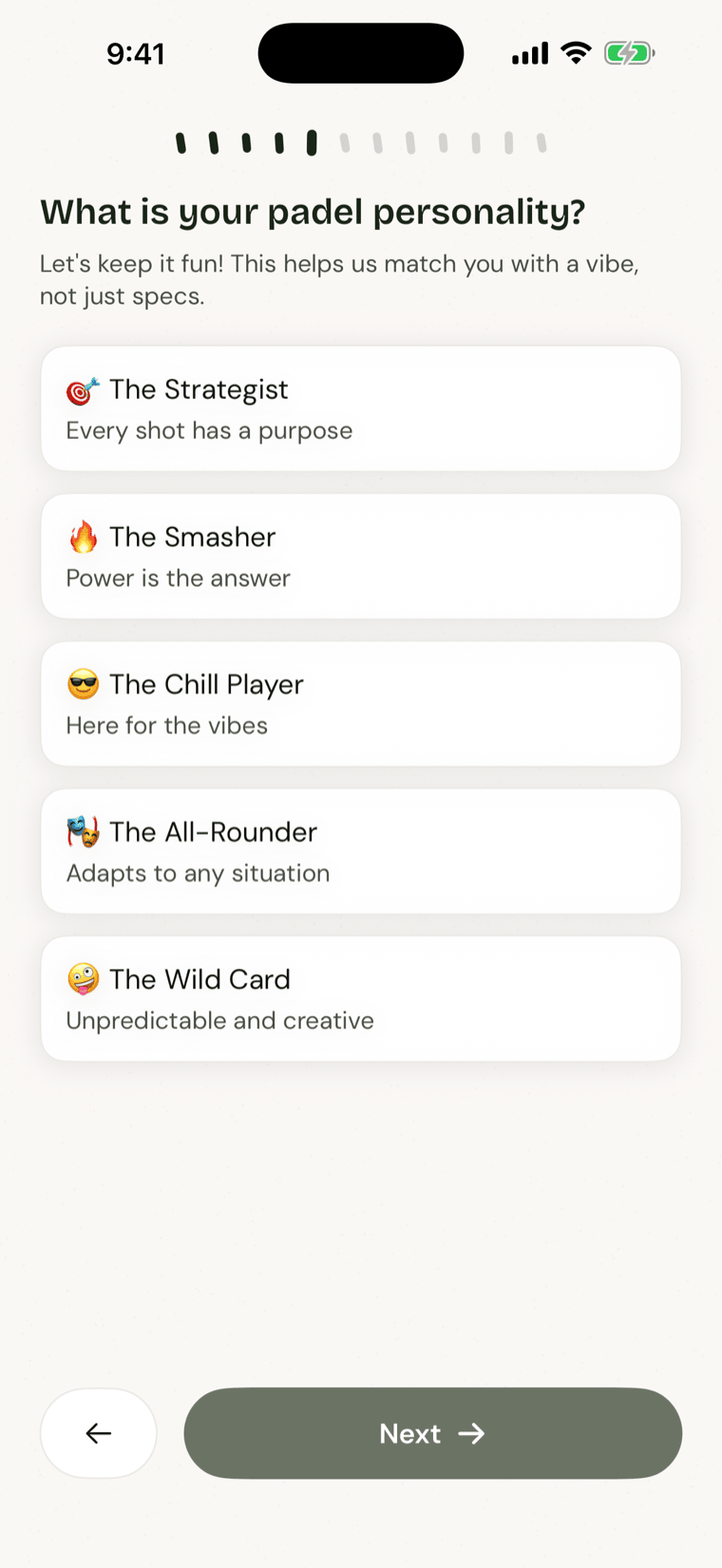
Not sure it's your match? The free 2-minute quiz reads your level, style, and budget and tells you which racket is.
The bottom line
There is no best racket, only the best one for your game. If you want to learn the attacking style without emptying your wallet, the Fenix Elite 6 is a rare bargain in a power frame. If you are still finding your swing or minding a sore arm, let the quiz point you somewhere kinder first.
Frequently asked
No. The Fenix Elite 6 is an advanced diamond racket with a hard core and a head-heavy balance, so a true beginner will fight its stiffness and feel every mishit in the elbow. A round, soft-cored frame around 360g will flatter your mistakes and teach you more. Come back to this one once your swing is grooved and you are ready to attack.
Power, clearly. Its diamond shape puts the sweet spot high toward the tip and the hard EVA core returns your swing speed as ball speed, both of which favor the finisher hunting a heavy smash. Control comes from your own timing here, not from a soft, forgiving face.
A hard EVA core sits behind a 3K carbon face with a rough finish, on a carbon frame. The hard core drives the ball off fast and direct, while the coarse 3K skin gives a touch on contact and grabs the ball for spin on brushed shots like the víbora and bandeja.
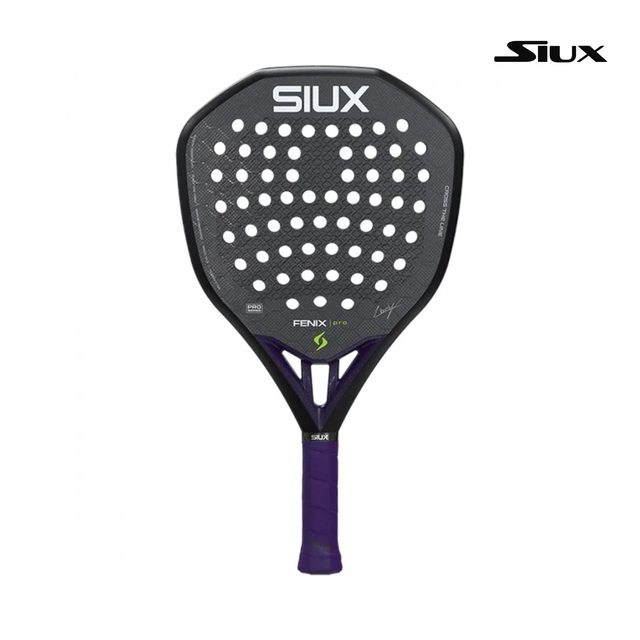
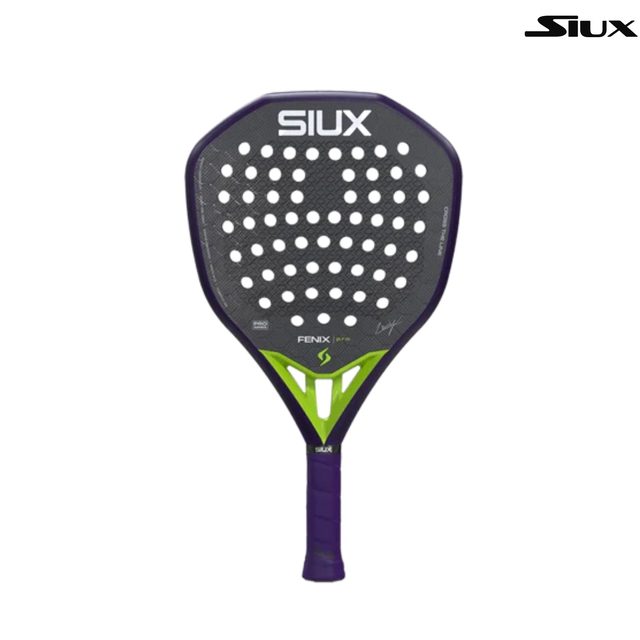
The Elite 6 keeps the Fenix Pro's diamond shape, hard core, rough surface, and carbon frame, so the intent is the same finisher's brief. Siux positions the Pro one shelf up as the sharper, less forgiving version, which makes the Elite 6 the value entry point into the line. Buy the Elite 6 to learn the attacking game, and step up to the Pro when your swing is ready for a stiffer, more demanding frame.
Buy the Fenix Elite 6 if you play forward, generate your own pace, and want a real hard-core power frame without paying a flagship price. Skip it if you are new, arm-sensitive, or a defender who wants free rebound. Not sure it is your match? The free 2-minute quiz reads your level, style, and budget and tells you.

The app · free quiz
Not sure which one's you?
Take the free quiz in the app. We'll match a racket to your game, not the other way around.
Find my racketFree quiz. Sign in with email or Google to get your four picks.

Siux Fenix Elite 6 2026 Review
By Andres Jovem · Updated October 19, 2026
A hard-cored diamond finisher at a starter price, built for the attacker learning to trust an overhead.
The verdict
The Siux Fenix Elite 6 is a finisher's racket wearing a beginner's price tag, and that combination is the whole reason to look at it. A hard core and a diamond head stacked toward the tip mean it lives for the overhead: set your feet, swing through, and the ball leaves fast and low. It is the frame for the player who wants to attack and needs an affordable way to find out if the attacking game is theirs.
What it is not is a soft place to land. The head sits high and the foam gives up little, so a lazy setup or a late arm gets scolded, both in the shot that sprays and in the shock that reaches your elbow. Siux built the Fenix Pro one shelf up for the player who wants the sharpest version of this. The Elite 6 is the sensible first step, not the ceiling.
If you already generate your own pace and hunt the net, this is a lot of racket for the money. If you are still grooving a swing or your arm tires late in a match, read the skip list before you spend.
The build
A hard EVA core that rewards a clean, committed swing
The engine here is a hard EVA core, and a grooved swing gets nearly all of its speed handed straight back as ball speed. Time the contact well and the payoff is a fast, low, direct ball with none of the mushiness a softer foam would add. Rush the shot and the same firmness turns unforgiving, because there is no give in the foam to bail out a poor strike. Catch one flush in the middle and the hit reads clean and quick up your arm; shank a block off the frame and that same channel delivers the miss just as plainly. This is a core that asks for commitment and repays it, with nothing spare for a tentative swing.
A 3K carbon face with a rough finish
The hitting layer is a 3K carbon weave with a coarse finish. The 3K skin gives a fraction on contact, which takes a little of the harshness off an otherwise firm frame and is part of what keeps this a starter-friendly build. You trade away a sliver of top-end sting for that flex. The rough texture is the useful part: it grabs the ball on a brushed contact, so spin arrives when you roll up the back of it on a víbora or a bandeja rather than hitting flat through it.
A tip-loaded diamond head
The diamond mold pushes the balance toward the tip, and the result is a head that swings itself into the ball once you get it moving. Behind an overhead, that weight up top does a chunk of the work for you, so the smash gains pace from the frame and not only from your arm. The cost shows up at the net. With the weight out at the head, the frame turns a touch slower, so a shot arriving late at your body wants your hands moving early to meet it in time.
How it plays
The overhead is where it comes alive
Give this racket a smash with time to set your feet and it turns your swing into a ball that drops steep and skids away low. The overhead is where it feels most rewarding, and where a player still building an attacking swing will overhit the first dozen before the timing clicks. The bandeja lands deep and kicks up off the surface when you brush across the ball rather than flatten it, and the víbora grips and dives on the same brushed contact. Trust your technique on these shots and the racket holds its line.
At the net, timing decides everything
Take a volley early, with the head moving into the ball, and it punches away flat and quick with no float to slow it down. Let one arrive on you late, with your hands scrambling to catch up, and that same quickness works against you: the ball flies long or wide before you have squared the face. The head weight buys you no margin for a slow reaction, so busy exchanges at the net go to the player who reads the point a beat early and gets set.
On defense, the cushion has to come from you
Pushed back off the net, you are the one who has to soften the ball, because the frame will not do it for you. Off a hard smash the block comes back at the pace you gave it; nothing in the frame takes the sting off, so a clean reset is on your hands and your timing. Lobs and digs answer to the same rule, meeting the ball softly is your job. The racket holds up in defense once you accept that the touch comes from you, not from the foam.
The honest note on your arm
This is a firm, head-heavy frame, and it sends more of every contact back through the wrist and elbow than a softer racket does. A well-struck ball feels crisp. A mishit or a late block bites, and a long match on a tired arm is where you notice it most. The 3K face softens the edge a little, but it does not make this a gentle racket. If your elbow already complains, this is not the frame to test it with.
Who it's for (and who should skip it)
Buy it if
- You generate your own pace and want an affordable way into a real power frame.
- You play forward, hunting the smash, the víbora, and the net put-away.
- Your technique is grooved enough to time a hard, head-heavy racket cleanly.
Look elsewhere if
- You are still building your swing and need a frame that forgives an off-center hit.
- If your arm tires or aches late in a match, this frame will find that sooner than a softer control racket.
- You defend more than you attack and want the frame to supply the cushion and the rebound for you.
Not sure it's your match? The free 2-minute quiz reads your level, style, and budget and tells you which racket is.
The bottom line
There is no best racket, only the best one for your game. If you want to learn the attacking style without emptying your wallet, the Fenix Elite 6 is a rare bargain in a power frame. If you are still finding your swing or minding a sore arm, let the quiz point you somewhere kinder first.
Frequently asked
No. The Fenix Elite 6 is an advanced diamond racket with a hard core and a head-heavy balance, so a true beginner will fight its stiffness and feel every mishit in the elbow. A round, soft-cored frame around 360g will flatter your mistakes and teach you more. Come back to this one once your swing is grooved and you are ready to attack.
Power, clearly. Its diamond shape puts the sweet spot high toward the tip and the hard EVA core returns your swing speed as ball speed, both of which favor the finisher hunting a heavy smash. Control comes from your own timing here, not from a soft, forgiving face.
A hard EVA core sits behind a 3K carbon face with a rough finish, on a carbon frame. The hard core drives the ball off fast and direct, while the coarse 3K skin gives a touch on contact and grabs the ball for spin on brushed shots like the víbora and bandeja.
The Elite 6 keeps the Fenix Pro's diamond shape, hard core, rough surface, and carbon frame, so the intent is the same finisher's brief. Siux positions the Pro one shelf up as the sharper, less forgiving version, which makes the Elite 6 the value entry point into the line. Buy the Elite 6 to learn the attacking game, and step up to the Pro when your swing is ready for a stiffer, more demanding frame.
Buy the Fenix Elite 6 if you play forward, generate your own pace, and want a real hard-core power frame without paying a flagship price. Skip it if you are new, arm-sensitive, or a defender who wants free rebound. Not sure it is your match? The free 2-minute quiz reads your level, style, and budget and tells you.
The app · free quiz
Not sure which one's you?
Take the free quiz in the app. We'll match a racket to your game, not the other way around.
Find my racketFree quiz. Sign in with email or Google to get your four picks.