Wilson Defy LS V1 SE 2026 Review
By Andres Jovem · Updated October 19, 2026
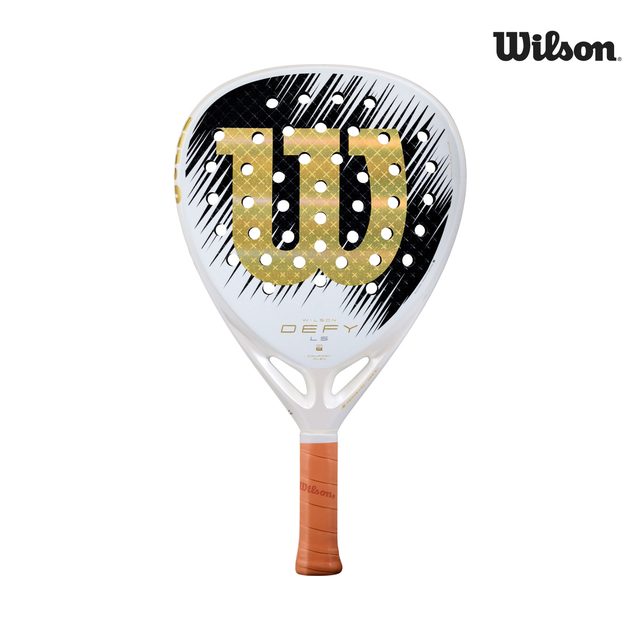
An attacking diamond with a carbon and fiberglass face Wilson built to flex, for the left-sider who wants finishing pace without a stiff carbon sting in the elbow.
The verdict
The Defy LS V1 SE is the lightest frame in Wilson's attacking Defy line, and the one with the softest face. Diamond head, balance toward the tip, Power Foam inside: the ingredients of a racket built to finish points. The reason it earns a page of its own is the hitting surface. Most finishing diamonds wear a stiff carbon face that fires the ball and the shock back at you in equal measure. This one uses Comfort Flex, a weave of carbon and fiberglass that bends a little at contact, for power with less effort and less fatigue in the arm. Translated to a court: a smash you catch off-center still leaves with most of its pace, and less of the jolt makes it to your elbow.
Advanced players only, and Wilson says the same. The mass sits toward the tip, so a block you have not prepared leaves the face late and floats. The flexible face has a cost too. A big hitter who wants the crack of a stiff 12K carbon frame on every strike will find the ball leaves a little slower off a flat hit. If you attack from the left side, swing fast rather than heavy, and have come off court with a sore elbow from a stiffer diamond, this frame was built for your problem. The SE is a special-edition colorway in white and gold on the same construction as the standard Defy LS V1.
The build
Power Foam, a firm core
The core is Wilson's Power Foam, a high-density foam built for a powerful shot with a solid feel, meaning the ball leaves fast and you feel where you struck it. A dense foam compresses less at contact, so less of your swing speed disappears into the core and more of it comes back as ball speed. The trade with any firmer foam is feedback: you feel where you hit the ball, which an advanced player wants and a beginner finds harsh. It is an advanced and pro-level frame, and sold as one.
Comfort Flex, a face that bends
The hitting surface is Comfort Flex, which blends carbon with fiberglass instead of using carbon alone. Fiberglass flexes more than carbon, so the face gives at contact and rounds off the edges of a mishit. A smash struck toward the frame keeps most of its pace. Less of the vibration reaches your hand than a full-carbon face would pass on. Wilson's own words for it are more ball speed for less effort and less arm fatigue. On top sits Spin² texture, a rough finish densest at the top of the face, where overheads land, to add spin on attacking shots.
A diamond, with holes arranged for the job
Diamond mold, sweet spot high up the face. Wilson prints no balance figure; the shops call it high, which on a frame this light means the head leads the swing. That mass behind the ball is where the smash comes from. Wilson's Duo Grid pattern drills larger holes at the top of the face and smaller ones at the bottom. The large holes are for power on overheads, the small ones for spin and control on volleys and defensive shots. I-Beam is a rib through the middle of the frame that adds stiffness there so power transfers through the head. Sharp Hole drilling and an Aeroexact profile for swing speed round out the sheet.
Light for a finisher
It is the lightest frame in the Defy collection, SE paint included. Light plus head-heavy is a specific recipe. The racket swings through fast but still arrives with weight at the tip. That rewards a quick overhead over a slow, muscled one: swing speed, not arm strength, is what the frame turns into pace. A player who likes to lean on a heavy diamond will want the standard Defy V1 or the Defy Pro instead.
How it plays
The overhead, where the face earns its name
Catch a smash a few centimeters off the middle and it still arrives hard enough to finish, where a stiff diamond would have handed you a dead ball and a sore forearm. That one habit is what you are paying for. A clean strike comes down heavy, because the mass is up top. A víbora brushed up the side of the ball holds its spin long enough to skid low off the side wall rather than sit up for the returner.
Volleys in front, not at the hip
Take the volley out ahead of you and it leaves firm and flat, and a high ball taken on the rise ends the point through the gap. Taken late, at the hip, the head is still on its way when the ball arrives, so the volley loses its line. Step in and take the ball early; this is not a frame for waiting.
The bandeja and the walk to the net
The bandeja comes off the flexible face a touch softer than it would from a stiff diamond, and here that is a feature. The ball stays on the surface a fraction longer. You can slice it short of the glass instead of handing the lob straight back. Moving from the back to the net, the light frame lets you take the half-court ball with a short swing and still land it deep enough to close behind.
Defense, with notice
The tip wants to keep traveling after your hand has stopped, so a block off the glass needs its preparation done before the ball gets there, and a last-second flick tends to float. The lob is fine once you commit; the problem is the half-second you spend deciding. A player who spends most of a match pinned at the back will do better with a rounder, lower-balanced frame.
What the elbow hears, what the shoulder carries
The flexible face takes some of the vibration out of every strike before it reaches your hand. That is why this diamond belongs on a shortlist for an elbow that has argued with stiffer frames. It does not make the racket soft: the core is firm, and a long session of overheads still loads the shoulder, because a head-weighted frame is work however light it is. An easier elbow than most diamonds give, and the shoulder workload every diamond asks.
Who it's for (and who should skip it)
Buy it if
- You attack from the left and want finishing pace at a weight you can swing fast all match
- A stiff full-carbon diamond has left your elbow sore and you still want a diamond
- You catch a few overheads off-center and would rather keep the point alive than lose it on a mishit
Look elsewhere if
- You're a beginner or an early intermediate: a firm core and a high balance punish you in defense before they reward you in attack
- Your matches are won from the back wall, with blocks you decide on at the last moment
- You want the sharpest, most direct strike a diamond can give: a stiff full-carbon face does that, a carbon and fiberglass blend does not
Not sure it's your match? The free 2-minute quiz reads your level, style, and budget and tells you which racket is.
The bottom line
If your left-side game is quick hands and a fast overhead, and your elbow has already filed a complaint about stiff diamonds, put this one on your shortlist; if you win by defending, keep walking.
Where to buy
Prices shown in Euro, converted and approximate. You check out in the store's own currency.
Frequently asked
The Defy LS V1 SE is built for advanced and pro-level players, Wilson says, so no. The balance sits high and the Power Foam core is firm, which means slow defense and a harsh contact for someone still learning. A round frame with a soft core is the place to start; the Defy will still be here when your overhead is.
Power, by design: the Defy LS V1 SE pairs a diamond head and a high balance with a firm Power Foam core, and it is sold as an attacking frame. What sets it apart from other power diamonds is the Comfort Flex face, which flexes slightly to keep a mishit smash alive and take some sting out of the strike. Control players will want a rounder, more evenly balanced racket.
From €164.95 at PadelShop for the Defy LS V1 SE, and PadelMarket stocks it too at a higher price. Prices move, so check before you commit.
A special-edition colorway is the whole difference. The Defy LS V1 SE is the Defy LS V1 in white and gold, same construction: diamond shape, Power Foam core, Comfort Flex face, 355g. If you see the standard LS V1 cheaper, buy that one; the only thing you give up is the paint.
Wilson's Power Foam core under a Comfort Flex face is what the Defy LS V1 SE runs, the face being a blend of carbon and fiberglass rather than pure carbon. The foam is on the firm side and gives the strike its pace; the blended face flexes at contact, which Wilson credits for lower arm fatigue and better pace on off-center hits. A Spin² texture on the surface adds grip for spin.
Easier than most diamonds on the elbow, the Defy LS V1 SE still asks the shoulder for a full day's work. The Comfort Flex face takes some vibration out of each strike before it reaches your hand, which is what Wilson built it for. The core is firm and the balance high, so a long match of overheads loads the shoulder the way every head-heavy frame does.

The app · free quiz
Not sure which one's you?
Take the free quiz in the app. We'll match a racket to your game, not the other way around.
Find my racketFree quiz. Sign in with email or Google to get your four picks.

Wilson Defy LS V1 SE 2026 Review
By Andres Jovem · Updated October 19, 2026
An attacking diamond with a carbon and fiberglass face Wilson built to flex, for the left-sider who wants finishing pace without a stiff carbon sting in the elbow.
The verdict
The Defy LS V1 SE is the lightest frame in Wilson's attacking Defy line, and the one with the softest face. Diamond head, balance toward the tip, Power Foam inside: the ingredients of a racket built to finish points. The reason it earns a page of its own is the hitting surface. Most finishing diamonds wear a stiff carbon face that fires the ball and the shock back at you in equal measure. This one uses Comfort Flex, a weave of carbon and fiberglass that bends a little at contact, for power with less effort and less fatigue in the arm. Translated to a court: a smash you catch off-center still leaves with most of its pace, and less of the jolt makes it to your elbow.
Advanced players only, and Wilson says the same. The mass sits toward the tip, so a block you have not prepared leaves the face late and floats. The flexible face has a cost too. A big hitter who wants the crack of a stiff 12K carbon frame on every strike will find the ball leaves a little slower off a flat hit. If you attack from the left side, swing fast rather than heavy, and have come off court with a sore elbow from a stiffer diamond, this frame was built for your problem. The SE is a special-edition colorway in white and gold on the same construction as the standard Defy LS V1.
The build
Power Foam, a firm core
The core is Wilson's Power Foam, a high-density foam built for a powerful shot with a solid feel, meaning the ball leaves fast and you feel where you struck it. A dense foam compresses less at contact, so less of your swing speed disappears into the core and more of it comes back as ball speed. The trade with any firmer foam is feedback: you feel where you hit the ball, which an advanced player wants and a beginner finds harsh. It is an advanced and pro-level frame, and sold as one.
Comfort Flex, a face that bends
The hitting surface is Comfort Flex, which blends carbon with fiberglass instead of using carbon alone. Fiberglass flexes more than carbon, so the face gives at contact and rounds off the edges of a mishit. A smash struck toward the frame keeps most of its pace. Less of the vibration reaches your hand than a full-carbon face would pass on. Wilson's own words for it are more ball speed for less effort and less arm fatigue. On top sits Spin² texture, a rough finish densest at the top of the face, where overheads land, to add spin on attacking shots.
A diamond, with holes arranged for the job
Diamond mold, sweet spot high up the face. Wilson prints no balance figure; the shops call it high, which on a frame this light means the head leads the swing. That mass behind the ball is where the smash comes from. Wilson's Duo Grid pattern drills larger holes at the top of the face and smaller ones at the bottom. The large holes are for power on overheads, the small ones for spin and control on volleys and defensive shots. I-Beam is a rib through the middle of the frame that adds stiffness there so power transfers through the head. Sharp Hole drilling and an Aeroexact profile for swing speed round out the sheet.
Light for a finisher
It is the lightest frame in the Defy collection, SE paint included. Light plus head-heavy is a specific recipe. The racket swings through fast but still arrives with weight at the tip. That rewards a quick overhead over a slow, muscled one: swing speed, not arm strength, is what the frame turns into pace. A player who likes to lean on a heavy diamond will want the standard Defy V1 or the Defy Pro instead.
How it plays
The overhead, where the face earns its name
Catch a smash a few centimeters off the middle and it still arrives hard enough to finish, where a stiff diamond would have handed you a dead ball and a sore forearm. That one habit is what you are paying for. A clean strike comes down heavy, because the mass is up top. A víbora brushed up the side of the ball holds its spin long enough to skid low off the side wall rather than sit up for the returner.
Volleys in front, not at the hip
Take the volley out ahead of you and it leaves firm and flat, and a high ball taken on the rise ends the point through the gap. Taken late, at the hip, the head is still on its way when the ball arrives, so the volley loses its line. Step in and take the ball early; this is not a frame for waiting.
The bandeja and the walk to the net
The bandeja comes off the flexible face a touch softer than it would from a stiff diamond, and here that is a feature. The ball stays on the surface a fraction longer. You can slice it short of the glass instead of handing the lob straight back. Moving from the back to the net, the light frame lets you take the half-court ball with a short swing and still land it deep enough to close behind.
Defense, with notice
The tip wants to keep traveling after your hand has stopped, so a block off the glass needs its preparation done before the ball gets there, and a last-second flick tends to float. The lob is fine once you commit; the problem is the half-second you spend deciding. A player who spends most of a match pinned at the back will do better with a rounder, lower-balanced frame.
What the elbow hears, what the shoulder carries
The flexible face takes some of the vibration out of every strike before it reaches your hand. That is why this diamond belongs on a shortlist for an elbow that has argued with stiffer frames. It does not make the racket soft: the core is firm, and a long session of overheads still loads the shoulder, because a head-weighted frame is work however light it is. An easier elbow than most diamonds give, and the shoulder workload every diamond asks.
Who it's for (and who should skip it)
Buy it if
- You attack from the left and want finishing pace at a weight you can swing fast all match
- A stiff full-carbon diamond has left your elbow sore and you still want a diamond
- You catch a few overheads off-center and would rather keep the point alive than lose it on a mishit
Look elsewhere if
- You're a beginner or an early intermediate: a firm core and a high balance punish you in defense before they reward you in attack
- Your matches are won from the back wall, with blocks you decide on at the last moment
- You want the sharpest, most direct strike a diamond can give: a stiff full-carbon face does that, a carbon and fiberglass blend does not
Not sure it's your match? The free 2-minute quiz reads your level, style, and budget and tells you which racket is.
The bottom line
If your left-side game is quick hands and a fast overhead, and your elbow has already filed a complaint about stiff diamonds, put this one on your shortlist; if you win by defending, keep walking.
Where to buy
Prices shown in Euro, converted and approximate. You check out in the store's own currency.
Frequently asked
The Defy LS V1 SE is built for advanced and pro-level players, Wilson says, so no. The balance sits high and the Power Foam core is firm, which means slow defense and a harsh contact for someone still learning. A round frame with a soft core is the place to start; the Defy will still be here when your overhead is.
Power, by design: the Defy LS V1 SE pairs a diamond head and a high balance with a firm Power Foam core, and it is sold as an attacking frame. What sets it apart from other power diamonds is the Comfort Flex face, which flexes slightly to keep a mishit smash alive and take some sting out of the strike. Control players will want a rounder, more evenly balanced racket.
From €164.95 at PadelShop for the Defy LS V1 SE, and PadelMarket stocks it too at a higher price. Prices move, so check before you commit.
A special-edition colorway is the whole difference. The Defy LS V1 SE is the Defy LS V1 in white and gold, same construction: diamond shape, Power Foam core, Comfort Flex face, 355g. If you see the standard LS V1 cheaper, buy that one; the only thing you give up is the paint.
Wilson's Power Foam core under a Comfort Flex face is what the Defy LS V1 SE runs, the face being a blend of carbon and fiberglass rather than pure carbon. The foam is on the firm side and gives the strike its pace; the blended face flexes at contact, which Wilson credits for lower arm fatigue and better pace on off-center hits. A Spin² texture on the surface adds grip for spin.
Easier than most diamonds on the elbow, the Defy LS V1 SE still asks the shoulder for a full day's work. The Comfort Flex face takes some vibration out of each strike before it reaches your hand, which is what Wilson built it for. The core is firm and the balance high, so a long match of overheads loads the shoulder the way every head-heavy frame does.
The app · free quiz
Not sure which one's you?
Take the free quiz in the app. We'll match a racket to your game, not the other way around.
Find my racketFree quiz. Sign in with email or Google to get your four picks.