Head Gravity Motion 2024 Review
By Andres Jovem · Updated October 20, 2026
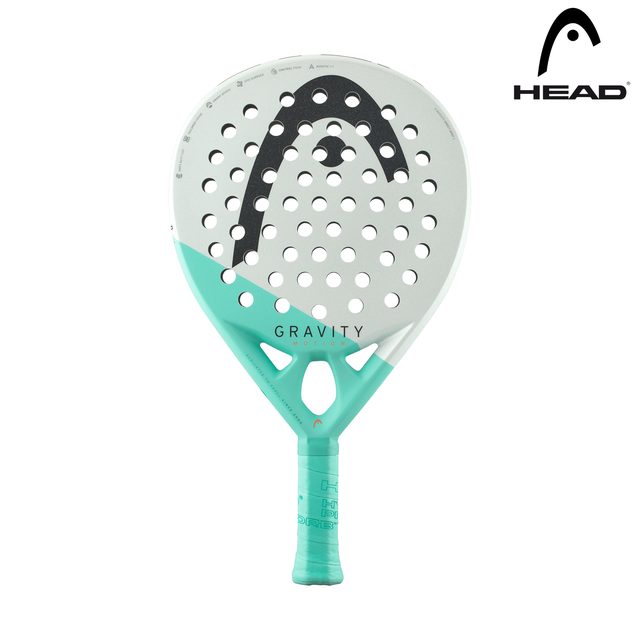
A 355g round control frame with the balance pulled low and a Control Foam core, the lighter route into Head's Gravity line for the right-side player who places the ball and wants her elbow left alone.
The verdict
The Head Gravity Motion 2024 is the Gravity Pro's lighter sibling, and the version of the Gravity you can swing for three sets without your shoulder filing a complaint. Round head, 355g, and a balance pulled down toward the handle. Head aims it at competition players who want control over pace. On court that is what it gives: a wide sweet spot, a block that lands where you looked, and a strike that stays quiet on the arm.
It is the only round frame in our right-side women's guide with a fiberglass face. The rough lacquer, Spin Surface, gives that glass the spin a smooth glass face lacks. The second thing that sets it apart is the Control Foam core, softer than the EVA most advanced frames carry. That softness is why a late block still travels and a long match does not end in an ice pack.
A 2024 model carries a 2024 price: €127.95 at the one shop that still has it, down from a €200 list price. That shop puts it on the women's shelf; Head's own line is advanced and tournament players. Both are true, and the second matters more: this is an advanced player's control racket that happens to be light.
The build
A Control Foam core, soft on purpose
Head fills the Gravity Motion with Control Foam, a core the brand pitches for precision and extra tolerance, which in practice means a softer foam than the EVA in most advanced frames. The ball compresses it, sits a fraction, and leaves with a little less pace and a lot less shock. On court that shows up as a block taken off the frame's edge that still lands deep, and as a sweet spot that feels bigger than the head looks. What the foam will not do is add speed; a flat drive leaves at the pace of your swing.
A fiberglass face with a rough lacquer
The hitting surface is fiberglass, which flexes more than carbon at contact and widens the zone that still returns a straight ball. Over it goes a rough lacquer, Spin Surface by name. The grit holds a brushed ball a fraction longer on the strings. A sliced bandeja dips, and a víbora kicks sideways off the glass harder than a smooth face allows. Fiberglass plus grit is a control player's combination: forgiving on the mishit, lively on the slice.
A round head, 355g, balanced low, with carbon in the frame
Round is the head shape, with the hitting zone mid-face, where a defender's contact lands. At 355g the Motion is the lighter of the two Gravity frames, and the balance sits low, down toward the hand, so the head comes round fast on a reaction volley. The frame carries Graphene Inside, Head's frame reinforcement. Auxetic 2.0 sits in the throat.
How it plays
Placement from everywhere on the right
The player who wins by not missing will like it here. Her partner at the net gets more balls to finish, because fewer of hers come back short. A drive off the back glass meets a soft face and a wide sweet spot, so the reply goes deep to the corner with a compact swing. The lob is the easiest shot on the racket. The foam holds the ball long enough to lift it, and the low balance lets you play it late, behind you, and still clear the net player. Against a hard-hitting pair you will feel the ceiling, because the ball comes back slower than it arrives. A drive into your backhand corner is the test. The wide zone and the soft core turn it into a lob to the back fence without a backswing, and that lob is the shot that keeps you in the point. Follow it to the net and the next ball is a volley you can take early, which is where this frame's low balance pays twice.
Reaction volleys with the head already there
The low balance is the first thing you notice at the net. A drive aimed at your hip is blocked back deep without a full shoulder turn, and the second volley in a fast exchange is on time. The core kills the pace on a drop volley, so it dies short, which is the shot that ends a point this frame started with a lob. Against a pair who rush the net behind every lob, that drop volley is the one answer they do not expect from a defender's racket. Where the Motion gives ground is the punch volley: there is little mass out front, so a volley hit through the court arrives firm but not final.
Spin on the overhead, not thunder
The rough lacquer earns its name on the bandeja. Slice under it and the ball dips low into the side glass, forcing a weak reply you can finish on the next ball. The víbora takes sidespin and kicks away from the returner off the glass, far enough that the return comes back short and high. The flat smash is the limit: a round head balanced low with a soft core does not drive the ball through a good defender. Hit the overhead for angle and depth and the point still ends in your favor two shots later.
What three sets do to your arm
Soft foam under fiberglass passes little of the strike to the elbow, and 355g with the weight by the hand asks little of the shoulder on a long swing. A clean strike reaches the hand as a muted knock, a mishit as a duller one. The elbow stays quiet. The player who will miss something is the one who likes to feel a crisp contact through the handle, because the Motion rounds that off.
Who it's for (and who should skip it)
Buy it if
- You play the right side and win on placement, lobs and the bandeja, not on the flat smash
- You want a Gravity you can swing for three sets without the shoulder loading up
- You are an advanced player with an arm that needs a soft core and a face with some grip
Look elsewhere if
- You finish points overhead and want mass at the tip: a diamond from our left-side women's guide does that job
- Your baseline game is flat and hard, and you need the ball to leave faster than it arrived
- You want a choice of shops: one still has it, and when that stock sells through the 2024 Motion is gone
Not sure it's your match? The free 2-minute quiz reads your level, style, and budget and tells you which racket is.
The bottom line
The price is the argument. A 2024 Gravity at €127.95 is an advanced control frame for not much more than a starter costs. The only reason to pass is a game built on the flat smash.
Where to buy
Prices shown in Euro, converted and approximate. You check out in the store's own currency.
Frequently asked
The Gravity Motion is softer and lighter than most advanced rackets, so a beginner could play it. It is built for advanced and tournament players, though, and the 2024 price now puts it close to beginner money. A newer player gets more from a round frame built for learning, and the women's beginner guide covers those. This one suits the woman whose placement is already there and whose arm wants sparing.
Control, without hedging. Round head, low balance, soft Control Foam core, glass face: every spec on the Gravity Motion points at placement and comfort. The rough Spin Surface lacquer adds rotation on the overhead, but the smash comes off at a modest pace and a good defender returns it.
The Head Gravity Motion 2024 is €127.95 at PadelShop, the last of our shops with stock. That is well under the €200 list price, which is what a 2024 model in a 2026 shop looks like.
PadelShop keeps it on the women's shelf, and the specs fit that shelf: 355g, a low balance and a soft core. Head's own words are competition players who want control, with no gender attached. Any advanced right-side player who wants a light control frame can play it; the label is the shop's, not a limit.
The Radical Motion is a teardrop with a 3K carbon face over the same Control Foam core, balanced low, at 355 to 365g. The Gravity Motion is round and fiberglass-faced, so it forgives a low strike more and feels softer at contact. The Radical Motion gives a sharper strike and a slightly higher hitting zone for the volley. Pick the Gravity for comfort and defense, the Radical for a crisper net game.
A Control Foam core under a fiberglass face finished with Head's rough Spin Surface lacquer, in a carbon frame with Graphene Inside. Auxetic 2.0 sits in the throat as well. The balance is low, with the mass down by the hand.


The app · free quiz
Not sure which one's you?
Take the free quiz in the app. We'll match a racket to your game, not the other way around.
Find my racketFree quiz. Sign in with email or Google to get your four picks.

Head Gravity Motion 2024 Review
By Andres Jovem · Updated October 20, 2026
A 355g round control frame with the balance pulled low and a Control Foam core, the lighter route into Head's Gravity line for the right-side player who places the ball and wants her elbow left alone.
The verdict
The Head Gravity Motion 2024 is the Gravity Pro's lighter sibling, and the version of the Gravity you can swing for three sets without your shoulder filing a complaint. Round head, 355g, and a balance pulled down toward the handle. Head aims it at competition players who want control over pace. On court that is what it gives: a wide sweet spot, a block that lands where you looked, and a strike that stays quiet on the arm.
It is the only round frame in our right-side women's guide with a fiberglass face. The rough lacquer, Spin Surface, gives that glass the spin a smooth glass face lacks. The second thing that sets it apart is the Control Foam core, softer than the EVA most advanced frames carry. That softness is why a late block still travels and a long match does not end in an ice pack.
A 2024 model carries a 2024 price: €127.95 at the one shop that still has it, down from a €200 list price. That shop puts it on the women's shelf; Head's own line is advanced and tournament players. Both are true, and the second matters more: this is an advanced player's control racket that happens to be light.
The build
A Control Foam core, soft on purpose
Head fills the Gravity Motion with Control Foam, a core the brand pitches for precision and extra tolerance, which in practice means a softer foam than the EVA in most advanced frames. The ball compresses it, sits a fraction, and leaves with a little less pace and a lot less shock. On court that shows up as a block taken off the frame's edge that still lands deep, and as a sweet spot that feels bigger than the head looks. What the foam will not do is add speed; a flat drive leaves at the pace of your swing.
A fiberglass face with a rough lacquer
The hitting surface is fiberglass, which flexes more than carbon at contact and widens the zone that still returns a straight ball. Over it goes a rough lacquer, Spin Surface by name. The grit holds a brushed ball a fraction longer on the strings. A sliced bandeja dips, and a víbora kicks sideways off the glass harder than a smooth face allows. Fiberglass plus grit is a control player's combination: forgiving on the mishit, lively on the slice.
A round head, 355g, balanced low, with carbon in the frame
Round is the head shape, with the hitting zone mid-face, where a defender's contact lands. At 355g the Motion is the lighter of the two Gravity frames, and the balance sits low, down toward the hand, so the head comes round fast on a reaction volley. The frame carries Graphene Inside, Head's frame reinforcement. Auxetic 2.0 sits in the throat.
How it plays
Placement from everywhere on the right
The player who wins by not missing will like it here. Her partner at the net gets more balls to finish, because fewer of hers come back short. A drive off the back glass meets a soft face and a wide sweet spot, so the reply goes deep to the corner with a compact swing. The lob is the easiest shot on the racket. The foam holds the ball long enough to lift it, and the low balance lets you play it late, behind you, and still clear the net player. Against a hard-hitting pair you will feel the ceiling, because the ball comes back slower than it arrives. A drive into your backhand corner is the test. The wide zone and the soft core turn it into a lob to the back fence without a backswing, and that lob is the shot that keeps you in the point. Follow it to the net and the next ball is a volley you can take early, which is where this frame's low balance pays twice.
Reaction volleys with the head already there
The low balance is the first thing you notice at the net. A drive aimed at your hip is blocked back deep without a full shoulder turn, and the second volley in a fast exchange is on time. The core kills the pace on a drop volley, so it dies short, which is the shot that ends a point this frame started with a lob. Against a pair who rush the net behind every lob, that drop volley is the one answer they do not expect from a defender's racket. Where the Motion gives ground is the punch volley: there is little mass out front, so a volley hit through the court arrives firm but not final.
Spin on the overhead, not thunder
The rough lacquer earns its name on the bandeja. Slice under it and the ball dips low into the side glass, forcing a weak reply you can finish on the next ball. The víbora takes sidespin and kicks away from the returner off the glass, far enough that the return comes back short and high. The flat smash is the limit: a round head balanced low with a soft core does not drive the ball through a good defender. Hit the overhead for angle and depth and the point still ends in your favor two shots later.
What three sets do to your arm
Soft foam under fiberglass passes little of the strike to the elbow, and 355g with the weight by the hand asks little of the shoulder on a long swing. A clean strike reaches the hand as a muted knock, a mishit as a duller one. The elbow stays quiet. The player who will miss something is the one who likes to feel a crisp contact through the handle, because the Motion rounds that off.
Who it's for (and who should skip it)
Buy it if
- You play the right side and win on placement, lobs and the bandeja, not on the flat smash
- You want a Gravity you can swing for three sets without the shoulder loading up
- You are an advanced player with an arm that needs a soft core and a face with some grip
Look elsewhere if
- You finish points overhead and want mass at the tip: a diamond from our left-side women's guide does that job
- Your baseline game is flat and hard, and you need the ball to leave faster than it arrived
- You want a choice of shops: one still has it, and when that stock sells through the 2024 Motion is gone
Not sure it's your match? The free 2-minute quiz reads your level, style, and budget and tells you which racket is.
The bottom line
The price is the argument. A 2024 Gravity at €127.95 is an advanced control frame for not much more than a starter costs. The only reason to pass is a game built on the flat smash.
Where to buy
Prices shown in Euro, converted and approximate. You check out in the store's own currency.
Frequently asked
The Gravity Motion is softer and lighter than most advanced rackets, so a beginner could play it. It is built for advanced and tournament players, though, and the 2024 price now puts it close to beginner money. A newer player gets more from a round frame built for learning, and the women's beginner guide covers those. This one suits the woman whose placement is already there and whose arm wants sparing.
Control, without hedging. Round head, low balance, soft Control Foam core, glass face: every spec on the Gravity Motion points at placement and comfort. The rough Spin Surface lacquer adds rotation on the overhead, but the smash comes off at a modest pace and a good defender returns it.
The Head Gravity Motion 2024 is €127.95 at PadelShop, the last of our shops with stock. That is well under the €200 list price, which is what a 2024 model in a 2026 shop looks like.
PadelShop keeps it on the women's shelf, and the specs fit that shelf: 355g, a low balance and a soft core. Head's own words are competition players who want control, with no gender attached. Any advanced right-side player who wants a light control frame can play it; the label is the shop's, not a limit.
The Radical Motion is a teardrop with a 3K carbon face over the same Control Foam core, balanced low, at 355 to 365g. The Gravity Motion is round and fiberglass-faced, so it forgives a low strike more and feels softer at contact. The Radical Motion gives a sharper strike and a slightly higher hitting zone for the volley. Pick the Gravity for comfort and defense, the Radical for a crisper net game.
A Control Foam core under a fiberglass face finished with Head's rough Spin Surface lacquer, in a carbon frame with Graphene Inside. Auxetic 2.0 sits in the throat as well. The balance is low, with the mass down by the hand.
The app · free quiz
Not sure which one's you?
Take the free quiz in the app. We'll match a racket to your game, not the other way around.
Find my racketFree quiz. Sign in with email or Google to get your four picks.