Adidas Metalbone Team Light 2026 Review
By Andres Jovem · Updated October 19, 2026
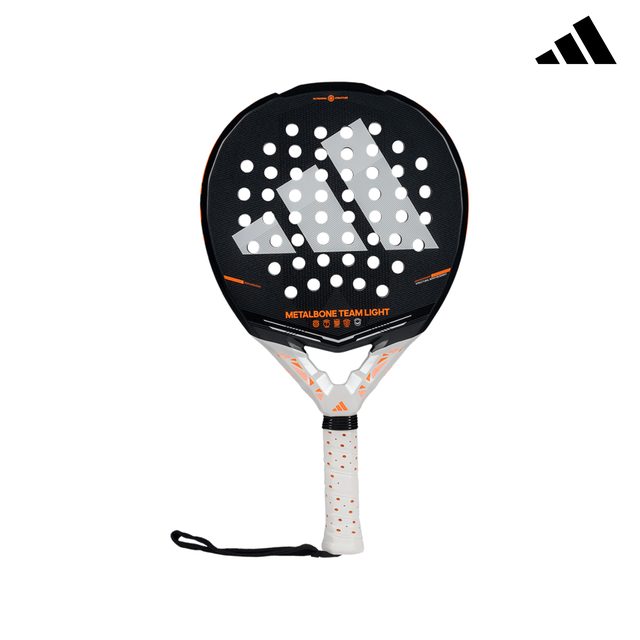
A round, evenly balanced Metalbone with a soft core and a fiberglass face, made for the advanced player who wants the line's name in a frame that spares the arm.
The verdict
The Metalbone Team Light is a round, arm-friendly Metalbone for the advanced player who wants a Metalbone without the shoulder cost. The name belongs to Adidas's attacking family, yet this trim quietly declines to attack. Where the rest of the range runs long and head-loaded, the Team Light is a round frame with its weight spread evenly, a soft core, and a fiberglass face. Read that as a build tuned to keep a strong player swinging deep into a match rather than to flatten one overhead. It is the Metalbone for the capable player who has started noticing the shoulder the morning after a long session.
The specs and the name pull in opposite directions, so buy on the specs. Come here for a head-loaded finisher that turns a clean smash into a dead ball and this trim will feel held back, and the heavier Metalbones are the honest answer. Come here for a forgiving, comfortable racket a capable player can keep swinging into a third set, and this is the one.
The build
An even balance at a light weight
The defining choice is where Adidas put the weight. The balance sits even, neither loaded out at the tip nor pulled back into the handle, and at 352g the whole frame is quick to move. A head that is not loaded does not carry extra momentum into the ball, which is why the racket asks you to supply the swing rather than lending you a loaded one. That trade is the point: you get a frame that answers fast to the wrist and never feels like a weight you have to haul, at the cost of the free tip-speed a head-heavy build would hand you on the smash.
A soft **EVA Soft Performance** core
Behind the face sits what Adidas calls an EVA Soft Performance foam, and the name tells you how it plays: soft. A soft foam compresses further under the ball at contact and rebounds without a hard snap, so a larger share of the strike is soaked up inside the frame before it can travel into your forearm. That absorption is the whole reason this racket earns a place in our shoulder guide. The flip side is honest: a soft core stores and returns less of the incoming pace than a dense one, so the pop off the face is the pace you brought, not pace the racket manufactured.
A **fiberglass** face, not carbon
The hitting layer is fiberglass, not the carbon you might expect from a Metalbone. Fiberglass flexes more than carbon at contact, so the ball sits on the face a fraction longer and a strike that lands off-center reaches your wrist as a soft thud instead of a jolt. Stacked on the soft core, that flex makes the whole frame play gentle from the first hit. The cost is free pace: a giving face hands back less speed than a stiff carbon one, so a hard drive leaves at the speed you swung, not faster.
How it plays
At the net, quick and forgiving
The head arrives early. A ball fired at your body is easy to meet because the head carries no extra weight to swing around, and you can turn your hand over between two fast exchanges without the frame lagging behind. Catch a volley slightly wide of the middle and it still settles into the court instead of spraying. What you trade away is the flat put-away: the block comes back clean and placed, so points close when you steer the ball into an open lane, not when you try to end them with pace.
From the baseline, an absorber
Under pressure at the back, an incoming smash loses its venom against the face and you can loft a lob back to length off almost no backswing, which is the shot that buys you the seconds to recover position. Scrape a ball off the rear wall and the response stays even and readable rather than jumping somewhere you did not ask for. This is a frame that rewards waiting. You soak up the heavy ball, redirect it, and hold out for the one you can step into.
On the attack, the pace is yours to bring
An overhead here lands firm and where you aimed, but it will not detonate the way a head-heavy diamond does, so if raw finishing power is the goal this is the wrong trim. Where the racket does pay you back on offense is the placed ball: the quick, even-balanced head lets you steer a víbora into the corner you picked. Attack with angles and placement and it delivers point after point. Ask it to bully a rally with flat force and it will feel deliberately short of thump.
How the arm feels after two hours
This is the case the Team Light is built to win. Two hours in, the striking arm is far quieter than a stiff, tip-loaded frame leaves it, so a strong player carrying a tender shoulder or elbow can keep competing without wincing through the warm-up next morning. It is candid about who that is. A healthy arm with a big, fast swing will finish the session wanting more racket underneath it, while a player minding a sore joint gets a frame that lets them play full matches without lighting up the ache.
Who it's for (and who should skip it)
Buy it if
- You are an advanced player with a sensitive shoulder or elbow who wants a frame you can swing all match and still feel fresh the next day.
- You build points with placement, working the angle and the low block, rather than trying to flatten the ball through the middle.
- You want the quick hands and generous face of a round frame, with the Metalbone name on it.
Look elsewhere if
- You are a healthy, hard-hitting finisher after head-heavy power. This is the lightest, softest Metalbone, and a heavier trim in the line will match your swing far better.
- You are a beginner or improver. This is an advanced frame that expects you to make your own pace, and a round, soft entry-level racket will teach you more for less money.
- You want a racket that donates free pace on the smash. The even balance, soft core, and fiberglass face are set up for comfort and control, so the power has to come from your swing.
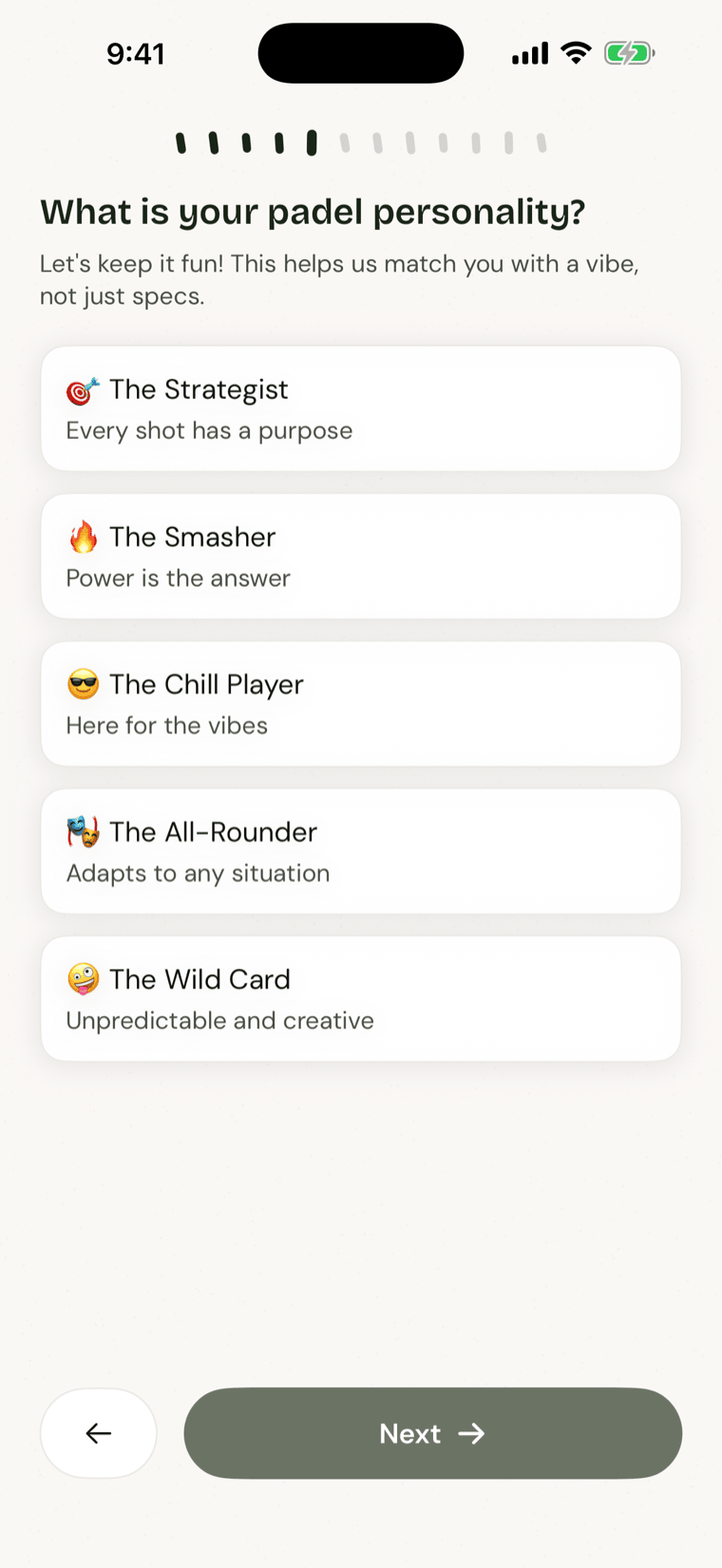
Not sure it's your match? The free 2-minute quiz reads your level, style, and budget and tells you which racket is.
The bottom line
Buy the Metalbone Team Light if you are a strong player who wants to keep attacking without the shock a stiff, head-loaded frame drives into your shoulder. Skip it if you want the full-blooded power the name promises, and reach for a heavier trim instead. If you are unsure this softened attacker is your match, the free 2-minute quiz reads your level, style, and budget and points you to the one that is.
Where to buy
Prices shown in Euro, converted and approximate. You check out in the store's own currency.
Frequently asked
No. The Metalbone Team Light 2026 is rated for advanced players, so although its round head and soft core are forgiving, it still expects you to generate your own pace and rewards a settled swing. A beginner is better off with a round, soft frame in the 350 to 360g range that is built to teach. Come back to this one once your technique holds up and you want something kind to your arm.
Control, clearly. Its weight sits evenly rather than out in the head, and the soft core and fiberglass face absorb impact instead of springing the ball off the face, so the racket favors placement and fast net hands over raw pace. You bring the power; the frame brings the accuracy and the comfort.
Adidas pairs an EVA Soft Performance foam core with a fiberglass face, on a carbon frame. The soft foam cushions contact to keep shock off the shoulder and elbow, and the fiberglass flexes more than carbon would, so the ball leaves with less sting and less free pace. Both choices point the racket at a comfort-and-placement game.
The Team Light is the softer, lighter, more forgiving member of the family. The heavier Metalbones run head-loaded and firm for attacking power, whereas this trim uses a round head, a soft core, and an even balance at 352g to put control and comfort first. Pick the Team Light for the Metalbone name in an arm-friendly package, and pick a heavier Metalbone if you want the power the name suggests.
Yes, and that is its strongest case. The soft foam and the flexible fiberglass face keep more of each impact inside the frame, so less shock reaches the shoulder and elbow across a long match, which makes it one of the more arm-friendly advanced rackets on our lists. If a joint is already flaring, pair it with a softer string, and the free 2-minute quiz can confirm it suits your level and style before you commit.
The app · free quiz
Not sure which one's you?
Take the free quiz in the app. We'll match a racket to your game, not the other way around.
Find my racketFree quiz. Sign in with email or Google to get your four picks.

Adidas Metalbone Team Light 2026 Review
By Andres Jovem · Updated October 19, 2026
A round, evenly balanced Metalbone with a soft core and a fiberglass face, made for the advanced player who wants the line's name in a frame that spares the arm.
The verdict
The Metalbone Team Light is a round, arm-friendly Metalbone for the advanced player who wants a Metalbone without the shoulder cost. The name belongs to Adidas's attacking family, yet this trim quietly declines to attack. Where the rest of the range runs long and head-loaded, the Team Light is a round frame with its weight spread evenly, a soft core, and a fiberglass face. Read that as a build tuned to keep a strong player swinging deep into a match rather than to flatten one overhead. It is the Metalbone for the capable player who has started noticing the shoulder the morning after a long session.
The specs and the name pull in opposite directions, so buy on the specs. Come here for a head-loaded finisher that turns a clean smash into a dead ball and this trim will feel held back, and the heavier Metalbones are the honest answer. Come here for a forgiving, comfortable racket a capable player can keep swinging into a third set, and this is the one.
The build
An even balance at a light weight
The defining choice is where Adidas put the weight. The balance sits even, neither loaded out at the tip nor pulled back into the handle, and at 352g the whole frame is quick to move. A head that is not loaded does not carry extra momentum into the ball, which is why the racket asks you to supply the swing rather than lending you a loaded one. That trade is the point: you get a frame that answers fast to the wrist and never feels like a weight you have to haul, at the cost of the free tip-speed a head-heavy build would hand you on the smash.
A soft **EVA Soft Performance** core
Behind the face sits what Adidas calls an EVA Soft Performance foam, and the name tells you how it plays: soft. A soft foam compresses further under the ball at contact and rebounds without a hard snap, so a larger share of the strike is soaked up inside the frame before it can travel into your forearm. That absorption is the whole reason this racket earns a place in our shoulder guide. The flip side is honest: a soft core stores and returns less of the incoming pace than a dense one, so the pop off the face is the pace you brought, not pace the racket manufactured.
A **fiberglass** face, not carbon
The hitting layer is fiberglass, not the carbon you might expect from a Metalbone. Fiberglass flexes more than carbon at contact, so the ball sits on the face a fraction longer and a strike that lands off-center reaches your wrist as a soft thud instead of a jolt. Stacked on the soft core, that flex makes the whole frame play gentle from the first hit. The cost is free pace: a giving face hands back less speed than a stiff carbon one, so a hard drive leaves at the speed you swung, not faster.
How it plays
At the net, quick and forgiving
The head arrives early. A ball fired at your body is easy to meet because the head carries no extra weight to swing around, and you can turn your hand over between two fast exchanges without the frame lagging behind. Catch a volley slightly wide of the middle and it still settles into the court instead of spraying. What you trade away is the flat put-away: the block comes back clean and placed, so points close when you steer the ball into an open lane, not when you try to end them with pace.
From the baseline, an absorber
Under pressure at the back, an incoming smash loses its venom against the face and you can loft a lob back to length off almost no backswing, which is the shot that buys you the seconds to recover position. Scrape a ball off the rear wall and the response stays even and readable rather than jumping somewhere you did not ask for. This is a frame that rewards waiting. You soak up the heavy ball, redirect it, and hold out for the one you can step into.
On the attack, the pace is yours to bring
An overhead here lands firm and where you aimed, but it will not detonate the way a head-heavy diamond does, so if raw finishing power is the goal this is the wrong trim. Where the racket does pay you back on offense is the placed ball: the quick, even-balanced head lets you steer a víbora into the corner you picked. Attack with angles and placement and it delivers point after point. Ask it to bully a rally with flat force and it will feel deliberately short of thump.
How the arm feels after two hours
This is the case the Team Light is built to win. Two hours in, the striking arm is far quieter than a stiff, tip-loaded frame leaves it, so a strong player carrying a tender shoulder or elbow can keep competing without wincing through the warm-up next morning. It is candid about who that is. A healthy arm with a big, fast swing will finish the session wanting more racket underneath it, while a player minding a sore joint gets a frame that lets them play full matches without lighting up the ache.
Who it's for (and who should skip it)
Buy it if
- You are an advanced player with a sensitive shoulder or elbow who wants a frame you can swing all match and still feel fresh the next day.
- You build points with placement, working the angle and the low block, rather than trying to flatten the ball through the middle.
- You want the quick hands and generous face of a round frame, with the Metalbone name on it.
Look elsewhere if
- You are a healthy, hard-hitting finisher after head-heavy power. This is the lightest, softest Metalbone, and a heavier trim in the line will match your swing far better.
- You are a beginner or improver. This is an advanced frame that expects you to make your own pace, and a round, soft entry-level racket will teach you more for less money.
- You want a racket that donates free pace on the smash. The even balance, soft core, and fiberglass face are set up for comfort and control, so the power has to come from your swing.
Not sure it's your match? The free 2-minute quiz reads your level, style, and budget and tells you which racket is.
The bottom line
Buy the Metalbone Team Light if you are a strong player who wants to keep attacking without the shock a stiff, head-loaded frame drives into your shoulder. Skip it if you want the full-blooded power the name promises, and reach for a heavier trim instead. If you are unsure this softened attacker is your match, the free 2-minute quiz reads your level, style, and budget and points you to the one that is.
Where to buy
Prices shown in Euro, converted and approximate. You check out in the store's own currency.
Frequently asked
No. The Metalbone Team Light 2026 is rated for advanced players, so although its round head and soft core are forgiving, it still expects you to generate your own pace and rewards a settled swing. A beginner is better off with a round, soft frame in the 350 to 360g range that is built to teach. Come back to this one once your technique holds up and you want something kind to your arm.
Control, clearly. Its weight sits evenly rather than out in the head, and the soft core and fiberglass face absorb impact instead of springing the ball off the face, so the racket favors placement and fast net hands over raw pace. You bring the power; the frame brings the accuracy and the comfort.
Adidas pairs an EVA Soft Performance foam core with a fiberglass face, on a carbon frame. The soft foam cushions contact to keep shock off the shoulder and elbow, and the fiberglass flexes more than carbon would, so the ball leaves with less sting and less free pace. Both choices point the racket at a comfort-and-placement game.
The Team Light is the softer, lighter, more forgiving member of the family. The heavier Metalbones run head-loaded and firm for attacking power, whereas this trim uses a round head, a soft core, and an even balance at 352g to put control and comfort first. Pick the Team Light for the Metalbone name in an arm-friendly package, and pick a heavier Metalbone if you want the power the name suggests.
Yes, and that is its strongest case. The soft foam and the flexible fiberglass face keep more of each impact inside the frame, so less shock reaches the shoulder and elbow across a long match, which makes it one of the more arm-friendly advanced rackets on our lists. If a joint is already flaring, pair it with a softer string, and the free 2-minute quiz can confirm it suits your level and style before you commit.
The app · free quiz
Not sure which one's you?
Take the free quiz in the app. We'll match a racket to your game, not the other way around.
Find my racketFree quiz. Sign in with email or Google to get your four picks.