Adidas Arrow Hit Light 2026 Review
By Andres Jovem · Updated October 19, 2026
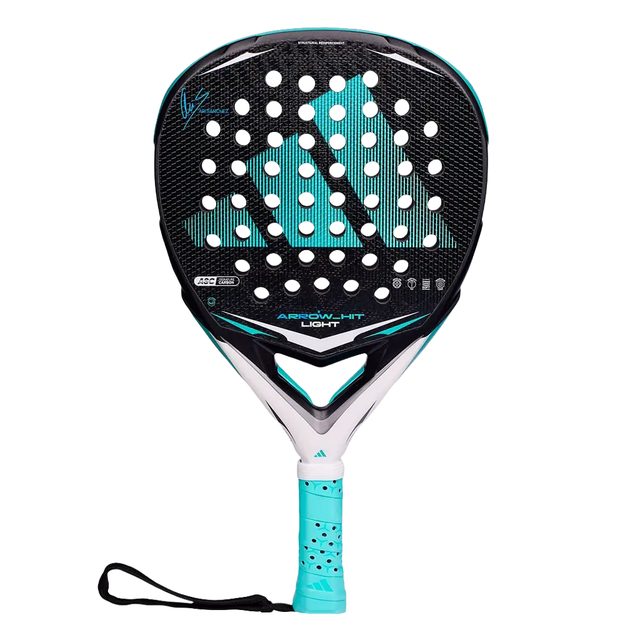
Ari Sánchez's diamond: the Metalbone's EVA Soft Performance core and head-heavy balance in a lighter frame at a lower price, for the attacking player who smashes for a living and does not need adidas's top face.
The verdict
On paper the Arrow Hit Light reads like a cheaper route to adidas's flagship, and the paper is mostly right. It is Ari Sánchez's racket: a pro-level diamond at 345 to 360g with the same EVA Soft Performance core and tip-weighted balance as the Metalbone. The result is the finishing weight of a tip-heavy frame with a core that absorbs the strike rather than firing it back. That is what lets you hit a heavy smash all afternoon without the elbow complaining. The shops have it from €219.90, against a €299.95 list price.
What you give up is the face. The surface is called ASC and nothing more, where the Metalbone wears a 16K aluminized carbon, and ASC is all anyone will tell you. What you keep is everything that makes the frame an attacker's: the mass up top, the long handle, the soft core. If you finish from the left side, want a pro-level diamond, and would rather spend the difference on court time, this is a sound place to put the money. If you defend more than you attack, the head weight will cost you more than the price saves.
The build
An EVA Soft Performance core
The core is EVA Soft Performance, the comfort foam in adidas's range. A softer foam compresses more at contact and gives the ball back with less of the sting a firm foam sends through the handle. On a diamond that is a deliberate pairing: the head weight supplies the pace, so the core can afford to be soft and still finish a point. The trade is directness. A player who wants the ball to leave like a shot from a hard core will find this one a touch cushioned.
A face adidas calls ASC
The hitting surface is ASC, a name without a description. The texture on top has one: 3D Spin Blade, a raised pattern for accuracy on topspin and backspin shots. In court terms, a brushed víbora gets its rotation from the raised surface instead of from a bigger swing of your own. The Metalbone's face is a 16K aluminized carbon with a full write-up; the price gap between the two frames is mostly this one line.
A carbon frame with adidas's structures inside
The frame is carbon fiber with three adidas structures built in. Muscle Power System is a set of carbon ribs crossing the core to resist torsion, so the head twists less on an off-center hit. Power Groove is a beam in the frame that stiffens the head area for more power on aggressive shots. Extra Power Grip is a longer handle that moves mass toward the head and shifts the sweet spot upward, for more inertia and power on the smash. The balance is head-heavy before you touch the optional weights.
345 to 360 g, plus the weights you add
The Arrow Hit Light comes in a 345 to 360g range with optional weights of up to 11.2g for the head. Bare, it is a diamond you can swing fast through a reaction volley; weighted, it becomes a slower, heavier finisher. Play it bare for a month first. The long handle already moves the balance up, and most players who add mass to a frame built this way end up with a shoulder that notices before their smash does.
How it plays
Overhead, the smash is the product
Everything in the frame is arranged for the overhead, and it shows. The mass at the tip and the long handle give the smash weight on the way down, so a clean strike off a short lob leaves the court before anyone reaches it. The soft core takes the edge off the contact, which is what lets you hit that shot thirty times in a match without the forearm filing a complaint. The bandeja has enough weight behind it to push the other pair back to the glass without a full swing.
The víbora and the side glass
Spin is where a soft core and a textured face agree. Run the face up the outside of the ball and the raised surface holds it. The cushioned core keeps it there a fraction longer. The víbora leaves with enough rotation to bend off the side glass and die. It is the shot to learn on this frame, because it needs the head weight less than the flat smash does and the arm thanks you for the variety.
At the net, the high volley is the strength
A high volley taken early goes through the gap finished; the head arrives with weight and the ball leaves flat. The reaction volley at the hip is the harder shot. A tip-heavy frame with a long handle turns a beat slower than a balanced one. This is a racket for attacking the ball, not receiving it. A right-sider who covers the net with blocks and touch volleys is asking a tip-heavy frame for a job it was not built for. A left-sider who takes the high ball and ends the point is asking for the one it was.
Pinned at the back, you're on your own
Nobody buys a pro diamond for its defense, and this one does not pretend. With the mass this far forward, a block off the glass needs early preparation, a lob hit under pressure drops short, and the cushioned core gives little rebound, so you supply the depth yourself. If you spend half your points defending, a rounder, more balanced frame will win you more of them. The one defensive shot that does come easily is the high lob. With this much mass in the head you can lift the ball from a low contact point with a short swing, and the soft core keeps it from sailing. Use it to buy the time the frame costs you elsewhere.
Easy elbow, working shoulder
Kinder than most diamonds on the elbow, because the core is soft and built for comfort. The shoulder gets no such break: a head-heavy frame with a long handle is work over three sets, and a player who adds the optional weights should expect to feel it first there.
Who it's for (and who should skip it)
Buy it if
- You smash for a living from the left side and want a pro-level diamond without paying flagship money
- The Metalbone's core and balance are what drew you and the face material was never the reason
- A firm diamond has been sending too much shock to your elbow and you still want the head weight
Look elsewhere if
- Most of your points start at the back glass
- You want a face with a full spec behind it: the Metalbone has its 16K aluminized carbon, this one has the name ASC
- You're new to padel: a head-heavy pro diamond will slow your defense before it helps your attack
Not sure it's your match? The free 2-minute quiz reads your level, style, and budget and tells you which racket is.
The bottom line
Buy it for the smash and the saving, not for the face, and keep the optional weights in the drawer until your shoulder says otherwise.
Where to buy
Prices shown in Euro, converted and approximate. You check out in the store's own currency.
Frequently asked
A pro-level racket is what the Arrow Hit Light is, and its head-heavy diamond shape makes a block in defense slow to set up for anyone still learning the court. The soft core keeps the contact from stinging, but a soft core does not turn a late block into a good one. Spend your first season on a round frame with the weight nearer your hand.
Ari Sánchez's name is on the Arrow Hit Light, and one shop shelves it with the women's rackets. The frame itself is a 345 to 360g head-heavy diamond with a soft core. Any attacking player who finishes from the net can use it. The label is marketing; the specs are the racket.
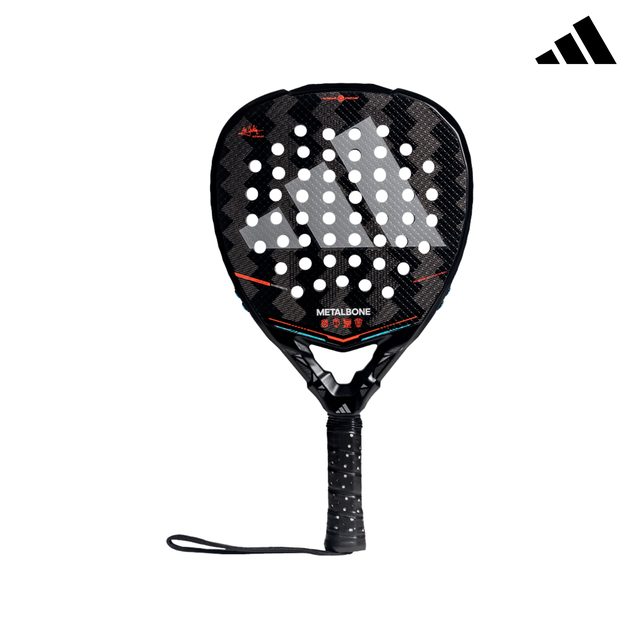
The Arrow Hit Light and the Metalbone 2026 share an EVA Soft Performance core and a head-heavy balance. The Metalbone has a 16K aluminized carbon face and a 367g customizable weight; the Arrow Hit Light's surface is called ASC and its range runs lighter, 345 to 360g. It also costs less than the Metalbone at the shops we check. If the smash is your whole game, the saving is clear; if you want the face with the fuller story, pay for the Metalbone.
From €219.90 at PadelPROShop for the Arrow Hit Light, and it was the only shop with stock when we looked. The €299.95 list price sits beside it on the same page, so the discount is a real one.
Adidas built the Arrow Hit Light to finish points: diamond shape, head-heavy balance, a long handle that pushes the sweet spot up. The soft core is there to keep the strike comfortable, not to turn it into a control frame.
An EVA Soft Performance core is what the Arrow Hit Light runs, built for comfort. The hitting surface goes by ASC and no more. A 3D Spin Blade texture sits on top for spin. The frame is carbon fiber with Muscle Power System ribs and a Power Groove beam built in.


The app · free quiz
Not sure which one's you?
Take the free quiz in the app. We'll match a racket to your game, not the other way around.
Find my racketFree quiz. Sign in with email or Google to get your four picks.

Adidas Arrow Hit Light 2026 Review
By Andres Jovem · Updated October 19, 2026
Ari Sánchez's diamond: the Metalbone's EVA Soft Performance core and head-heavy balance in a lighter frame at a lower price, for the attacking player who smashes for a living and does not need adidas's top face.
The verdict
On paper the Arrow Hit Light reads like a cheaper route to adidas's flagship, and the paper is mostly right. It is Ari Sánchez's racket: a pro-level diamond at 345 to 360g with the same EVA Soft Performance core and tip-weighted balance as the Metalbone. The result is the finishing weight of a tip-heavy frame with a core that absorbs the strike rather than firing it back. That is what lets you hit a heavy smash all afternoon without the elbow complaining. The shops have it from €219.90, against a €299.95 list price.
What you give up is the face. The surface is called ASC and nothing more, where the Metalbone wears a 16K aluminized carbon, and ASC is all anyone will tell you. What you keep is everything that makes the frame an attacker's: the mass up top, the long handle, the soft core. If you finish from the left side, want a pro-level diamond, and would rather spend the difference on court time, this is a sound place to put the money. If you defend more than you attack, the head weight will cost you more than the price saves.
The build
An EVA Soft Performance core
The core is EVA Soft Performance, the comfort foam in adidas's range. A softer foam compresses more at contact and gives the ball back with less of the sting a firm foam sends through the handle. On a diamond that is a deliberate pairing: the head weight supplies the pace, so the core can afford to be soft and still finish a point. The trade is directness. A player who wants the ball to leave like a shot from a hard core will find this one a touch cushioned.
A face adidas calls ASC
The hitting surface is ASC, a name without a description. The texture on top has one: 3D Spin Blade, a raised pattern for accuracy on topspin and backspin shots. In court terms, a brushed víbora gets its rotation from the raised surface instead of from a bigger swing of your own. The Metalbone's face is a 16K aluminized carbon with a full write-up; the price gap between the two frames is mostly this one line.
A carbon frame with adidas's structures inside
The frame is carbon fiber with three adidas structures built in. Muscle Power System is a set of carbon ribs crossing the core to resist torsion, so the head twists less on an off-center hit. Power Groove is a beam in the frame that stiffens the head area for more power on aggressive shots. Extra Power Grip is a longer handle that moves mass toward the head and shifts the sweet spot upward, for more inertia and power on the smash. The balance is head-heavy before you touch the optional weights.
345 to 360 g, plus the weights you add
The Arrow Hit Light comes in a 345 to 360g range with optional weights of up to 11.2g for the head. Bare, it is a diamond you can swing fast through a reaction volley; weighted, it becomes a slower, heavier finisher. Play it bare for a month first. The long handle already moves the balance up, and most players who add mass to a frame built this way end up with a shoulder that notices before their smash does.
How it plays
Overhead, the smash is the product
Everything in the frame is arranged for the overhead, and it shows. The mass at the tip and the long handle give the smash weight on the way down, so a clean strike off a short lob leaves the court before anyone reaches it. The soft core takes the edge off the contact, which is what lets you hit that shot thirty times in a match without the forearm filing a complaint. The bandeja has enough weight behind it to push the other pair back to the glass without a full swing.
The víbora and the side glass
Spin is where a soft core and a textured face agree. Run the face up the outside of the ball and the raised surface holds it. The cushioned core keeps it there a fraction longer. The víbora leaves with enough rotation to bend off the side glass and die. It is the shot to learn on this frame, because it needs the head weight less than the flat smash does and the arm thanks you for the variety.
At the net, the high volley is the strength
A high volley taken early goes through the gap finished; the head arrives with weight and the ball leaves flat. The reaction volley at the hip is the harder shot. A tip-heavy frame with a long handle turns a beat slower than a balanced one. This is a racket for attacking the ball, not receiving it. A right-sider who covers the net with blocks and touch volleys is asking a tip-heavy frame for a job it was not built for. A left-sider who takes the high ball and ends the point is asking for the one it was.
Pinned at the back, you're on your own
Nobody buys a pro diamond for its defense, and this one does not pretend. With the mass this far forward, a block off the glass needs early preparation, a lob hit under pressure drops short, and the cushioned core gives little rebound, so you supply the depth yourself. If you spend half your points defending, a rounder, more balanced frame will win you more of them. The one defensive shot that does come easily is the high lob. With this much mass in the head you can lift the ball from a low contact point with a short swing, and the soft core keeps it from sailing. Use it to buy the time the frame costs you elsewhere.
Easy elbow, working shoulder
Kinder than most diamonds on the elbow, because the core is soft and built for comfort. The shoulder gets no such break: a head-heavy frame with a long handle is work over three sets, and a player who adds the optional weights should expect to feel it first there.
Who it's for (and who should skip it)
Buy it if
- You smash for a living from the left side and want a pro-level diamond without paying flagship money
- The Metalbone's core and balance are what drew you and the face material was never the reason
- A firm diamond has been sending too much shock to your elbow and you still want the head weight
Look elsewhere if
- Most of your points start at the back glass
- You want a face with a full spec behind it: the Metalbone has its 16K aluminized carbon, this one has the name ASC
- You're new to padel: a head-heavy pro diamond will slow your defense before it helps your attack
Not sure it's your match? The free 2-minute quiz reads your level, style, and budget and tells you which racket is.
The bottom line
Buy it for the smash and the saving, not for the face, and keep the optional weights in the drawer until your shoulder says otherwise.
Where to buy
Prices shown in Euro, converted and approximate. You check out in the store's own currency.
Frequently asked
A pro-level racket is what the Arrow Hit Light is, and its head-heavy diamond shape makes a block in defense slow to set up for anyone still learning the court. The soft core keeps the contact from stinging, but a soft core does not turn a late block into a good one. Spend your first season on a round frame with the weight nearer your hand.
Ari Sánchez's name is on the Arrow Hit Light, and one shop shelves it with the women's rackets. The frame itself is a 345 to 360g head-heavy diamond with a soft core. Any attacking player who finishes from the net can use it. The label is marketing; the specs are the racket.
The Arrow Hit Light and the Metalbone 2026 share an EVA Soft Performance core and a head-heavy balance. The Metalbone has a 16K aluminized carbon face and a 367g customizable weight; the Arrow Hit Light's surface is called ASC and its range runs lighter, 345 to 360g. It also costs less than the Metalbone at the shops we check. If the smash is your whole game, the saving is clear; if you want the face with the fuller story, pay for the Metalbone.
From €219.90 at PadelPROShop for the Arrow Hit Light, and it was the only shop with stock when we looked. The €299.95 list price sits beside it on the same page, so the discount is a real one.
Adidas built the Arrow Hit Light to finish points: diamond shape, head-heavy balance, a long handle that pushes the sweet spot up. The soft core is there to keep the strike comfortable, not to turn it into a control frame.
An EVA Soft Performance core is what the Arrow Hit Light runs, built for comfort. The hitting surface goes by ASC and no more. A 3D Spin Blade texture sits on top for spin. The frame is carbon fiber with Muscle Power System ribs and a Power Groove beam built in.
The app · free quiz
Not sure which one's you?
Take the free quiz in the app. We'll match a racket to your game, not the other way around.
Find my racketFree quiz. Sign in with email or Google to get your four picks.